Owning a summer house or quiet getaway in the woods used to be a simple thing. You would schedule a quick jaunt from your busy life for the weekend, pack up the kids, dog, and car, and head out for a little break. That same definition no longer applies.
The rapid growth of remote work, flexible schedules, and lifestyle-driven decision-making has exploded the market to the point of nearly 10 million summer vacation homes being owned around the country. People are viewing these temporary spaces as viable options. What used to be an escape now must function as a fully operational house all year round.
Now, the challenge isn’t what paint colors to pick out before your quarterly trip to your family’s cabin. It’s more about coordinating luggage, equipment, vehicles, and people so that the summer property turns into a secondary location available any season at any time.
When Weekend Getaways Turn into Longer Stays and Remote Work
The global pandemic changed everything about traditional workspaces. It’s estimated that roughly 6 in 10 employees engage in remote or hybrid structures. People want the convenience and freedom to take care of their kids, maintain social connections, and earn a decent wage, all without being stuck in one place or another.
With a summer house, those flexible work models become more attractive. Instead of only sneaking away for the weekend, you can turn a small stay into an entire month’s adventure, without sacrificing a paycheck. However, the space must evolve to meet your work and lifestyle needs.
The core structures must be present. A home meant only for warmer months has to be adapted. There needs to be dedicated workspaces that separate focus from downtime, comfortable seating with lighting and HVAC systems that operate, plenty of storage, and an internet connection that can support video calls or large file transfers.
You’re not trying to turn the space into a corporate office. It’s more about removing any friction so you can get work done, maintaining your average daily routine, but still having a relaxing, welcoming space where you can get away or host friends. You have to turn a home meant for shorter, seasonal stays into a place for sustained living.
Juggling Maintenance, Utilities, and Security While You Are Away
The primary issue with owning a summer house is that it often sits empty for extended periods. Without regular use, that can turn tiny issues with water pressure or a lack of insulation into significant expenses. You don’t want humidity to damage interiors, or for the property to be insecure enough to attract squatters.
An excellent way to combat these common maintenance issues is to work with your utility companies. Have a clear pricing schedule set with mechanisms that make it easy to turn off the electricity when you’re away or only get heating oil deliveries when you know you’ll be in town. If that is too much coordination on your already busy schedule, you can hire a property management company to manage the simple things while you’re away.
Technology also improves the situation. You’re already converting your vacation property into one with reliable internet, so why not take advantage of smart features? Add thermostats, leak detection systems, HVAC monitoring, security cameras, and a cloud-based document of local service contacts in case anything goes wrong. That is where smart devices can be a lifesaver.
Something as simple as an Amazon Echo Show can be enough to drop in on your second home and see how the birds enjoy your porch or whether anyone is inside triggering motion sensors.
Getting Year-Round Comfort Right for How to Plan a Summer House That Works for Year-Round Living
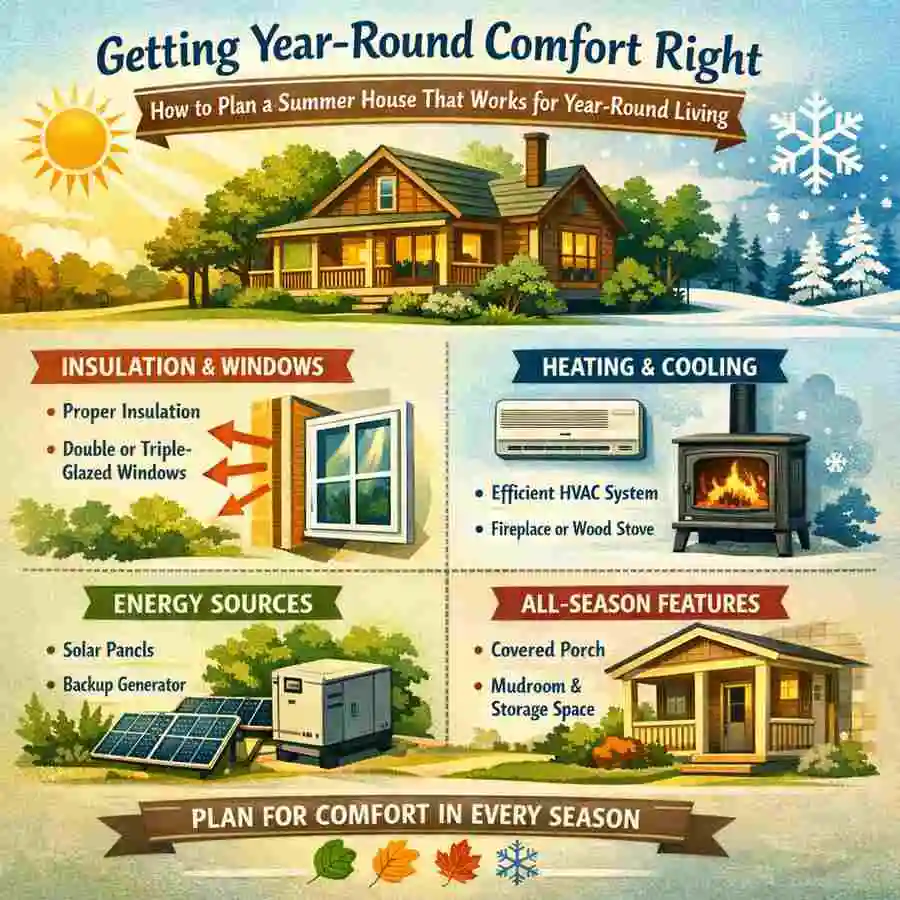
Comfort is another issue. Not every secondary property you have is equipped for year-round temperatures and seasonal storms. It might feel amazing to wake up to the cool breeze of a summer morning on the lake, but that same experience is quite different when October rolls around.
Seasonal design starts with prioritizing airflow control, sunlight exposure, and space comfort. Have a heating system you can control from anywhere, and get an evaluation of insulation, window quality, and any leaks on your property to cut costs and ensure energy efficiency.
Go ahead and layer your bedding. Build a closet in your vacation space that has enough room for thicker blankets, duvets, window treatments, and seasonal clothing (plus gear). You wouldn’t ship a car in the winter months without thinking about the weather. Why would you have an extended stay at your other property without first thinking about the temperature?
Accommodations should match your needs. It’s a great excuse to hit IKEA or your local big-box thrift store for secondary appliances and items you know you’ll need for each season. That way, you can have your outdoor grilled salmon in the summer just as much as hot cocoa and a roast in the winter. You’re not overbuilding, but ensuring the space fits your work needs, even in the off-season.
Where Calm Coordination Helps with Vehicles, Furniture, and Tight Timelines
The more you use your summer house as a workspace, the more logistics factor into your peace of mind. You’re not just packing for a light trip, but for a long-term visit that requires much more coordination. That can mean rotating vehicles, transporting furniture, managing deliveries, and working with guests around your work and personal schedules.
If you’re going to stay at your second property for longer, you need a plan. Otherwise, you risk overpacking, forgetting essentials, or dealing with annoying adjustments that disrupt your routine. Make a list of what stays in what property. Treat your home and your summer house as Airbnbs. Give yourself a dossier of steps to open/close the space, if you need to move anything, and what car stays where or needs to be moved.
For families who don’t have another driver available or don’t want the added hassle of trading cars back and forth, working with a professional shipping company like Nexus Auto Transport can save a lot of stress. You get clear pricing, coordinated support, and nationwide door-to-door delivery that align with your timelines and expectations. That kind of support is extremely valuable, no matter if you’re in your primary or secondary residence. Find out what to expect with auto transport services so you can take one item off your travel “to-do” list.
Settling Into a Routine That Still Feels Like a Getaway
Planning a summer house for year-round living must include preserving what makes it so appealing in the first place. Whenever you can turn a vacation home, short-term rental, or secondary space into something more functional, you risk over-structuring it. Remember to keep things simple.
Build in the structured processes that ensure you can live comfortably no matter the season. Find support, like professional car shipping, to make going back and forth between properties easier. That way, you can maintain the slow mornings you want, easy workdays you need, and calm evenings with friends that build memories into the fabric and walls of your vacation property.
The more your lifestyle shifts from location to location, the clearer your understanding of upgrades, coordination, and how you use the home matters. When it all works together, it should be a simple, easy-to-remember excursion that suits your needs and fulfills your soul.