A leaking conservatory roof can quickly turn from a small nuisance into a bigger home problem. Water can stain the ceiling, damage frames, encourage mold, and weaken the roof structure if you leave it too long.
If you are wondering how to fix a water leak in the conservatory roof, the good news is that many leaks stem from simple issues like worn sealant, blocked gutters, or loose fittings. Some of these problems are easy to repair yourself. Others need a professional touch.
Common Causes of Conservatory Roof Leaks
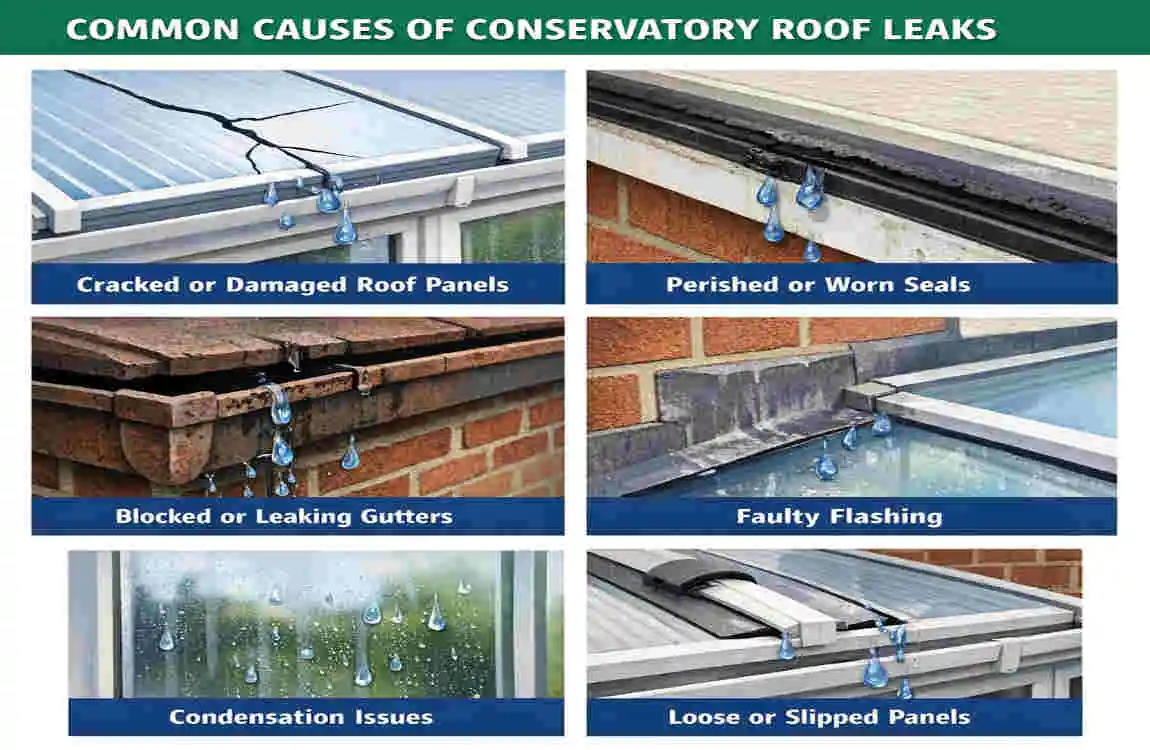
Worn or Damaged Roof Seals
Roof seals do a lot of the hard work. They help keep water out at the joints and edges of the roof.
Over time, seals can dry out, crack, or shrink. Once that happens, rainwater can slip through the gaps.
Cracked Roof Panels
Roof panels can crack from age, weather, or impact. Even a small crack can let in water during heavy rain.
This is more common in older conservatories or roofs that have been exposed to harsh weather for years.
Blocked Gutters and Downpipes
If gutters are full of leaves and dirt, water cannot drain properly. Instead, it backs up and spills where it should not.
That overflow can lead to leaks around the roof edge and wall joints.
Loose Flashing Around the Roof
Flashing helps seal roof edges and joints. If it becomes loose or damaged, water can get in behind it.
This is a common leak point, especially around roof corners and joints.
Faulty Roof Vent or Skylight Seals
Many conservatories have roof vents or skylights. These areas need proper sealing to stay watertight.
If the seal fails, water may enter around the opening and run into the room below.
Poor Original Installation
Sometimes the problem starts from day one. If the roof was not installed correctly, leaks may appear even when the materials are still fairly new.
This can mean poor alignment, weak seals, or badly fitted panels.
Signs You Have a Water Leak
Water Dripping During Rain
This is the most obvious sign. If water starts dripping when it rains, you likely have a roof leak.
Damp Walls or Ceiling
Damp spots on the walls or ceiling often mean water is entering from above and spreading slowly.
Mold and Mildew Growth
Moisture creates a perfect place for mold. If you see dark spots or smell dampness, take it seriously.
Condensation vs. Roof Leak
Not every wet patch is a leak. Sometimes condensation causes moisture buildup, especially in colder months.
A real roof leak usually gets worse during rain and leaves clear water stains. Condensation often appears more evenly across surfaces.
Stains Around Window Frames
Brown marks or peeling paint around window frames can point to water getting in through the roof or nearby joints.
Tools and Materials Needed
Before you start, gather the right tools. That makes the job easier and safer.
- Silicone roof sealant
- Caulking gun
- Cleaning cloth
- Roofing tape
- Ladder
- Safety gloves
- Waterproof sealant
- Replacement screws
- Soft brush
Having everything ready saves time and helps you avoid rushing during the repair.
How to Fix a Water Leak in a Conservatory Roof Step by Step
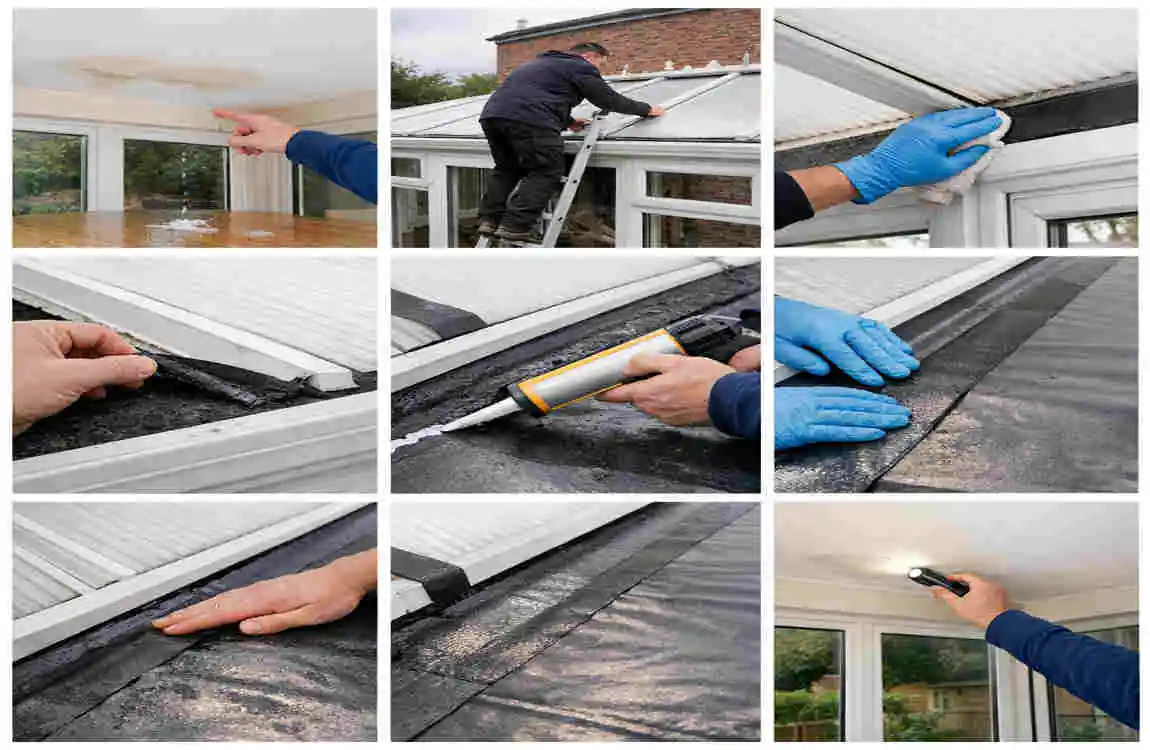
Locate the Leak
Start by finding where the water is entering. Do not assume the drip inside is exactly where the leak begins.
Check the roof, seals, corners, vents, and window frames. Look for cracks, gaps, loose screws, or damaged panels.
Clean the Affected Area
Before applying anything, clean the area thoroughly. Dirt and moisture can stop sealant from sticking properly.
Use a soft brush or cloth to remove dust, moss, and loose debris.
Remove Old Sealant
If the old sealant is cracked or peeling, remove it carefully. New sealant will not work well over damaged or dirty material.
Take your time here. A clean surface makes a much stronger repair.
Apply New Waterproof Sealant
Use a good-quality exterior sealant to fill gaps and cover joints. Apply it evenly so water cannot sneak through.
A caulking gun helps you control the flow and place the sealant neatly.
Tighten Loose Roof Fixings
Check for loose screws or fixings around the roof panels and frame. Tighten them carefully so the roof sits properly again.
Do not overtighten, because that can damage the panel or frame.
Replace Damaged Roof Panels
If a panel is cracked or badly worn, sealant alone may not be enough. In that case, replacement is the better solution.
A damaged panel will usually keep leaking until it is changed.
Test the Repair
After the repair is complete, wait for the next rain or use water carefully to test the area. Watch closely for any fresh leaks.
If the area stays dry, your repair is likely working well.
Best Sealants for Conservatory Roof Repairs
Silicone Sealant
Silicone sealant is flexible and waterproof. It works well for many conservatory roof joints and small cracks.
It is a popular choice because it can handle movement and changing weather.
Polyurethane Sealant
Polyurethane sealant is strong and long-lasting. It is a good option if you want a tougher repair.
It bonds well to many roofing surfaces and holds up in harsh conditions.
Roof Repair Tape
Roof repair tape is useful for quick temporary fixes. It is not always a permanent answer, but it can help in emergencies.
Waterproof Roofing Compound
This type of compound is designed for heavier-duty repairs. It can seal larger problem areas and provide extra protection.
When You Should Replace Instead of Repair
Multiple Roof Leaks
If your conservatory roof has several leak points, repair may only give short-term relief.
Old Conservatory Roof
An older roof may have worn materials all over, not just in one place. In that case, replacement can be more cost-effective.
Structural Damage
If the roof frame, panels, or supports are damaged, you may need more than sealant and patching.
Extensive Cracks
Large cracks or broken sections usually mean the roof is too far gone for a simple fix.
Prevent Future Roof Leaks
Clean Gutters Regularly
Clear gutters help water drain away properly. This is one of the easiest ways to prevent leaks.
Inspect Roof Seals Every Year
Check seals for cracks, shrinking, or lifting. Catching problems early saves money later.
Remove Moss and Debris
Leaves, moss, and dirt can trap moisture and damage roof surfaces over time.
Replace Worn Sealant Early
Do not wait until the sealant fails. Replace aging sealant before it causes a leak.
Schedule Annual Maintenance
A yearly checkup helps you spot weak areas before they turn into bigger issues.
DIY vs Professional Repair
DIY Repair Professional Repair
Lower cost Expert artistry
Good for small leaks Ideal for major damage
Quick temporary fix Long-lasting repair
Basic tools required Professional equipment
Suitable for simple seal replacement Best for structural issues
DIY works well for small, simple leaks. If the damage is larger or you are unsure where the problem starts, a professional is the safer choice.
Mistakes to Avoid
Ignoring Small Leaks
A tiny leak today can become a costly repair later. Do not brush it off.
Using the Wrong Sealant
Not every sealant is made for conservatory roofs. Choose one that is waterproof and suitable for outdoor use.
Applying Sealant to Wet Surfaces
Sealant sticks best to dry, clean surfaces. If the area is damp, the repair may fail.
Walking on Fragile Roof Panels
Some conservatory roofs are not made to carry much weight. Be careful, or you may create more damage.
Skipping Regular Inspections
Small checks can prevent big repairs. Make inspection part of your routine.
Cost to Repair a Conservatory Roof Leak

DIY Repair Costs
If you do the job yourself, you may only spend around $20 to $100 on sealant, tape, and basic tools.
Professional Repair Costs
Professional repairs often range from $150 to $800, depending on the size of the leak and the work needed.
Full Roof Replacement Costs
If the roof is badly damaged or very old, replacement can cost much more. This can range from $3,000 to $10,000+, depending on materials and size.
Factors Affecting Repair Costs
A few things can change the final price:
- Size of the leak
- Type of roof material
- Amount of damage
- Labor costs
- Whether panels need replacing
Frequently Asked Questions
What is the most common cause of a conservatory roof leak?
Damaged seals, cracked roof panels, blocked gutters, and loose flashing are the most common causes.
Can I fix a leaking conservatory roof myself?
Yes, minor leaks caused by worn sealant or loose fixings can often be repaired with basic DIY tools.
What sealant is best for conservatory roof leaks?
A high-quality exterior-grade silicone or polyurethane sealant is usually the best choice.
How much does it cost to repair a conservatory roof leak?
DIY repairs can cost around $20–$100, while professional repairs usually range from $150–$800.
How can I prevent future conservatory roof leaks?
Inspect the roof regularly, clean gutters, replace aging sealant early, and fix small problems before they grow.
| Topic | Details |
|---|---|
| Problem | Water leaking through the conservatory roof during or after rain. |
| Common Causes | Damaged roof seals, cracked glazing panels, blocked gutters, loose flashing, worn-out rubber gaskets, or poor installation. |
| Signs of a Leak | Water stains, damp patches, dripping water, mold growth, condensation, or visible cracks. |
| Easy DIY Repairs | Replace damaged seals, apply roof sealant, tighten loose fixings, clean gutters, and clear drainage channels. |
| Materials Needed | Silicone roof sealant, replacement rubber seals, screwdriver, ladder, cleaning cloth, and waterproof tape (temporary fix). |
| Repair Difficulty | Easy to Moderate, depending on the source of the leak. |
| Estimated Repair Time | 30 minutes to 3 hours for most minor repairs. |
| Average DIY Cost | Approximately $20–$100, depending on materials required. |
| When to Call a Professional | If the roof structure is damaged, glazing panels are broken, leaks persist after repairs, or the roof requires replacement. |
| Prevention Tips | Inspect seals twice a year, clean gutters regularly, remove debris, and repair small cracks before they worsen. |