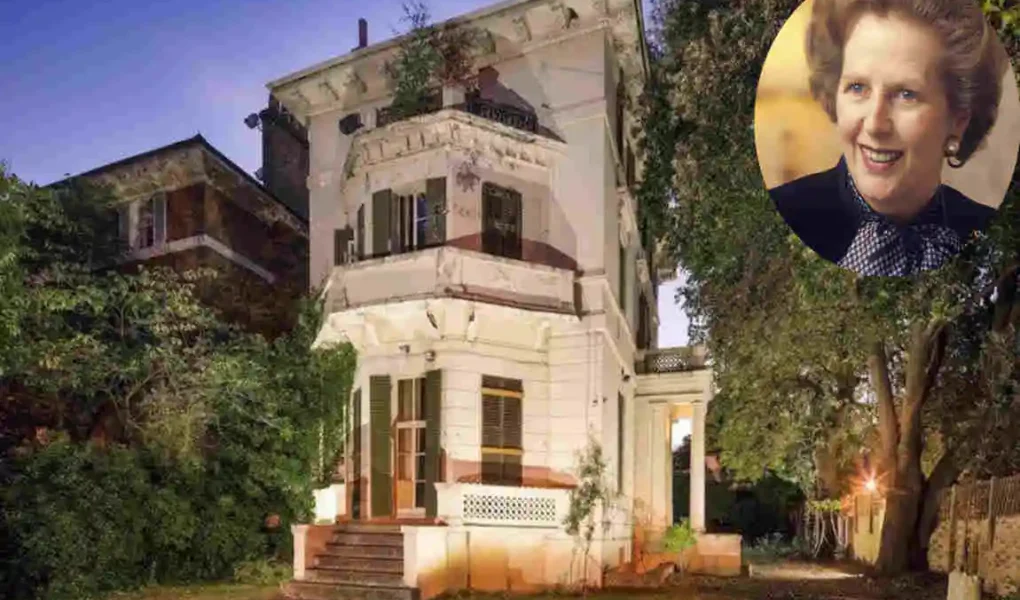
When you walk through the quiet, leafy streets of Belgravia, it is easy to feel like you have stepped onto a movie set. The white stucco buildings, the black iron railings, and the immaculate garden squares all whisper stories of London’s elite. But one building, in particular, holds a history that is louder than the rest. It is the Margaret Thatcher house, a residence that served as the fortress, sanctuary, and command center for Britain’s “Iron Lady” after she departed from Downing Street.
For history buffs, architecture lovers, or anyone fascinated by British politics, Margaret Thatcher’s Westminster home is more than just a pile of bricks and mortar. It is a physical representation of an era. Located at 73 Chester Square, this townhouse is a tangible link to a woman who shaped the 20th century.
Architectural and Design Overview
Now, let’s look closer at the building itself. If you were to stand outside 73 Chester Square, you would be looking at a classic example of early 19th-century architecture.
The Exterior: Classic Georgian Elegance
The house is a Grade II listed property, meaning it is protected for its historical and architectural importance. The façade is quintessentially London. It features white stucco rendering on the ground floor and basement, with traditional brickwork often visible on the upper levels of surrounding properties. However, Chester Square is famous for its uniform cream-and-white grandeur.
The windows are tall sash windows, designed to flood the interior with natural light—a precious commodity in London. The front door, usually painted a glossy black, is framed by a portico with pillars, giving it a sense of formal authority. It is the kind of house that demands you straighten your tie before you ring the bell.
Interior Design: Restrained Opulence
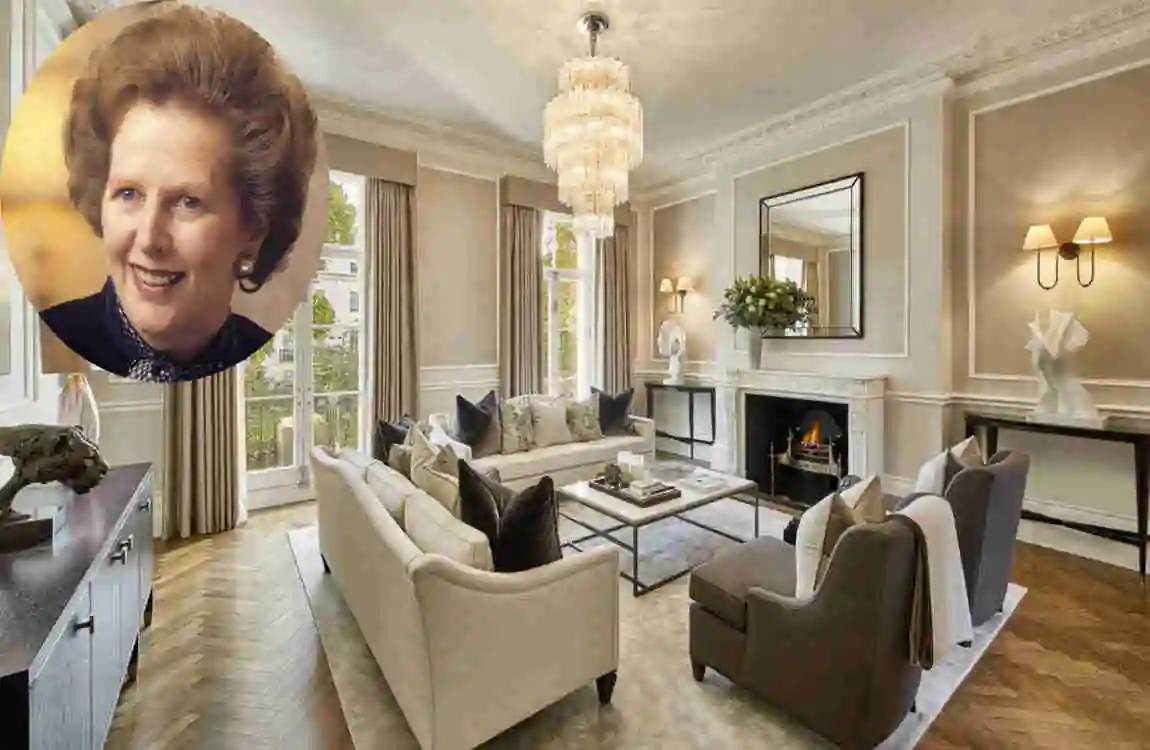
Stepping inside Thatcher’s London townhouse, the design philosophy became immediately clear. It was not trendy. You wouldn’t find avant-garde art or modernist furniture here. The interiors revealed a taste for classic elegance.
Thatcher preferred a style that felt established. We are talking about high ceilings with intricate cornicing (moldings), heavy silk curtains, and plush carpets. The design was functional but comfortable—a place where you could host a tea with a diplomat or a strategy meeting with an aide.
A Room-by-Room Tour
Let’s break down the key spaces within the Margaret Thatcher house:
The Entrance Hall. First impressions matter. The entrance hall was designed to be imposing yet welcoming. Often featuring stone or polished wood floors, this space served as a reception area where security detail and secretaries would greet guests.
The Drawing Room. This was the heart of the home’s social life. Located on the first floor (as is traditional in London townhouses to escape street noise), the drawing room was grand. It featured a large fireplace, which was often the focal point. The furniture was likely arranged to encourage conversation—sofas facing each other, flanked by armchairs. This is where the “Iron Lady” would relax, though for her “relaxing” usually meant discussing policy.
The Dining Room: Dinner parties were a political tool. The dining room in the Thatcher private home interiors was formal. Imagine a long mahogany table, crystal glassware, and silver service. This room witnessed countless private discussions that likely influenced the direction of the Conservative Party even after she left office.
The Library and Office Perhaps the most important room for Thatcher was her library or study. Lined with books—many of them political biographies, histories, and economic texts—this room was her sanctuary. It was here that she drafted speeches and read correspondence.
Materials and Craftsmanship
The quality of the Margaret Thatcher house design was undeniable. The property boasted:
- Original Fireplaces: Marble surrounds that anchored the main rooms.
- Iron Balustrades: The staircase was a central spine of the house, featuring intricate ironwork.
- Hardwood Flooring: Covered in many rooms by high-quality wool carpets, a preference of the era for warmth and soundproofing.
Iconic Features and Keepsakes
Every home has unique quirks that define the owner. In the case of the Margaret Thatcher house, these features were deeply tied to her political identity. There were elements in this house that you would not find in a regular celebrity home.
The Division Bell
This is perhaps the most fascinating feature of the Thatcher Westminster home. A “Division Bell” is a signaling device used in the neighborhood of Westminster. When a vote is called in the House of Commons, bells ring throughout the Parliamentary estate to summon MPs to vote.
However, certain pubs, restaurants, and private homes within a specific radius (roughly 8 minutes’ walking distance) were allowed to install their own Division Bells. Thatcher had one installed. Even after she was no longer Prime Minister, and later when she moved to the House of Lords, the sound of the bell was a heartbeat of her life. It symbolized her permanent tether to British democracy.
The Home Office: A Power Center
The Thatcher home office was not a casual nook. It was a command center. After leaving Number 10, she received thousands of letters. Her office in Chester Square was set up to handle this volume. It was equipped with secure lines and was staffed by her loyal assistants.
The desk she used was often described as being meticulously organized. Thatcher was known for her incredible work ethic, sleeping only four hours a night. This room was where those extra waking hours were spent working.
The Private Garden
Central London is crowded. Having an outdoor space is a luxury. The Thatcher private garden at the rear of the property provided a rare escape. It wasn’t a sprawling country estate, but it was a quiet, walled enclave where she could get fresh air away from the prying lenses of the paparazzi. It was a space for reflection, and occasionally, for reviewing government papers in the summer sun.
Memorabilia and Personal Touches
The house was filled with items that told the story of her career.
- The Red Boxes: Even out of office, the famous red ministerial boxes were a symbol she was fond of.
- Portraits: Oil paintings of herself and her husband, Denis Thatcher, adorned the walls.
- Porcelain: Thatcher had a fondness for fine china and porcelain, collectibles that added a softer, more domestic touch to the otherwise formal environment.
Cultural and Political Significance
Why do we still care about this house today? Why does the search term Margaret Thatcher’s house still trend? It is because buildings like this are historical stages.
A Locus of Power
For decades, political power in the UK has been concentrated in very few postcodes. By establishing her court at 73 Chester Square, Thatcher created a “shadow” power center. Politicians, journalists, and world leaders knew that if they were invited to Chester Square, it mattered.
It blurred the lines between public perception and a private residence. While Downing Street belongs to the state, this house belonged to her. Yet, the business conducted there was often of state importance. It reminds us that politics is personal. Relationships are built over dinner tables, not just in debating chambers.
A Fortress Against the Modern World
In her later years, the house became a protective shell. As Thatcher’s health declined and she had dementia, the house was her safe harbor. The staff who worked there were fiercely loyal, protecting her dignity. In this sense, Margaret Thatcher’s house’s significance lies in its role as a sanctuary for a woman who had spent her life in the gladiator pit of public opinion.
Comparison to Other Political Landmarks
How does it stack up?
- 10 Downing Street: The office. Cramped, busy, publicly owned.
- Chequers: The country retreat. Grand, historic, isolating.
- 73 Chester Square: The home. Personal, elegant, and located in the heart of the establishment.
Visiting, Preservation, and Public Interest
This brings us to a common question: Can you visit the Margaret Thatcher house?
Is it Open to the Public?
The short answer is no. Unlike the homes of American Presidents, which often become museums (like Mount Vernon), British Prime Ministers’ private homes usually return to the private market.
After Baroness Thatcher died in 2013, the property was sold. Developer Leconfield Property Group purchased it for a sum reported to exceed £12 million. They undertook a massive renovation to modernize the property while preserving its historic shell.
The Renovation and Sale
The developers faced a challenge. They had to balance the status of the Belgravia heritage property with the needs of a modern billionaire buyer.
- They added a lift (elevator).
- They dug down to create a basement with a gym and cinema—amenities Thatcher certainly didn’t have!
- They restored the original cornicing and fireplaces.
The house was recently relisted for sale at a considerably higher price, highlighting its unique history as a major selling point.
Blue Plaques and Recognition
Currently, there is no official “Blue Plaque” (the English Heritage marker) on the house, largely because rules state a person must be deceased for 20 years before a plaque is installed. However, it is almost certain that in the future, 73 Chester Square will bear a plaque marking it as the Margaret Thatcher London townhouse.
Design Lessons from the Iron Lady
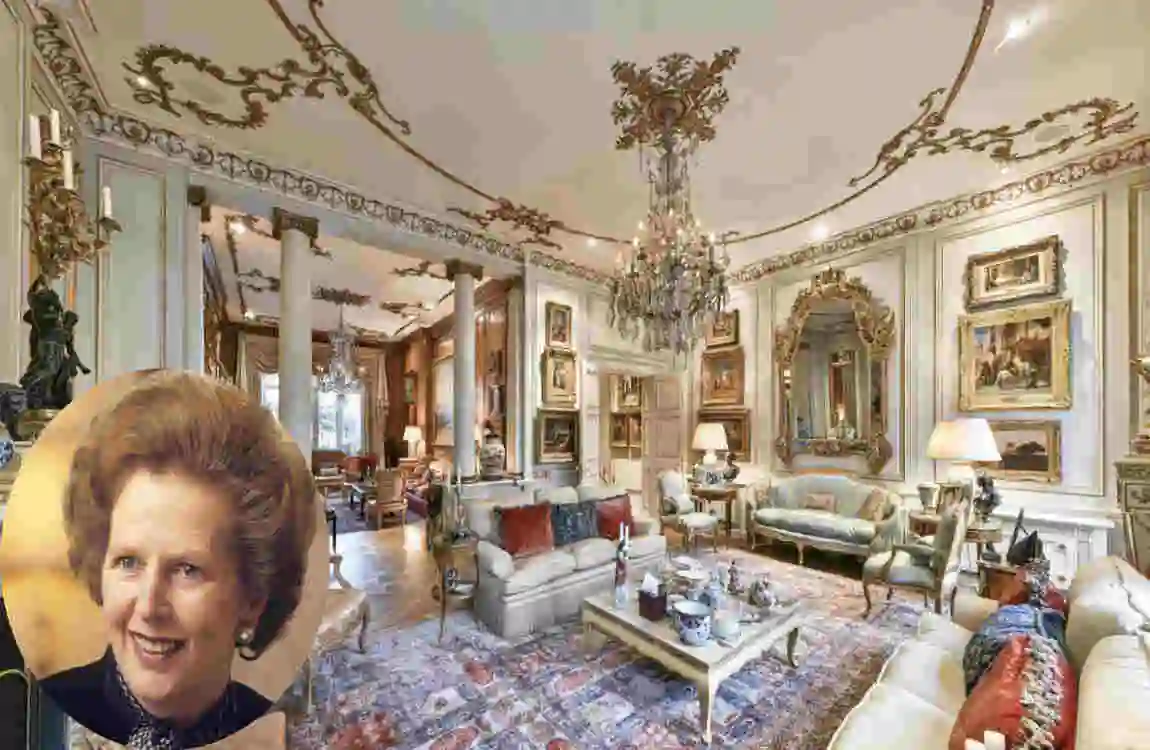
Even if we can’t afford a multi-million-pound mansion in Belgravia, there are design takeaways from the Thatcher house design style that can apply to any home.
Function First
Thatcher was a pragmatist. Her rooms were laid out for specific purposes. Takeaway: Define what a room is for before you decorate it. If it is a workspace, prioritize the desk and lighting over decorative fluff.
Timeless Over Trendy
The house ignored the trends of the 90s and 00s. It stuck to Georgian roots. Takeaway: Classic furniture shapes, natural materials (wood, stone, wool), and neutral color palettes never go out of style.
The Importance of an Entrance
The hallway sets the tone. Takeaway: Keep your entryway clutter-free. Use a mirror to bounce light and a console table to create a focal point.
Create a Sanctuary
Thatcher had her library; everyone needs a corner of their home that is just for them. Takeaway: Whether it is a reading nook or a garden bench, create a space where you can disconnect from the world.
Summary of Thatcher’s Design Style vs. Modern Trends
FeatureThatcher’s Style (Classic)Modern Interpretation
Walls: Heavy wallpapers, cream paints, Matte paints, bold feature walls
Floors: Wall-to-wall wool carpets, Hardwood with area rugs
Kitchen: Purely functional, hidden away. Open plan, social hub
Decor Oil portraits, porcelain, antiques Abstract art, minimalism, plants
Lighting : Crystal chandeliers, table lamps , recessed LEDs, smart lighting
Frequently Asked Questions (FAQs)
1. Where is Margaret Thatcher’s house located? Margaret Thatcher’s most famous post-premiership home is located at 73 Chester Square in the Belgravia district of London, postcode SW1W 9DU.
2. Can I tour the Margaret Thatcher house? No, the house is a private residence and is not open to the public for tours. Private individuals currently own it. However, you can view the exterior from the street in Chester Square.
3. What is the Division Bell mentioned in the article? A Division Bell is an alarm that rings to signal a vote in the House of Commons. Thatcher had one installed in her home so she would know when important parliamentary business was happening, highlighting her dedication to politics.
4. How much is Margaret Thatcher’s house worth? After her death, the house was sold, renovated, and put back on the market. In recent years, it has been listed at prices ranging from £18 million to £30 million, depending on the market and the extent of the renovations.
5. Did she die in this house? While 73 Chester Square was her primary home, Margaret Thatcher passed away at the Ritz Hotel in London in 2013. She had been staying there in her final months to recover from a minor operation and to avoid the stairs in her townhouse.
Where Does Margaret Thatcher Currently Live?
Margaret Thatcher passed away on April 8, 2013, so she does not currently live anywhere.
Margaret Thatcher house photo