Water bugs are one of those pests that can make any home feel uncomfortable in a hurry. You walk into the kitchen at night, switch on the light, and suddenly something dark and fast moves across the floor. For many homeowners, that moment is enough to start searching for answers right away.
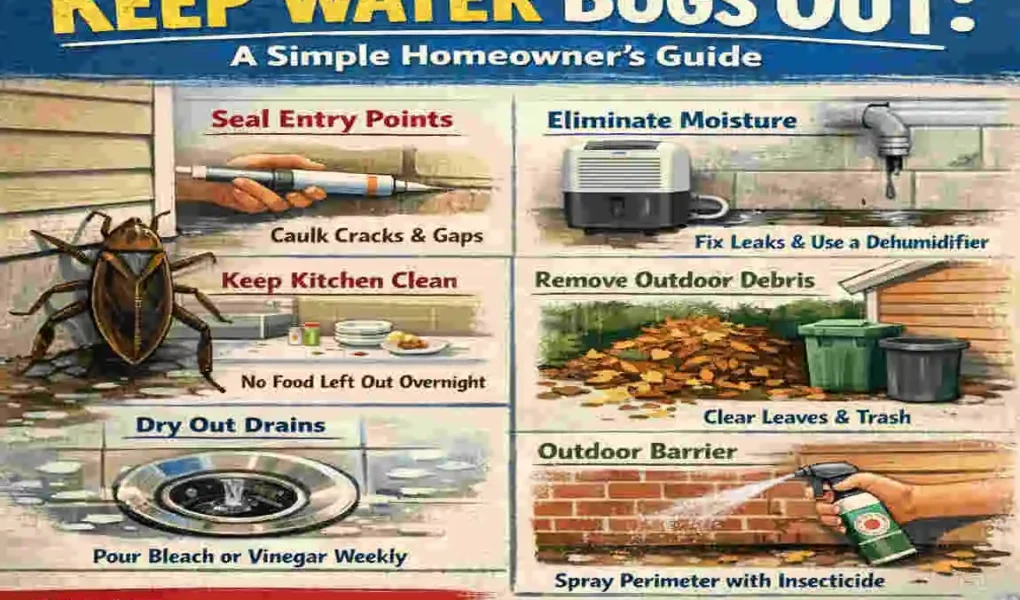
| Method | How to Do It | Why It Works |
|---|---|---|
| Seal entry points | Apply silicone-based caulk to cracks around doors, windows, pipes, and utility lines; add weatherstripping and mesh over vents | Blocks the main pathways water bugs use to enter your home |
| Eliminate moisture | Fix leaks, dry spilled liquids immediately, clean damp areas (bathtubs, hampers), ensure ventilation openings are dry | Water bugs are attracted to warm, moist air and standing water |
| Remove food sources | Keep dirty dishes out of the sink, store garbage in sealed containers, avoid keeping litter indoors overnight | Removes attractions that draw bugs inside |
| Clean gutters & exterior | Clear food debris and moisture from gutters; remove dead plants/leaf debris; don’t store woodpiles against exterior walls | Prevents buildup that attracts bugs near your home’s perimeter |
The term water bug is often used loosely. Some people mean true aquatic insects, while others use the phrase for large roaches that thrive in damp spaces. Either way, if you are seeing them indoors, the message is clear: your home is offering moisture, shelter, food, or easy access.
Understanding Water Bugs and Why They Enter Homes

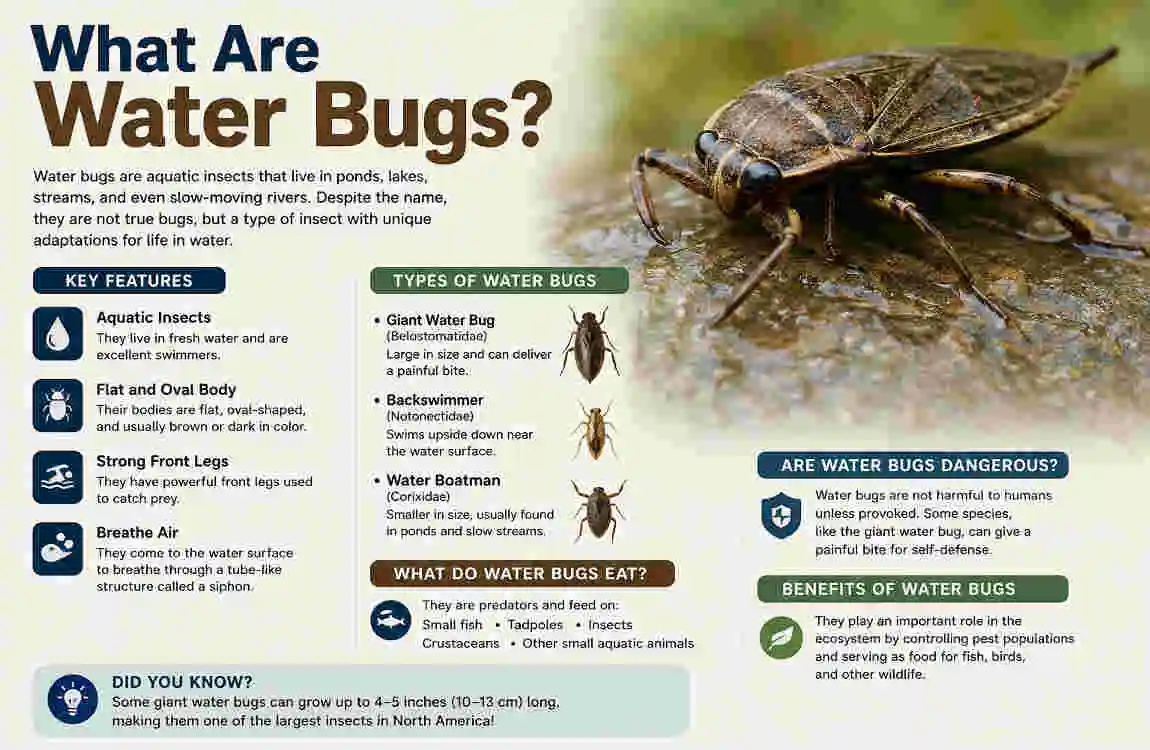
What Are Water Bugs?
The phrase water bug can mean different things depending on where you live. In everyday speech, many clean home use it to describe large, dark roaches, especially the American cockroach. Others may be talking about true water insects that live near ponds, drains, or standing water.
This confusion matters because treatment can differ. A true water insect may wander indoors by accident. A roach-like water bug, on the other hand, often comes inside because the environment supports it.
Most water bugs that homeowners notice indoors are large, flat-bodied, and brown to reddish-brown. They move quickly and prefer dark, damp places. They are often mistaken for standard cockroaches, and in many cases, that is exactly what they are.
Why Water Bugs Invade Homes
Water bugs do not enter homes randomly. They come inside because something attracts them.
The biggest reason is moisture. Leaky pipes, wet floors, damp basements, and humid bathrooms create ideal conditions for mould growth. These pests need water more urgently than they need food, so even a small leak can pull them in.
Food is another factor. Crumbs under appliances, greasy stovetops, open pantry items, and pet food left out overnight all make your home more appealing.
They also want shelter. During hot, cold, or rainy weather, homes provide protection. If they can find dark corners, cardboard boxes, and cluttered storage spaces, they are more likely to stay.
Finally, they look for breeding areas. A hidden, damp location with little disturbance provides the right conditions for them to reproduce.
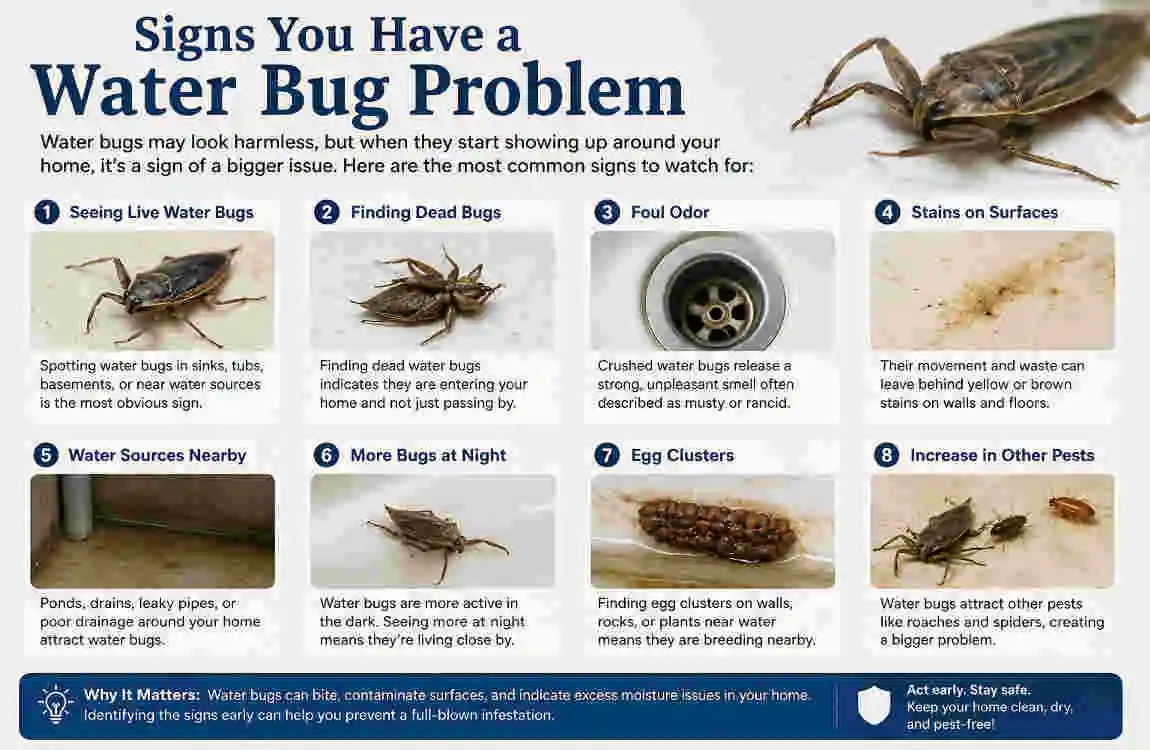
Common Signs of Water Bug Activity
Sometimes you see the bugs themselves. Other times, you only notice clues.
Look for these signs:
- Live sightings, especially at night
- Egg cases in hidden corners or behind appliances
- Droppings that look like tiny dark specks
- Musty or unpleasant odors in infested spaces
- Shed skins near damp areas
If you spot more than one of these signs, take action early. Waiting usually allows the problem to grow.
Where Water Bugs Commonly Hide Inside a House
Water bugs like dark, damp, warm, undisturbed places. That is why they tend to gather in very specific parts of clean home.
Kitchens
The kitchen is one of the top hiding spots. Water bugs often stay under sinks where plumbing leaks go unnoticed. They also hide behind refrigerators, stoves, and dishwashers because those appliances create warmth and collect crumbs and moisture.
Pantry spaces can also attract them, especially if food is stored in paper, cardboard, or loosely sealed packaging.
Bathrooms
Bathrooms offer almost everything water bugs want. They can stay near drains, behind toilets, under vanities, and inside cabinets where pipes create dampness. A bathroom with poor ventilation is even more attractive because humidity stays trapped longer.
Basements and Crawl Spaces
Basements and crawl spaces are common problem areas because they are often cool, dark, and damp. Water bugs can hide in corners, under storage bins, near water heaters, and around utility lines. If you store cardboard boxes there, you give them even more cover.
Outdoor Areas Near the Home
Many infestations begin outside. Gutters full of debris, wood piles near the wall, thick garden beds, mulch, and standing water all create the right environment for water bugs. From there, they only need a small crack or gap to move indoors.
Quick Reference Table: Common Hiding Spots and What to Check
AreaWhy Water Bugs Like ItWhat You Should Check
Kitchen Food, warmth, and moisture Under sink, behind appliances, pantry corners
Bathroom Drains, humidity, hidden plumbing Under cabinets, around toilet base, tub and sink drains
Basement Damp air and low activity Wall cracks, storage boxes, water heater area
Crawl space Moisture and darkness Standing water, vents, insulation issues
Exterior perimeter Easy shelter near entry points Gutters, mulch, wood piles, foundation gaps
How to Keep Water Bugs Out of House by Eliminating Moisture
If you want the most effective answer to how to keep water bugs out of house, start with moisture control. Water is often the main reason these pests stay.
Fix Plumbing Leaks Immediately
Even a slow drip can support pest activity. Check under sinks, behind toilets, around washing machines, and near your water heater. Pay attention to loose pipe fittings, sweating pipes, and cabinet floors that feel soft or damp.
A leak that seems minor to you may be a perfect water source for bugs. The faster you fix it, the less attractive that area becomes.
Do not forget places that are easy to ignore. Refrigerator water lines, dishwasher hoses, and basement plumbing can all leak quietly for weeks before you notice damage.
Improve Ventilation
Poor airflow allows damp air to linger. Bathrooms, laundry rooms, and basements are especially vulnerable. Use exhaust fans during and after showers. Run a fan in the laundry room if it tends to feel humid. Open windows when weather allows, especially after cooking or cleaning.
If a room always feels muggy, it is a sign that the air isn’t moving well enough.
Reduce Humidity Levels
Indoor humidity should generally stay in a moderate range, often around 30% to 50%. When moisture levels rise too high, pests and mould become more likely.
A simple humidity monitor can help you track problem areas. If your basement, bathroom, or utility room stays humid, a dehumidifier can make a big difference. Empty it regularly and keep it clean so it works effectively.
Remove Standing Water
Standing water gives water bugs exactly what they need. Check for puddles in the basement, water gathering near floor drains, plant trays holding extra water, and pet bowls left out overnight.
You do not need to make your home overly dry. You just need to remove unnecessary water sources that make it easy for pests to survive.
When homeowners ask how to keep water bugs out of house, the answer often begins here: fix leaks, dry damp spaces, improve airflow, and remove standing water. Without moisture, your home becomes much less appealing to them.
Seal Entry Points Around Your Home
Once you reduce moisture, the next step is to stop new bugs from coming in. Even the cleanest house can still have a pest problem if insects can easily enter from the outside.
Inspect Exterior Walls
Walk around the outside of your home and look closely at the walls and foundation. Small cracks, gaps around siding, and foundation openings can all serve as entry points. Water bugs do not need a large opening to get inside.
Pay special attention to where the foundation meets the ground, where pipes enter the house, and where older materials may have separated over time.
Seal Doors and Windows
Doors and windows are common weak spots. If daylight shows under a door, pests can probably get in. Add or replace door sweeps to close gaps at the bottom. Install clean home around doors and windows where air leaks are noticeable.
Use caulk around window frames and exterior trim to seal narrow spaces. These repairs also help with energy efficiency, so you get more than one benefit.
Protect Utility Openings
Openings around plumbing, cable, and gas lines, as well as HVAC penetrations, are often overlooked. These gaps may be hidden behind bushes, under decks, or inside utility areas.
Seal them with the right material for the opening size and location. The goal is to close access without damaging the utility line or blocking anything that needs ventilation.
Repair Damaged Screens
Torn window screens and broken vent covers create easy access points. Check window screens, attic vents, crawl space vents, and any other screened opening around the home. If the mesh is torn or loose, repair it quickly.
This is one of the simplest prevention steps, but it is also one of the most effective.
A home with fewer gaps is harder for pests to enter. When you combine sealing work with moisture control, you build a much stronger defense against water bugs in house.
Maintain a Clean Home to Prevent Water Bugs
Cleanliness alone will not solve every pest issue, but it removes many of the reasons bugs stay once they get inside. A clean home gives them fewer food sources and fewer hiding places.
Keep Kitchen Surfaces Clean
The kitchen should be cleaned daily, especially at night. Wipe counters, stovetops, and tables after meals. Clean spills right away, including grease splatter and sticky liquids.
Crumbs under small appliances matter too. A toaster tray full of crumbs or a sticky coffee area can feed pests for a long time. Sweep or vacuum regularly, especially along edges and under appliances.
Store Food Properly
Food storage plays a big role in preventing foodborne illness. Dry goods like cereal, flour, rice, and snacks should be stored in airtight containers rather than in paper boxes or loosely folded bags.
Pet food is another common issue. Store it in sealed containers and avoid leaving large amounts out overnight. The same goes for treats and bird seed if you keep them indoors.
Manage Trash Effectively
Garbage should not sit uncovered inside the home. Use trash cans with lids, empty them often, and clean the bins if food residue collects inside. Recycling should also be rinsed before storing it indoors.
If your outdoor trash area is messy, it can attract pests near the house, increasing the chance they will move inside.
Reduce Indoor Clutter
Water bugs love clutter because it gives them protection. Cardboard boxes, stacks of paper, unused grocery bags, and crowded storage areas make it easier for pests to hide undisturbed.
Try replacing cardboard storage with plastic bins when possible. Keep floors easier to inspect and clean. Organized spaces make it harder for bugs to settle in and easier for you to spot problems early.
A clean home does not need to be perfect. It just needs to be less welcoming to pests. Small daily habits can make a big difference over time.
Outdoor Prevention Strategies That Work

Many homeowners focus only on what happens inside. But strong water bug prevention starts outdoors. If you reduce outdoor shelter and moisture, you lower the chance that bugs will approach the house in the first place.
Keep Landscaping Trimmed
Bushes, shrubs, and tree branches should not touch your home. Overgrown plants create shade, retain moisture, and create easy pathways for pests to reach walls, windows, and rooflines.
Trim bushes back from the foundation. Cut branches that hang over the roof or rub against siding. The more open and dry the area around your home is, the less attractive it becomes.
Clean Gutters Regularly
Clogged gutters trap leaves, dirt, and standing water. That creates a damp environment near your roof and walls, where pests often gather.
Clean gutters seasonally, or more often if trees drop a lot of debris in your yard. Also make sure downspouts direct water away from the foundation instead of letting it collect near the house.
Move Firewood Away From Home
Firewood stacked against the house is a common mistake. It shelters pests very close to an entry point. Store wood in a dry area and keep it a reasonable distance away from the home whenever possible.
The same advice applies to extra lumber, yard debris, and unused pots or containers that collect water.
Improve Yard Drainage
Poor drainage keeps the soil around your home damp. That can attract pests and increase basement moisture simultaneously. If water pools after rain, address it with grading improvements, properly extended downspouts, or drainage solutions like a French drain, where appropriate.
Outdoor prevention is not complicated. It is about making the area around your home drier, cleaner, and more open.
Simple Outdoor Prevention Priorities
- Trim plants away from walls and windows
- Keep gutters clear and downspouts working
- Store firewood away from the clean home
- Remove yard clutter that traps moisture
- Fix drainage issues before they become chronic
Natural Remedies for Water Bug Control
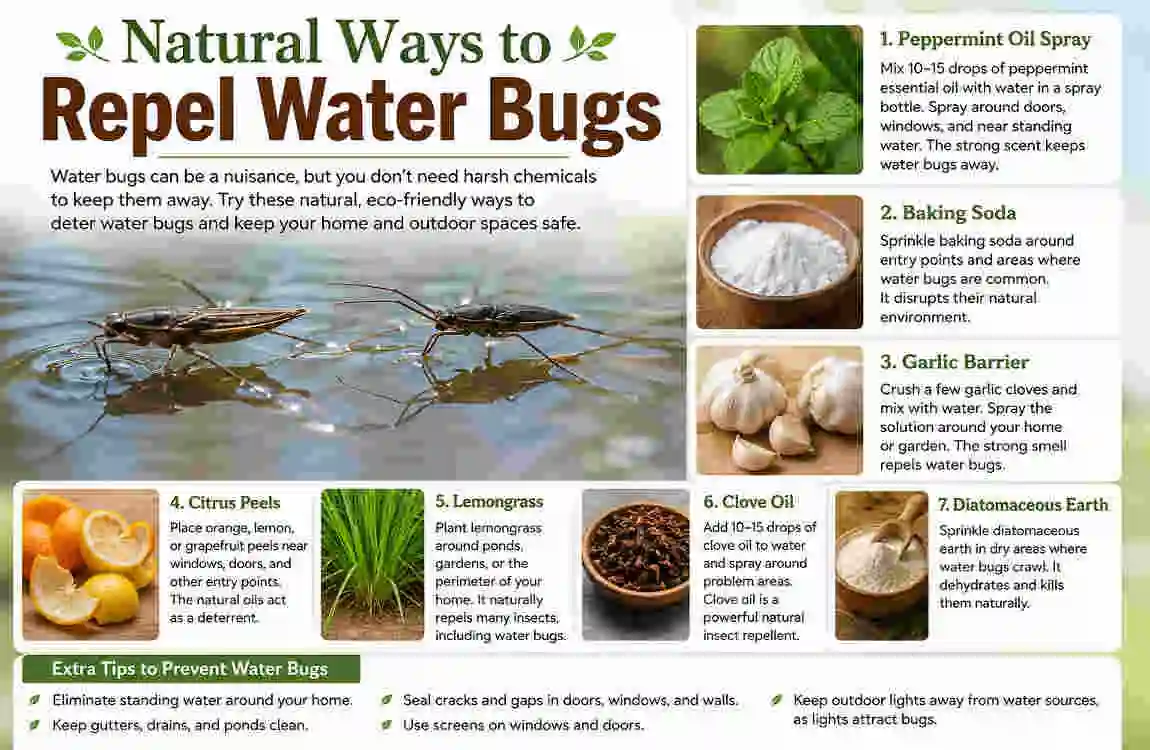
Some homeowners prefer to start with lower-toxicity options. Natural methods can help, especially for light activity, but they work best when combined with cleaning, sealing, and moisture control.
Essential Oils
Peppermint oil, lavender oil, and tea tree oil are often used as scent-based repellents. Some people spray diluted mixtures around sinks, baseboards, and entry areas.
These may temporarily discourage bugs, but they usually do not solve a real infestation on their own. Think of them as a support step, not a complete treatment.
Diatomaceous Earth
Diatomaceous earth is a fine powder that can damage the outer layer of certain insects, causing them to dry out. It is often used in cracks, behind appliances, or in dry hidden spaces.
Use it lightly. A thin layer works better than a heavy pile. Avoid applying it in wet places because moisture reduces its effectiveness.
Baking Soda and Sugar Mixtures
This is a common home remedy, but results are mixed. Sugar may attract pests, while baking soda is supposed to disrupt them. In reality, this method is less reliable than many people hope.
It may be worth trying in minor situations, but do not depend on it if you are seeing frequent activity.
Boric Acid Treatments
Boric acid is a stronger option often used for roach-like pests. It can be effective when placed in thin layers in hidden areas such as under appliances or behind cabinets.
Still, it must be used carefully. Keep it away from children, pets, food prep surfaces, and areas where powder can spread easily. Always follow label directions.
Natural, low-toxicity methods can help eliminate water bugs. Still, they work best as part of a comprehensive prevention plan.
Best Pest Control Products for Water Bugs
If cleaning and prevention are not enough, store-bought pest products may help reduce activity. The right choice depends on where the bugs are active and how serious the problem is.
Baits and Traps
Baits are useful because pests carry the treatment back to hiding areas. They are often effective for roach-like water bugs and can reduce populations over time.
Place baits in hidden areas where bugs travel, such as under sinks, behind appliances, and near utility spaces. Sticky traps can also help monitor activity and show where the problem is strongest.
Insecticide Sprays
Sprays can provide fast knockdown, especially when you see bugs directly. Indoor sprays may be used along baseboards, cracks, or specific hiding places. In contrast, outdoor barrier sprays can be applied around the clean home perimeter.
The downside is that sprays may only affect the bugs you hit or the surfaces you treat. They often work better as part of a larger plan.
Residual Treatments
Residual products continue working after application. They can offer longer-term water bug treatment in cracks, wall voids, and exterior entry zones. Some homeowners use professional-grade options, while others prefer to leave these treatments to licensed technicians.
Residual products can be highly effective when used correctly, but misuse can pose safety risks.
Safety Considerations
Always read the label before using any pest control product. Keep products away from children, pets, and food areas unless the label clearly allows that use. Never mix chemicals unless instructions specifically say it is safe.
The best pest control for water bugs balances effectiveness with safety. More product is not always better. Correct placement matters more.
When to Call a Professional Exterminator
Sometimes the smartest move is to bring in a professional. If you are seeing water bugs often, especially during the day, the problem may be bigger than it appears.
Signs of a Serious Infestation
Frequent sightings are a warning sign. So is rapid population growth, repeat activity after treatment, or bugs appearing in several rooms at once. Egg cases, strong odors, and activity in clean, dry areas may also suggest a deeper infestation.
Benefits of Professional Treatment
A professional can identify whether you are dealing with true water bugs, cockroaches, or another pest entirely. That matters because accurate identification leads to better treatment.
They can also create a plan tailored to your home, including recommendations for moisture control, exclusion work, and targeted treatment options. This saves time and often prevents repeated trial-and-error.
What to Expect During a Pest Inspection
During an inspection, the technician will check problem areas, look for entry points, identify moisture issues, and assess the level of infestation. You should also expect treatment recommendations and guidance on what you can do between visits.
If home methods are not working, do not wait too long. Early professional help can prevent a manageable issue from becoming a major one.
Common Mistakes Homeowners Make
Even with good intentions, many clean home make choices that keep the problem going.
Ignoring Small Leaks
A tiny leak under the sink may not seem urgent, but pests see it differently. Small moisture sources can sustain them for a long time.
Using Too Much Pesticide
More spray does not mean better results. Overusing pesticide can create safety problems and still fail to solve the root issue.
Neglecting Outdoor Maintenance
If you ignore gutters, overgrowth, and standing water outside, bugs will keep gathering near the house.
Failing to Address Root Causes
This is the biggest mistake of all. If you only kill visible bugs but leave moisture, food, and entry points unchanged, they often come back.
Year-Round Water Bug Prevention Checklist

Prevention works best when you treat it as a routine, not a one-time fix.
Spring Tasks
Check for leaks, inspect screens, clean gutters, and look for foundation cracks after winter weather.
Summer Tasks
Monitor humidity, trim landscaping, and watch for increased pest activity during hot weather.
Fall Tasks
Seal gaps before cooler temperatures drive pests indoors. Clear leaves and debris from gutters and around the foundation.
Winter Tasks
Inspect basements, crawl spaces, and utility areas for hidden dampness. Make sure indoor ventilation is still working well.
Monthly Home Inspection Routine
Use this simple monthly checklist:
- Check under sinks for leaks or dampness
- Inspect baseboards and corners for droppings or egg cases
- Clean behind appliances and remove crumbs
- Look around doors and windows for gaps
- Walk the outside perimeter for standing water or overgrowth
Frequently Asked Questions
What attracts water bugs to a house?
The biggest attractors are moisture, food, and shelter. Leaks, humidity, crumbs, trash, clutter, and easy entry points all make a home more inviting.
How do I permanently get rid of water bugs?
Permanent control usually requires a combination of steps. Fix leaks, dry damp areas, seal cracks, store food properly, reduce clutter, and use targeted treatments if needed. Lasting results come from removing what attracts them.
Are water bugs dangerous to humans?
Most are not dangerous in the sense of attacking people, but they can still create health and sanitation concerns. They may contaminate surfaces and food, and heavy infestations can worsen indoor hygiene.
Can water bugs come up through drains?
Yes, some can enter through drains or gather near them, especially in damp plumbing areas. Keeping drains clean and addressing moisture around them can help reduce activity.
What smell do water bugs hate?
Some homeowners report that peppermint, lavender, and tea tree scents help repel them. These smells may discourage activity, but they usually do not solve a larger infestation on their own.
Does keeping lights off help prevent water bugs?
Turning lights off alone will not prevent them. While some pests are more active in the dark, the main issues are still moisture, food, shelter, and access.
How long does it take to eliminate a water bug infestation?
That depends on how severe the problem is. Mild issues may improve in days or weeks once you fix moisture and sanitation problems. Larger infestations can take longer and may require professional treatment.
What is the best way to keep water bugs out of house?
The best way to keep water bugs out of the house is to combine moisture control, sealing, sanitation, outdoor maintenance, and targeted treatment. No single step works as well as a full prevention plan.