Residential pools are more popular than ever. More families are turning backyards into private places to relax, exercise, and spend time together. A pool can add comfort and value to a home, but only when it is planned correctly.
That is why pool placement matters so much. A pool is not just a feature you place wherever there is space. It affects safety, drainage, comfort, maintenance, privacy, and even your home’s structure. Understanding how far should pool be from house is critical for both safety and convenience.
Why Pool Placement Matters

Choosing where to install a pool is one of the biggest decisions in the entire project. Many people focus on pool style, tile colour, or decking first, but the location comes first. If the pool is placed in the wrong spot, you may later face water damage, poor drainage, limited access, or code violations.
Safety Concerns
The biggest reason pool placement matters is safety. A pool that sits too close to the house can create problems that are easy to overlook at first. Water splashing against walls, doors, or windows may seem minor, but over time it can lead to damage. If water consistently collects near your foundation, it may weaken the area around your home.
There is also the issue of family safety. If the pool is too close to main doors or busy walkways, children and guests may move in and out of the area without enough space to walk safely. Crowded layouts can increase the risk of slips and falls. This is especially important if your backyard is used often for gatherings.
A well-planned pool also reduces hidden risks. It gives you space for fencing, alarms, steps, and other safety features. It also helps keep rescue access clear in the event of an emergency. When you think about pool placement safety, distance becomes more than a design choice. It becomes a protection measure.
Aesthetic and Functional Considerations
A pool should look like it belongs in your yard. Proper spacing helps create a better visual balance between the home, the pool, and the surrounding landscape. If the pool is squeezed too tightly against the house, the yard can feel cramped. If it is placed too far away, it may feel disconnected from the rest of the outdoor living area.
The right placement also improves how you use the space. You may want room for a patio, lounge chairs, a grill, or a dining area. You may want a clear path from the kitchen or back door to the pool. You may want a comfortable transition between the house and the water. All of that depends on spacing.
Light and shade matter too. A pool placed in the wrong area may stay cold for too long or sit in deep shade where algae becomes harder to manage. A smart layout supports a relaxing atmosphere and keeps the space usable throughout the day.
Compliance with Local Building Codes
Local rules are another major reason placement matters. Many cities, towns, and counties have backyard pool regulations that govern where a pool can be built. These rules often mention how close a pool can be to a home, property line, septic system, or utility line.
Some places allow a pool to sit fairly near a house, while others require a much larger buffer. That is why there is no one-size-fits-all answer. How far the pool should be from the house depends on where you live and what kind of pool you are building.
Even if a placement seems ideal from a design standpoint, it may not be legal. If you ignore code requirements, you may face delays, fines, or even the cost of moving parts of the project. That is why checking local rules early is one of the smartest steps you can take.
Factors to Consider When Deciding Pool Placement
Choosing a pool location takes more than measuring open space. You need to think about what is under the ground, around the property, and above it. The best location balances safety, function, appearance, and long-term maintenance.
Local Building Codes and Permit Requirements
Before anything else, research your local building codes and permit rules. This is one of the most important steps because every area has its own standards. A municipality may require a set distance from the house, property line, septic system, or easements. It may also require fencing, self-closing gates, or special drainage plans.
You should never assume that rules in one neighborhood apply everywhere. Even homes in the same city can fall under different requirements depending on zoning or lot size. Some communities are strict about pool setbacks. Others are more flexible but still require formal approval.
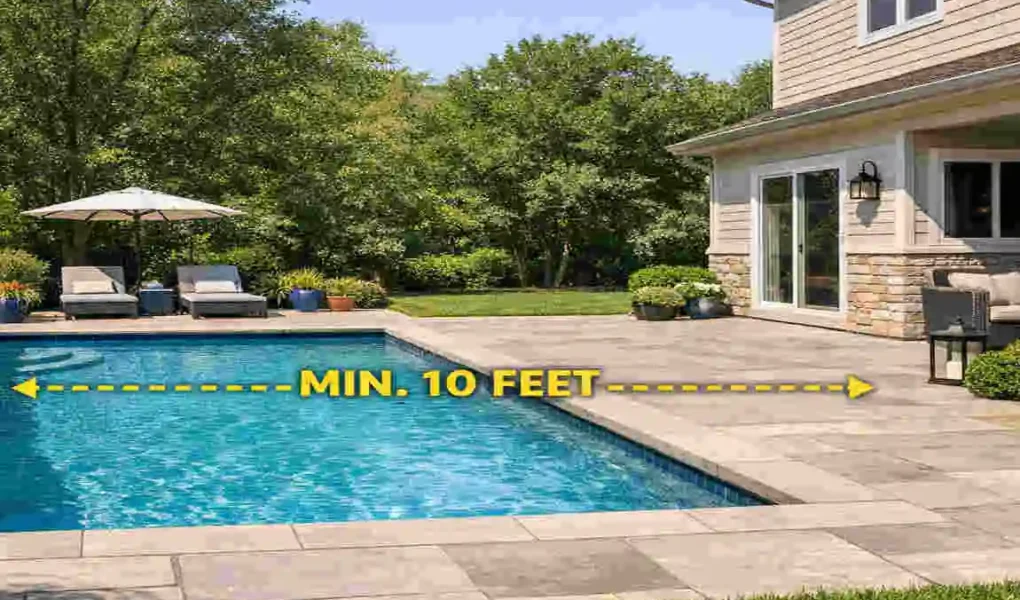
A common example might be a rule that says, “Pools must be at least 10 feet from the house.” In other places, the required distance may be 15 feet, 20 feet, or more. Some rules may also differ based on whether the pool is in-ground or above-ground.
That is why asking, “How far should the pool be from the house?” is really the same as asking, “What does my local code allow?” If you skip this step, your project may run into trouble later.
If you plan to hire a contractor, ask them to review the code requirements with you. If you are doing the planning yourself, contact your local building department before you finalize the design. It is much easier to change the plan on paper than to move a partially built pool.
Soil Quality and Drainage
The ground under your pool is just as important as the space around it. Soil conditions can make or break a pool project. If the soil is unstable, too sandy, too soft, or too clay-heavy, the pool may shift over time. That can lead to cracking, sinking, or uneven settling.
Drainage is another key factor. Water naturally moves across a yard based on slope and soil type. If your pool is placed where water already flows toward the house, you may create a bigger moisture problem near the foundation. That is why the answer to how far should pool be from house often depends on how water moves through the site.
A good pool location helps direct water away from the home instead of toward it. You want rainwater, splash water, and runoff to flow safely into the proper drainage area. If the yard holds water after storms, the pool should not be placed in the lowest spot unless proper grading and drainage systems are added.
Soil quality can also affect the installation cost. Some soils require more preparation, compaction, or reinforcement before a pool can be built safely. In some cases, a seemingly perfect spot may not be practical because the ground cannot adequately support the structure.
Here is a simple comparison of major placement factors:
FactorWhy It MattersWhat Can Go Wrong If Ignored
Soil stability Supports the pool structure Cracking, shifting, sinking
Drainage patterns Keeps water away from the house Foundation moisture, pooling
Utility location Avoids dangerous digging Line damage, safety hazards
Sunlight Helps heating and water balance Cold water, algae growth
Wind exposure Affects comfort and evaporation More debris, faster water loss
Privacy Improves comfort and usability Feeling exposed or crowded
Traffic flow Supports easy movement Cluttered and unsafe layout
This kind of planning may feel detailed, but it protects your investment. A beautiful pool is only worth it if it performs well over time.
Proximity to Utilities and Septic Systems
You also need to check what lies below the yard. Utility lines and septic systems can greatly affect placement. Pools should be installed away from gas, electric, water, and sewer lines whenever possible. Digging near these lines can be dangerous and expensive.
Some utilities run deeper than others, and some may not be obvious at first glance. You should always verify line locations before excavation begins. Even a small mistake can cause service interruptions, safety hazards, or costly repairs.
Septic systems deserve special attention. If your property uses a septic tank or drain field, a pool placed too close can interfere with the system’s function. Heavy construction can damage pipes or compact the soil over the drain field. Water from the pool area may also affect the septic system.
This is another reason the pool distance from home must be considered alongside the rest of the property. It is not just about the house wall. It is about the entire underground layout.
If you are unsure where your utilities are located, bring in a professional before digging. A little extra planning can prevent major problems later.
Sunlight and Shade Considerations
Sunlight plays a bigger role in pool placement than many homeowners expect. A pool that gets good sun during the day often stays warmer and feels more inviting. Sunlight can also help reduce some algae growth, though it does not replace proper cleaning and chemical balance.
That said, too much shade can make the pool feel cooler and keep it damp for longer. Wet areas that stay shaded may also encourage debris buildup. Leaves, pollen, and moisture can make maintenance harder.
The trick is to balance sunlight and shade. Think about where the house sits in relation to the sun. A yard that gets strong afternoon sun may be ideal for one pool layout, while another lot may benefit from partial shade to keep the water from overheating.
You should also think about comfort. A little shade can be useful for rest areas, seating spaces, and summer breaks. Pergolas, umbrellas, and nearby trees can all add value when placed thoughtfully.
When you ask how far should pool be from house, you should also ask how the home blocks or reflects sunlight. The house itself can create useful shade at certain times of day. That may help with comfort, but too much shadow near the water can become a downside.
Wind Protection and Privacy
Wind can affect your pool more than you might think. Strong breezes cool the water faster and increase evaporation. Wind also blows leaves, dirt, and dust into the pool, requiring more cleaning and maintenance. In some yards, wind direction may even affect how comfortable the pool area feels daily.
That is why many homeowners try to place the pool in a spot that gets at least some natural wind protection. The house itself, a fence, hedges, or a privacy wall can all help reduce exposure. A protected pool area often feels calmer and more pleasant.
Privacy is another important part of the experience. Most people want a pool area that feels like a retreat, not a stage. The right distance from the house, the neighbouring fences, and the nearby windows can help create that sense of comfort.
You can improve privacy with landscaping, tall shrubs, decorative fences, screens, and pergolas. Just be careful not to block too much light or create clutter around the pool edge. Privacy should enhance the space, not overwhelm it.
Accessibility and Traffic Flow
A pool needs room around it. People should be able to walk, sit, carry towels, and move furniture without feeling crowded. You should also consider how people will reach the pool from the kitchen, the back door, or the entertainment area.
If the pool is placed too close to the house, traffic can become tight and awkward. Guests may gather near doors, block access points, or create wet pathways, making entry and exit less safe. On the other hand, if the pool is too far away, it may feel isolated from the rest of your backyard.
The best layout supports smooth movement. It should feel natural to go from the house to the pool and from the pool to seating areas, storage, and outdoor dining spaces. Good traffic flow makes the whole backyard easier to enjoy.
You should also think about maintenance access. Pool equipment, cleaning tools, and service workers all need room to move. A cramped space can make repairs more difficult and lead to frustration over time.
How Far Should Pool Be from House? A Detailed Answer

Let’s get to the question most homeowners want answered first: how far should pool be from house?
General Guidelines for Pool Distance
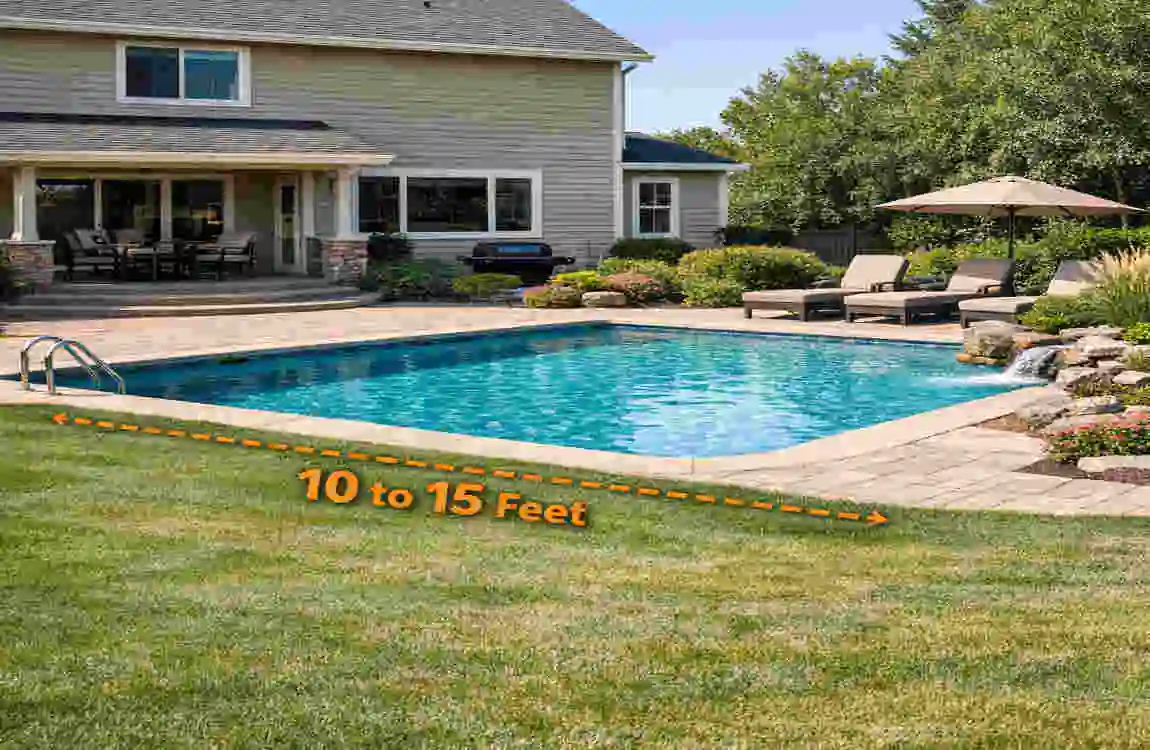
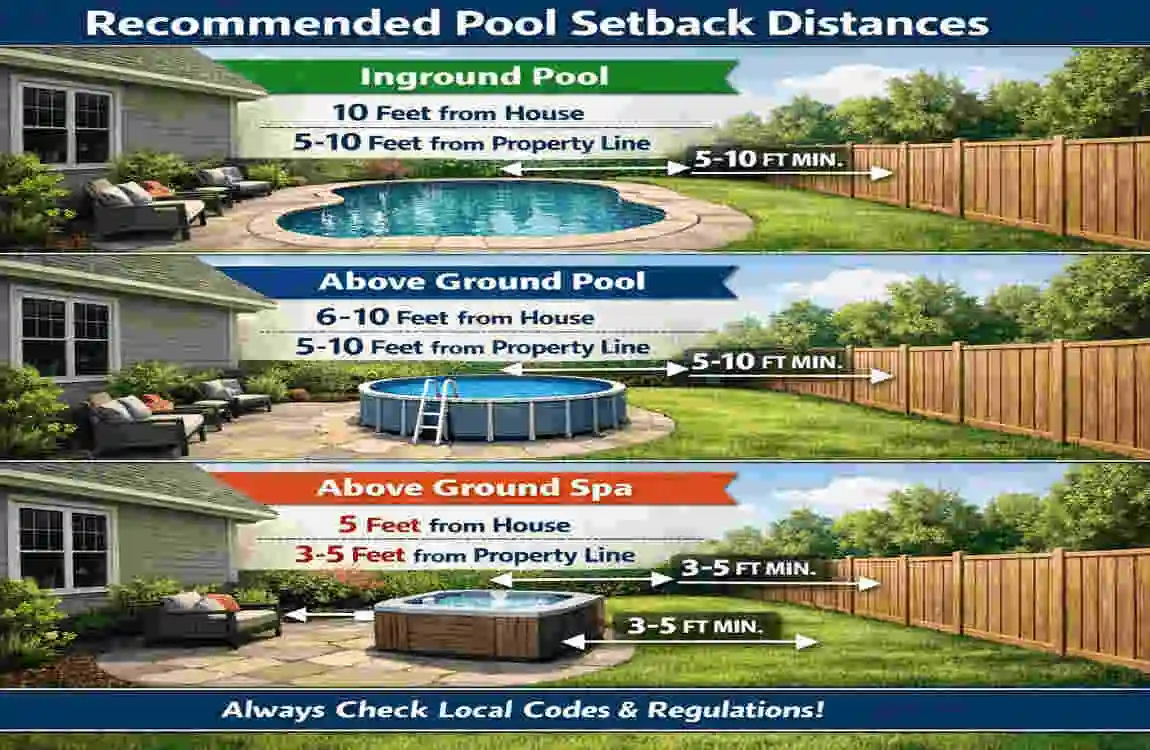
A common rule of thumb is to place the pool about 10 to 15 feet from the house. This is not a universal rule, but it is a helpful starting point for many properties. That amount of space often gives enough room for drainage, access, safety features, and design flexibility.
For some homes, a larger distance is better. For others, a slightly tighter design may be allowed if local codes and site conditions support it. In-ground pools usually need more careful planning than above-ground pools because they create a more permanent change to the landscape and foundation area.
Above-ground pools may sometimes be placed closer to the house than in-ground pools, depending on local rules and the height of the structure. Still, closeness should never replace safety. Even an above-ground pool can cause problems if it blocks access, creates splashing, or sits too close to the foundation.
So while how far a pool should be from the house often falls in the 10- to 15-foot range, the real answer depends on your property, local regulations, and the type of pool you want.
Factors That May Affect the Distance
Several things can change the ideal spacing.
Soil stability is one of them. If the ground is soft or prone to movement, you may need more separation or extra support to protect the house.
Water table levels matter too. In areas with a high water table, placing a pool too close to the home may increase moisture pressure around the foundation. That can create long-term concerns.
Pool size and design also play a role. Larger pools need more room for safe movement, equipment access, and surrounding decking. A compact plunge pool may fit differently than a full-size family pool.
Regional weather affects placement as well. In rainy areas, drainage becomes even more important. In hot, sunny regions, shade and evaporation matter more. In windy regions, protection from blowing debris may shape the best location.
This is why two homeowners can ask the same question and get different answers. How far should pool be from house is not a fixed number everywhere. It is a design decision shaped by the site itself.
Legal Considerations
Legal rules can be even more important than personal preference. Many local building departments have setback laws that define the minimum distance between a pool and a home. There may also be rules about fences, gates, electrical equipment, and required clearances.
You may also need approval for grading, drainage changes, or deck construction. If your design affects stormwater flow or touches a protected easement, you may need additional review.
Failing to follow these rules can create real consequences. You may be told to stop construction. You may have to make expensive changes. In the worst cases, you could be forced to remove part of the project.
That is why it pays to ask the question early and verify everything before work begins. You do not want to finish a pool and then discover that backyard pool regulations were not followed.
Common Mistakes to Avoid When Choosing Pool Placement
Many pool problems start with simple planning mistakes. Some are easy to prevent if you know what to look for.
Placing the Pool Too Close to the House
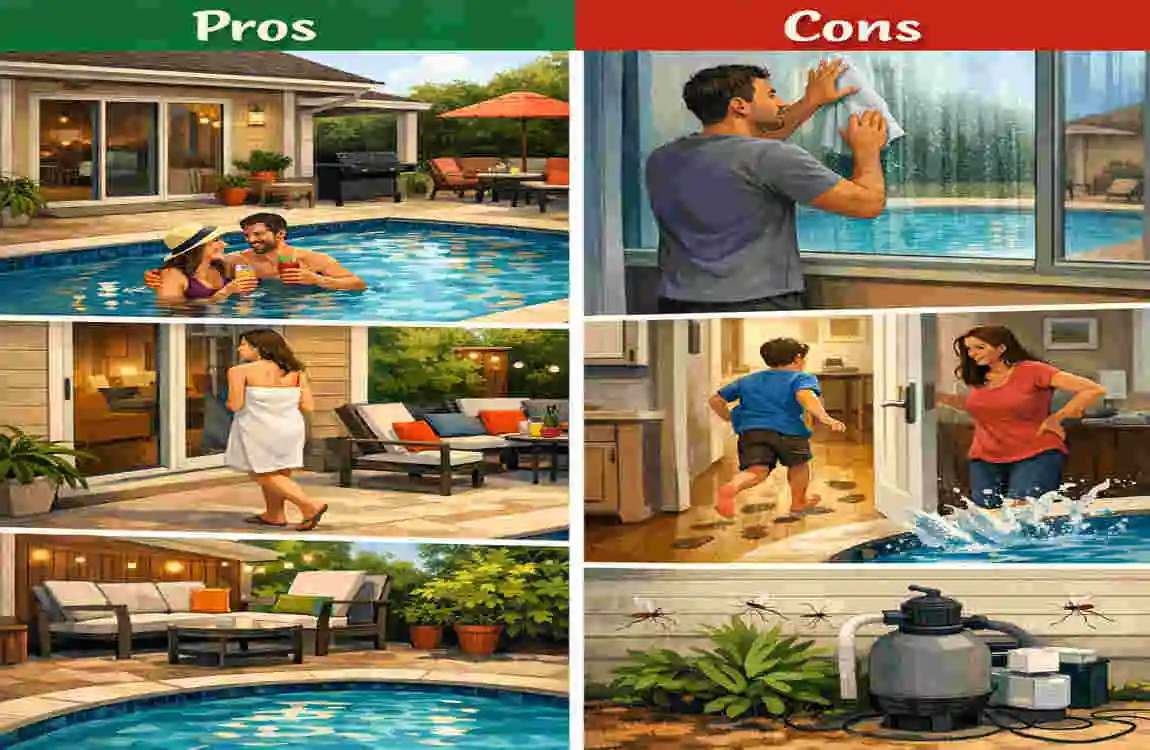
This is one of the most common errors. A pool that sits too close to the house may seem convenient at first, but it can lead to water seepage, splash damage, and a cramped layout. It may also make it hard to add fencing or walkways later.
If you are not sure how far the pool should be from the house, do not assume that closer is better. The convenience of walking a few extra steps is usually worth the safety and maintenance benefits of better spacing.
Ignoring Drainage and Slope Issues
Many homeowners focus on appearance and forget about water movement. If the yard slopes toward the house, rainwater and pool splash may collect near the foundation. That can create moisture issues over time.
Poor drainage can also leave your pool area muddy, slippery, or uneven. You want the ground to stay stable and dry where it should. This is why proper grading matters so much.
Overlooking Utility Lines and Septic Systems
Digging without checking underground lines is a dangerous mistake. Gas lines, electric lines, water pipes, and septic components can all be damaged if you do not plan carefully. Repairs can be expensive and disruptive, and some damage can be dangerous right away.
Before you build, confirm the utility layout. That small step can save you from major setbacks.
Not Accounting for Future Landscaping Needs
Many homeowners only think about the pool itself. Later, they wish they had left room for trees, patio furniture, privacy screens, or garden beds. Once the pool is built, changing the layout becomes much harder.
If you think you might want an outdoor kitchen, extra seating, or a fire feature later, plan for that now. The pool should work with your plans, not against them.
Failing to Plan for Decking or Fencing Requirements
Decking and fencing are not optional details to leave for later. They affect safety, access, and compliance. If you place the pool in a spot that leaves no room for these features, you may have to redesign the entire area.
A good pool layout should include enough space for safe walking areas, barriers, and entry points. That helps the yard feel complete and secure.
Tips for Safe and Strategic Pool Placement

Good pool placement is not just about rules. It is about creating a space you will enjoy for years. Here are some smart ways to approach the project.
Collaborate with Professionals
A licensed pool builder, contractor, landscape designer, or engineer can save you a lot of trouble. These professionals understand soil, codes, drainage, and construction challenges. They can help you determine how far the pool should be from the house in a way that fits your specific lot.
A professional can also spot issues that might not be obvious to you. For example, they may notice grade changes, poor runoff, hidden utility concerns, or access problems. That kind of insight is valuable before construction starts.
Plan for the Long Term
Think beyond the pool itself. Ask yourself how the backyard may change over time. Will you add a patio later? Do you want space for a garden, a play area, or an outdoor kitchen? Will your family’s needs change in a few years?
A pool that feels perfect today should still feel practical later. Long-term planning helps you avoid a layout that becomes cramped or awkward after the first phase is complete.
Invest in Safety Features
Every pool should include strong safety features. Fences, self-closing gates, pool alarms, and covers all add protection. Even if the pool is placed at the ideal distance from the house, safety layers still matter.
These features are especially important if you have children, guests, or pets. The more accessible your backyard is, the more important it is to build safeguards into the design.
Maximize Energy Efficiency
Placement also affects cost. A pool that gets too much shade may require more heating. A pool in a windy spot may lose heat faster and require more water replacement due to evaporation. A poor location may also increase debris, which means more cleaning and maintenance.
Try to place the pool where it gets helpful sun, has some wind protection, and is easy to access for equipment. Small choices like these can lower long-term operating costs.
FAQs About Pool Placement
What is the minimum distance a pool should be from a house?
There is no single universal answer. In many places, a common starting point is 10 to 15 feet, but local rules may require more or allow less depending on the pool type and property conditions. Always check your local building department before finalizing the design.
Can I place a pool closer to my house if it’s above-ground?
Sometimes, yes. Above-ground pools may offer greater flexibility due to their design, but they still need to comply with local codes and safety rules. Even if the pool can be placed closer, you still need enough room for access, fencing, and maintenance.
How do I determine if my property is suitable for a pool?
Start by looking at the land itself. Check the slope, drainage, soil type, and available space. Then find out where utility lines and septic systems are located. A professional can help you review the site and identify issues before you spend money on construction. This is one of the best ways to determine how far the pool should be from the house for your specific lot.
Are there any landscaping ideas to enhance the placement of the pool?
Yes. Landscaping can make the pool feel more private, balanced, and inviting. You can use shrubs, ornamental grasses, pavers, pergolas, or low walls to shape the area. Just make sure the landscaping does not block access, collect too much debris, or interfere with drainage.
| Aspect | Key Considerations | Recommended Distance/Tip |
|---|---|---|
| Distance from House | Prevent structural damage and ensure safety | Minimum 10-15 feet away from the house |
| Local Building Codes | Follow municipal rules for pool placement | Check with local authorities before planning |
| Soil and Drainage | Avoid unstable soil and ensure proper water drainage | Assess soil quality; maintain good drainage |
| Utilities and Septic | Keep clear of gas, water, electrical lines, septic | Consult utility maps; maintain safe buffer zones |
| Sunlight Exposure | Maximize pool heating and reduce algae growth | Place pool where it gets ample sunlight |
| Wind and Privacy | Protect from strong winds and ensure privacy | Use landscaping or fencing as windbreaks/privacy screens |