That is exactly why roof terrace garden house design is becoming one of the most exciting home trends in 2026. More homeowners now want a quiet place to breathe, relax, grow plants, and enjoy nature without leaving the city. When your ground space is limited, the roof becomes an opportunity.
A well-designed rooftop terrace can do much more than look beautiful. It can lower heating costs, improve comfort, create a peaceful escape, and even increase your home’s value. It can become your morning coffee spot, your evening retreat, your mini farm, or your favorite place to host friends.
The best part is that there is no single right way to build it. Some people love a calm Zen retreat with gravel and bamboo. Others want a lush tropical setting full of plants. Some need a practical family space. Others dream of a stylish rooftop lounge.
Why Roof Terrace Garden House Design Is Trending
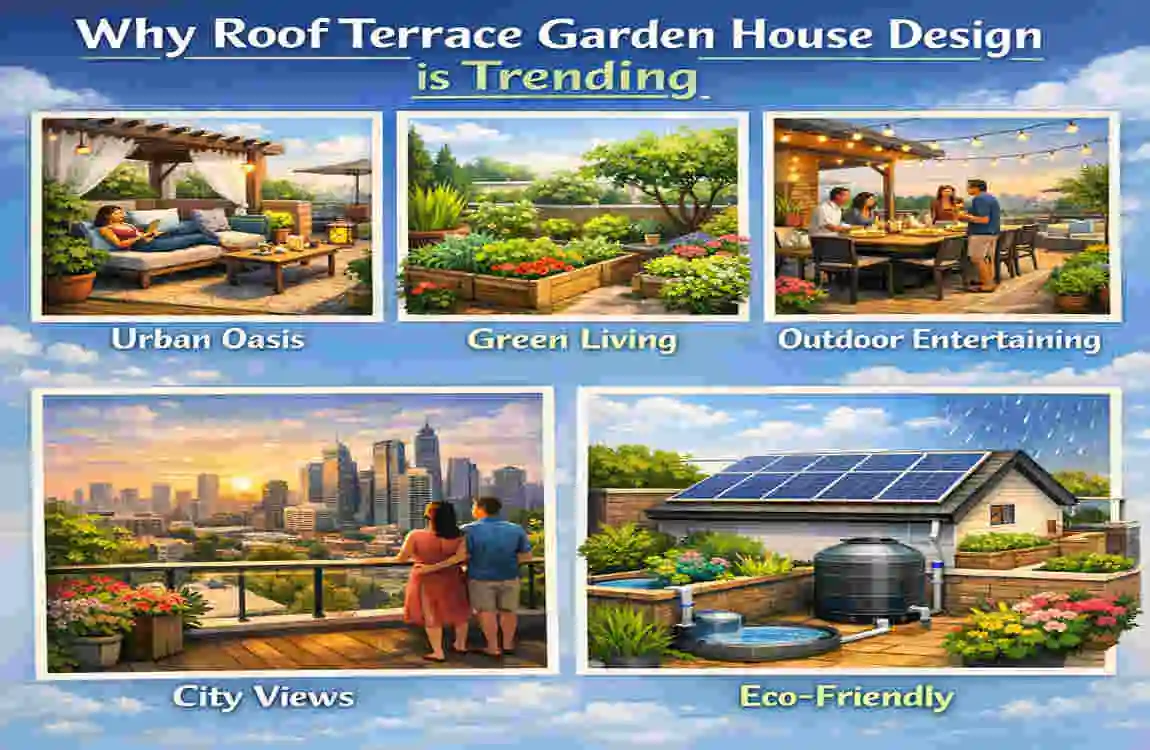
Urban living is pushing people upward.
In many cities, open outdoor space is hard to find. Houses are built closer together, apartments have smaller balconies, and many homeowners feel boxed in by concrete. That is why rooftops are no longer just a structural part of the house. They are now a valuable lifestyle space.
A smart roof terrace garden house design helps you make use of an area that often sits empty. Instead of letting your rooftop collect dust, heat, or clutter, you can turn it into a place that feels alive and useful.
This trend is especially strong in dense urban areas where people want both privacy and nature. A rooftop terrace offers both. You are above the street noise, away from heavy foot traffic, and closer to open sky.
Eco-friendly living is shaping design choices.
Homeowners in 2026 care more about sustainability than ever. They want homes that feel better and perform better. That is one reason why urban rooftop gardens and modern roof terrace landscaping are gaining attention.
Plants on rooftops can help reduce surface heat. Planters and green layers can also improve insulation, helping reduce indoor temperature swings. In simple terms, your house may stay more comfortable, and you may rely a little less on cooling systems.
People also love the idea of growing herbs, vegetables, and pollinator-friendly plants. Even a small rooftop can support eco-conscious living when it is planned well.
Biophilic design is now a lifestyle, not just a trend.
You have probably noticed how modern homes now bring nature indoors and outdoors. This approach is called biophilic design, but the idea is simple: people feel better when they stay connected to natural elements like plants, light, air, wood, and water.
A rooftop garden fits perfectly into that idea.
When you add greenery, natural textures, and comfortable seating, your terrace becomes more than a decorative feature. It becomes a space that supports better rest, focus, and mood. Many homeowners say even a short time spent around plants helps them feel calmer after a busy day.
It can improve property appeal and value.
A beautiful terrace house garden design often stands out in the real estate market. Buyers and renters notice outdoor features, especially in cities where private open space is rare.
Many property professionals believe well-designed outdoor upgrades can bring a strong return, especially when they combine beauty and function. A rooftop that includes seating, lighting, planters, and low-maintenance landscaping can make your home feel more Premium and more complete.
It works for many lifestyles.
One of the biggest reasons this trend keeps growing is flexibility. A sustainable rooftop oasis can serve many roles at once:
- A quiet reading area
- A small dining terrace
- A herb and vegetable garden
- A child-friendly outdoor corner
- A stylish entertainment space
In other words, the roof terrace garden house design is not just trendy. It is practical, personal, and future-ready.
Essential Planning for Roof Terrace Garden House Design
Before you buy planters or furniture, you need a good plan. The success of your rooftop garden depends on what happens before the styling begins.
Assess your roof’s feasibility.
This is the first and most important step.
Not every roof can handle the same amount of weight. Soil, large pots, water features, pergolas, furniture, and people all add load. Before starting your roof terrace garden house design, ask a structural professional or contractor to inspect the roof.
You also need to check waterproofing and drainage. Plants need water, but standing water can damage your roof over time. A proper drainage system helps prevent leaks, mold, and slippery surfaces.
Wind is another major factor. Rooftops usually face stronger winds than ground-level gardens. That means lightweight furniture, weak trellises, and delicate plants may struggle if you do not secure them correctly.
Sun exposure matters too. Some rooftops get full sun all day, while others receive partial shade because of nearby buildings. This affects the types of plants you should choose.
A strong start saves money, protects your home, and helps your terrace last for years.
Budget breakdown: from simple to luxurious
The good news is that you do not need a huge budget to create a beautiful space. A small and thoughtful setup can still look amazing. The key is to match your goals with your budget.
Here is a simple guide:
Budget Level, Estimated Cost, What You Can Include, Best For
Basic $500–$1,500 Grow bags, simple planters, herbs, outdoor rug, basic seating, string lights , for beginners and small rooftops
Mid-Range $1,500–$5,000 Raised planters, weatherproof furniture, decorative lighting, irrigation basics, privacy screens. Most urban homeowners
Premium $5,000–$10,000+ Custom decking, pergola, built-in seating, large planters, feature lighting, water elements , Luxury rooftop makeovers
A low-cost roof terrace garden house design can still feel polished if you focus on three things: a clear layout, healthy plants, and a limited color palette.
A larger budget gives you more freedom with materials and custom features. But even then, it is smart to invest first in structural safety, waterproofing, and long-term durability.
Tools, permits, and practical needs
Depending on your city, you may need approval for structural changes, pergolas, fixed shade structures, or plumbing work. If you live in a dense urban area, such as Lahore, always check local building regulations before making permanent changes.
You will also need the right basic tools. For many terrace projects, that means pruning shears, hand trowels, gloves, watering equipment, a moisture meter, sturdy planters, and lightweight soil mix.
For plant selection, choose varieties that match your sunlight, wind level, and maintenance routine. If you know you cannot water every day, do not design a plant-heavy landscape that requires constant care.
A simple rooftop planning checklist
Before you begin, walk through these steps:
- Check the structure and load capacity
- Inspect waterproofing and drainage
- Measure the full terrace area
- Track sunlight and shade patterns
- Set a realistic budget
- Choose a design style
- Pick plants for your climate
- Plan seating, storage, and lighting
- Review local permits if needed
- Start small if this is your first rooftop garden
This planning stage may feel less exciting than shopping for furniture. Still, it is what makes your final roof terrace garden house design both beautiful and safe.
Stunning Roof Terrace Garden House Design Ideas
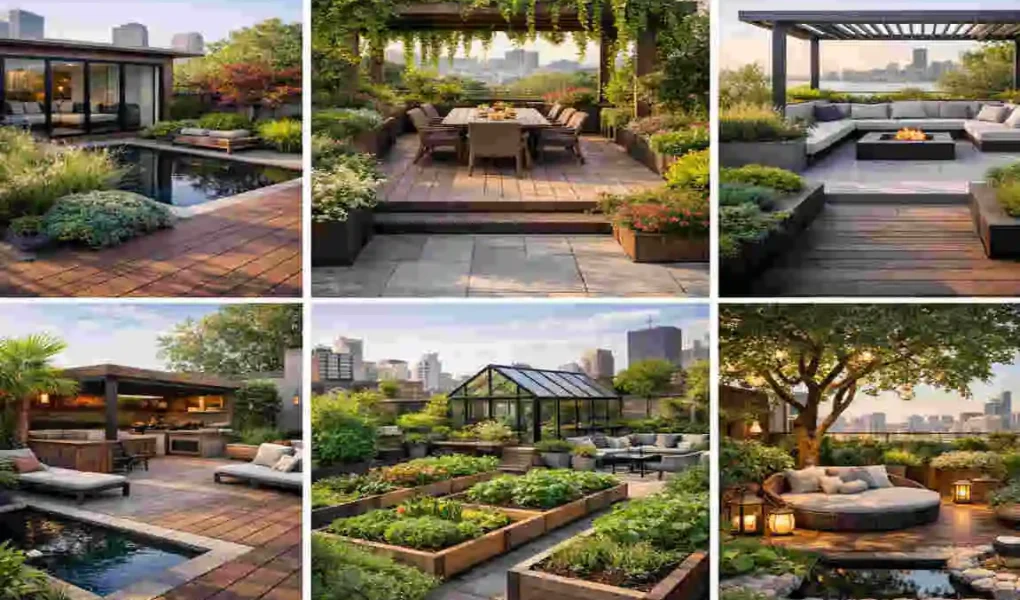
Below are seven ideas you can adapt to your space, budget, and lifestyle. Each one offers a different mood and function, so you can choose the style that feels most like home.
Minimalist Zen Rooftop Retreat
If you want calm, simplicity, and visual balance, this style works beautifully. A Zen-inspired roof terrace garden house design uses clean lines, soft textures, and a limited palette. Think bamboo screens, neutral planters, smooth pebbles, gravel paths, and sculptural plants like succulents or small ornamental grasses.
Start by keeping the layout open. Do not overcrowd the terrace. Let space do some of the design work. Add one low seating area with cushions in earthy shades. Use wood or stone finishes to keep the look grounded and natural.
For planting, choose low-maintenance options. Succulents, sedum, aloe, dwarf palms, and snake plants often work well in hot and sunny conditions. A slim water bowl or stone feature can bring a soft sense of movement without taking up much room.
This design suits busy homeowners who want peace without heavy maintenance. If your rooftop feels chaotic or exposed, this approach can instantly make it feel calmer and more refined.
Lush Tropical Paradise Terrace
Do you want your rooftop to feel like a mini vacation? A tropical terrace can give you that rich, layered, relaxing atmosphere. This kind of rooftop terrace garden works best with bold greenery, cozy textures, and a slightly immersive layout.
Start with large, leafy plants in containers, such as palms, bird of paradise, banana plants, ferns, and philodendrons. Mix plant heights to create depth. Taller plants can line edges for privacy, while medium and trailing plants soften corners and railings.
Use warm wood tones, woven furniture, and soft outdoor fabrics. If your climate allows it, a small wall fountain or water bowl can add humidity and a soothing sound. You can also use shade sails or a pergola to create a sheltered tropical feel.
This style looks especially good when the planters are grouped instead of spaced too evenly. The slight density gives the terrace a more natural and rich appearance.
Edible Herb and Veggie Roof Garden
A productive rooftop is one of the smartest urban roof garden ideas for modern homes. If you like fresh cooking ingredients or want to grow food in a small city space, an edible terrace is both practical and satisfying.
Begin with lightweight raised beds or vertical planters. Herbs like basil, mint, rosemary, thyme, coriander, and parsley are great starting points. You can also grow tomatoes, chilies, lettuce, spinach, and compact eggplant varieties if your rooftop gets enough sun.
Arrange your planters by plant height and water needs. Put sun-loving vegetables in the brightest areas. Keep herbs near your seating or kitchen access so you can pick them easily. If you want to take it a step further, you can explore simple hydroponic systems for space-saving growing.
To make the terrace feel attractive, not just functional, add neat pathways, matching containers, and a small bench or stool. An edible garden should still feel inviting.
Bohemian Lounge Oasis
A boho rooftop feels warm, relaxed, and full of personality. It is a great choice if you love layered textures, cozy corners, and a more creative look. This kind of terrace house garden design combines greenery with comfort in a very lived-in way.
Start with a soft base, such as an outdoor rug or deck tiles. Add low seating, floor cushions, poufs, or a hanging chair, if your structure allows. Use planters in a mix of shapes and natural materials, such as clay, rattan-inspired finishes, or woven baskets with liners.
For plants, choose trailing vines, flowering pots, ornamental grasses, and a few statement pieces. Macramé hanging planters can help lift the eye upward and save floor space. In the evening, fairy lights, lanterns, and candles in safe holders can turn the terrace into a dreamy retreat.
The key here is balance. A boho terrace should feel styled, but not rigid. Mix colors and patterns gently so the space stays warm rather than crowded.
If you want a rooftop that feels personal and welcoming, this style makes it easy to create a space where people naturally want to stay longer.
Modern Geometric Container Garden
For a sleek and highly visual result, go for a geometric garden. This style is perfect if you like order, symmetry, and a more contemporary finish. A modern roof terrace landscaping approach often uses modular planters, clean edges, and repeating shapes.
Begin with square, rectangular, or cylindrical containers in black, white, charcoal, or muted earthy tones. Arrange them in patterns that guide movement through the terrace. You can use repeated planting combinations to create rhythm and visual unity.
Plants should stay sharp and structured. Try boxy shrubs, ornamental grasses, agave, lavender, dwarf bamboo, or clipped topiary. If you like a stronger design statement, combine greenery with architectural surfaces such as stone-look tiles, slatted screens, or concrete benches.
This style photographs very well, which is one reason it is popular with homeowners who want a polished, social-media-friendly outdoor space. But beyond that, it is also easy to maintain because the layout tends to stay organized.
Family-Friendly Play and Grow Terrace
Not every rooftop garden needs to be quiet and formal. If you have children, your terrace can become a shared outdoor space that is fun, safe, and green. This style blends plants, activity, and comfort practically.
Start by creating clear zones. One side can be for play, with soft artificial turf or padded flooring. Another section can hold raised planters where children can help grow herbs, strawberries, or easy flowers. Add built-in benches with storage for toys, gardening tools, or cushions.
Safety should lead every choice. Use secure railings, rounded furniture edges, non-slip surfaces, and child-safe plant varieties. Avoid fragile decor and toxic plants. Shade is also important, so think about umbrellas, sails, or a light pergola.
This kind of roof terrace garden house design does more than improve the home. It creates memories. Children learn where food comes from, spend more time outdoors, and enjoy a private place to play in the city.
Luxe Entertaining Rooftop Haven
If you love hosting guests, this is the ultimate upgrade. A luxury entertaining terrace combines style, comfort, and functionality to make your rooftop feel like a private outdoor lounge.
This type of roof terrace garden house design often includes built-in seating, a dining area, layered lighting, a pergola, and statement planters. If your roof structure and local rules allow it, features such as a fire pit table, outdoor kitchenette, or bar counter can take the experience to another level.
Planting should support the social layout. Use greenery to frame spaces, soften edges, and add privacy without blocking movement. Tall planters around seating zones help create a room-like feel on the terrace. Warm lighting under benches, along planters, or overhead can make the space feel elegant at night.
Choose weatherproof furniture and fabrics that can handle sun, dust, and occasional rain. In luxury designs, comfort matters as much as appearance.
Key Elements of Successful Roof Terrace Garden House Design
A beautiful idea only becomes a lasting success when the essential elements are handled well. No matter which style you choose, these parts matter most.
Choose plants that suit rooftop conditions.
Rooftops can be harsh. They often get stronger sun, stronger wind, and quicker drying than ground gardens. That is why plant selection should be practical first and decorative second.
Drought-tolerant plants usually perform well in rooftop settings. Lavender, rosemary, sedum, portulaca, ornamental grasses, bougainvillea, and certain succulents are often good options in sunny conditions. If your terrace gets shade, look for ferns, peace lilies in protected areas, shade-loving vines, or foliage plants suited to containers.
Also, think about maintenance. A rooftop full of delicate plants may look lovely for a week, but it becomes stressful when the care requirements are too high.
Use weatherproof furniture and smart lighting.
Outdoor furniture should be durable, comfortable, and easy to move when needed. Powder-coated metal, treated wood, synthetic wicker, and quality outdoor fabric usually work well. If the rooftop is exposed, avoid very light pieces unless you can anchor them safely.
Lighting matters more than many people think. It changes how the terrace feels after sunset. Soft warm lights create comfort. Spotlights can highlight statement plants. Solar lights work well for small decorative touches, while wired fixtures may be better for larger and more permanent layouts.
A successful roof terrace garden house design often looks inviting both day and night.
Plan irrigation before plants struggle
Watering is one of the biggest rooftop challenges. Containers dry faster than ground beds, and carrying water up manually quickly becomes tiring. That is why simple irrigation systems can make a huge difference.
A drip system is often the best choice because it delivers water directly to the root zone, reducing waste. Smart timers can also help, especially if you travel or have a busy schedule. Even a small setup can save time and protect plant health.
Build maintenance into the design.
Low-maintenance design is not about having fewer plants. It is about making care easier.
Use mulch to reduce evaporation. Group plants with similar water needs. Leave enough space to walk between planters. Choose finishes that are easy to clean. Store basic tools in a weatherproof box nearby.
A simple seasonal routine also helps. In warmer months, check watering and pests more often. In windy or stormy periods, inspect supports, furniture placement, and drainage points.
The most successful roof terrace garden house design is not just attractive on day one. It still works beautifully months and years later.
Common Mistakes to Avoid in Roof Terrace Garden House Design
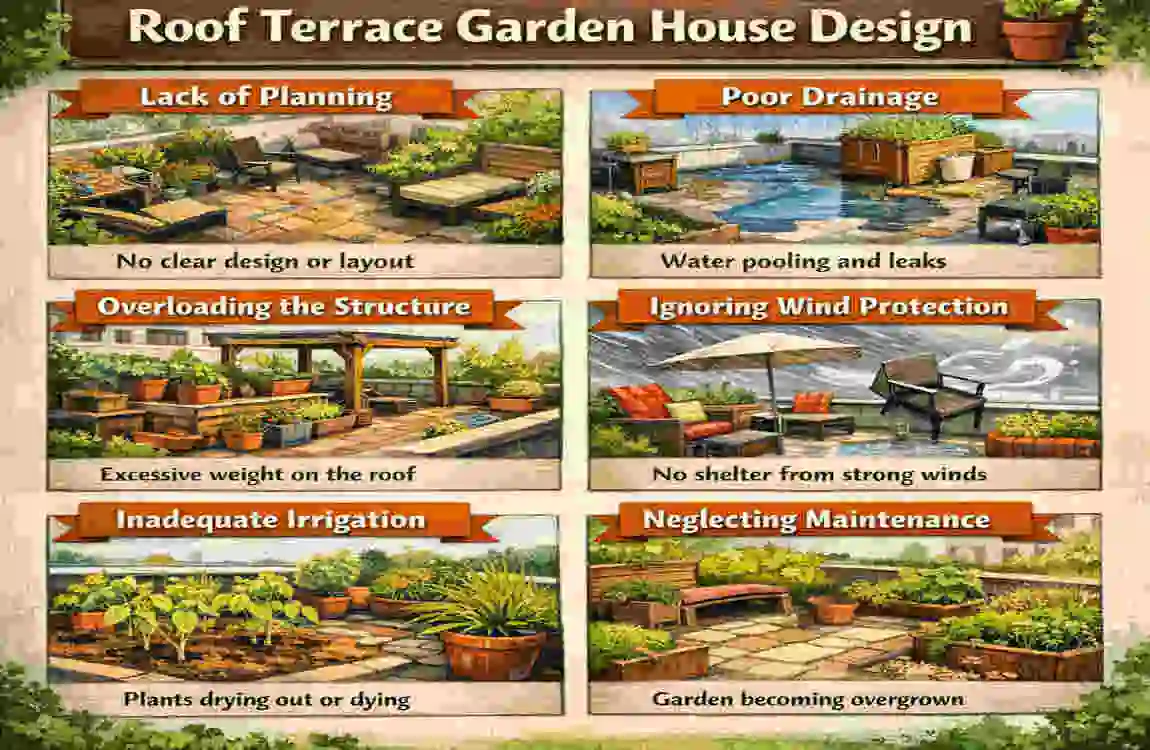
Even a stylish rooftop can fail if a few basics are ignored. Avoid these common mistakes from the start:
- Overloading the roof with heavy planters, wet soil, stone, or water features without structural checks
- Ignoring drainage, which can lead to leaks, mold, and long-term roof damage
- Choosing the wrong plants for wind, heat, or shade conditions
- Using indoor furniture outside, where it quickly breaks down
- Forgetting privacy and shade, making the terrace hard to enjoy
- Crowding the layout, leaving no clear walking or seating space
- Skipping waterproofing upgrades before adding a full garden setup
A good roof terrace garden house design should feel easy to live with, not difficult to manage.
Frequently Asked Questions About Roof Terrace Garden House Design
How much does a roof terrace garden house design cost?
The cost can vary a lot depending on size, materials, and features. A simple setup may cost $500 to $1,500, while a more polished terrace can cost $1,500 to $5,000. Luxury rooftop additions, including custom seating, pergolas, lighting, and structural upgrades, can cost more than $10,000.
What plants grow best on a rooftop terrace?
That depends on your climate and sunlight. In many rooftop settings, drought-resistant plants such as lavender, rosemary, succulents, sedum, and ornamental grasses do well. If you want edible plants, popular options include herbs, tomatoes, lettuce, chilies, and spinach.
Do I need permission to build a rooftop garden?
Sometimes, yes. If you are making structural changes, adding plumbing, installing pergolas, or significantly changing the roof load, you may need approval. Always check local building rules before starting major work.
How do I protect my roof from water damage?
The best way is to inspect and improve waterproofing before installation. You also need proper drainage, raised planter systems where needed, and regular maintenance checks. Good planning protects both your garden and your home.
Can a small rooftop still look impressive?
Absolutely. In fact, small spaces often look more elegant when designed with focus. A few well-chosen planters, compact seating, warm lighting, and one clear style can create a rooftop that feels far bigger and better than its actual size.