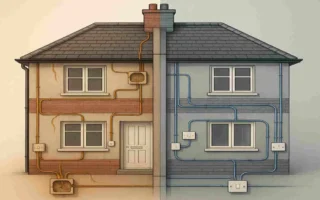
Building a new house in 2026 feels exciting, but it also comes with a long list of costs that can quickly stretch your budget. Many homeowners plan carefully for bricks, cement, tiles, paint, and woodwork. Yet, they often get surprised by one major expense: electrical wiring.
That surprise usually happens because wiring stays hidden behind walls and ceilings. You do not always see it, but you depend on it every single day. Your lights, fans, AC units, kitchen appliances, water pumps, internet setup, CCTV, and even future solar systems all rely on a well-planned electrical network. If the wiring is poor, the problems can be serious. You may experience voltage drops, overloaded circuits, short circuits, tripped breakers, or even a fire risk.
a common working range for the cost of new house electrical wiring is around Rs. 40 to Rs. 90 per square foot. At the same time, the rate often goes higher due to stronger demand, better materials, and higher labor charges. In many projects, you may see averages closer to Rs. 35 to Rs. 80 per square foot for standard work, while Premium builds can go above that.
Why Electrical Wiring Matters in New Builds
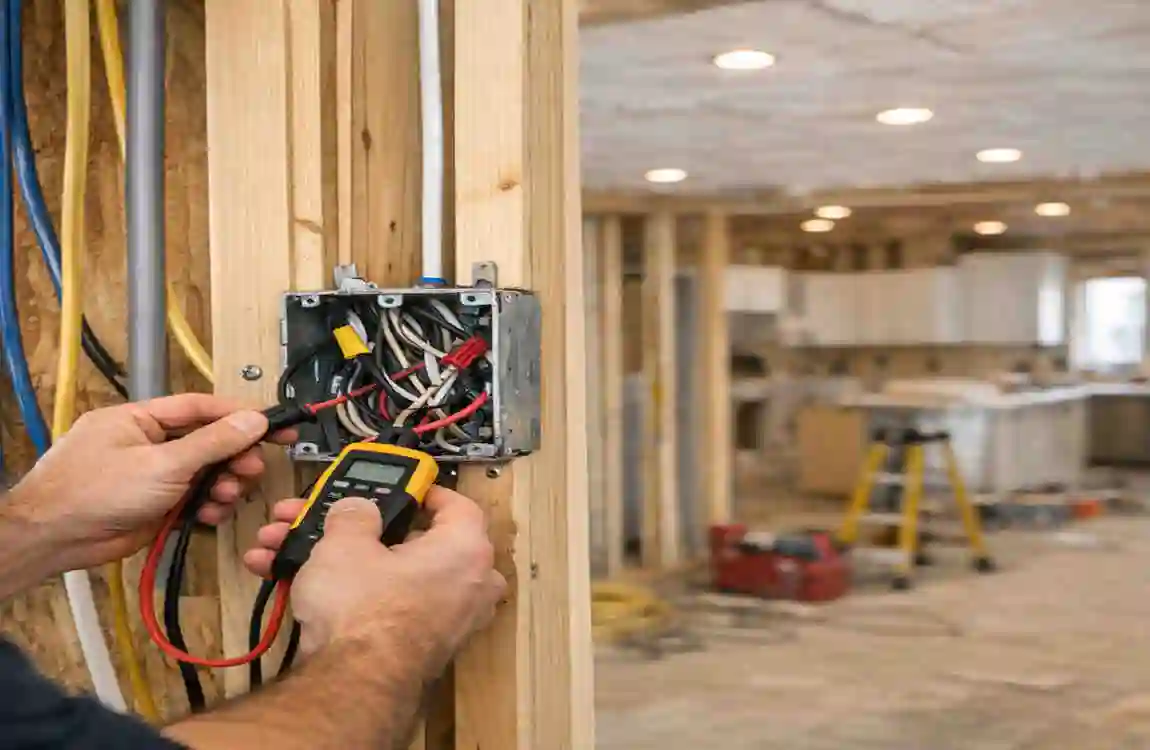
Electrical wiring is one of the most important systems in a house. It is not just about turning lights on and off. It supports your full lifestyle. A properly wired home gives you safety, comfort, and long-term reliability.
When you build a new house, you have a major advantage. The walls are still open, the layout is still flexible, and the electrician can run conduits and circuits more easily. This makes new installations much more efficient than rewiring an old house. In fact, new wiring work can be 20% to 30% cheaper than rewiring an existing home because there is less wall breaking, less repair work, and fewer layout limitations.
Good wiring also increases your property’s value. Buyers today ask practical questions. They want to know if the home has proper earthing, enough breakers, AC points, UPS lines, internet points, and backup preparation. In urban areas like many buyers also look for homes that are ready for solar systems, inverters, and smart home upgrades.
Another reason wiring matters more in 2026 is the way homes are changing. Families now use more electrical devices than they did a few years ago. You may have multiple air conditioners, microwaves, induction stoves, smart TVs, water dispensers, computers, and security systems running simultaneously. That means your electrical setup must safely handle a higher load.
Modern construction trends also affect costs. If you want EV charger preparation, solar integration, or smart control wiring, your total budget may rise by 15% or more. These additions cost more now, but they can save you from expensive upgrades later.
When you think about wiring, do not treat it as a minor line item. Think of it as the backbone of your home. A strong start here protects your family and prepares your home for the future.
Average Costs Breakdown
The biggest question most homeowners ask is simple: what is the cost of electrical wiring for new house construction The answer depends on size, quality, and city. Still, there are useful average ranges that can help you plan.
National vs Local Pricing
the general cost range for standard electrical wiring in a new home often falls between Rs. 40 and Rs. 90 per square foot. However, local conditions matter a lot.usually sits on the higher end because skilled labor costs are higher, and many homeowners prefer higher-quality brand materials.
Here is a simple cost comparison table for common house sizes:
House Size Sq Ft Range Avg Cost (Rs.)Per Sq Ft (Rs.)
3 Marla 800-1000 50,000-80,000 50-80
5 Marla 1200-1500 90,000-150,000 60-100
10 Marla 2000-2500 150,000-250,000 70-100
This table gives a broad estimate, not a fixed quote. A simple single-story house with basic switches and standard wiring may stay near the lower end. A house with larger rooms, more AC points, heavier circuits, or Premium accessories may move closer to the upper end.
many homeowners report average rates of Rs. 60 to Rs. 90 per square foot for decent-quality work. In smaller cities or rural areas, labor may be cheaper. Still, material transport and brand availability can affect the total cost.
If you are budgeting for a 5 marla or 10 marla home, this difference becomes important. A small per-square-foot increase can add a big amount to your final bill.
Material vs Labor Split
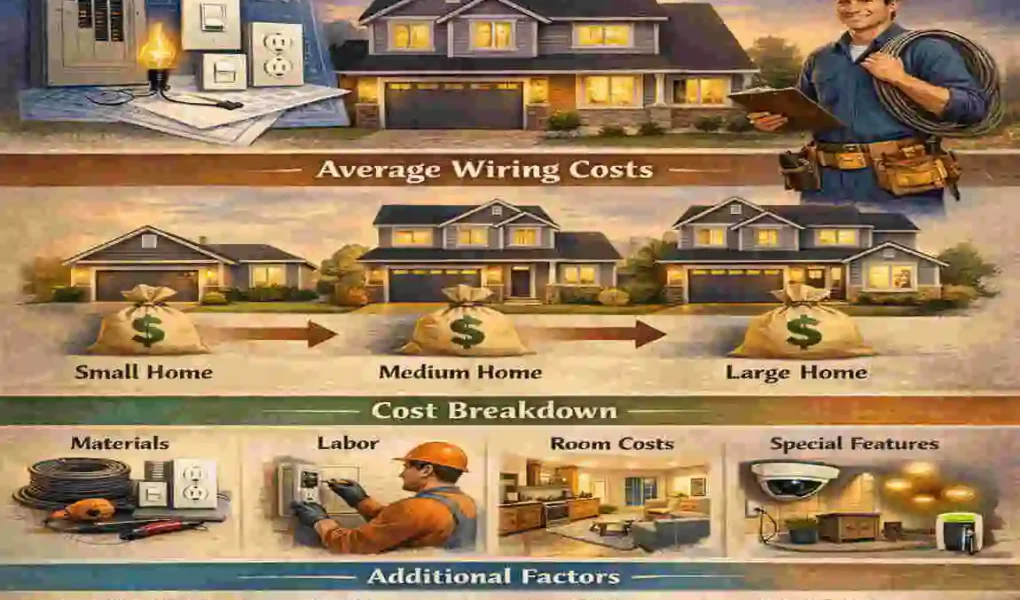
To understand the cost of wiring a new house, it helps to break the price into parts. In most projects, the total wiring cost is divided like this:
- Materials: around 50% to 60%
- Labor: around 30% to 40%
- Fixtures and extras: around 10%
Materials usually take the biggest share because quality wires, circuit breakers, distribution boards, conduits, boxes, and accessories are not cheap. For example:
- Electrical wires: roughly Rs. 20 to Rs. 50 per meter depending on brand, size, and type
- Distribution boards and panels: around Rs. 15,000 to Rs. 40,000
- Switches and sockets: often Rs. 5,000 to Rs. 15,000 or more, depending on quantity and brand
Labor depends on project complexity. In many cases, electricians charge around Rs. 20 to Rs. 40 per square foot for labor. For a standard 5 marla house, the electrical rough-in and finishing work may take 7 to 10 days. However, this can extend if the project includes multiple floors or detailed finishing.
So if you receive a quote, do not just look at the final number. Ask how much covers wires, boards, conduits, breakers, labor, and finishing accessories. A proper breakdown helps you compare offers more fairly.
Cost Factors Influencing Your Quote
No two houses have the same wiring needs. That is why the electrical wiring price for home construction can change from one project to another, even when the covered area looks similar.
One major factor is the type of wiring material. Copper wiring costs more than aluminum, but it is stronger, safer, and more reliable for long-term use. Many contractors prefer copper for new houses because it handles load better and lasts longer. If you choose Premium copper wiring, your cost can rise by around 20% compared to low-budget options.
Your house design also affects the quote. A simple single-story house is easier to wire. A multi-story house needs more vertical runs, more conduit planning, and often more labor time. This can push your total cost up by 15% to 25%.
Location matters as well. electricians with solid experience often charge more because demand is high and homeowners expect higher-quality finishes. Compared to rural areas, urban projects may carry a 10% to 20% Premium due to labor rates and brand preferences.
Then there is code compliance. Proper earthing, MCBs, safety breakers, quality distribution boards, and correct load distribution are not optional if you want a safe house. Following PEC standards and using proper protective devices may increase upfront costs. Still, they lower risk and prevent costly repairs later.
Modern add-ons can also raise the estimate. Common examples include:
- Smart wiring: +Rs. 20,000 to Rs. 50,000
- Generator backup wiring: +Rs. 30,000 or more
- Solar preparation or inverter-ready circuits: extra, depending on load plan
- Inflation impact in 2026: around 10% to 15% higher prices compared to earlier rates
You should also consider the number of points in your house. More bedrooms, attached bathrooms, kitchen appliances, washing area points, CCTV lines, internet cables, and AC circuits all raise the cost. Even details like extra outdoor lighting, gate motor wiring, or terrace wiring can increase the budget.
If you want an accurate estimate, do not ask only by marla size. Share your floor plan, number of rooms, number of AC points, kitchen load, water pump details, and backup system needs. That is how electricians build realistic quotes.
Step-by-Step Pricing for Popular House Sizes
House size is the easiest starting point for estimating the cost of new house electrical wiring. Let us look at practical examples so you can understand how the numbers often work in real projects.
5 Marla Example
A standard 5 marla house is one of the most common residential builds. Depending on layout and quality level, the average electrical wiring cost for new house construction in this size category is often around Rs. 1,20,000.
This is a reasonable mid-range estimate for a normal family home with standard lighting, fan points, AC points, kitchen wiring, bathroom exhausts, and a decent quality distribution board.
Here is a simple breakdown:
Cost Component Approx. Share Estimated Cost (Rs.)
Wires 40% 48,000
Distribution Board / MCBs 20% 24,000
Labor 30% 36,000
Miscellaneous 10% 12,000
The wire cost takes the largest share because a 5 marla house needs several circuits. You may have separate lines for lights, fans, sockets, kitchen appliances, AC units, and a water pump. If the contractor uses a reliable brand and proper gauge wire, the price rises, but the system becomes safer.
The distribution board cost includes breakers, casing, and protective components. A cheaper board may reduce the quote, but that is not a good place to cut corners. Good breakers protect your appliances and reduce the risk of overloads or faults.
Labor depends on the team and project structure. If the site is well-managed and the walls are ready for conduit work, labor stays under control. If there are delays, rework, or layout changes during construction, labor costs can increase.
The miscellaneous section covers switch boxes, PVC pipe fittings, clips, tape, connector accessories, and small finishing items. These small costs add up more than many homeowners expect.
If your 5 marla home includes UPS lines, dedicated heavy-load points, CCTV, internet cable routing, or smart switches, your total may range from Rs. 1,40,000 to Rs. 1,50,000.
10 Marla Example
A 10 marla house usually has more rooms, more washrooms, larger lounges, extra lighting, stronger kitchen demand, and often multiple floors. Because of this, the average cost typically ranges from Rs. 2,20,000 to Rs. 2,50,000 for standard-quality wiring.
For a bigger house, the cost does not rise only because of the area. It also rises because the electrical layout becomes more detailed. You may need:
- More separate circuits
- Additional distribution planning
- More socket points
- More AC points
- Outdoor and terrace lighting
- Gate and security wiring
- Larger panel capacity
If the 10 marla house has two floors, vertical routing and separate load balancing can increase both material and labor costs. In many cases, multi-floor wiring pushes the price above the normal rate because the electrician spends more time planning and pulling cables across levels.
A practical range for a 10 marla project can be Rs. 1,80,000 to Rs. 2,50,000, depending on the finishing level. If you choose branded switches, surge protection, inverter wiring, and a solar-ready setup, you can expect to move toward the upper side of the range.
You should also remember that larger houses often include more decorative lights, concealed lighting, and feature walls. These do not always seem expensive at first, but each lighting zone means extra wiring and labor.
Custom Builds
Custom houses, villas, and luxury homes work very differently from standard builds. Their wiring cost is usually calculated more carefully based on circuit count, automation features, panel size, and load design rather than simple square-foot rules.
For custom homes, the electrical wiring price for home construction can easily reach Rs. 100+ per square foot. In Premium projects, it can go far beyond that.
Luxury homes often include:
- Home automation
- Smart switches and app controls
- Motion sensors
- CCTV and access control
- Server or networking cabinets
- Dedicated home office circuits
- High-end kitchen load planning
- Generator and solar integration
- Landscape lighting
- Video door systems
In these homes, the electrician also spends more time coordinating with interior designers, false ceiling installers, security teams, and solar contractors. That planning adds cost, but it also gives the homeowner a smoother and more useful final setup.
So if you are building a custom home, avoid comparing your quote with a basic 5 marla house. The requirements are not the same.
Materials Deep Dive
Materials account for a significant part of the cost of wiring a new house, so it helps to understand what you are paying for.
The heart of the system is the wire. Most homeowners choose PVC-insulated copper wire for standard residential work. It is common, practical, and widely available. You may also hear about THHN-type wiring, which is known for stronger insulation and better heat resistance in some applications. The exact choice depends on design, conduit method, and contractor preference.
Well-known local brands, such as Cables, often cost more than unbranded products but offer better reliability. In wiring, quality matters because you are building a system that should last for many years.
The next key item is the distribution board. Residential boards are commonly available in 16-way to 32-way sizes, depending on the number of circuits. A standard board may cost around Rs. 10,000 to Rs. 30,000, while Premium setups with better breakers and cleaner finishing can cost more.
Then come the conduits and pipes. In most projects, PVC conduit is used to protect wires inside walls and slabs. These pipes often cost around Rs. 15 to Rs. 25 per meter, depending on quality and size.
Switch boxes, junction boxes, bends, clips, and fittings may look minor, but they are necessary parts of the complete system. If you leave them out of your estimate, your budget can go off track.
Here are a few simple quality tips to keep in mind when buying materials:
- Choose fire-rated wiring where possible
- Prefer properly marked and trusted brand products
- Make sure the breaker capacity matches the actual load
- Do not mix low-grade wire with high-load appliances
- Use proper earthing materials instead of cheap shortcuts
If you want to save money, do it carefully. Saving on decorative accessories is one thing. Saving on the main cable quality is another. One affects style. The other affects safety.
Labor and Contractor Insights
Hiring the right electrician can protect both your budget and your house. Labor is not just about connecting wires. It includes planning routes, placing conduits, balancing circuits, labeling boards, testing the system, and coordinating with the construction team.
you will usually find three common options: licensed professionals, organized contractor teams, and freelance electricians. Freelancers may charge less, sometimes saving you around 20%, but the lower price can come with risks if the work is not properly supervised.
A professional contractor often costs more, but you usually get better planning, clearer wiring maps, and fewer mistakes. This matters a lot in larger houses or homes with an inverter, generator, or solar preparation.
The typical wiring timeline for a new house is around 5 to 15 days, depending on the size and complexity. A compact house with a simple plan may finish quickly, while a multi-floor home may take longer.
When you compare quotes, watch for red flags. One of the biggest warning signs is a quote that seems far too low. If someone offers complete wiring for less than Rs. 30 per square foot, ask questions. That rate may mean low-grade wire, rushed labor, weak safety planning, or incomplete scope.
You should also ask the contractor:
- Which wire brand will be used?
- Is earthing included?
- How many breakers and circuits are planned?
- Is testing included?
- Are switch boxes and conduits included?
- Does the quote cover finishing accessories or only rough wiring?
A good contractor should answer clearly. If the answers feel vague, keep looking.
Hidden Costs to Watch
Many homeowners calculate wire, labor, and switches, but they still miss smaller charges that affect the final budget.
For example, some projects in may involve permits or approval-related expenses that can add around Rs. 5,000 to Rs. 10,000, depending on the type of project and process involved. While this does not apply in the same way everywhere, it is smart to ask early.
You may also pay for testing and certification, especially if you want extra assurance before handover. This can start from Rs. 3,000 or more, depending on the scope.
Then come upgrades that are easy to ignore at first, but common in real homes. These include:
- LED-specific lighting layouts
- Surge protection
- UPS or inverter line separation
- Extra outdoor lighting
- Internet and CCTV cabling
- Doorbell and intercom lines
None of these may seem huge individually, but together they can add a noticeable amount. That is why your final wiring bill is often higher than the initial verbal estimate.
Ways to Save on New House Wiring
You can reduce the electrical wiring cost for new house construction without sacrificing safety. Still, you need to save in the right places.
Here are a few practical ways:
- Buy materials in bulk if you already know the exact quantity and brand
- Compare at least 2 to 3 contractor quotes
- Hire during less busy periods if your construction schedule allows it
- Keep the layout practical instead of adding unnecessary points
- Choose standard specs instead of luxury accessories where possible
- Plan future needs now so you avoid costly wall breaking later
One of the smartest saving methods is proper planning. If you decide on AC points, internet points, solar lines, and backup circuits before wall work begins, the electrician can wire them efficiently. Last-minute additions always cost more.
You can also save by separating essential quality items from optional style items. Spend more on wire, breakers, earthing, and safety devices. Save on Premium designer switches if your budget is tight.
In many cases, a homeowner can save up to 25% with better planning and smarter purchasing, while still keeping the system safe and durable.
Trends and Future-Proofing
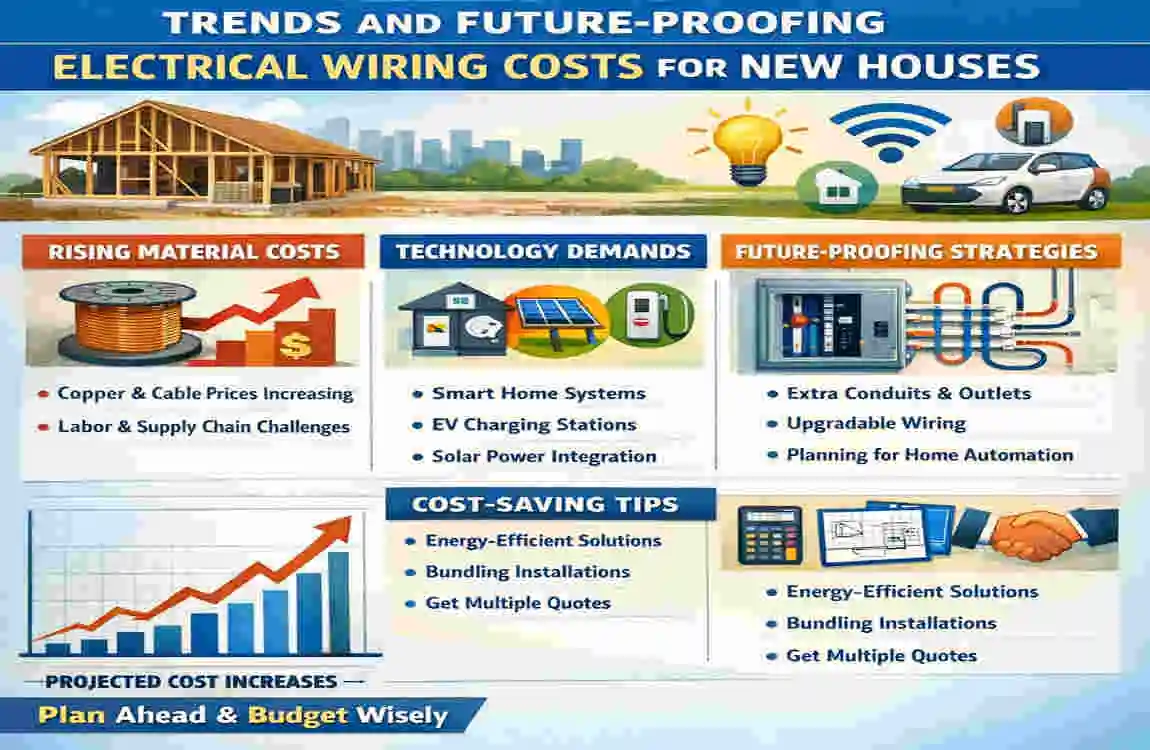
Wiring in 2026 is no longer just about current needs. More homeowners now want homes that can handle future technology.
The biggest trend is solar-ready wiring. Even if you do not install solar panels today, preparing conduit routes, inverter space, and load planning now can save time and money later.
Another growing trend is IoT and smart home integration. Smart switches, app-controlled lights, motion sensors, digital locks, and energy-monitoring systems are becoming increasingly common in urban homes.
These future-ready features usually increase total cost by around 10% to 20%, depending on the setup. Still, the extra investment can make your home more practical, modern, and valuable in the long run.
If you are building today, think beyond this year. A small amount of planning now can prevent major rewiring later.
FAQs
What is the average electrical wiring cost for a new house
the average electrical wiring cost for new house construction is typically around Rs. 60 to Rs. 90 per square foot for standard-quality work. Basic projects may cost less, while Premium homes with branded materials and smart features cost more.
What is the cost of new electrical wiring for a 5 marla home?
A typical 5 marla house may cost around Rs. 90,000 to Rs. 1,50,000, with a practical average near Rs. 1,20,000. The final amount depends on the wire brand, the number of points, the panel quality, and labor rates.
Is copper wiring worth the higher price?
Yes, in most cases it is. Copper handles electrical load better, lasts longer, and offers more reliable performance than cheaper alternatives. It may raise costs by about 20%, but many homeowners consider it worth the investment.
Can I do house wiring myself to save money?
DIY electrical work is risky. Poor wiring can cause electric shock, appliance damage, short circuits, or fire. It is always safer to hire a qualified electrician, especially for the main panel, load balancing, and earthing.
When is the best time to wire a new house?
The best time is during the construction stage when walls and slabs are ready for conduit placement, but before plaster and finishing work. Early planning keeps costs lower and avoids expensive rework.
Why do quotes from electricians vary so much?
Quotes vary because contractors use different brands, wire sizes, safety standards, labor teams, and scope definitions. One quote may include earthing, breakers, and testing, while another may not. Always ask for a detailed breakdown.
Should I prepare for solar and generator backup now?
Yes, if your budget allows it. Preparing for solar or generator backup during construction is usually cheaper than upgrading later. Even basic conduit and panel planning can save significant money in the future.