A kitchen range hood has an important practical job: removing cooking fumes, odours, smoke and airborne grease. But choosing the right hood can also significantly affect a kitchen’s overall appearance.
For kitchens where space, cabinetry and visual balance matter, an under-cabinet range hood can be an especially effective solution. Tucked neatly beneath cabinetry, this style provides ventilation without demanding the visual attention of a large statement hood. The result can be a kitchen that feels more considered, cohesive, and comfortable to use.
Make Better Use of Kitchen Space
One of the biggest advantages of an under-cabinet range hood is its compact profile. Rather than requiring a large architectural feature above the cooking area, the hood works within the existing cabinetry layout.
That makes it particularly useful for smaller kitchens, galley kitchens, and designs where homeowners want to maximize usable storage. It can also help maintain clean sightlines across the room.
As kitchen designer Kayleigh Queoff explains, “Its compact design gives it a more understated look, which works well if you already have a unique focal point in your kitchen, such as an island.”
This understated quality can be valuable in a carefully designed interior. If an island, backsplash, lighting installation, or statement worktop already provides the visual focus, a discreet hood lets those features take center stage.
Create a More Cohesive Aesthetic
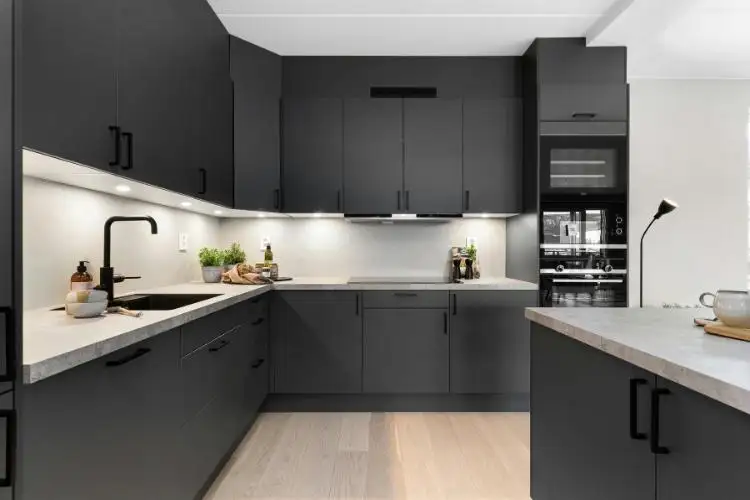
A range hood does not have to look like a purely functional appliance. The right design can become an integrated part of the cabinetry and wider kitchen scheme.
Under-cabinet models work particularly well when the goal is a streamlined appearance. Instead of introducing another dominant shape or material into the room, the hood can sit comfortably within the existing composition.
This approach reflects a broader shift in kitchen design towards spaces that feel residential rather than purely utilitarian. Designer Lisa Staton captures the appeal succinctly: “We love them because it makes kitchens feel less kitchen-y.”
That distinction matters. Today’s kitchens often function as dining rooms, entertaining spaces, home offices, and social areas as well as places to prepare food. A discreet ventilation solution can help preserve that more relaxed, furniture-like character.
Consider Materials and Finishes Carefully
While a range hood’s shape matters, its material and finish can influence the final design just as much.
Metal can add texture, warmth, or contrast to a kitchen, depending on the finish you choose. Copper, stainless steel and other architectural metals can create very different impressions, from traditional and characterful to contemporary and refined.
This is where custom fabrication can beat a one-size-fits-all appliance. Instead of designing the kitchen around a standard product, homeowners and designers can consider the hood as part of the overall material palette.
CopperSmith, for example, creates handcrafted architectural products and offers an expansive range of metalwork for residential and commercial spaces. Its range hood collection includes more than 80 finishes and textures and 65 models, giving designers considerable scope to develop a look that complements the rest of the kitchen.
The WorldCopperSmith under-cabinet range hoods are a strong option when a project calls for a more tailored approach to kitchen ventilation.
Customization Can Change the Design Equation
Standard appliances can limit a designer’s options. Dimensions, finishes and styling may already be determined, leaving fewer opportunities to create a truly individual interior.
Custom-made architectural products take a different approach. The hood becomes something you can consider alongside the cabinetry, worktops, splashback, flooring and hardware from the start of the project.
CopperSmith focuses on customization across its architectural products, letting you choose size, finish, and material to suit your aesthetic. Its broader collection includes sinks, tables, seating, tabletops, bathtubs, fire pits, planters and metal sheets alongside range hoods.
That breadth can help you create a consistent material story throughout a home. A carefully selected metal finish on a range hood can echo details elsewhere in the room, helping separate elements feel intentionally connected.
Look Beyond the Visuals
Good kitchen design balances appearance with everyday practicality. A beautiful hood that doesn’t suit the cooking area or how the kitchen is used will ultimately compromise the space.
Before selecting an under-cabinet range hood, consider the cooking area’s size and configuration, the surrounding cabinetry, and the project’s overall ventilation needs. Also consider access for cleaning and maintenance, as well as how the hood will interact visually with nearby lighting and storage.
The best choice should feel almost inevitable once the kitchen is complete: visually integrated, appropriately scaled and capable of performing its intended role.
A More Personal Approach to Kitchen Design
There is also something appealing about choosing architectural elements that feel made for a particular home rather than selected from a catalog.
CopperSmith has built its reputation around handcrafted architectural products and positions itself as a trusted partner to interior designers, architects and builders worldwide. Its focus on sustainable products for the forever home also aligns with an approach to interiors that prioritizes longevity rather than constantly replacing finishes and fixtures.
The company’s concierge-level professional service is another consideration for projects where the details matter. Rather than treating the hood as an isolated appliance, a more personalized design and fabrication process can help bring a wider kitchen vision together.
CopperSmith also has thousands of 5-star reviews, reflecting customers’ experience with its products across residential and commercial projects.
The Finishing Touch
An under-cabinet range hood may not be the first feature people notice when they walk into a kitchen, and that can be precisely what makes it so effective.
The best kitchen design often comes down to balance. Statement elements need room to breathe, practical features need to work efficiently, and every material should contribute to the space’s atmosphere.
An under-cabinet hood can provide that balance by combining necessary ventilation with a relatively discreet architectural presence. With thoughtful consideration of proportions, materials, and finishes, it can support the kitchen’s visual identity without overwhelming it.
For homeowners, architects and interior designers creating a kitchen intended to last, that combination of function and understated design makes the under-cabinet range hood well worth considering. And when custom fabrication is part of the equation, the humble range hood can become more than an appliance — it can become one of the carefully considered finishing touches that makes a kitchen feel like home.