
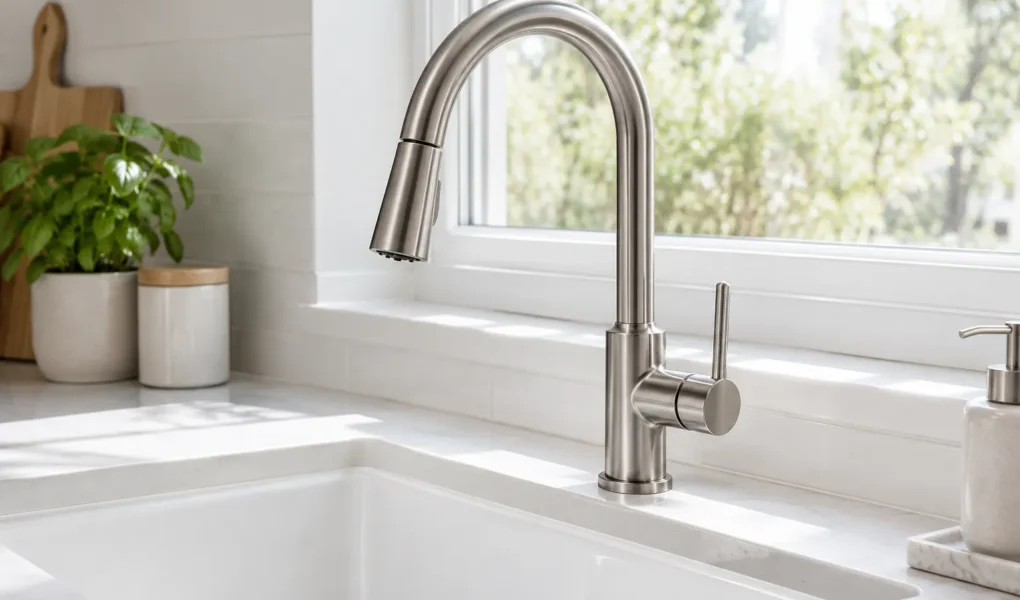
Few fittings get used as often as the faucet in your kitchen or bathroom. It runs dozens of times a day, takes knocks from pans and cleaning sprays, and sits in constant contact with water. That is why the material matters more than most people expect. A reliable stainless steel faucet manufacturer builds products that cope with this daily workload without chipping, peeling or tarnishing, which is a big reason stainless steel has moved from professional kitchens into ordinary family homes. If you are planning a refresh, here is why this material deserves a place on your shortlist.
Built for Daily Wear
A faucet is handled with wet, soapy and sometimes greasy hands, and it is often hit by a heavy pan or a dropped utensil. Plated finishes can wear thin under that treatment. Once the coating breaks, the metal underneath is exposed and the faucet starts to look tired within a few years.
Stainless steel works differently. The colour you see runs all the way through the metal, so there is no thin layer to scratch off. Small marks can appear over time, but they blend into the surface rather than flaking away. For families with children or busy cooks, that toughness is a real advantage.
Strong Against Rust and Corrosion
Despite the name, stainless steel can mark under the wrong conditions, but it is far more resistant to rust than ordinary steel. The reason is chromium. It reacts with oxygen to form a thin, invisible film on the surface that protects the metal underneath. If the surface is scratched, the film rebuilds itself.
This matters in rooms that are damp for much of the day. Bathrooms see steam, splashes and cleaning products, while kitchens deal with salt, vinegar and citrus. A faucet that shrugs off this exposure keeps its look and its function for longer, and you are less likely to face leaks or stiff handles caused by internal corrosion.
Easier to Keep Clean
Nobody wants to spend their weekend scrubbing taps. Stainless steel has a smooth, dense surface that does not trap dirt easily, so a quick wipe with a soft cloth and mild washing up liquid is usually enough.
Homes in hard water areas, which covers much of the south and east of England, will know the struggle with limescale. White deposits build up around the spout and base, and they show on every finish. On stainless steel they are simple to deal with. A cloth dampened with diluted white vinegar lifts most of the build up, followed by a rinse and a dry buff. Many finishes also hide fingerprints and water spots better than polished chrome or dark coatings, which keeps the faucet looking presentable between cleans.
A Hygienic Choice for Busy Households
Stainless steel is non porous, so bacteria and grime have fewer places to settle. That is one reason it is the standard material in hospitals, food preparation areas and commercial kitchens. In a home setting, it gives you extra peace of mind in the spots where hygiene counts most, such as the sink where you rinse vegetables or the basin used by the whole family.
It also contains no lead, which is worth knowing when you think about the water you drink and cook with. Whatever material you choose, look for products that meet current UK water fittings standards so you can be confident about safety.
Style That Fits Different Interiors
Some homeowners worry that stainless steel looks cold or industrial. In practice, it is one of the most flexible finishes available. Brushed stainless suits modern kitchens with flat fronted cabinets and stone worktops. It also sits comfortably beside a traditional shaker kitchen, where its soft sheen reads as understated rather than harsh.
In the bathroom, a clean stainless design pairs well with white sanitaryware, natural wood and neutral tiles. It also coordinates easily with other metals around the room, from towel rails to cabinet handles, so you are not forced into matching everything exactly. Because the look is neutral, it is less likely to feel dated when your decor changes in a few years.
What to Check Before You Buy
Not every stainless faucet is built to the same standard, so a few checks are worth making before you order.
Grade of steel: Grade 304 is common and performs well in most homes. Grade 316 contains molybdenum and offers extra resistance, which can help in coastal areas or where cleaning products are strong.
Internal parts: The cartridge controls the flow and temperature, so look for a ceramic disc cartridge. These are known for smooth operation and a long working life.
Fit and size: Check the hole size on your sink or basin, the spout height and the reach. A tall spout looks great but can splash if the bowl is shallow.
Water pressure: Some faucets are designed for high pressure systems and others for low pressure, which is common in older UK homes with tank fed supplies. Match the product to your plumbing.
Warranty and support: A clear warranty and available spare parts show that the maker stands behind the product.
Simple Care Tips
A little routine care keeps a stainless faucet in good shape for years. Wipe it dry after heavy use to prevent water marks. Clean with a soft cloth and avoid steel wool or harsh scouring pads, which can leave scratches. Skip bleach and strong chlorine cleaners, as they can dull the finish if left on the surface. If you notice a rough patch, a non abrasive cleaner rubbed along the direction of the brushed grain usually restores the look.
Is the Upgrade Worth It?
For most households, yes. Stainless steel faucets cost more than basic plated options at the start, but they tend to last longer, stay cleaner with less effort and keep their appearance through years of daily use. That combination often works out cheaper over time than replacing a worn faucet every few years.
If your current faucet is leaking, stained or simply out of date, a stainless steel model is a practical way to improve both the look and the comfort of your kitchen or bathroom. Take your time comparing grades, cartridges and sizes, and choose a product that suits your plumbing as well as your style.