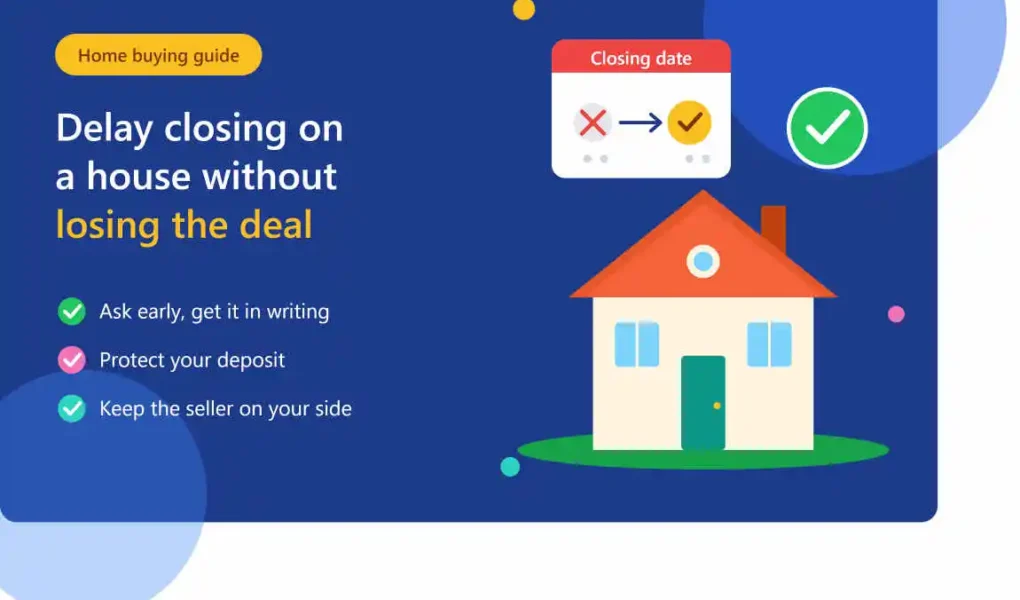
The offer is accepted, the inspection is done, and the closing date is circled on your calendar. Then life happens. Your loan needs more time, your movers cancel, or the home you’re selling hasn’t closed yet. If you’re wondering how to delay closing on a house, the good news is that it’s possible and more common than most buyers think. The catch is that it has to be done properly, in writing, and with everyone on board.
Can you really delay closing on a house?
Yes, but not unilaterally. According to Chase’s home-buying education center, buyers can ask to extend or postpone the closing date, but every party has to agree, and the change may bring extra home costs or contractual penalties. The closing date is a core term of your agreement, so missing it without permission can put you in breach of contract.
The sellers’ side of the story matters too. As Clever Real Estate explains, when a buyer asks for a delay, it has to be agreed to in writing, and the buyer’s agent will usually draft an amended purchase agreement for the seller to sign. In other words, a handshake or a text message isn’t enough.
Common reasons buyers ask for more time
You’re not the first buyer to need a little breathing room. HomeLight’s guide to closing delays points to loan approval as the most common culprit, since the whole sale hinges on the mortgage. Other frequent causes include:
- Financing hiccups: underwriting questions, missing paperwork, or a lender that’s behind schedule.
- A low appraisal: if the home appraises below the purchase price, the deal often has to be renegotiated.
- Inspection problems: repairs that take longer than expected.
- A home-sale contingency: you need your current house to close before you can buy the new home one.
- Title issues: such as an unpaid contractor lien that has to be cleared first.
- Insurance or moving logistics: a policy that isn’t bound yet, or a move-out date that doesn’t line up.

How to delay closing on a house: step by step
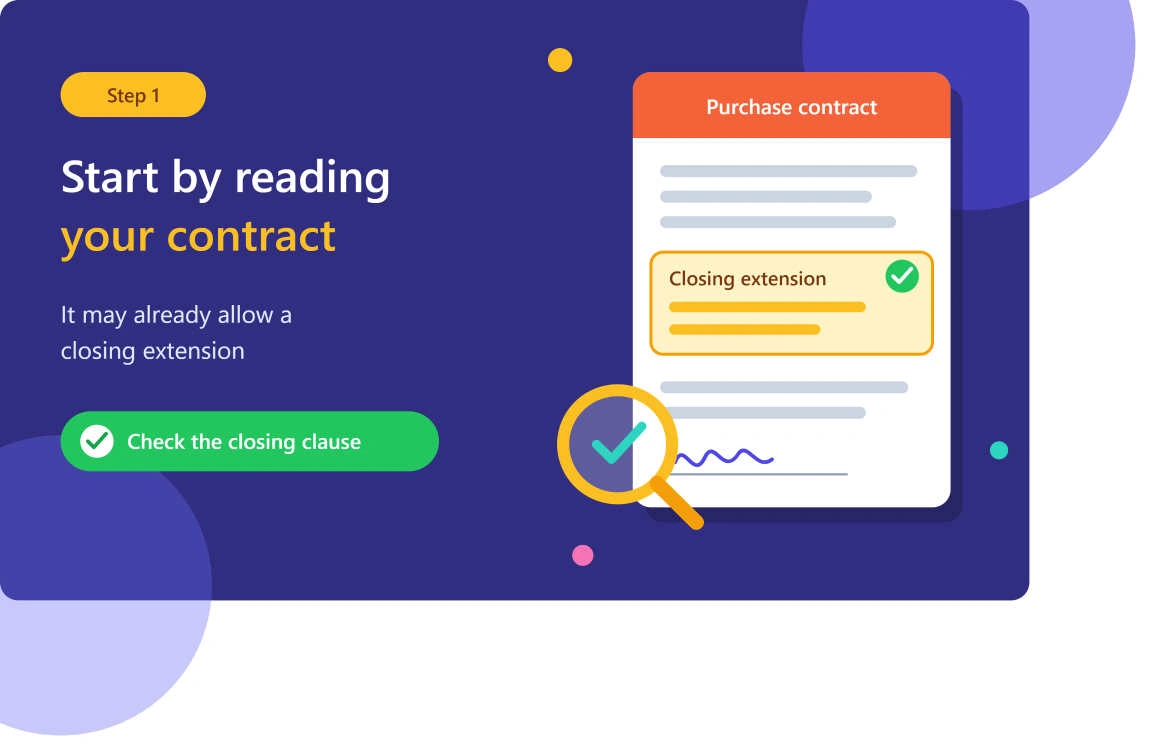
Read your purchase agreement first
Many contracts include an extension clause or a short grace period. Check the closing date section, any contingency deadlines, and whether there’s a daily fee for closing late. Knowing your starting point keeps you from offering more than you need to.
Talk to your lender and agent right away
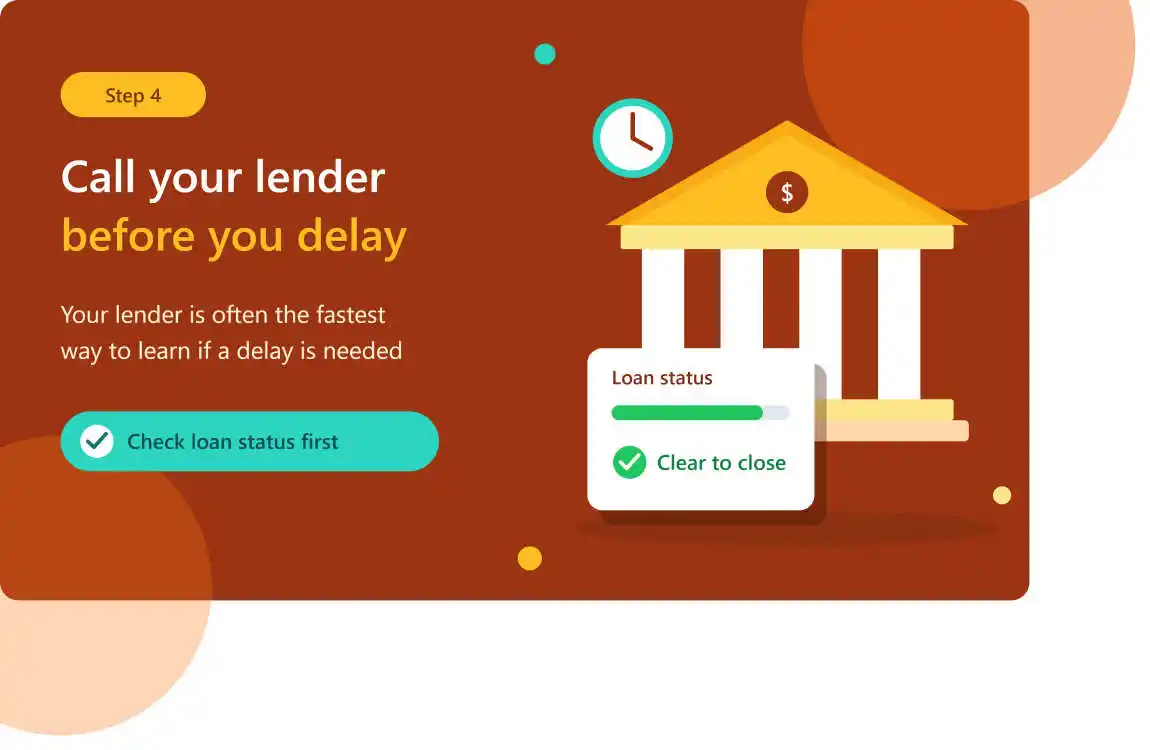
Chase advises communicating with your lender and real estate agent before requesting any change. Your lender can tell you how a new date affects your approval, and your agent can help you approach the seller the right way. The earlier you raise it, the more options you’ll have.
Check your rate lock
This is the step buyers forget. Chase notes that extending closing could cost you extra if your rate lock expires and rates have gone up. Rate-lock policies and fees vary by lender, so ask for the exact expiry date and the price of an extension.
Make a clear, specific request to the seller
Give a reason, propose a new date, and keep it realistic. Vague requests make sellers nervous. HomeLight’s seller-side advice suggests that a “reasonable” extension is often in the range of 10 to 30 days, depending on the circumstances, so a request far beyond that needs a strong explanation.
Offer something in return
Sellers carry real costs while they wait: mortgage payments, taxes, insurance, utilities, and their own move. Chase suggests buyers be prepared to offer something in return. Common sweeteners include a per-day fee for each extra day, covering the seller’s carrying costs, or a larger earnest money deposit. Which one fits depends on your contract and your market.
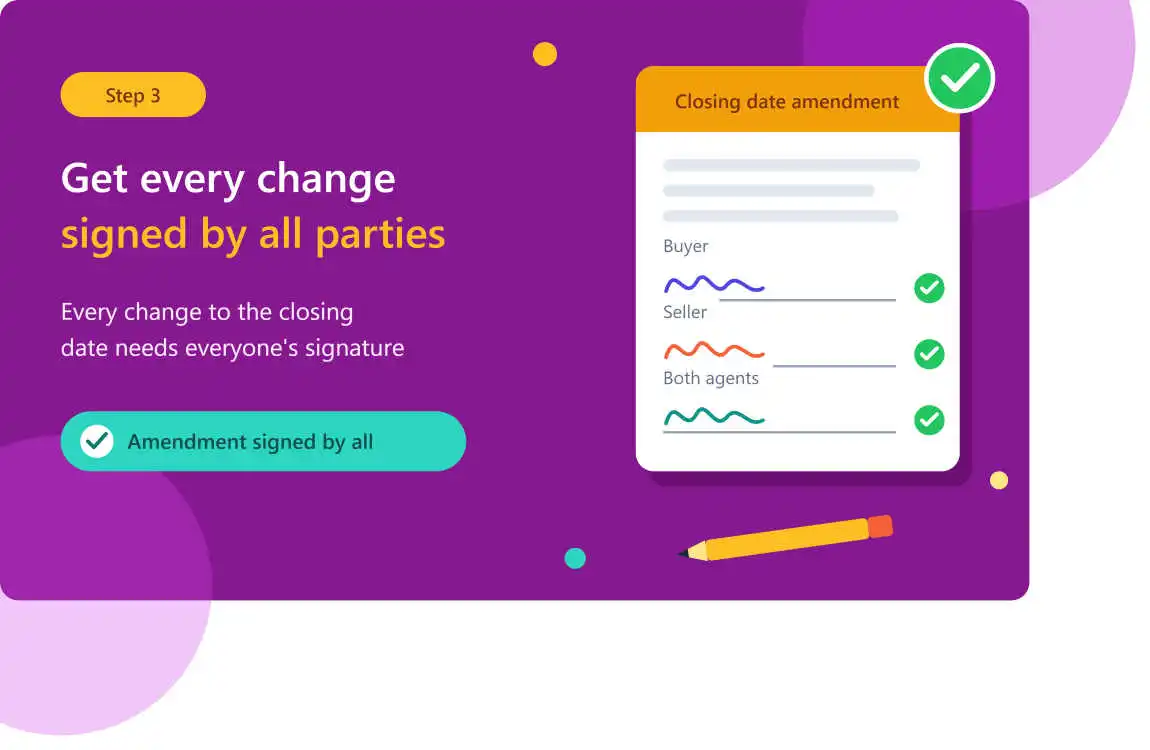
Get it signed in writing
Once everyone agrees, sign a written amendment (sometimes called an extension addendum) that states the new closing date and any fees. Then make sure your lender, title or escrow company, and agents all have the updated version. Update your moving company and rental agreement too.
The three-day rule that can slow things down
Even if the buyer and seller agree, federal disclosure rules can affect your timeline. The Consumer Financial Protection Bureau explains that you should receive your Closing Disclosure at least three business days before closing. Only a few late changes restart that clock: if the APR becomes inaccurate, the loan product changes, or a prepayment penalty is added, the lender must give you another three business days to review the updated disclosure. Smaller things, like typos or issues found on the final walk-through, generally don’t trigger a fresh waiting period.
The takeaway: if you’re also changing loan terms while delaying closing, ask your lender how much extra time to build in.
What happens if the seller says no?
Sellers aren’t required to agree, and that’s where things get tricky. Without an extension, you’re expected to close on the original date. Missing it can put your deposit and the entire deal at risk, depending on your contract and local law. In that situation, consider these options:
- Revisit your offer with more incentives, such as a daily fee or a firm new date.
- Ask your lender whether anything can be sped up so you can close on time instead.
- Check whether any contingency in your contract (financing, appraisal, sale of your current home) is still active and lets you extend or exit.
- Talk to a real estate attorney before you let the deadline pass. This is especially important if your deposit is large.
Tips to avoid asking for a delay at all
- Respond to your lender fast. Send requested documents the same day.
- Don’t change your finances. Avoid new credit, job changes, or large unexplained deposits before closing.
- Bind insurance early. HomeLight recommends shopping for a homeowners policy as soon as the contract is signed.
- Negotiate a realistic closing date up front, especially if you’re selling another property home or relying on those proceeds.
- Build in a cushion. If a month feels tight, ask for 45 days instead of 30.
Frequently asked questions
How long can you delay closing on a house?
There’s no universal limit. It depends on your contract, your lender’s timelines, and what the seller will accept. Many extensions are measured in days or a few weeks rather than months.
Does delaying closing cost money?
It can. Possible costs include a per-day fee to the seller, a rate-lock extension, or other charges spelled out in your agreement. The exact amount varies by lender and contract.
Can the seller keep my deposit if I close late?
That depends on the contract and where you live. Don’t assume either way. Get the extension in writing, and speak to a real estate attorney if there’s any doubt.
Final thoughts
Delaying closing isn’t a failure; it’s a negotiation. The buyers who handle it best are the ones who speak up early, stay specific, protect their rate lock, and put everything in writing. Do that, and a few extra days can be just a small detour on the way to getting your keys.