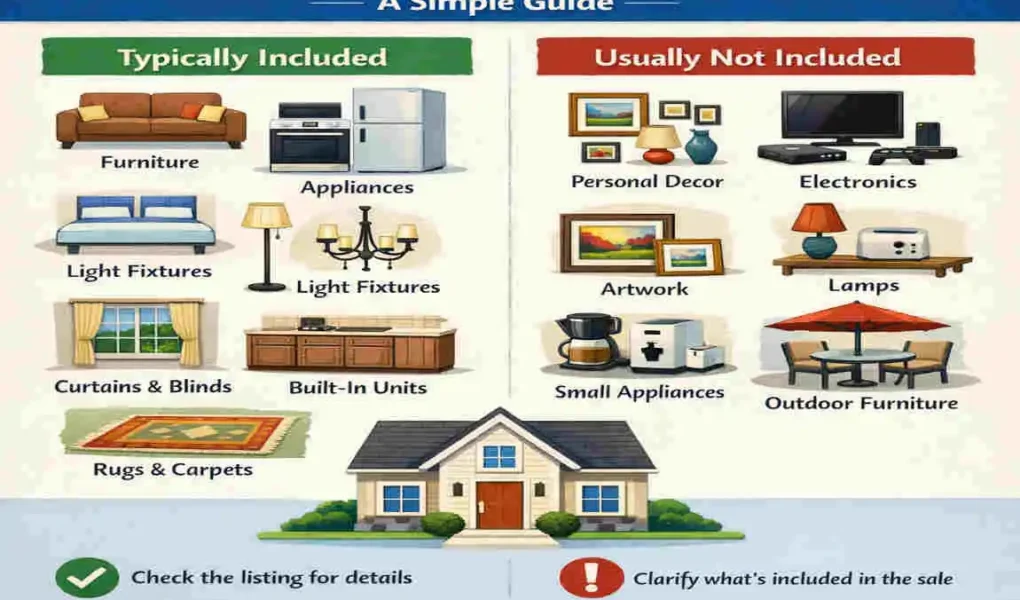
When a house is sold, buyers and sellers often get confused about what stays and what goes. That confusion can lead to stress, delays, and even arguments before closing.
The main reason is simple: furnishings and fixtures are not the same thing. Furnishings are usually movable items, while fixtures are usually attached to the home.
What Are Furnishings in Real Estate?
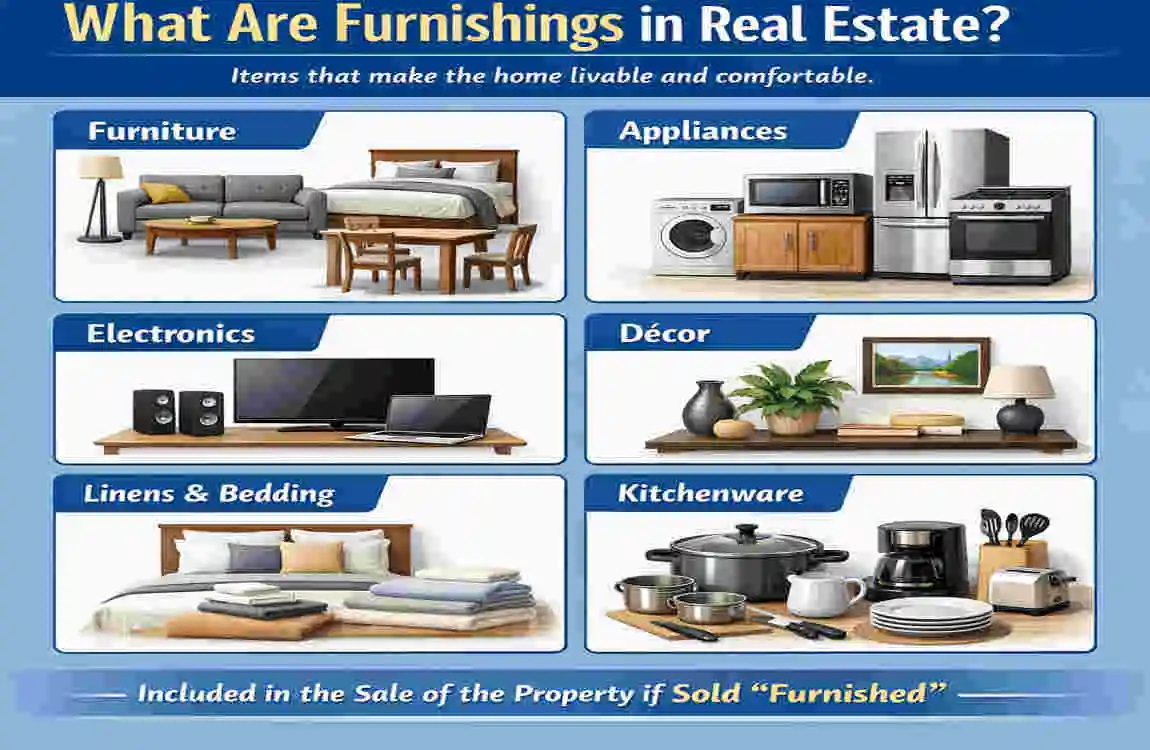
Simple Definition of Furnishings
Furnishings are household items that can be moved. They are not built into the house and are not permanently attached to the structure.
Think of the things you could pick up and take with you when you move. That is the general idea behind furnishings.
Examples of Furnishings
Common examples include:
- Sofas
- Dining tables
- Beds
- Rugs
- Lamps
- Dressers
- Patio furniture
- Portable mirrors
Some items like curtains can be tricky. If they are easy to remove, they may be treated like furnishings. If they are custom-installed, they may be treated differently.
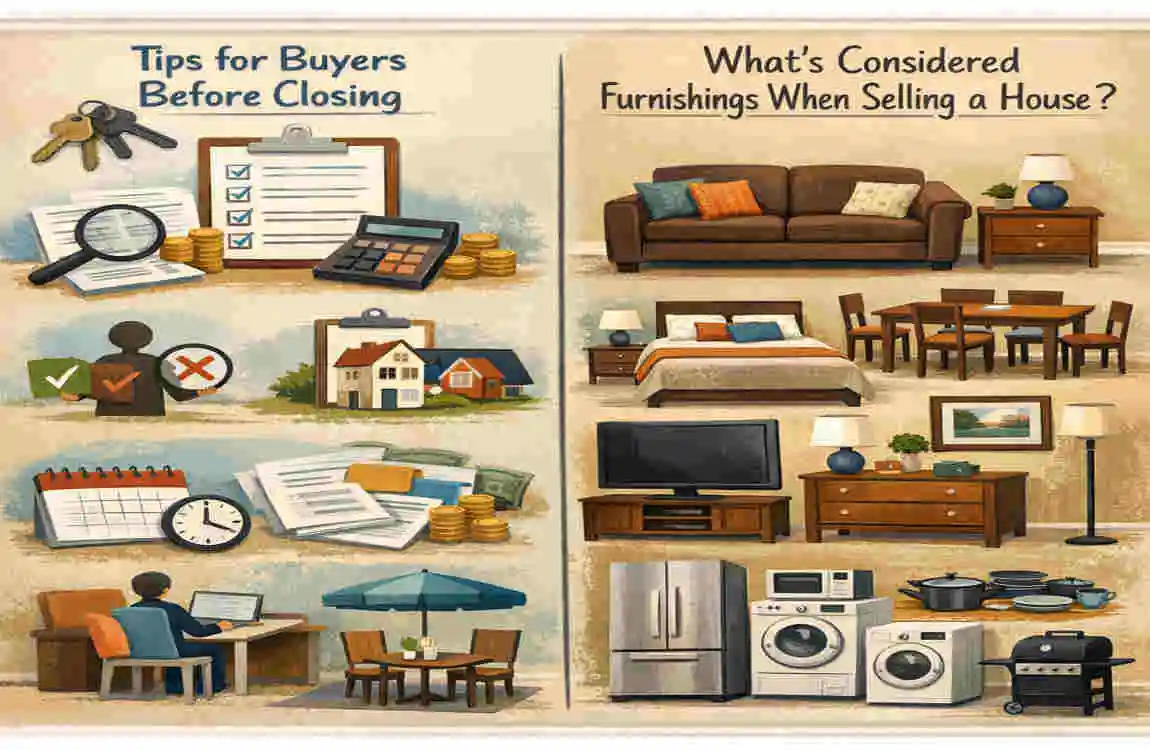
What Is Considered Furnishings When Selling a House?
Items Usually Considered Furnishings
Most of the time, furnishings are the items in a home that are not attached to walls, floors, or ceilings.
These usually include:
- Living room furniture
- Bedroom furniture
- Dining furniture
- Outdoor furniture
- Decorative accessories
So if a seller wants to take their couch, bed, table, or patio chairs, that is usually allowed unless the contract says otherwise.
Items Usually Not Included in the Sale
Some items are often mistaken for furnishings, but they are usually not included in the default sale.
These may include:
- Personal artwork
- Portable appliances
- Freestanding mirrors
- Small decorative items
Still, this can vary from sale to sale. That is why written agreements matter so much.
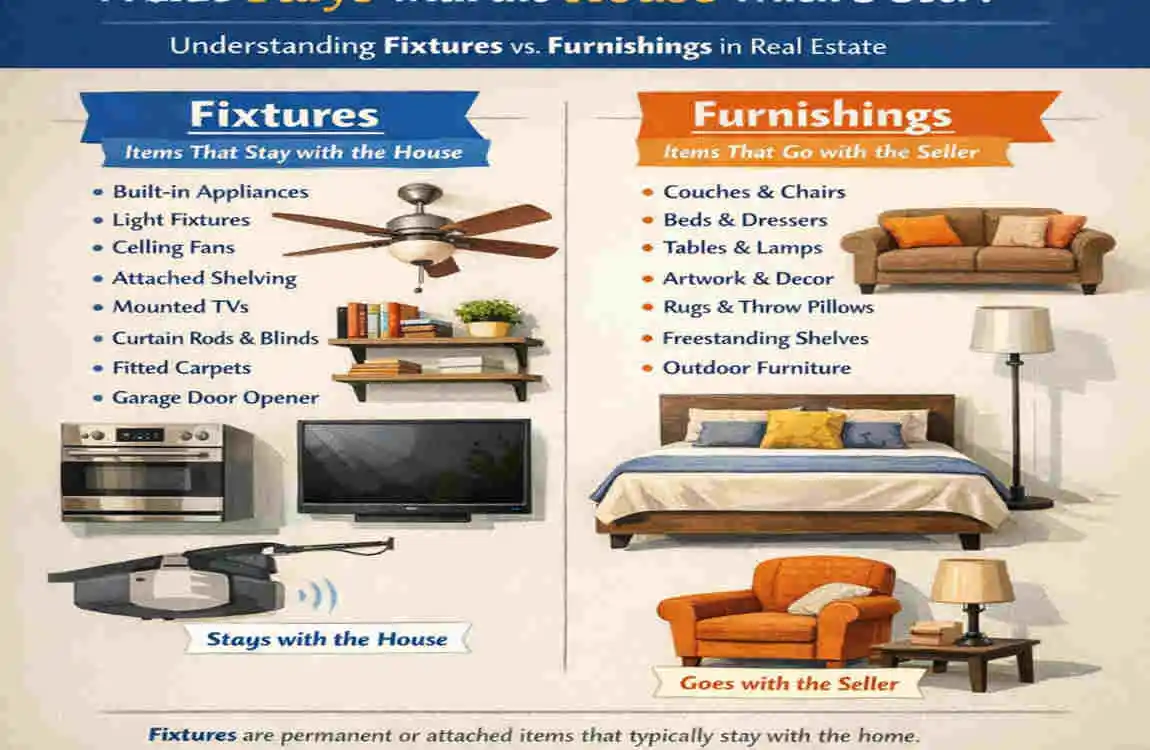
Furnishings vs. Fixtures: What’s the Difference?
What Are Fixtures?
Fixtures are items that are permanently attached to the home. They are usually considered part of the property.
Examples include a ceiling fan, built-in cabinets, or a kitchen sink. These are not things you normally pack up and take with you.
Common Fixtures Included in a Home Sale
Fixtures often stay with the house unless the seller specifically removes them in the contract.
Common fixtures include:
- Built-in cabinets
- Ceiling fans
- Light fixtures
- Built-in shelving
- Bathroom mirrors
- Kitchen cabinets
Quick Comparison Table
FurnishingsFixtures
Sofa Built-in cabinets
Dining table Ceiling fan
Bed Kitchen sink
Coffee table Light fixture
Area rug Built-in shelves
Portable lamp Bathroom vanity
This table makes the difference easier to see. If it can be moved easily, it is often a furnishing. If it is attached or built in, it is usually a fixture.
What Items Usually Stay with the House?
Kitchen Items
Many kitchen items stay because they are built in or attached.
These often include:
- Built-in oven
- Dishwasher
- Cabinets
A freestanding refrigerator may or may not stay, depending on what the seller and buyer agree to.
Bathroom Items
Bathrooms often include both fixtures and removable items. Usually, these stay:
- Vanity
- Mirrors
- Toilet
- Shower fixtures
Outdoor Features
Outdoor features can also be part of the home sale if they are attached or permanent.
These may include:
- Attached deck
- Built-in grill
- Permanent fencing
If it is bolted down, built-in, or part of the structure, it usually stays.
What Can Sellers Take with Them?
Personal Belongings
Sellers can usually take anything that is clearly personal property.
That includes:
- Clothing
- Electronics
- Family photos
- Freestanding furniture
Decorative Items
The seller also takes many decorative items unless the buyer asks for them in writing.
Examples include:
- Artwork
- Portable lamps
- Decorative mirrors
- Plants in movable pots
If an item is not attached to the house, the seller can usually remove it unless the agreement says otherwise.
Why Purchase Agreements Matter
Importance of Listing Included Items
A purchase agreement should clearly say what stays and what goes. This prevents confusion later.
Without written details, both sides may assume different things. One person may think the dining set stays, while the other may plan to take it.
How Realtors Handle Furnishings
Realtors often use special lists to clarify things.
These may include:
- Included item lists
- Excluded property lists
- Negotiation notes before closing
This helps both buyer and seller stay on the same page.
Can Buyers Purchase Furnishings Separately?
Negotiating Furniture Sales
Yes, buyers and sellers can agree to sell furnishings separately from the house.
This happens in a few common ways:
- Fully furnished homes
- Partial furnishing agreements
- Furniture priced separately
Benefits for Buyers
Buying furnishings with the home can be helpful because:
- The home feels move-in ready
- Buyers can save moving costs
- It can be easier for first-time buyers
Benefits for Sellers
Sellers may also benefit because:
- Moving becomes easier
- They may earn extra income
- The home may sell faster
This kind of deal works best when everything is written clearly.
Common Mistakes Sellers Should Avoid
Removing Attached Fixtures
One big mistake is taking items that should stay. If something is attached to the home, the seller should usually leave it unless the contract says otherwise.
Forgetting Contract Details
Another common issue is assuming the agreement is “understood” without putting it in writing. That can cause a dispute later.
Leaving Unwanted Furniture
Sometimes sellers forget to remove items they meant to take. This can create problems during the final walk-through.
Assuming Everything Is Included
Do not assume the buyer wants every item in the house. Always talk about it clearly.
Tips for Buyers Before Closing
Review the Purchase Agreement
Read the contract carefully. Make sure it lists what is included and what is not.
Conduct the Final Walk-Through
Before closing, walk through the dream home and check that the agreed items are still there.
Document Missing Items
If something important is missing, write it down right away.
Ask Questions Before Signing
If anything feels unclear, ask before you sign. That simple step can save a lot of trouble later.
Best Practices for Sellers
Here are a few easy ways to avoid confusion:
- Create an inclusion/exclusion list
- Label items that will remain
- Remove excluded belongings before closing
- Communicate clearly with the buyer
- Keep written records of agreements
These steps help keep the sale smooth and reduce the chance of disagreements.
Frequently Asked Questions
What is considered furnishings when selling a house?
Movable items like sofas, beds, dining tables, rugs, and portable furniture are usually considered furnishings.
Are curtains considered furnishings?
It depends. Removable curtains may be treated like furnishings, while custom-installed rods or built-in window treatments may stay.
Is furniture included when buying a house?
Not usually. Furniture is only included if the purchase agreement says so.
Can a seller remove light fixtures before closing?
Usually no. Light fixtures are typically fixtures, so they normally stay with the house unless the contract says otherwise.
What happens if the seller removes something that should stay?
The buyer may ask for the item back, request a repair or replacement, or seek compensation based on the agreement.
Can buyers negotiate to keep furnishings?
Yes. Buyers and sellers can agree to include some or all furnishings in the sale.
| Topic | Details |
|---|---|
| Definition of Furnishings | Furnishings are movable items used to decorate, furnish, or make a home comfortable. They are generally not permanently attached to the property. |
| Common Furnishings | Sofas, chairs, tables, beds, dressers, rugs, curtains (if not permanently fixed), lamps, artwork, and decorative accessories. |
| Not Considered Furnishings | Built-in cabinets, kitchen cabinets, countertops, plumbing fixtures, built-in appliances, ceiling fans, and permanently installed lighting fixtures. |
| Included in the Sale? | Furnishings are usually not included unless specifically listed in the purchase agreement. |
| Negotiable Items | Furniture, patio sets, appliances, televisions, mirrors, and other movable items can be negotiated between the buyer and seller. |