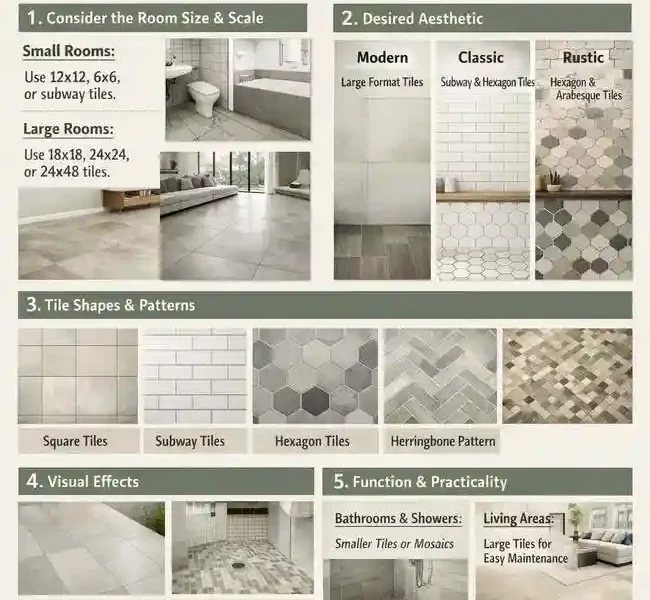
Choosing tiles is one of those decisions that seems simple until you are standing in a showroom surrounded by hundreds of options. Size and shape have a greater impact on a finished room than you might expect, and getting them right can genuinely transform how a space looks and feels. Here’s a simple, practical guide to help you navigate this decision like a pro!
Why Tile Size and Shape Actually Matter
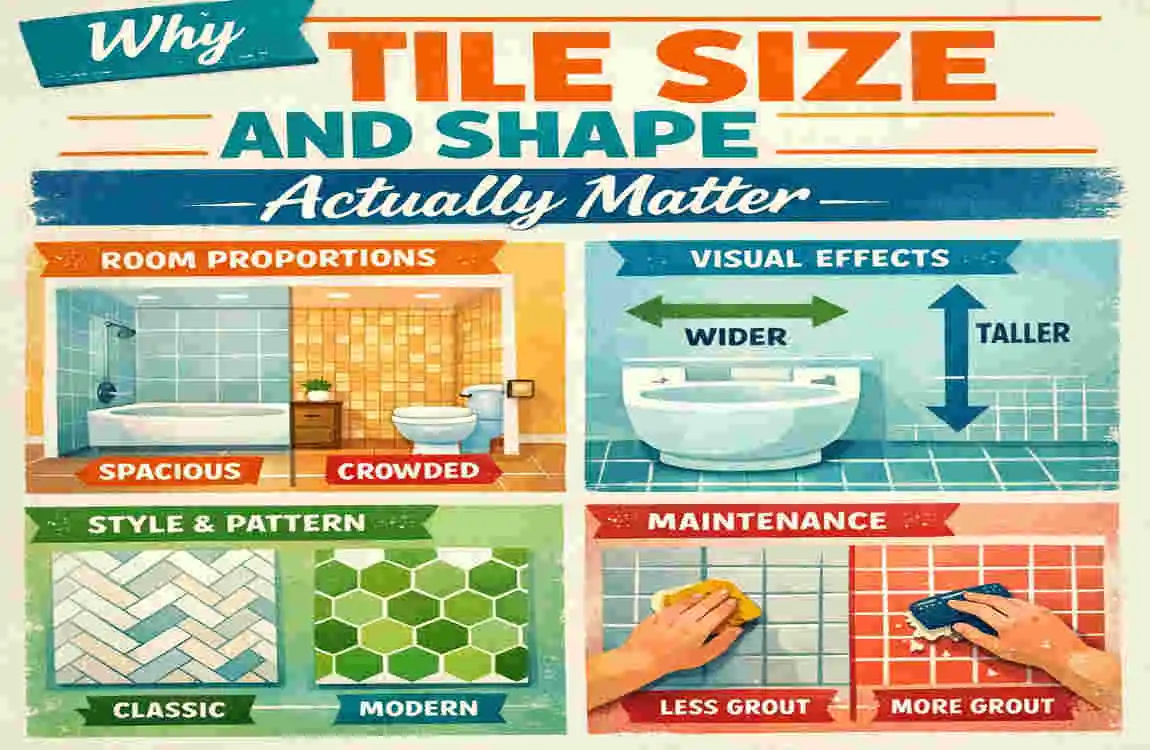
Tiles do more than just cover a surface. The size and shape you choose affect how big a room feels, how much light it reflects, and whether the overall look feels balanced or busy. A tile that works beautifully in a large open-plan kitchen can make a small bathroom feel cramped and chopped up. Getting the proportion right is the foundation of everything else.
Square Tiles
Square tiles are one of the most popular choices for good reason. They are versatile, timeless, and work across a huge range of styles from classic to contemporary. The key is matching the tile size to the space. In smaller rooms, larger square tiles, think 600x600mm and above, can actually make the space feel bigger by reducing the number of grout lines and creating a sense of visual continuity.
Smaller square tiles, around 100x100mm, are better suited to feature walls or areas where you want to add pattern and personality rather than a seamless backdrop. Square tiles can be laid in a classic grid, a diamond or rotated pattern, or a staggered arrangement where each tile meets the midpoint of the one beside it. Each layout creates a noticeably different feel, even with the exact same tile.
Rectangular Tiles
Rectangular tiles are the go-to choice for anyone looking to add length or width to a room. Their shape gives you real control over a space’s visual direction. Laid horizontally, they push the eye along the width of a room, making it feel wider. Laid vertically, they draw the eye upward and add height. In long corridors or narrow rooms, this kind of directional play is genuinely useful.
Subway tiles fall into this category and remain one of the most enduringly popular options available. Originally designed as a hygienic wall finish for New York subway stations in the early 1900s, they have since expanded into a huge range of colours, textures, and finishes while keeping that classic rectangular profile. Layouts like brick bond, herringbone, and stacked all deliver quite different results from the same tile shape.
Larger home rectangular planks in the 20x120cm or 22.5x180cm range are particularly effective at creating an elegant, elongated effect, especially in wood-look or stone-look finishes.
Hexagonal Tiles
Hexagons are the choice for people who want something a little more distinctive. The six-sided honeycomb shape adds instant character and works well as a feature floor, a bathroom splashback, or an accent wall. They bring a handcrafted, artisan quality to a space that square and rectangular tiles simply cannot replicate.
Hexagons come in a wide range of materials, including porcelain, ceramic, natural stone, and concrete, each giving a different feel. They also mix well with rectangular or square tiles, so you can use them to define a particular zone within a larger space without committing to them throughout.
Mosaic and Other Shapes
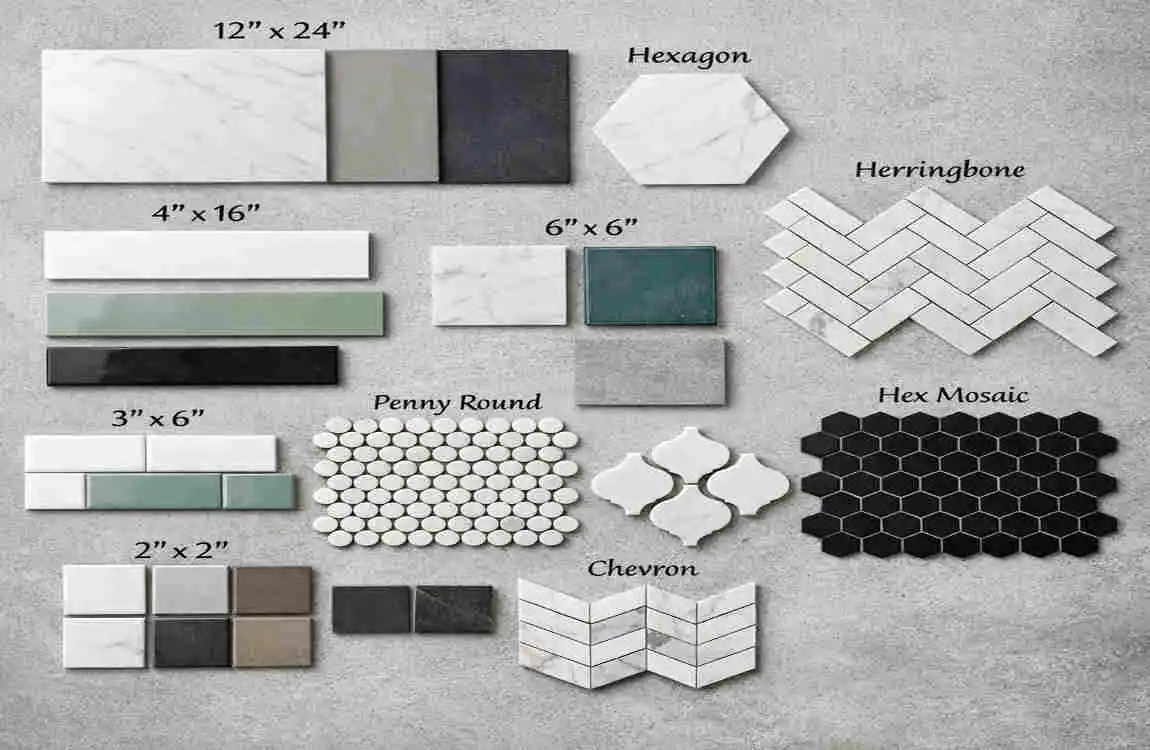
Beyond the main three, there is a whole world of tile shapes worth knowing about. Pennyround tiles, which are small circular tiles on a mesh backing, add rich texture and work beautifully as kitchen splashbacks or bathroom feature walls. Chevron tiles create a dynamic zig-zag effect that suits both traditional and contemporary spaces.
Fishscale, lantern, and triangle tiles all bring their own distinct personality and are worth considering for anyone looking to make a real design statement. Mosaic tile collections, where small tiles are pre-mounted on a mesh sheet for easy installation, offer a great deal of creative freedom. Many can even be customised to create your own pattern or artwork.
Mixing Shapes

Using more than one tile shape in a single space is a genuinely effective design technique. Square tiles in a main living area paired with rectangular tiles in a connecting corridor, for example, creates a clear visual distinction between zones without feeling disjointed. Just be mindful of scale: using very small tiles in a large room tends to create a busy, fragmented look that works against the sense of space.
Find tiles here
Choosing the right tiles takes time, effort, and guidance. If you’re looking for a huge range of tiles, check out Cheap Tiles Online. From outdoor and indoor tiles to granite and other materials, we’re confident that you’ll find what you’re looking for there.
Final Thoughts
There is no single right answer when it comes to tile size and shape. The best choice is the one that suits your space, your style, and how the room is actually used. Start with your room’s dimensions, consider the visual effect you want to create, and go from there. The right tile makes a space feel intentional and complete.
What Size and Shape of Tiles Should I Choose for My Space? – FAQ
Q: Do large tiles make a room look bigger?
Yes. Large-format tiles create fewer grout lines, giving the impression of a more open and spacious area.
Q: Are small tiles better for certain spaces?
Small tiles work well in bathrooms, shower floors, backsplashes, and areas with curves or detailed designs where greater flexibility is needed.
Q: What tile shape is best for a modern look?
Rectangular and large square tiles are popular choices for modern interiors due to their clean lines and minimalist appearance.
Q: Can I use the same tile size throughout my home?
Yes. Using a consistent tile size can create visual continuity and make the overall space feel larger and more cohesive.
Q: How do I choose the right tile size for a small room?
Medium to large tiles often work best in small rooms because they reduce visual clutter and minimize grout lines.
Q: Are patterned tile shapes a good choice?
Shapes like hexagon, herringbone, or subway tiles can add character and visual interest, but they may create a busier look than standard square or rectangular tiles.