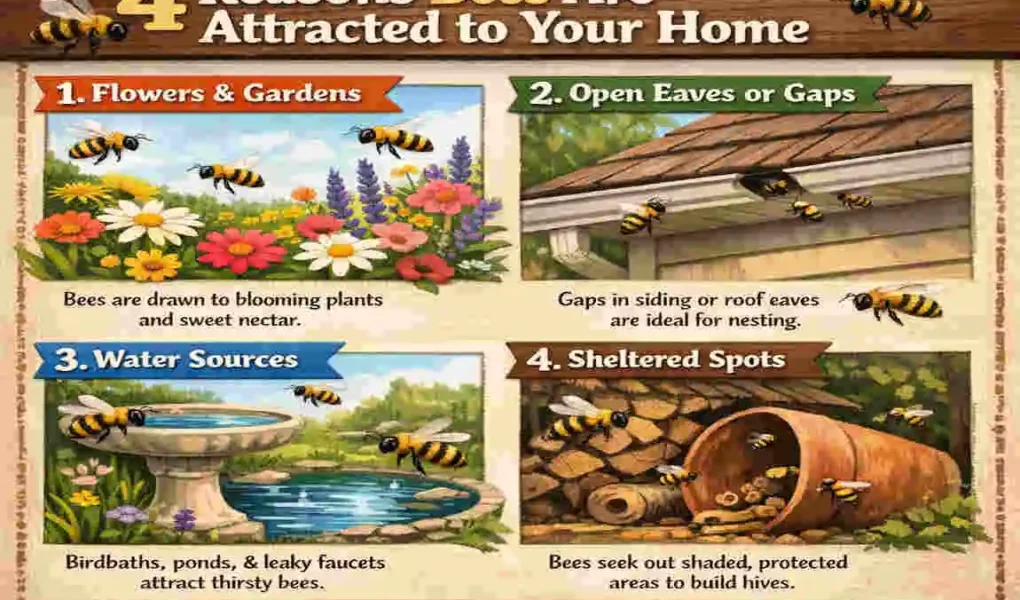
If you have been asking yourself, “why do bees keep coming into my house”, you are not alone. Many homeowners notice bees near windows, doors, roofs, vents, and even inside rooms, especially during spring and summer. Bees are important pollinators, but when they keep showing up around your home, they can become annoying and sometimes risky.
| Why It Attracts Bees | ||
|---|---|---|
| Food & Sugary Substances | Spilled drinks, ripe/fallen fruit, and food leftovers provide energy-rich nectar and sugar | |
| Water Sources | Standing water from bird baths, pet bowls, pools, or leaking faucets meets their hydration needs | |
| Flowers & Flowering Plants | Nectar and pollen from gardens (especially blue, red, yellow, purple flowers) draw bees as pollinators | |
| Shelter & Nesting Opportunities | protected spots like eaves, attics, wall gaps, and sheds offer safety from predators for building colonies |
The good news is that bees usually do not come inside for no reason. They are often looking for food, water, shelter, or warmth. Once you understand what is attracting them, you can take simple steps to reduce the problem.
Why Bees Are Attracted to Homes in the First Place
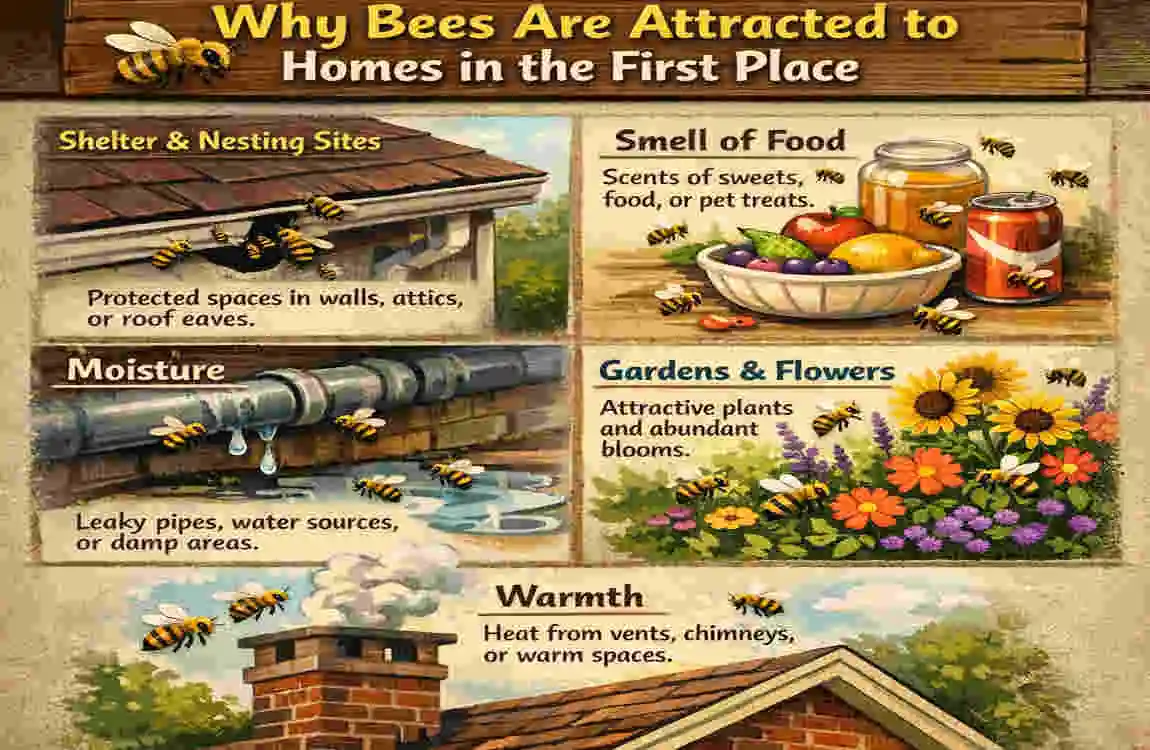
Bees are always searching for basic needs. Like most living things, they want food, water, and a safe place to rest or nest. Your home can accidentally provide all of these.
During spring and summer, bee activity rises. Colonies grow, bees become more active, and swarming may happen. This is when homeowners often notice more buzzing around the house, especially near gardens, vents, or rooflines.
Common bees around homes include honey bees, carpenter bees, and bumblebees. Each type behaves a little differently, but they can all end up near or inside homes when conditions are right.
Quick table: Common reasons bees come near homes
Reason What Attracts Them What You May Notice
Food Sugary drinks, fruit, trash, flowers Bees around patios, kitchens, and gardens
Water Leaks, bird baths, puddles Bees near sinks, gutters, or pools
Shelter Cracks, vents, wall spaces Buzzing inside walls or near roof areas
Light and scent Bright lights, perfumes, candles Bees flying toward windows and doors
Your Home Provides Easy Access to Food Sources
One of the biggest reasons bees are attracted to my home is the food. Bees are drawn to sweet smells and easy-to-reach food sources. If your clean home emits a scent of sugar or flowers, bees may approach to investigate.
Sweet smells and food residue attract bees
Bees often notice:
- Sugary drinks
- Fruit bowls
- Trash bins
- Pet food
- Outdoor grills and leftovers
A spilled soda on the porch or an open trash can can attract bees very quickly. Even small food crumbs can make a difference. If you eat outside often, bees may keep returning to the same spot because they remember where food is available.
Flower gardens and landscaping
Bright flowers are naturally attractive to bees. That is not always a bad thing, because bees help pollinate plants. But if flowers are planted right next to doors or windows, bees may gather close to the house and eventually come inside.
This is why many people wonder, why are bees flying around my house even when they are not eating outside. The answer may be your garden. Bees may be following the scent and color of nearby flowers.
Outdoor dining areas
Outdoor meals can also bring bees close. They are especially drawn to:
- Soda cans
- Juice cups
- BBQ sauce
- Sweet desserts
If your patio or deck is used often, bees may learn that it is an easy place to find food.
Prevention tips
You can lower the chance of bee visits by doing a few simple things:
- Seal food containers tightly
- Clean spills quickly
- Keep trash bins covered
- Avoid leaving sugary drinks outside
These small habits can make a big difference if you are trying to figure out how to stop bees from coming inside.
Bees Are Searching for Water Sources
Another major reason bees come close to homes is water. Bees need water to survive, and in hot weather, they search harder for it.
Standing water around your home
Water around the house can attract bees, including:
- Bird baths
- Gutters
- Leaky pipes
- Pet water bowls
- Pools
Even a small puddle can attract bees. They may visit the same water source repeatedly if it is helpful.
Why bees need water
Bees use water to:
- Cool the hive
- Feed larvae
- Support colony needs during heat
When the weather gets hot, bees may become more active and more visible around water. This can make them seem more persistent, and in some cases, they may appear more aggressive simply because they are focused on finding what they need.
Indoor moisture problems
Water problems inside the home can also attract bees or make them explore certain areas. Watch for:
- Condensation near windows
- Damp basements
- Leaky ceilings
- Moist wall areas
If bees are entering through a damp or open area, that space may be part of the problem.
Prevention tips
To reduce bee activity, try this:
- Fix leaks quickly
- Empty standing water
- Keep gutters clean
- Check pet bowls and bird baths often
If you are asking why do bees keep coming into my house during hot weather, water may be one of the main reasons.
Your House Offers Shelter and Nesting Areas
This is one of the most important reasons to understand. Bees are not only looking for food and water. They also want safe, protected spaces. Your house may offer exactly that.
Small cracks and openings invite bees
Bees can enter through many small spaces, such as:
- Roof gaps
- Wall cavities
- Attic vents
- Chimneys
- Siding gaps
Even tiny cracks can be enough. Once bees find a quiet and protected opening, they may keep coming back.
Why bees like warm, protected spaces
A home offers several things bees want:
- Safety from predators
- Stable temperatures
- Shelter from rain and wind
That is why bees may enter hidden places and stay there. In some cases, this leads to bees nesting in walls, which can become a larger problem over time.
Signs bees may be nesting in your home
Here are common bee infestation signs:
- Buzzing inside walls
- More bee traffic near one area
- Honey stains or sticky marks
- Musty or unusual odors
If you see these signs, the bees may not just be passing through. They may have already found a nesting spot.
Carpenter bees vs honey bees
It helps to know the difference.
- Carpenter bees bore into wood and may leave visible holes.
- Honey bees often build colonies in hidden cavities, such as walls or attics.
Both can become problems, but honey bees can form larger hidden colonies. In contrast, carpenter bees can damage wood surfaces over time.
Prevention tips
To lower the chance of nesting:
- Seal exterior gaps
- Install vent screens
- Inspect the attic and roof once a year
If you keep asking, why do bees keep coming into my house, a hidden nesting space may be the real cause.
Bright Lights and Indoor Scents Confuse Bees
Bees do not always enter because they are hunting food or shelter. Sometimes, they simply get confused.
Bees mistake indoor lights for sunlight
Bright indoor lights, especially near open windows or doors, can confuse bees. In the evening, bees may fly toward lighted areas as if they are following the sun.
Strong fragrances attract bees
Many everyday scents can draw bees near, including:
- Floral perfumes
- Scented candles
- Air fresheners
- Cleaning products
Open windows and doors increase entry
When windows and doors stay open, bees have an easy path inside. This is especially common in warmer months when people want fresh air.
Many homeowners wondering why do bees keep coming into my house overlook the role of lighting and scent. A strong smell or open doorway can be enough to invite them in.
Prevention tips
- Use screens on windows
- Reduce strong floral scents indoors
- Turn off unnecessary outdoor lights at night
These steps may seem small, but they make a big difference.
Are Bees Dangerous Inside Your House?
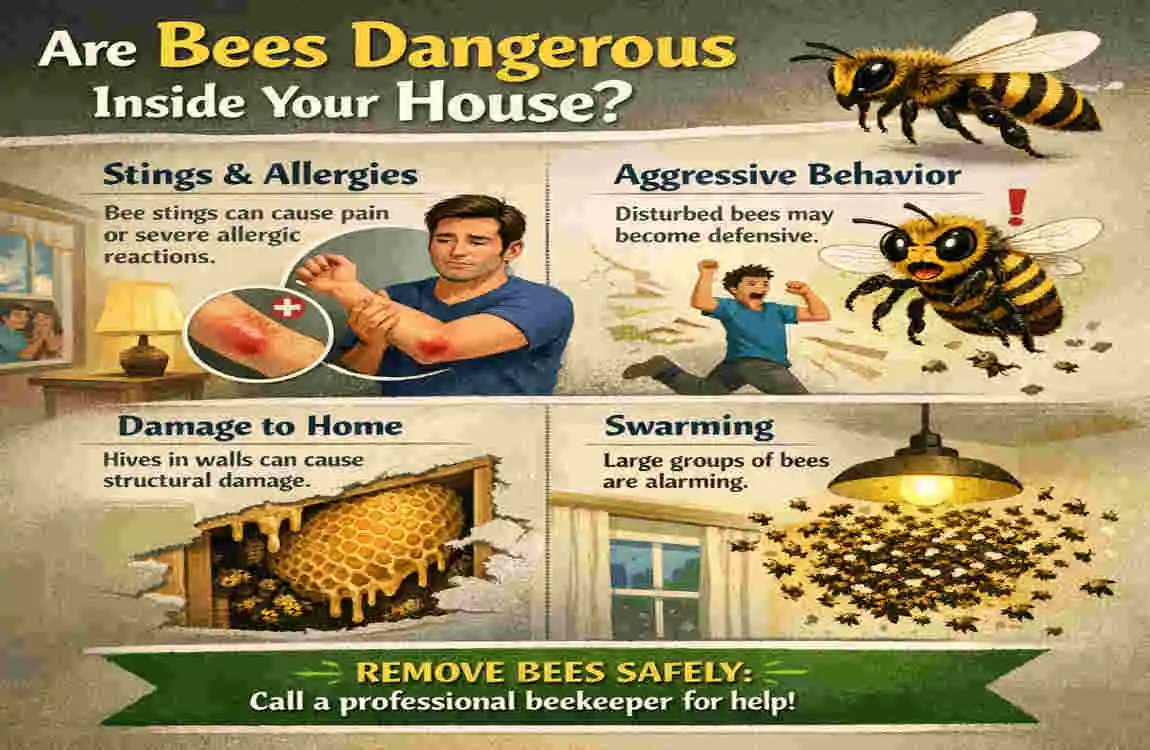
Bees inside the house are not always dangerous, but they should still be taken seriously.
The main risks include:
- Bee stings
- Allergic reactions
- Trouble for children and pets
Most bees do not attack unless they feel trapped or threatened. A single bee flying near a window is very different from a hidden colony inside the walls.
If you notice many bees in one area, or if the buzzing keeps returning, that may mean the problem is bigger than a random visitor.
How to Keep Bees Away From Your Home Naturally
If you want to know how to keep bees away from house areas without harsh chemicals, start with prevention.
Natural bee repellents
Some people use:
- Peppermint oil
- Cinnamon
- Vinegar spray
- Citronella
These may help discourage bees from certain spots, especially entry points and outdoor seating areas.
Landscaping changes
Move flowering plants farther away from entrances when possible. This can reduce bee traffic near doors and windows.
Bee-friendly options
If you still want to support pollinators, create a small pollinator zone away from the house. That way, bees can still do their important work without coming too close to your home.
The goal should be safe, humane control, not harming bees when it is not needed.
When to Call a Professional Bee Removal Service
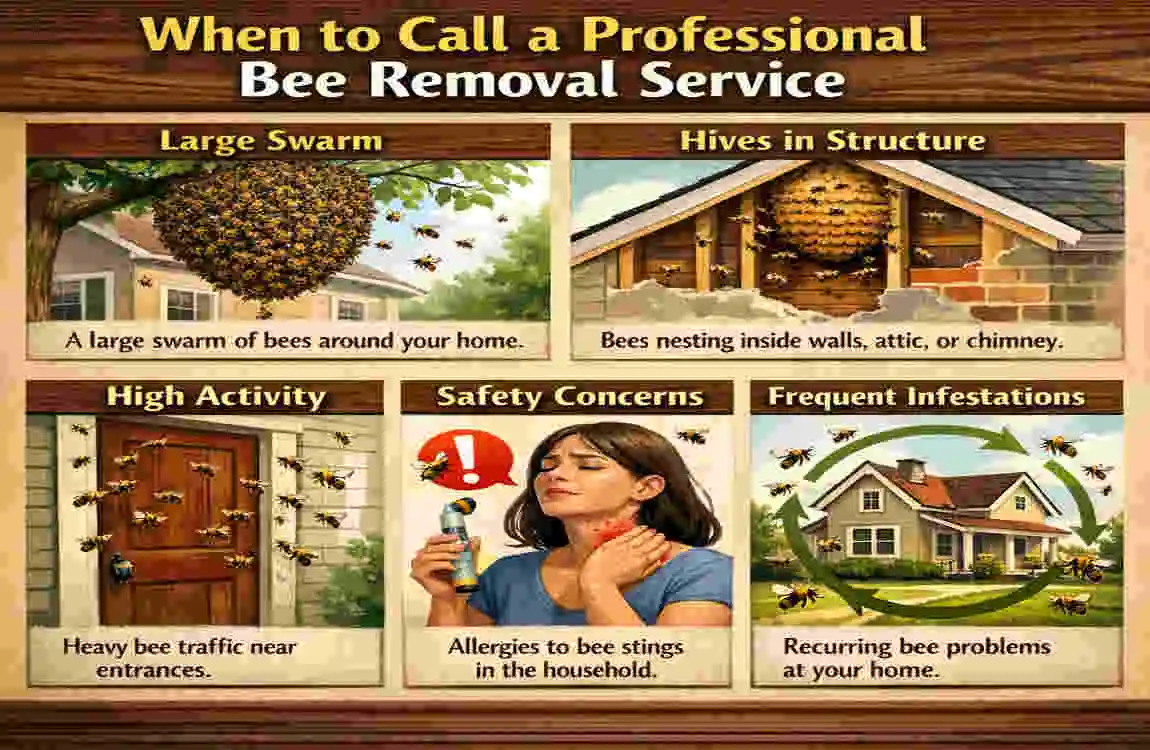
Sometimes the problem is too large for home fixes.
You should call a professional if:
- You see a large hive
- Bees seem aggressive
- Bees are inside walls
- The problem keeps coming back
DIY removal can be risky, as it may result in multiple stings or damage to your home. A professional can inspect the area and often remove or relocate the bees more safely.
Frequently Asked Questions
Why do bees keep coming into my house all of a sudden?
This often happens because of seasonal changes, nearby food, open entry points, or a new water source. Spring and summer usually bring more bee activity.
Can bees build nests inside walls?
Yes. Honey bees and carpenter bees can both nest in hidden spaces, including walls and other protected openings.
What smell keeps bees away?
Many people use peppermint, cinnamon, and vinegar as natural scent deterrents.
Are bees attracted to air conditioning vents?
Sometimes. Vents may emit warmth or airflow that bees find appealing, especially if there are nearby openings.
Should I kill bees in my house?
It is usually better to remove them safely rather than kill them. Bees are important pollinators, and humane removal is often the better choice.