If you have ever wondered who built my house online, you are not alone. Many homeowners want to know the original builder for practical reasons. Maybe you are planning repairs. Maybe you want to understand the home’s history. Or maybe you want to know more about the place you live in every day.
| What to do | |
|---|---|
| 1 | Make a list of local builders in your area. |
| 2 | Check their experience, licenses, and insurance. |
| 3 | Visit completed homes and active job sites. |
| 4 | Ask for references and talk to past clients. |
| 5 | Compare quotes, timelines, and contracts. |
| 6 | Choose the builder with clear communication and proven quality. |
Why Knowing Who Built Your House Matters
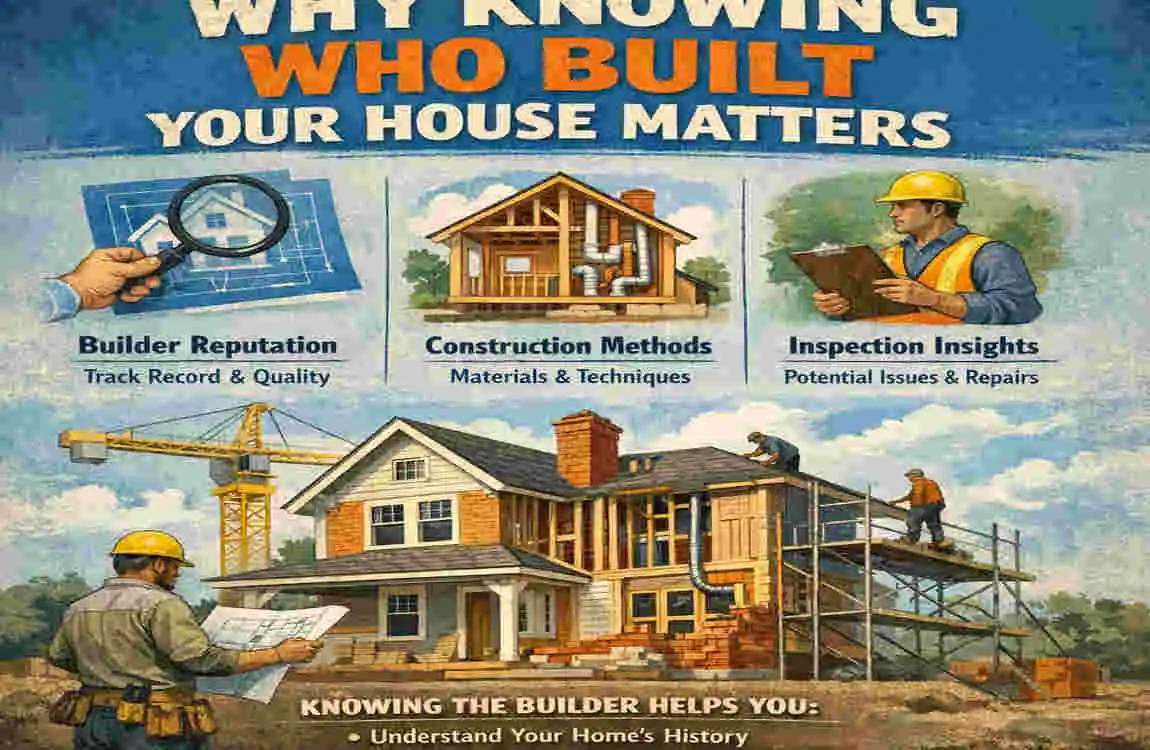
Knowing the builder is not just a fun fact. It can help you make better decisions about the home.
Helps with repairs and renovations
If you know the original builder, you may better understand the materials and home design used in the house. That can help when matching flooring, siding, windows, or structural features during repairs.
Helps you understand construction quality
Some builders have stronger reputations than others. Learning the builder can give you clues about quality, design standards, and common construction patterns used in your neighborhood.
Useful for insurance and legal questions
Builder records can matter if you ever need to look into construction defects, warranty issues, or permit-related questions. In older homes, the records may also help explain past changes.
Start with the Basic Property Details
Before you search online, gather the key facts about your home. This makes the search much easier and helps you avoid confusion.
Find your exact address
Use the full current address, including unit number if you live in a condo or townhouse. If the home is older, try older address variations as well. Some properties were listed differently in older records.
Look for the parcel or tax ID number
This number is very important. County smart systems often use it to organize property records. It can lead you to tax history, ownership records, and sometimes construction details.
Gather any home paperwork you already have
Check these documents if you have them:
- Closing papers
- Mortgage files
- Inspection reports
- Home warranty documents
- Old renovation records
Even one small note in these papers can help you find home builder records faster.
Check County Property Records Online
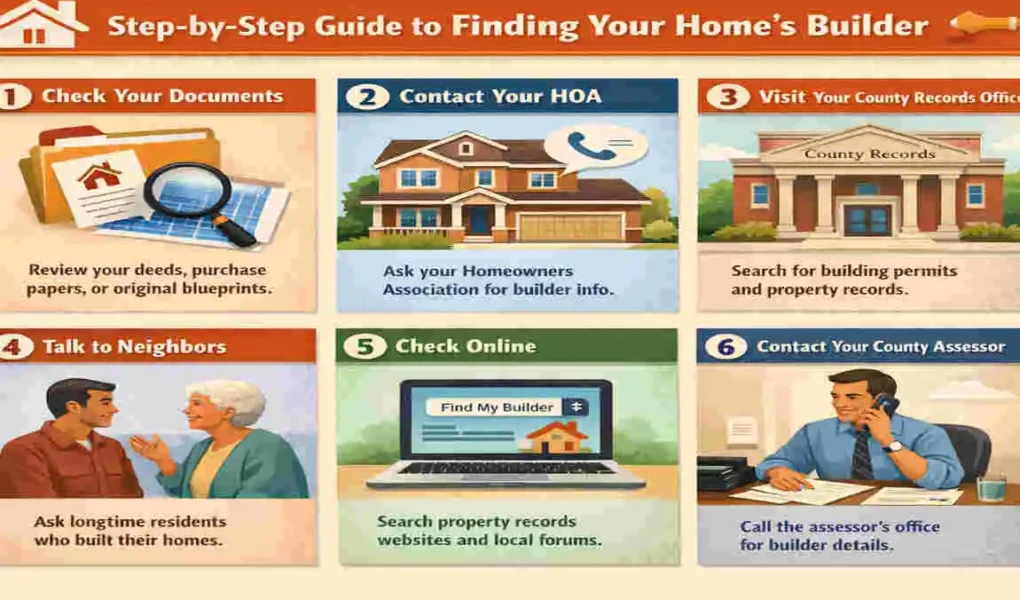
This is one of the best places to begin if you want to know who built my house online. County records are often the most reliable starting point.
Search your local assessor’s website
County assessor websites often show the year the house was built, property size, tax history, and ownership changes. While they may not always name the builder, they can give you enough details to move forward.
Review deed and land transfer records
Deeds show who owned the land and when the property changed hands. In some cases, the original sale from a developer or builder is listed in the records. That can point you to the company that built the home or the neighborhood.
Look for property history details
Property history records may show when the lot was first developed, when construction started, and who filed the original paperwork. If you are trying to find the original builder of a house, this is a good place to start.
Record TypeWhat It May ShowWhy It Helps
Assessor record Build year, property size, tax history Confirms the home’s age
Deed record Ownership transfers, developer names May reveal original seller
Parcel record Lot and land details Helps match the right property
Property history Past listing and sale data Can point to builder clues
Search Building Permit Records
Building permits are often the clearest source for original builder information. If the records exist, they can be very helpful.
Where to find permit records
Check your city or county permit office, building department website, or municipal records portal. Some places let you search online, while others may require a records request.
What permit records usually show
Permit files may include:
- Builder or contractor name
- Project type
- Approval dates
- Inspection dates
- Construction notes
These details can help you confirm the person or company that handled the build.
How to read the records correctly
Be careful here. The permit holder is not always the same as the builder. Sometimes a homeowner, developer, or general contractor is listed. Subcontractors may also appear in the file. Still, permit records are one of the best ways to find home builder records with confidence.
Review Your Home Purchase Documents
If you bought the home yourself, your closing and loan files may already contain hidden clues.
Check the closing disclosure
This document may mention the seller, developer, or original construction company. Even if it does not name the builder directly, it can point you in the right direction.
Look at title insurance papers
Title records can show the property’s chain of ownership. That chain may lead back to the developer or construction company tied to the first sale.
Search mortgage and inspection records
Sometimes inspection reports mention the home’s age, style, or original construction details. A mortgage file may also include references to new construction if the home was recently built when you purchased it.
Use Online Real Estate and Property History Sites
Online property tools can help you build a timeline. They are not always perfect, but they are useful when used with public records.
Check property history pages
Many property sites show past sales, previous listings, and home facts. Some old listings may mention the builder name or subdivision.
Compare multiple sources
Do not rely on a single site. Use at least two or three sources and compare the information. If the build year, lot details, and neighborhood match, your answer is more likely to be correct.
Watch for old listing descriptions
Archived listings sometimes include phrases like “built by,” “new construction,” or “custom home by.” Those small notes can help you identify the builder.
Look at Local Government and Historical Records
If your home is older, the answer may be outside the usual online records. That is when local archives become more useful.
City planning departments
Planning offices may have subdivision maps, development approvals, and early building files. These records can show which company developed the area.
Historical societies and archives
Historical groups often keep old maps, photos, permits, and neighborhood records. If your home is in an older area, these resources can be very valuable.
Newspaper archives
Old newspapers sometimes announced new subdivisions, custom homes, or construction projects. A small ad or article may reveal the builder’s name.
Ask People Who May Know the History
Sometimes the best answer comes from a person, not a database.
Talk to previous owners
If you can contact a former owner, ask whether they know who built the home. Even a partial memory can give you a useful lead.
Ask longtime neighbors
Neighbors who have lived in the area for years may remember which builder developed the street or subdivision.
Check HOA or community records
If your home is part of a homeowners association, the HOA may still have original development documents, builder agreements, or warranty information.
How to Find the Builder of an Older House
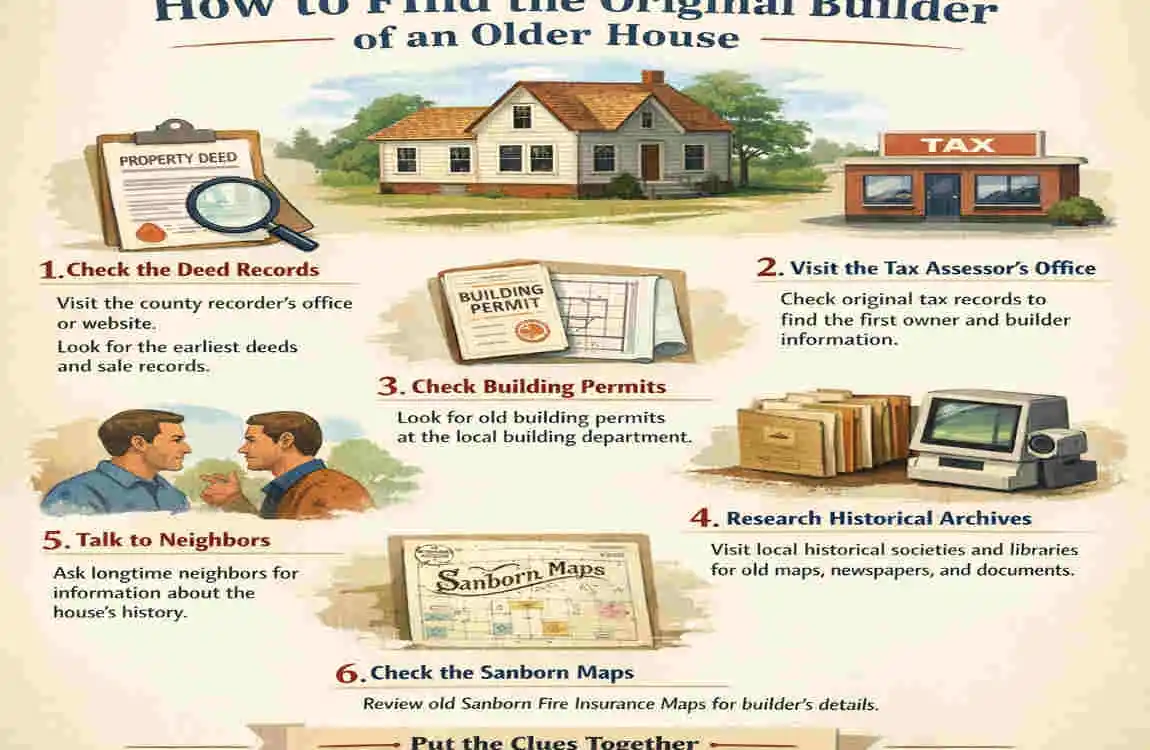
Older homes often take more work because records may be incomplete or missing. Still, you can usually find clues.
Use historical records
Older deeds, land maps, and city archives can show how the area was developed over time.
Look for architectural clues
The home’s style can hint at the builder or the era. Repeated floor plans, trim styles, and materials in nearby homes may point to a specific developer.
Search for neighborhood patterns
If many homes in your area were built around the same time, they may have been built by the same company. Comparing several houses can reveal a pattern.
Common Problems You May Run Into
Finding who built my house online is not always easy. Here are some common issues.
- Missing permit records in older towns
- Builder companies that no longer exist
- Multiple ownership changes over time
- Renovations that hide original features
- Incomplete public databases
If one source does not help, do not stop there. Keep checking other records and compare the details carefully.
Quick Tips to Confirm the Correct Builder
Before you settle on an answer, verify it from multiple sources.
- Cross-check records
- Match the build year
- Compare the home style
- Look for neighborhood patterns
- Confirm official business names
A good match usually shows up in several records, not just one.
When You May Need Professional Help
Sometimes the records are too complex or too old to sort out on your own. A property researcher, historian, or title expert can help if:
- The home is historic
- Records are missing
- There is a legal dispute
- Property boundaries are unclear
- Ownership history is complicated
FAQ
Can I find who built my house online for free?
Yes, often you can. County records, permit databases, and property history sources are usually free to search.
Are building permits public records?
In many places, yes. Permit records are often public, though access rules vary by city or county.
What if the builder no longer exists?
That is common. You can still use permits, deeds, archives, and neighborhood records to trace the original builder.
Can real estate websites show builder information?
Sometimes they can. Old listings and property history pages may mention the builder or the original development.
How accurate are online property records?
They are helpful, but not perfect. Always compare several sources before you decide on the final answer.