The answer may surprise you. House spiders do not always live for just a few days or weeks. In the right indoor setting, some can survive for years. That is why you may keep seeing the same spider, or at least think you are seeing the same one, again and again.
| Spider type / context | Typical lifespan | Notes |
|---|---|---|
| Common house spiders | About 1–2 years | Often live longer indoors than outdoors. |
| Cellar spiders (“daddy longlegs”) | Around 2–3 years | Do well in cool, undisturbed corners. |
| Female house spiders (general) | Often 1–3 years, sometimes several | Females typically live longer than males. |
| Male house spiders (general) | A few months up to about 1 year | Many die soon after mating. |
| In ideal indoor conditions | Upper end of species range (2–5 years) | Stable temperature, food, and no predators help them. |
House spiders are common indoor visitors. They usually come inside in search of food, shelter, and warmth. Most of them are harmless, and some even help by eating other pests. Still, many people want to know how long they will live, what affects their lifespan, and how to manage it.
What Are House Spiders?
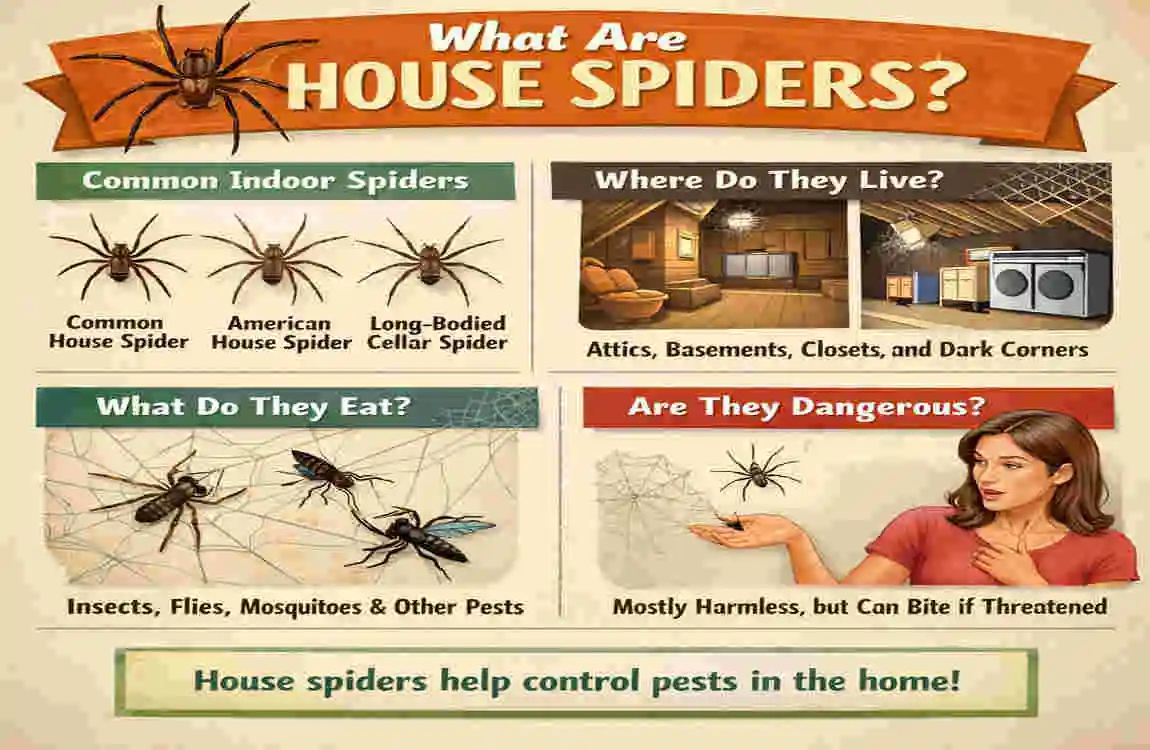
House spiders live near people and often build webs or hide inside homes clean. They are not a single species. Instead, the term covers several common spiders that adapt well to indoor spaces.
Common house spiders you may see
- Cellar spiders
- House cobweb spiders
- Wolf spiders
- Jumping spiders
These spiders often enter homes because they find:
- Food like flies, ants, and mosquitoes
- Warmth during cold weather
- Shelter from rain, wind, and predators
A common myth is that all homes clean are dangerous. That is not true. Most are not harmful to people and should be avoided whenever possible.
How Long Do Spiders Live in Your House?
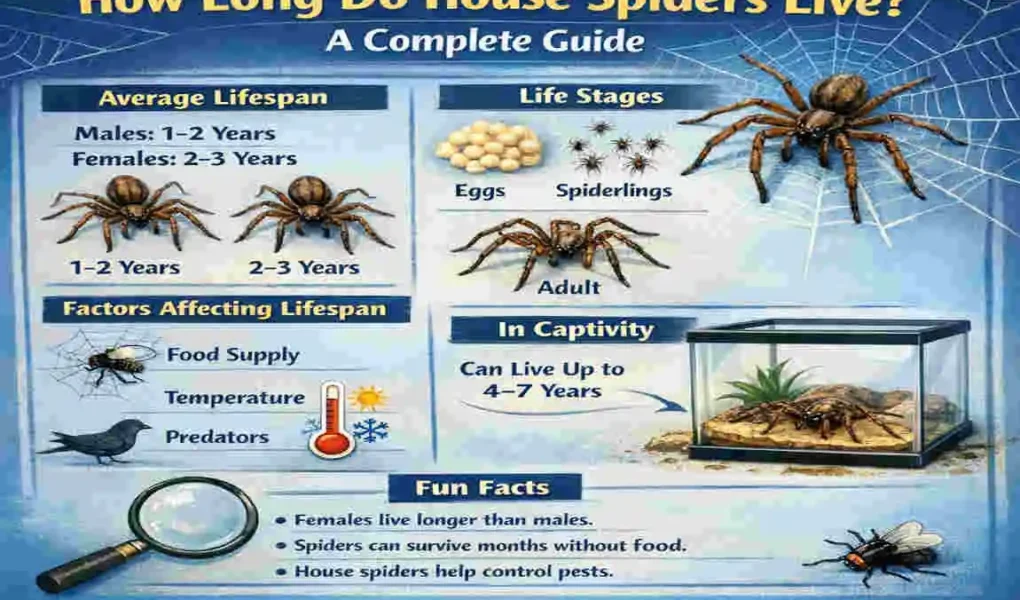
This is the main question, and the short answer is that most house spiders live 1 to 7 years, depending on the species.
Some small spiders live for only a year or two. Larger species may survive longer, especially indoors, where conditions are more stable.
Typical indoor lifespan by type
- Small house spiders: about 1 to 2 years
- Wolf spiders: about 1 to 3 years
- Some indoor spiders in stable conditions: up to 7 years
Why do they live longer inside? The answer is simple. Indoors, spiders often face:
- Fewer predators
- Stable temperatures
- Regular food sources
That means a spider inside your house may have a better chance of surviving than one outside in the wild.
It also explains why people sometimes keep spotting the same spider. It may truly be the same individual living in a quiet, hidden place.
Spider Lifespan Indoors vs Outdoors
Spiders live very differently depending on where they are.
Outdoor life is harder.
Outside, spiders must deal with:
- Changing weather
- Rain, heat, and cold
- Birds and other predators
- Less predictable food
Indoor life is easier.
Inside a homes clean, spiders may find:
- A more comfortable temperature
- Less danger
- Hidden places to rest
- Easy access to insects
Condition Indoors Outdoors
Temperature Stable Changes often
Predators Fewer More common
Food supply More steady Less steady
Lifespan Often longer Often shorter
So, in simple terms, house spiders usually live longer indoors than outdoors.
Life Cycle of a House Spider
A house spider goes through several stages before it becomes an adult.
Egg stage
Life starts in an egg sac. A single sac can hold dozens or even hundreds of eggs.
Spiderling stage
When the eggs hatch, tiny baby spiders emerge. These are called spiderlings. They are very small and vulnerable.
Juvenile stage
As they grow, spiderlings become juveniles. They start hunting more, building stronger webs, and moving into better hiding spots.
Adult stage
Once fully grown, the spider becomes an adult and can reproduce. Adult spiders are the ones people usually notice most often.
The full life cycle depends on the species and the indoor environment. In homes clean with enough food and shelter, spiders can complete these stages and remain for extended periods.
Factors That Affect How Long Spiders Live in Your House
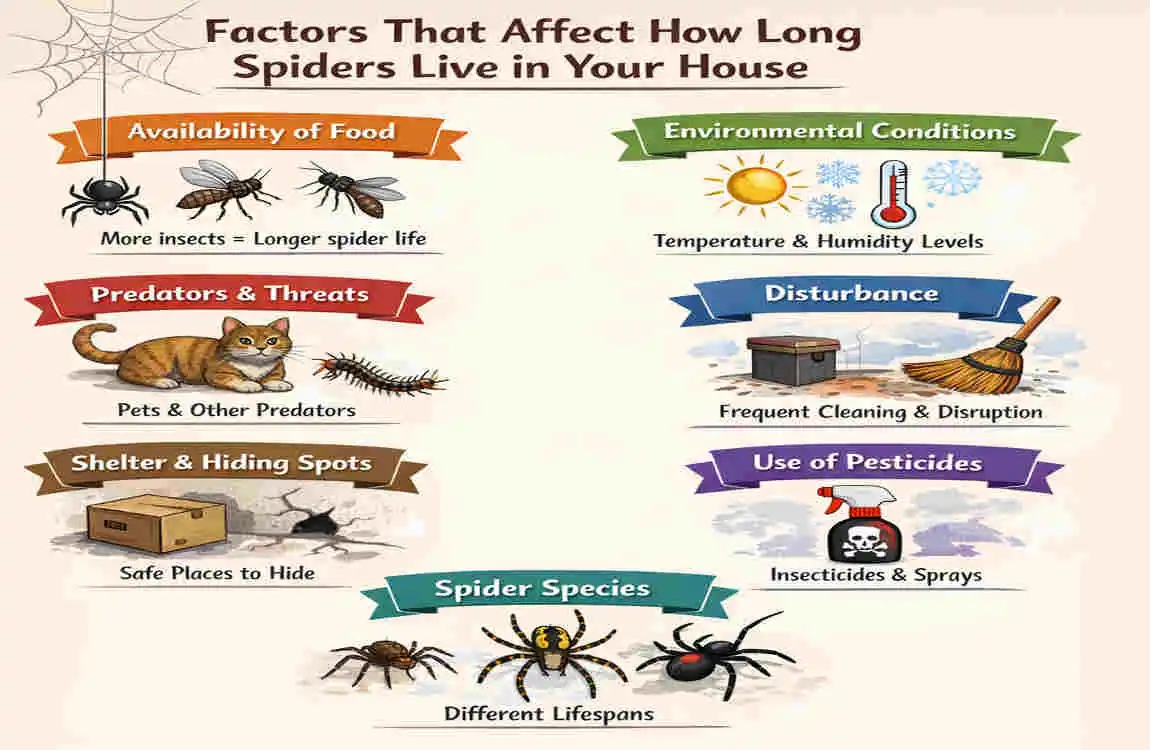
Several things can change a spider’s lifespan indoors.
Food supply
Spiders need insects to survive. If your home has flies, gnats, ants, or mosquitoes, spiders will have plenty to eat.
Temperature and humidity
Warm, calm indoor conditions help spiders survive longer. Very dry or very cold air can make life harder for them.
Cleaning and pest control
Regular cleaning, vacuuming, and pest control can shorten a spider’s lifespan by removing webs, hiding places, and food sources.
Species type
Some spiders naturally live longer than others. A cellar spider will not live the same way a wolf spider does.
Hiding places
Spiders love quiet areas such as:
- Corners
- Basements
- Attics
- Closets
- Behind furniture
The more hidden the space, the better the spider’s chances.
Most Common House Spiders and Their Lifespan
Cellar Spiders
Cellar spiders usually live about 2 to 3 years. They are thin, fragile-looking, and often found in ceilings or dark corners. They are harmless and help control small insects.
House Cobweb Spiders
These spiders often live around 1 to 2 years. They build messy webs in quiet indoor spots and tend to stay in one area for a while.
Wolf Spiders
Wolf spiders are larger and more active hunters. Their lifespan is usually 3 years or less. They do not rely on webs as much as other spiders.
Jumping Spiders
Jumping spiders often live about 1 to 2 years. They are small, alert, and quick-moving. Many people find them interesting because of their active behavior.
Do House Spiders Reproduce Inside Homes?
Yes, many homes clean spiders can reproduce indoors if conditions are good.
They need:
- Warmth
- Shelter
- Food
When these three things are present, spiders may lay egg sacs inside hidden areas. This is one reason spider numbers can slowly grow over time.
If you see more spiders in the same area, it may mean the home is giving them everything they need to survive and reproduce.
Are House Spiders Dangerous?
For most people, house spiders are not dangerous. In fact, they can be useful because they eat other pests.
What spiders usually do
- Stay hidden
- Avoid humans
- Catch insects in webs or by hunting
When to be careful
Spider bites are rare in ordinary house spiders, but some people may have:
- Mild skin irritation
- Swelling
- Allergic reactions
If a bite causes severe pain, swelling, or other unusual symptoms, seek medical advice.
For most homes, the issue is not danger. It is simply comfort and cleanliness.
How to Reduce Spider Lifespan in Your House Naturally
If you want fewer spiders at home, the goal is to make your house less inviting.
Simple natural steps
- Keep your home clean and uncluttered
- Remove other insects that spiders eat
- Seal cracks and small openings
- Vacuum webs and corners regularly
- Use natural repellents like peppermint oil or vinegar sprays
- Turn off outdoor lights when possible, since lights can attract insects
Here is a simple list to remember:
- Clean often
- Cut down on insect food
- Block entry points
- Remove hiding spots
When spiders lose food and shelter, they usually do not stay long.
Professional Spider Control Options
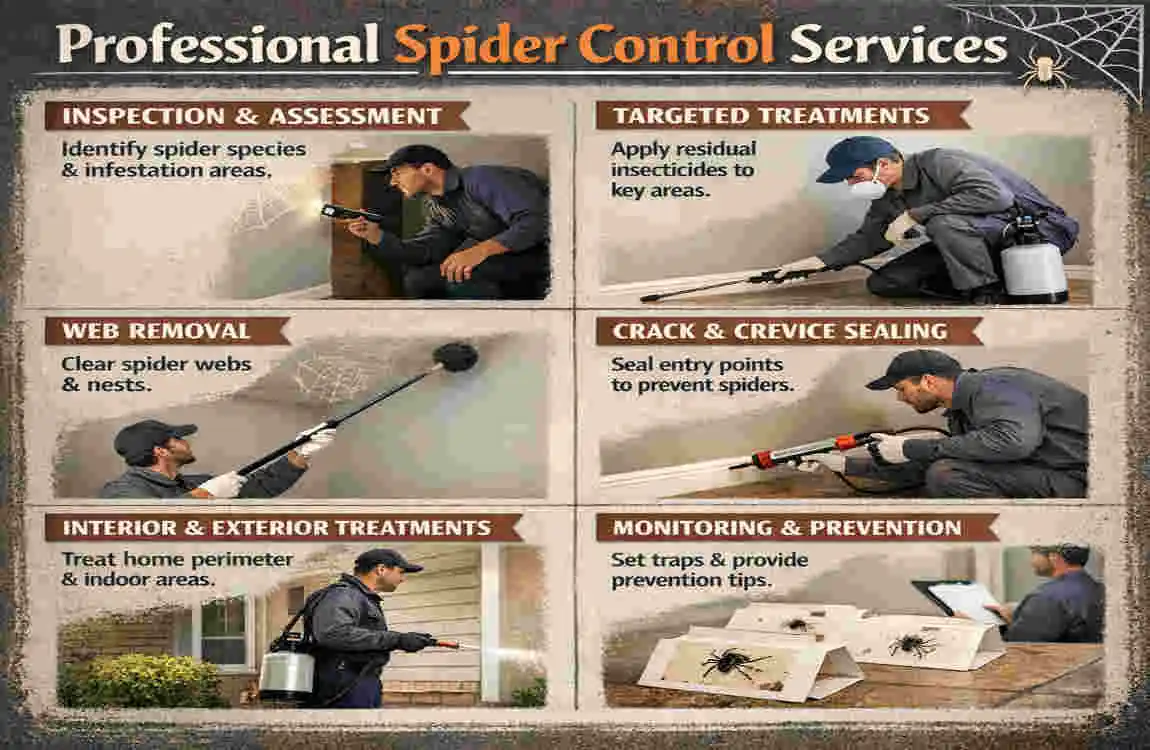
Sometimes home methods are not enough. If you keep seeing spiders in large numbers, professional help may be a good idea.
You may want pest control if:
- Spider sightings happen often
- Webs keep coming back
- You suspect nesting in hidden spaces
- You have a large infestation
A pest control expert can find the source, treat the problem safely, and help prevent spiders from returning homes clean.
Frequently Asked Questions
Do spiders die quickly indoors?
Usually, no. Many spiders live longer indoors because the conditions are safer and more stable.
Can spiders live for years in a house?
Yes. Some species can live 2 to 7 years in the right indoor environment.
Why do I keep seeing the same spider?
It may really be the same spider surviving in a hidden place. It may also be several spiders living in the same area.
Do spiders multiply fast inside homes?
They can, especially if there is enough food, warmth, and shelter.