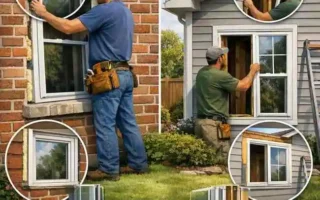
A house window won’t stay up problem is more than just annoying. It can make your room less comfortable, let in outside air, and even create a safety risk if the window drops suddenly.
In many cases, the cause is a broken balance, worn sash cord, loose hardware, or dirt in the tracks. The good news is that many of these issues are fixable with basic tools and a little patience.
What Does It Mean When a House Window Won’t Stay Up?
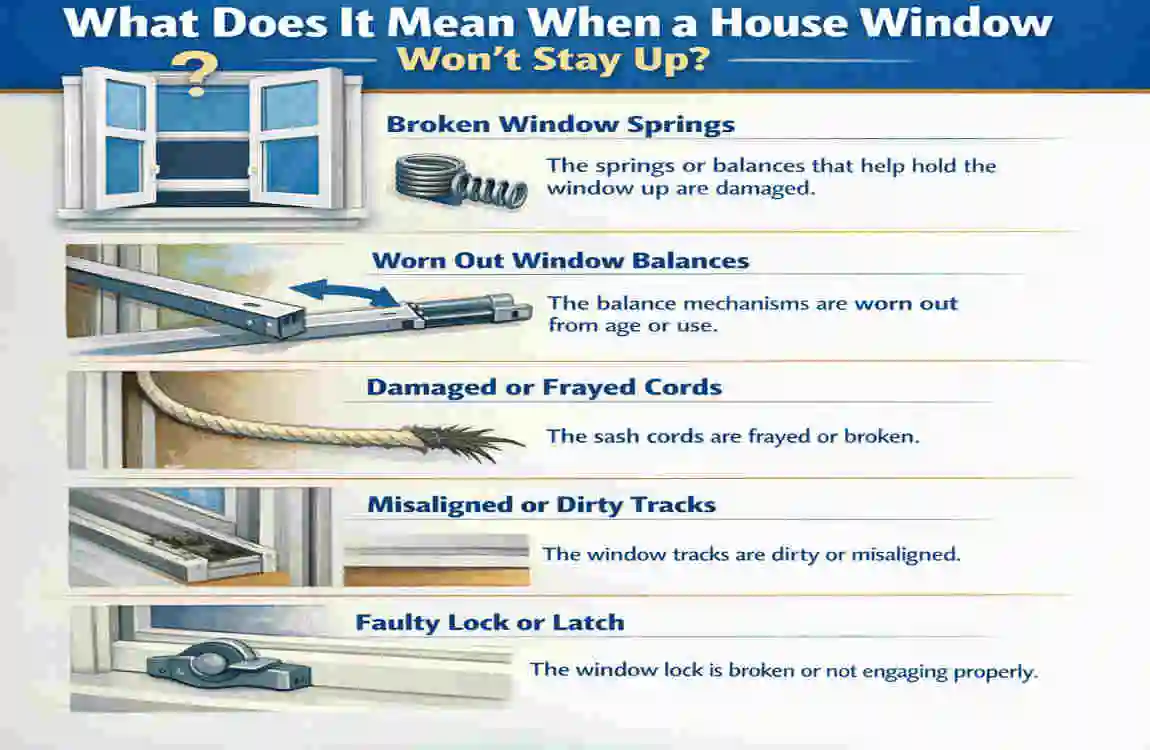
When a window won’t stay open, it usually means the support system inside the frame is not working properly. The sash may slide down on its own, feel heavy, or move unevenly.
Common Signs
- The window keeps falling after you open it
- It feels hard to lift or hold in place
- You hear scraping or clicking sounds
- The sash moves unevenly from side to side
Why It Matters
A window that won’t stay open can be risky. It may slam shut on fingers, damage the frame, or make the room less energy efficient. Fixing it early can save time and money.
Common Reasons a House Window Won’t Stay Up
Broken Window Balance System
The balance system helps hold the window in place and makes it easier to move. If it breaks, the sash may drop right away.
Damaged Spiral Balances
Spiral balances are common in many older windows. Over time, they wear out or lose tension, which causes the window to sink.
Worn-Out Sash Cords
Older windows often use cords and weights. If the cord snaps, the window will no longer stay up.
Loose Hardware and Dirt
Sometimes the problem is simpler. Loose screws, damaged brackets, or dirt in the tracks can make the window stick or fall.
Tools and Materials You May Need
Before starting, gather a few basic items:
- Screwdriver
- Pliers
- Utility knife
- Putty knife
- Replacement balance kit or sash cord
- Work gloves and safety glasses
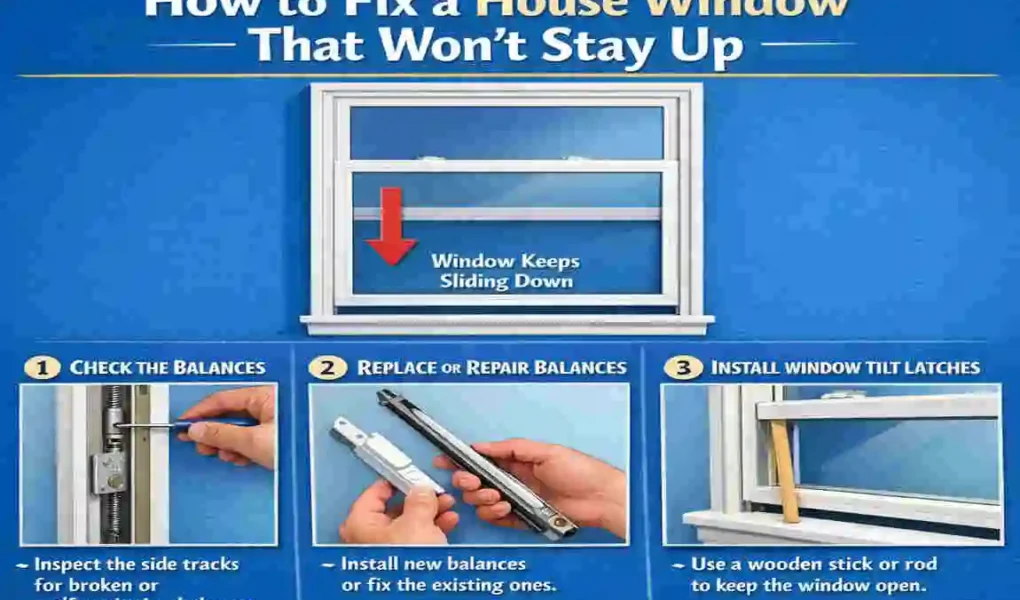
Step-by-Step Guide to Fix a House Window That Won’t Stay Up
Inspect the Window
Look closely at the sash, frame, and visible hardware. Check if the window type is older or newer, since that helps you identify the repair method.
Clean the Tracks
Remove dust, dirt, and debris from the sides and bottom track. A dirty track can make the window feel broken even when the main parts are still. Check the Balance System.
Open the window carefully and inspect the balance parts. Look for broken pieces, loose springs, or anything bent out of shape.
Step 4: Replace the Faulty Part
If the balance is damaged, you may need to replace the window balance parts with matching ones.
Repair Sash Cords if Needed
If your window uses cords, open the access area and check whether the cord is broken or frayed. Replace it with a strong, matching cord.
Tighten Loose Hardware
Tighten screws, brackets, and locks. If any part is bent or damaged, replace it instead of forcing it back into place.
Test the Window
Open and close the window several times. It should move smoothly and stay in place without dropping.
DIY vs Professional Repair
When DIY Makes Sense
DIY repair is often fine for cleaning, tightening hardware, or replacing a simple balance system.
How to Prevent Window Problems in the Future
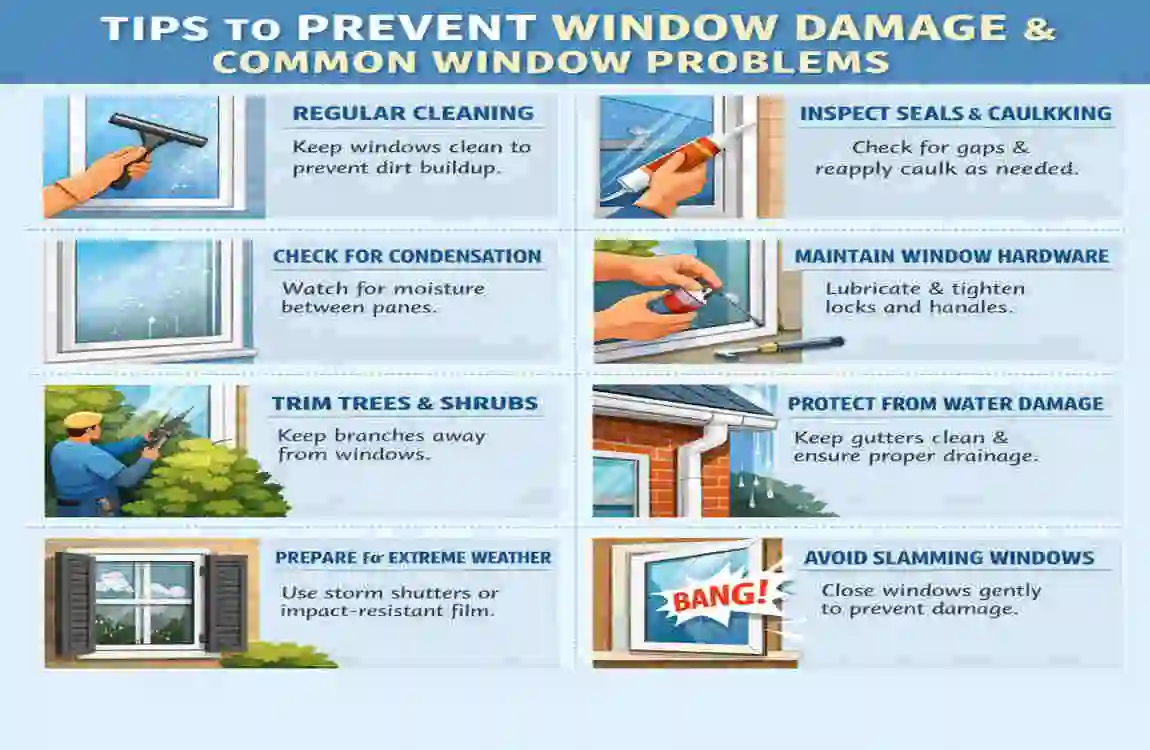
Good window maintenance tips can help you avoid the same problem again.
- Clean tracks regularly
- Check screws and hardware once a year
- Lubricate moving parts lightly
- Fix small issues before they get worse
Frequently Asked Questions (FAQ)
Why does my house window keep falling down?
A failed balance system, broken sash cord, or worn hardware is usually the cause.
Can I fix a window that won’t stay up myself?
Yes, many homeowners can repair balance systems or replace damaged hardware using basic tools.
How much does it cost to repair a window that won’t stay up?
Most repairs range from $50 to $300 depending on the parts and labor required.
Is it dangerous if my window won’t stay open?
Yes. A falling window can cause injuries and damage to the window frame.
How long does it take to replace a window balance?
Most DIY replacements take between 30 minutes and 2 hours.
Should I replace the entire window?
Only if the frame, glass, and operating mechanisms are severely damaged or outdated.
| Action | What to Check/Do | |
|---|---|---|
| Identify window type | Determine if it’s double-hung, single-hung, or vinyl replacement | |
| Check the balances | Look for worn-out spring balances, channel balances, or counterweights that hold the sash up | |
| Inspect tilt locks | Unlock tilt locks and remove the window sash to access internal components | |
| Rehook or replace balance | Reattach broken hooks/pegs to the sash, or replace damaged balance shoes | |
| Check friction mechanisms | For newer windows, ensure friction stays/pins aren’t worn; clean tracks and adjust tension | |
| Test and secure | Reinstall sash at an angle, test if window stays up, and adjust if needed |