A morning shower that dribbles, a creeping gas bill, a damp patch that keeps coming back under the bath. That’s rarely just “the house getting old.” More often, it’s the plumbing itself: the material, the bore, the fittings nobody thinks about until they misbehave. Choose well, and a system can run quietly for decades. Here’s where to look first.
Recognizing the Hidden Signs That Your Home Needs Repiping
Most people only notice the problem once there’s a puddle on the kitchen floor. Worn-out pipework flags itself long before that, but the early signals are easy to write off. Watch for any of these:
- A noticeable drop in tap pressure in the evening or after a wash
- Water that runs rust-tinged after sitting in the pipes overnight
- A single joint that’s needed a re-solder or a tighten twice in the same year
- A dull knock or hum in the walls when the hot tap opens
- Damp ceiling stains downstairs with no obvious source
- A metallic taste at the kitchen sink
- An oddly stubborn electricity bill where the boiler or pump is doing more work than it should
Age matters too. Plenty of UK homes still run on pipework that’s 40 to 50 years old or more: lead supply pipes in places, galvanised steel in others, and the early polybutylene of the 1980s, which has a reputation for letting go at the joints. If yours falls into that bracket, lift a floorboard or two and have a look before something forces your hand.
The Impact of Pipe Material on Water Pressure and Heating Efficiency
Old copper pipework slowly furs up inside: a film of limescale first, then oxides and corrosion. In the hard water typical of southern and central England, this happens faster than people expect. The bore narrows, and the same boiler can no longer push the volume it once did. The result: a tired shower, slow radiators, and longer boiler runs that show up on the bill.
Plastic pipework (PEX, polybutylene, push-fit) doesn’t have that problem. The inner wall stays smooth for years, and the material itself gives scale almost nothing to grip. Plastic also bends so a circuit can be run with fewer joints, and every joint is a potential leak. In underfloor heating it’s the default: a steady 40 to 50 °C flow temperature suits it perfectly, and it lays out across a floor plan without buried fittings in the screed.
Weighing Your Options: Modern Synthetics vs. Traditional Metals
The choice between plastic and copper usually comes down to three things: how long it has to last, what the budget looks like, and who’s installing it.
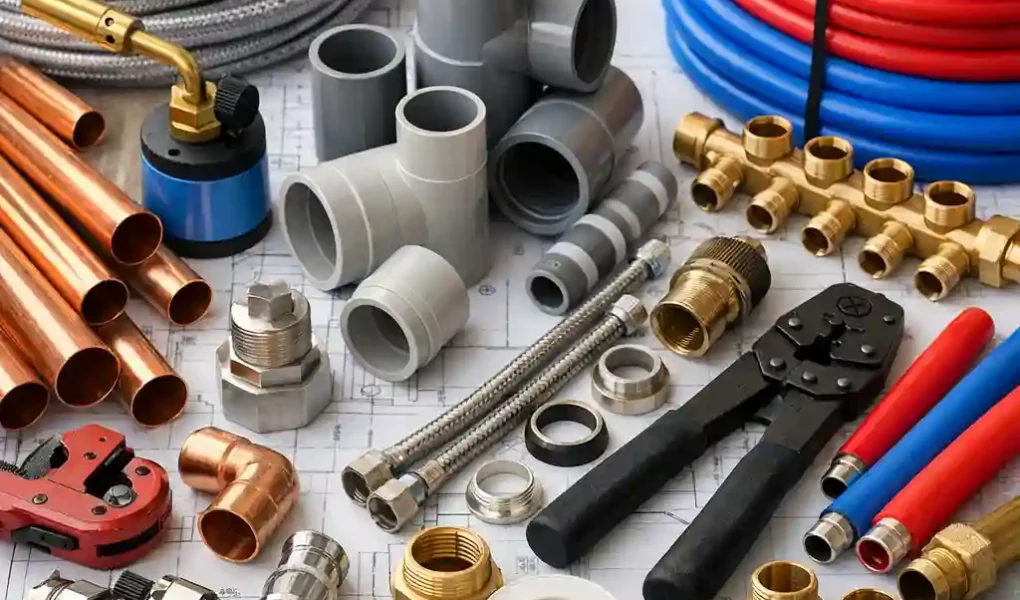
Copper is the familiar workhorse. Properly fitted, BS EN 1057 tube in groups X, Y or W will give you 40 to 50 years of service, it’s repairable, and any plumber in the country knows how to handle it. The trade-offs are price, the need for soldering or pressing, and a tendency to get noisy on a hard-pressure system.
Modern plastic is cheaper, far quicker to install, and won’t corrode. Push-fit fittings such as JG Speedfit come apart and back together in minutes, which is useful for any future repair. The weak spots: it doesn’t like UV (no leaving runs exposed in sunlight), it needs more clipping and support so heat expansion doesn’t move it about, and it has to stay clear of open flame.
Good news: it isn’t an either-or call. Most modern installations mix the two, with copper on visible runs, in the boiler cupboard and around radiators, and plastic threaded through floors and under screeds. For a side-by-side breakdown from working plumbers, there’s a thorough write-up here: https://www.monsterplumb.co.uk/blog/post/plastic-pipes-vs-copper-pipes
Finding the Right Professional for Installation
Doing the work yourself is rarely a good idea, especially when gas or pressurised hot water is involved. Anything touching gas in the UK has to go through a Gas Safe Register engineer. It’s the law, not a recommendation. For drinking water, you want a plumber on the WaterSafe register, who works to the Water Supply (Water Fittings) Regulations and uses WRAS-approved materials.
Before signing off a quote, ask for three things: proof of registration on the relevant scheme, contact details for two recent customers, and a written plan that names the materials and fittings. A good installer will tell you straight which sections to keep and which must come out, and will run a pressure test before any wall is closed. Five minutes at install saves a week of pulling a ceiling apart six months later.
The right materials, fitted with care, take a whole class of small domestic headaches off the table for decades. Quietly, that’s about the best money you can spend on day-to-day comfort.