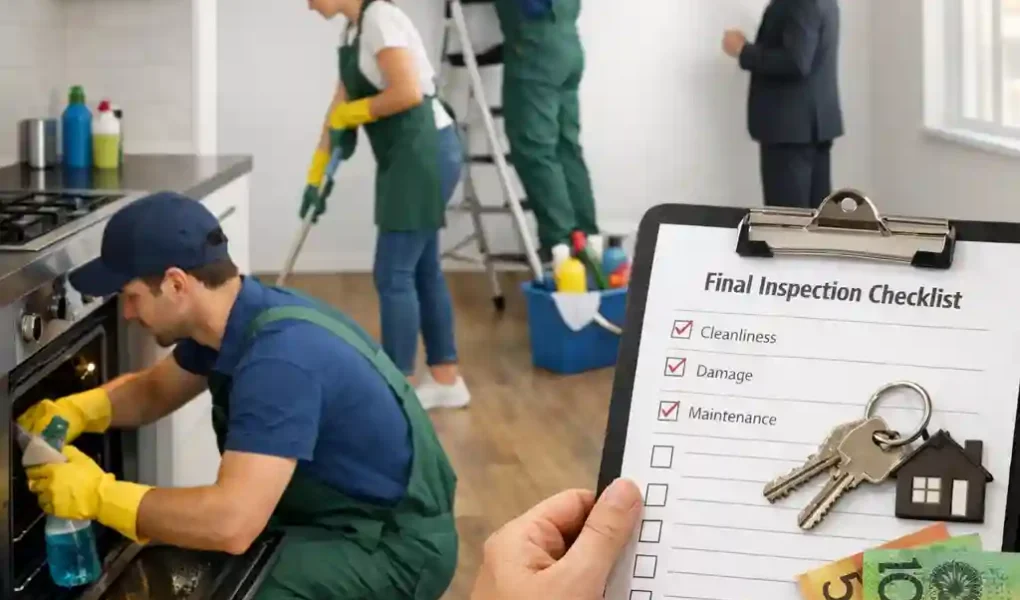
Most advice about bond cleaning stops at a checklist. Scrub this, degrease that, do not forget the rangehood. Useful, but it skips the part that actually determines the outcome, which is what happens in the business days *after* you hand back the keys.
Because a bond is not returned by a cleaner. It is returned by a process, and that process runs on paperwork and deadlines.
Most bond matters never become a fight
The reassuring part of the Victorian system is how rarely it ends in conflict. Roughly **95% of bond repayments are settled by mutual agreement**, without a tribunal ever being involved, and only about **5% escalate to VCAT** (RTBA Annual Report, 2023-24).
The typical outcome, in other words, is a form both sides sign off on. Renters lose money in the narrower band where a claim gets made and nobody can produce the evidence to resolve it quickly. Across the state, **65% of bonds are refunded to the renter in full** (RTBA Annual Report, 2024-25), which leaves a meaningful minority who see some of it withheld.
When a deduction does happen, one category dominates. Cleaning accounts for about **56% of bond deductions Australia-wide**, making it the leading dispute category nationally (End of Lease Bond Disputes Report, 2025). Not damage. Not unpaid rent. Cleaning.
What “bond cleaning” actually means
The phrase gets used loosely, so it is worth being precise, because the definition is what a quote is priced against.
A regular clean maintains a home you are still living in: surfaces, floors, bathrooms, kitchen. A bond clean is measured against an exit inspection checklist, so it adds everything nobody touches during a tenancy. Oven interior, racks and door glass. Rangehood filters. Window and sliding door tracks. Skirting boards. Inside cupboards and wardrobes. Marks on walls. Light fittings and exhaust fans.
That is why the same three-bedroom house costs more to bond clean than to maintain, and why the two services are not interchangeable when an agent is holding your money.
There is also a legal ceiling on what can be demanded of you, and it is lower than most agents’ language implies. The statutory test under the Residential Tenancies Act 1997 is **”reasonably clean”** (section 63). Two words in that phrase do the work: *reasonably*, which rules out perfection, and *clean*, which is assessed against how the place was recorded at move-in, with fair wear and tear discounted. Nothing in the Act obliges you to improve on the property you were handed.
One clause deserves a second look before you accept a quote. Victoria tightened the rules in March 2021, and a “professional cleaning required” line in a lease is not automatically binding. It generally only bites where two conditions were both met at the start: the property had actually been professionally cleaned, and that fact was disclosed to you in writing before you signed. Reviewing Melbourne leases, we find roughly **four in ten** of these clauses sitting in agreements where neither condition was satisfied, which makes the clause considerably weaker than it looks.
The timeline nobody explains
This is the part that decides outcomes, and almost no cleaning guide covers it.
Once your tenancy ends, the rental provider has **10 business days** to complete the exit condition report and give you a copy (Consumer Affairs Victoria). They also have **10 business days** to lodge any bond claim with the RTBA. If a claim is made, you have **14 days** to accept or dispute it.
Two practical consequences follow from those dates.
First, if both sides agree, the RTBA can process the refund in about **one business day**. Agreement is fast. Disagreement is not: once a matter reaches VCAT or the dispute resolution service, **30 days or more** is realistic (Tenants Victoria).
Second, and this catches people out, a cleaning problem often surfaces a week or more after you have moved out, because that is when the exit report gets written. This is the single strongest argument for checking the length of a cleaner’s re-clean guarantee. A **7-day window** still exists when the agent’s feedback lands. A 24 or 72 hour window has usually expired before anyone has looked at the property properly.
Evidence is what actually settles claims
Because roughly 95% of cases resolve by agreement, the goal is not to win an argument. It is to make the argument unnecessary.
Three documents do almost all the work.
**Your entry condition report.** It is the benchmark the law uses. Photograph it, keep it, and read it before you scope any cleaning. If the carpet already had a stain at move-in and the report records it, that stain is not your bill.
**Dated photos at handover.** Wide shot of each room, then close-ups of the items that get inspected: oven interior, tracks, shower screen, inside cupboards. Take them after the clean and before you return the keys. Five minutes of photography has resolved more bond disputes than any amount of arguing.
**The cleaning invoice.** If you paid for a professional clean, the invoice is proof of standard and date. In a sharehouse where the bond is lodged jointly, have one person pay and hold that invoice. It is the document that protects everybody on the lease.
Knowing what is *not* a cleaning problem matters just as much. If mould has gone black *inside* the silicone sealant of a shower, scrubbing will not shift it, because it is growing within the caulk rather than sitting on it. At that point it is a repair and maintenance question rather than a cleaning one, and repairs are generally the rental provider’s responsibility. Worth being precise here, because liability for mould depends on how it arose: if it took hold because a bathroom was never ventilated or a leak went unreported, a renter can still be held partly responsible. If you think a deduction has been mislabelled as cleaning when it is really maintenance, say so in writing and ask for the exit report and photos that support it.
Separately, fair wear and tear covers the ordinary deterioration of living somewhere: faded paint, lightly worn carpet on walkways, small nail holes. Consumer Affairs Victoria draws the line at damage caused by neglect, misuse or poor cleaning habits, so the distinction is worth getting right before you concede anything.
What should a bond clean cost
Market rates in Melbourne sit around **$200 to $300 for a studio**, **$300 to $550 for a two or three bedroom property**, and **$550 to $800 for a four bedroom or larger home**, with hourly pricing, where it is still used, running about **$55 to $85 per cleaner** (End of Lease Cleaning Pricing in Melbourne, 2026).
Set that against the money at risk. With Melbourne’s median weekly rent near **$580** (REIV, February 2025), a standard four-week bond lands around **$2,320**. Spending a few hundred dollars to protect that sum, against the deduction category that leads the national dispute figures, is not an extravagance. It is proportionate.
The comparison people get wrong is hourly versus fixed. An hourly quote can look cheaper and finish more expensive, because every stubborn oven becomes your cost. A fixed price per property makes quotes directly comparable and puts the risk of a slow job on the operator instead of you. If you want the detail on what a bond clean actually costs in Melbourne by property size, including where carpet steam cleaning and add-ons sit, it is worth reading before you accept the first number you are given.
One more comparison tip that costs nothing: ask for the **exclusions** in writing. What a quote leaves out tells you far more than what it advertises, and the omissions are predictable. External window cleaning, wall washing, blind slats, garage floors, balcony tiling and carpet steam extraction are usually priced separately, so two quotes that look $200 apart may simply be drawn around different boundaries.
A Melbourne suburb where all of this collides
Hawthorn is a good illustration, because its housing stock forces two completely different kinds of bond clean within the same postcode.
On one side there is the Swinburne University corridor: share houses around Glenferrie Road and Burwood Road, where leases turn over in clusters rather than evenly through the year. Kitchens and bathrooms in these properties absorb far more use than a comparable family home, and because the bond is typically lodged in joint names, the cleaning bill becomes a shared liability regardless of whether every housemate wants to contribute.
On the other side there are the Victorian terraces and Edwardian family homes around Power Street and Riversdale Road. Heritage stock brings its own inspection list: sash window channels that collect decades of grit, ornate cornices that cannot be attacked with a wet cloth, original floorboards that need a dry method rather than a mop, and picture rails nobody has dusted in years.
The practical lesson is that a postcode tells you almost nothing about what a bond clean will involve. Two three-bedroom properties on the same Hawthorn street can need different products, different methods and a different number of hours, purely because one has a 2018 kitchen and the other has 1920s joinery. When you brief anyone quoting for bond cleaning in Hawthorn, say which of the two you live in. A quote given without that detail is a guess, and guesses are where the variations and the arguments come from.
Sequence matters in both cases, and it is the tip most often ignored. Dust settles downward, moisture spreads outward. Clean top to bottom, dry before wet, and leave the floors until last. Anyone who mops first ends up doing the floors twice.
If a claim is made against you
It happens, and it is not the end of the matter.
Read the claim against your entry condition report first, line by line. Separate genuine cleaning misses from fair wear and tear, and from anything that was already recorded at move-in. If part of the claim is fair, agreeing to that part and disputing the rest is usually faster and cheaper than fighting all of it.
If you used a professional cleaner, contact them before you respond. A reputable operator will return and re-clean a legitimate miss **at no cost** while its guarantee window is still open, which is the practical reason a 7-day window matters more than a 24-hour one. Then put your evidence in one place: the entry condition report, your handover photos and the cleaning invoice, sent together rather than piecemeal. A claim that has to be argued against three dated documents is a much harder claim to sustain.
And if it does escalate, remember the base rate: only about 5% of bond matters reach VCAT. Preparation is what keeps you out of that 5%.
Conclusion
Bond cleaning is not really about cleaning products. It is about meeting a written standard, on a defined timeline, with evidence you can produce on request.
Know that “reasonably clean” is the legal test, not perfection. Check whether the professional cleaning clause in your lease is actually enforceable. Photograph everything at handover. Choose a quote you can compare and a guarantee window long enough to still exist when the agent’s report arrives.
Do that, and you are firmly in the 65% who get every dollar back.