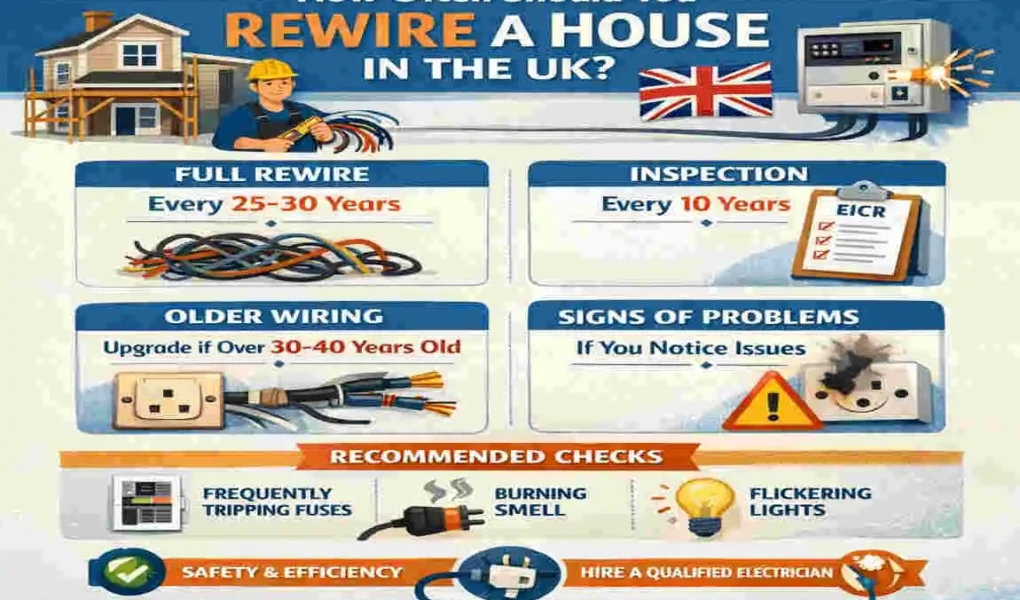
If you are asking how often you should rewire a house in the UK, the short answer is usually every 25 to 30 years for many homes. But age is only part of the story.
What really matters is the condition of the wiring. Some homes may need attention sooner, while others can last longer if they have been well maintained and upgraded over time. In the UK, electrical safety is very important because old or damaged wiring can raise the risk of shocks, faults, and even fires.
How Often Should You Rewire a House in the UK?
General Rewiring Timeline
A common rule is that a house may need rewiring every 25 to 30 years. This does not mean every home must be rewired on that exact schedule.
Some properties stay safe for longer if the wiring is still in good shape. Others may need work earlier because of wear, damage, or older materials.
Factors That Affect Rewiring Frequency
Several things can change how soon you need to rewire your home:
- Age of the property
- Previous electrical upgrades
- Type of wiring
- How heavily the electrical system is used
For example, a home that has had regular improvements may not need a full rewire as soon as a home with very old wiring and no updates.
Signs Your House Needs Rewiring
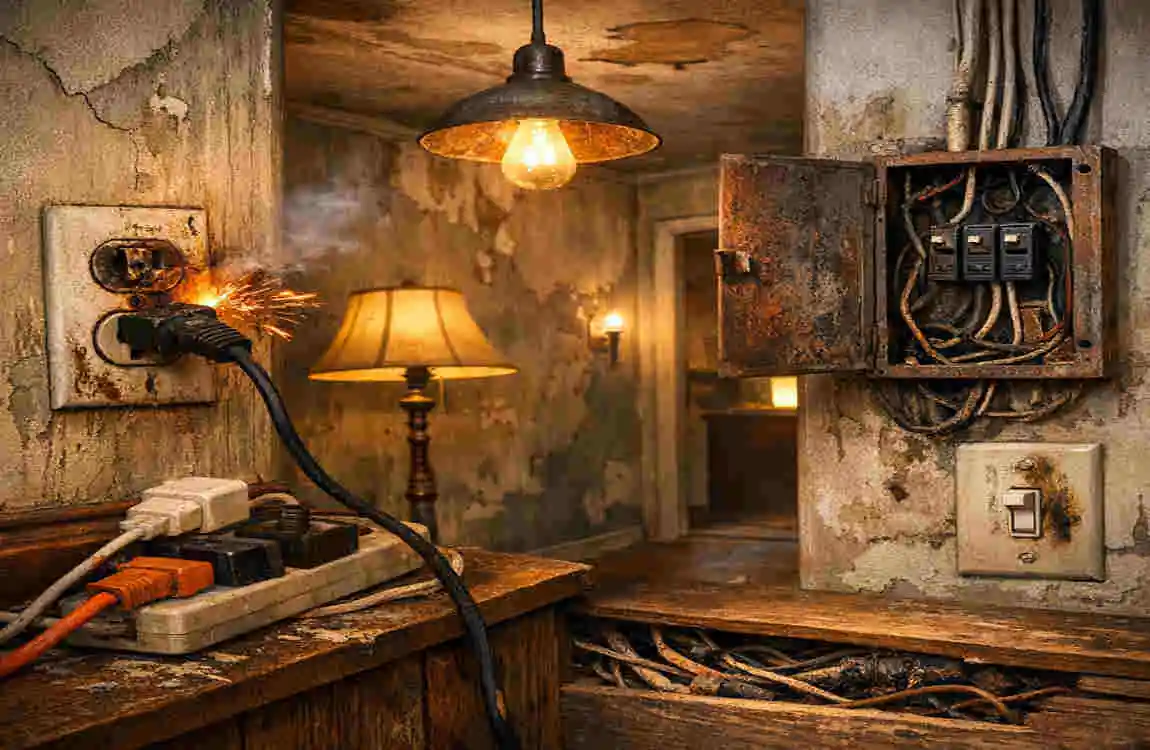
Frequent Fuse Trips
If your fuses trip often, that is a warning sign. It can mean the system is overloaded or there is a fault in the wiring.
Flickering or Dimming Lights
Lights that flicker or dim for no clear reason may point to loose connections or old wiring.
Burning Smells or Scorch Marks
A burning smell near sockets, switches, or the consumer unit should never be ignored. Scorch marks are also a serious concern.
Old Rubber or Fabric Wiring
Very old wiring materials can become brittle and unsafe over time. If your home still has rubber or fabric-covered cables, it is worth getting them checked.
Discolored Switches and Sockets
Brown marks, heat damage, or discolored plates can suggest overheating.
Lack of Modern Safety Devices
Modern homes should have proper safety equipment such as an up-to-date consumer unit and RCD protection. If your home lacks these, it may need an upgrade.
How to Know If Your Wiring Is Safe
Electrical Installation Condition Report (EICR)
An EICR is one of the best ways to check electrical safety. A qualified electrician inspects the wiring and tells you whether it is safe, needs repairs, or needs to be replaced.
Consumer Unit Inspection
The consumer unit, sometimes called the fuse box, is an important part of the electrical system. If it is outdated, it may not protect your home properly.
Professional Electrician Assessment
If you notice warning signs, call a qualified electrician. A proper inspection can help you avoid guessing and make the right decision for your home.
UK Rewiring Recommendations by Property Age
Property Age Recommended Action
Under 10 years Routine inspections
10–25 years Electrical safety check
25–30 years Consider partial or full rewiring
Over 30 years Full inspection and possible rewiring
This table gives a simple guide, but remember: condition matters more than age alone.
Full Rewire vs Partial Rewire
What Is a Full Rewire?
A full rewire means replacing most or all of the electrical wiring in the property. It is often needed in older homes or homes with serious electrical problems.
What Is a Partial Rewire?
A partial rewire means only certain parts of the system are replaced or improved. This may be enough if only one area has issues.
Which Option Is Best?
The right choice depends on the condition of your wiring, your budget, and the size of the problem. A professional electrician can help you decide.
Benefits of Rewiring Your Home

Rewiring can feel like a big job, but it brings real benefits.
- Improved electrical safety
- Lower fire risk
- Supports modern appliances
- Meets current UK regulations
- Can increase property value
- May improve energy efficiency
If your home is older, rewiring can also give you peace of mind. You know the system is safer and better suited to modern life.
How Much Does House Rewiring Cost in the UK?
Average Cost by Home Size
Property Type Estimated Cost
1-bedroom £3,000–£5,000
2-bedroom £4,000–£6,500
3-bedroom £5,500–£8,500
4-bedroom+ £7,500–£12,000+
These are only rough estimates. The final cost depends on the property and the amount of work needed.
Factors Affecting Cost
Several things can change the price:
- Property size
- Accessibility
- Number of sockets
- Labour rates
- Repairs after rewiring
For example, a home with difficult access or more rooms will usually cost more to rewire.
How Long Does House Rewiring Take?
The time needed depends on the size of the home and the amount of work involved.
Small Homes
A small property may take a few days to a week.
Medium Homes
A medium home often takes one to two weeks.
Large Properties
Larger homes can take two weeks or more, especially if extra repairs are needed.
Living in the House During Work
You may be able to stay in the home during a partial rewire. A full rewire can be uncomfortable, dusty, and disruptive, so some homeowners choose to stay elsewhere during the work.
Tips to Extend the Life of Your Home Wiring
You can help your wiring last longer by taking a few simple steps.
- Schedule regular EICRs
- Avoid overloaded sockets
- Replace damaged outlets
- Upgrade outdated consumer units
- Hire qualified electricians
These habits help spot problems early and reduce the chance of bigger issues later.
Common Rewiring Mistakes to Avoid
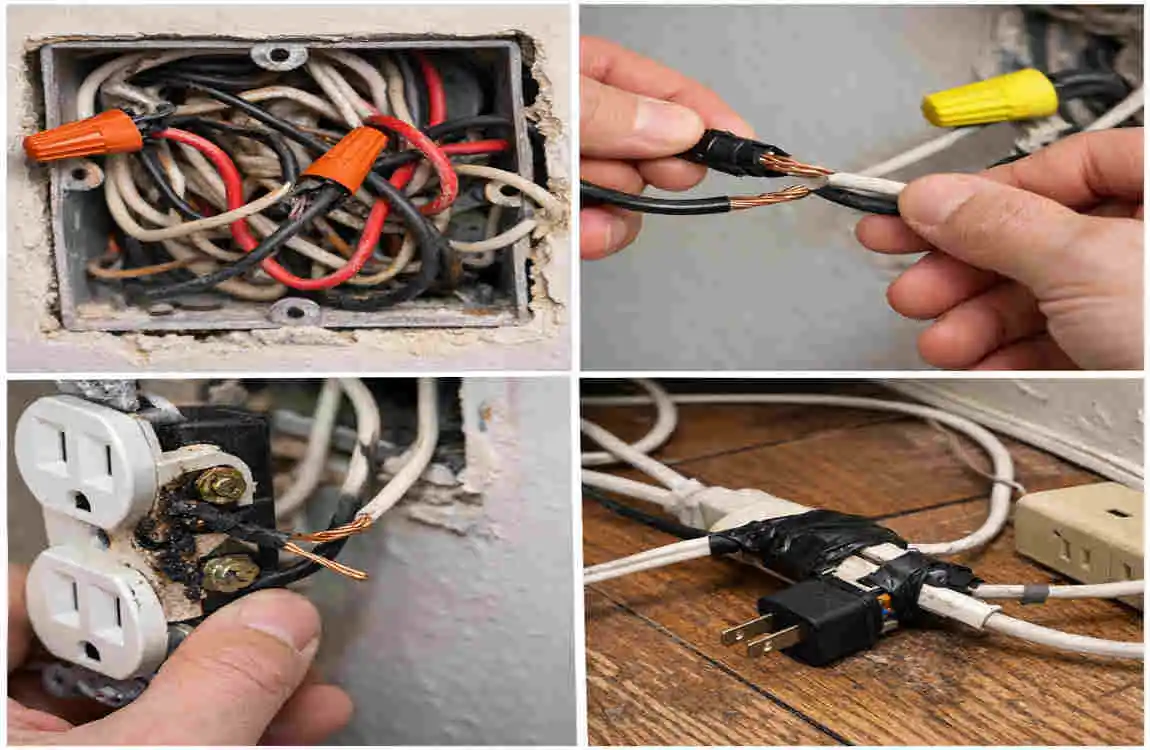
Ignoring Warning Signs
If lights flicker, sockets heat up, or fuses trip often, do not wait too long to act.
DIY Electrical Work
Electrical work is not something to guess at. Mistakes can be dangerous.
Hiring Unqualified Contractors
Always check that the electrician is properly qualified and experienced.
Delaying Inspections
Regular checks are a smart way to catch problems early.
Choosing the Cheapest Quote Only
The lowest price is not always the best choice. Safety and quality should come first.
Frequently Asked Questions
How often should you rewire a house in the UK?
Most UK homes should be checked after 25–30 years, depending on the condition of the wiring.
How do I know if my house needs rewiring?
Look for flickering lights, frequently tripped breakers, burning smells, and outdated wiring.
Is rewiring a house expensive in the UK?
Yes, it can cost between £3,000 and £12,000+, depending on the size of the home and the work needed.
Can I stay in my house during rewiring?
Sometimes, yes. But for a full rewire, many homeowners choose temporary relocation.
Is rewiring required before selling a house?
Not always, but safe wiring and a recent EICR can make the home more appealing to buyers.
How often should an EICR be carried out?
Usually every 10 years for owner-occupied homes, or sooner if an electrician recommends it.
| Topic | Information |
|---|---|
| Recommended Rewiring Frequency | Most homes in the UK should be fully rewired every 25–30 years, depending on the condition of the electrical system. |
| Electrical Inspection | Have an Electrical Installation Condition Report (EICR) carried out every 10 years for owner-occupied homes and every 5 years for rental properties. |
| Signs a House Needs Rewiring | Frequent tripping, flickering lights, burning smells, discoloured sockets, outdated fuse boxes, or old rubber, lead, or fabric-insulated wiring. |
| Older Properties | Homes built before the 1980s may require rewiring if the original wiring is still in place or has deteriorated. |
| Benefits of Rewiring | Improves electrical safety, meets current UK wiring standards, supports modern appliances, and can increase property value. |
| Average Rewiring Time | A typical 2–3 bedroom house usually takes 5–10 days, depending on the property’s size and condition. |