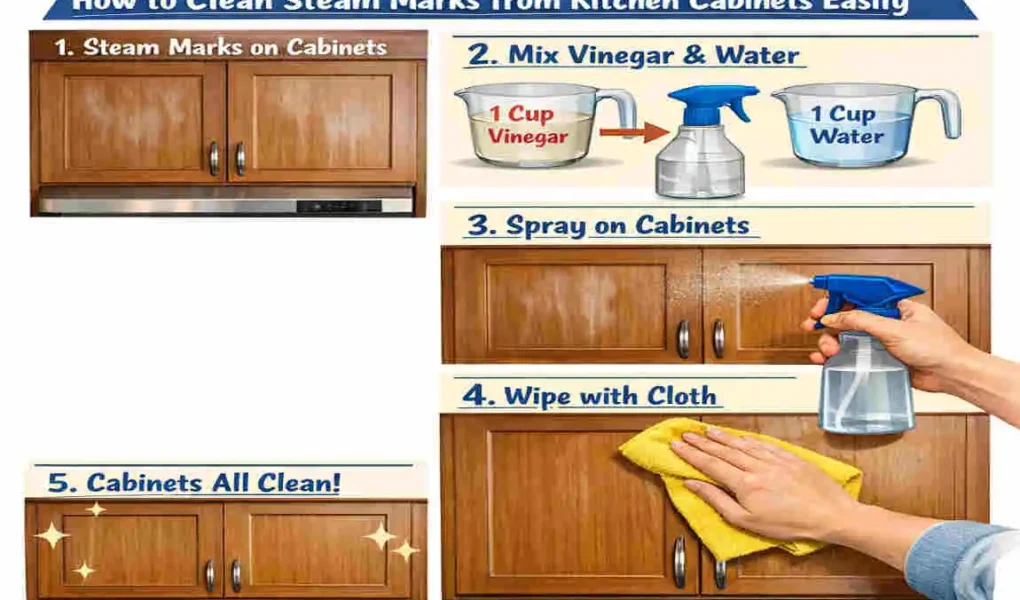
If you have ever walked into your kitchen and noticed dull white marks, cloudy streaks, or patchy spots on your cabinets, you already know how frustrating it can feel. These marks often show up near the stove, sink, or dishwasher, and they can make even a clean kitchen look tired and messy.
The good news is that most steam marks are not permanent. In many cases, they come from moisture that has been sitting on the cabinet surface for too long. Steam from boiling pots, hot dishes, or the dishwasher rises, cools, and leaves a visible mark. If this happens often, the finish can start to weaken over time.
| Step | Action | Tips |
|---|---|---|
| Prepare Supplies | Gather microfiber cloths, mild detergent, white vinegar, baking soda, soft sponge | Test solutions on a hidden spot first |
| Clean with Soapy Water | Mix warm water and mild dish soap; wipe marks gently | Avoid soaking wooden cabinets |
| Use Vinegar Solution | Mix equal parts white vinegar and water; apply with cloth | Great for natural cleaning, avoid overuse |
| Apply Baking Soda Paste | Make paste with baking soda and water; gently rub on stubborn marks | Rinse thoroughly and dry after treatment |
| Dry Thoroughly | Wipe cabinets dry with a clean towel | Prevents moisture damage |
| Prevent Future Marks | Use ventilation, avoid placing hot items close | Apply cabinet polish or protective coating |
What Causes Steam Marks on Kitchen Cabinets?
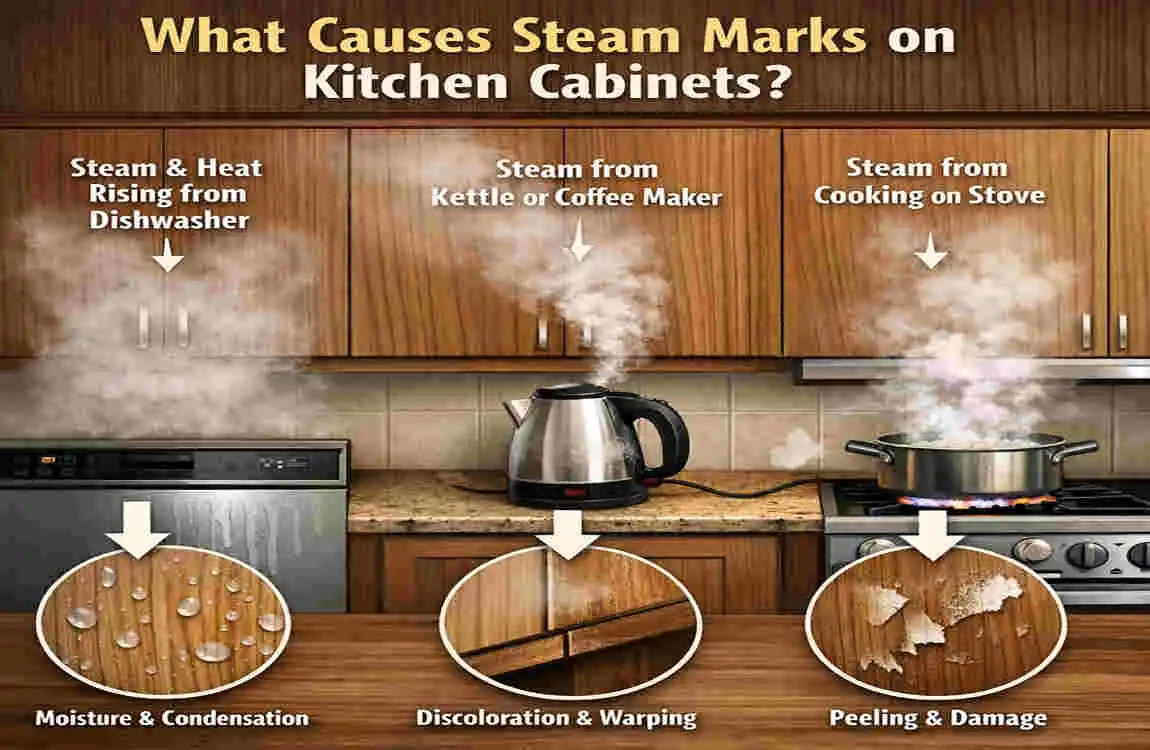
Steam marks are usually caused by moisture meeting a cooler cabinet surface. When hot steam rises from cooking or cleaning, it hits the cabinet, cools quickly, and turns into tiny water droplets. Those droplets can leave behind cloudy spots, rings, or dull patches.
Sometimes, the mark is only on the surface. Other times, repeated steam exposure can affect the finish itself. That is why it is important to understand the source of the problem before you start cleaning.
Why Does Steam Leave Marks on Cabinets?
Steam may not look harmful, but it can cause problems over time. When hot, moist air lands on cabinets repeatedly, it can leave mineral residue, trap dirt, or weaken the top coating.
This is especially common in kitchens where:
- Pots boil often without lids
- The dishwasher releases hot steam near the cabinet doors
- The range hood is weak or not used often
- Cabinets sit close to the stove or sink
If the surface is not dried quickly, moisture can settle in, creating a dull or hazy look.
Are Certain Materials More Prone to Steam Damage?
Yes, some cabinet materials handle steam better than others.
Wood cabinets can absorb moisture if the finish is worn down. That may lead to swelling, warping, or a rough texture.
Laminate cabinets are usually easier to clean, but heat and moisture can still damage the surface or loosen the edges over time.
Painted cabinets may show cloudy spots, streaking, or finish damage if strong cleaners or too much water are used.
Understanding what causes steam marks is the first step toward removing them from kitchen cabinets without making the problem worse.
Preparation Before Cleaning Steam Marks
Before you start cleaning, take a few minutes to get everything ready. A little preparation can save time and help protect your cabinets from damage.
What You’ll Need
For most cleaning methods, gather these simple tools:
- Microfiber cloths
- Warm water
- Mild dish soap
- White vinegar
- Baking soda
- Soft sponge or soft brush
- Dry towel
- Gloves, if needed
These items are enough for most light to moderate steam marks. You do not need harsh chemicals for the first attempt.
Safety Tips Before You Begin
Always test your cleaning solution on a small, hidden area first. This is especially important if you have painted, stained, or glossy cabinets. A quick test helps you ensure the finish will not react adversely.
Also, avoid soaking the cabinet surface. Too much water can create new problems, especially on wood or MDF cabinets. Use a damp cloth instead of a dripping one.
If you are using any stronger cleaner, wear gloves and keep the room ventilated.
Clear the Area First
Move items away from the cabinet area so you can clean without bumping into things. Take off nearby dish racks, towels, or containers if they are in the way. If you can reach the area easily, you will clean more carefully and more evenly.
Before diving into how to remove steam marks from kitchen cabinets, make sure you have the right tools and a clean workspace.
Step-by-Step Guide: How to Remove Steam Marks from Kitchen Cabinets
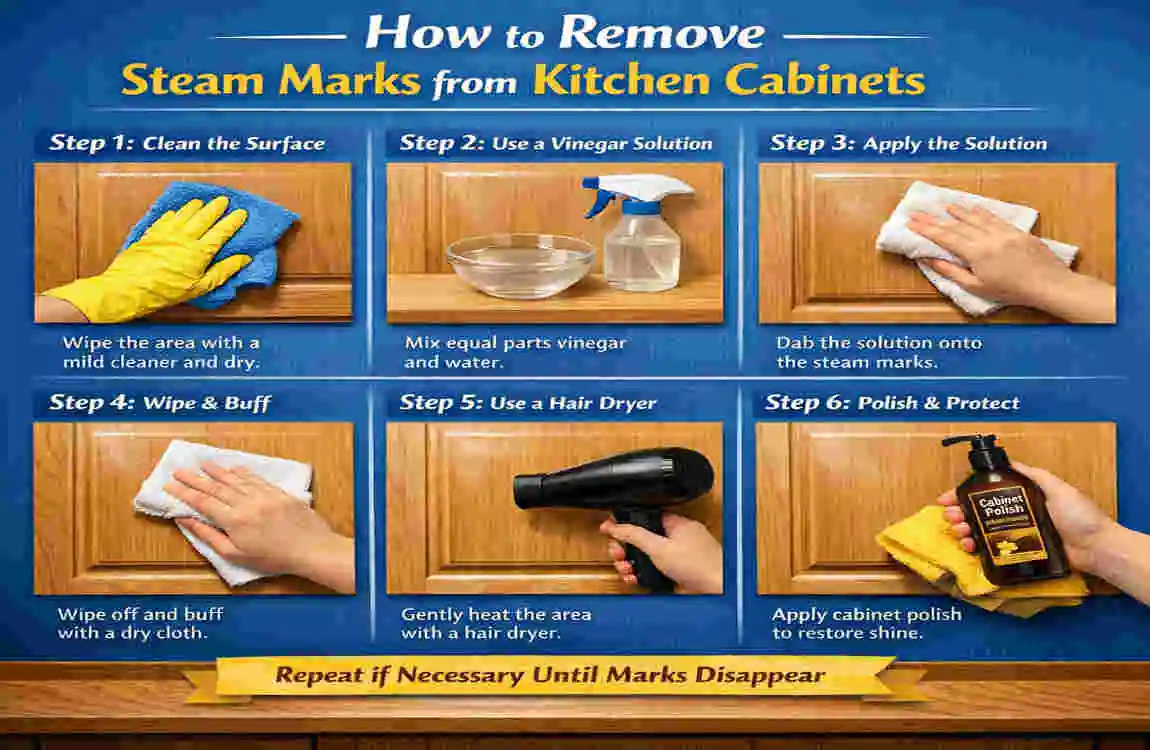
There is no single method that works for every cabinet. The best approach depends on how bad the mark is and what your cabinets are made of. Start gently, then move to stronger options if needed.
Quick Comparison of Cleaning Methods
Method Best For Strength Level Caution
Warm soapy water, light steam marks, mild. Do not over-wet wood
White vinegar solution , Cloudy marks and residue , Mild to moderate , Test on painted finishes
Baking soda paste Stubborn spots Moderate Rub gently
Commercial cabinet cleaner Tough buildup Moderate to strong Follow label instructions
Repair approach : Severe damage, N/A, May need refinishing
Method 1: Warm Soapy Water
This is the safest place to start. It works well for light steam marks and daily grime.
Steps:
- Fill a bowl with warm water.
- Add a few drops of mild dish soap.
- Dip a microfiber cloth into the water.
- Wring it out well so it is only damp.
- Wipe the steam mark in gentle circles.
- Use a clean, damp cloth to remove any soap residue.
- Dry the surface fully with a soft towel.
This method is ideal if the mark is fresh or only lightly visible. It is also a good first step for wooden cabinets because it uses very little moisture.
If the mark fades, repeat the process once more. If it stays, move to a slightly stronger method.
Method 2: White Vinegar Solution
White vinegar can help break down cloudy residue left by steam and mineral deposits. It is simple, affordable, and often very effective.
How to make the solution:
- Mix equal parts white vinegar and warm water in a spray bottle or bowl.
How to use it:
- Lightly dampen a microfiber cloth with the vinegar solution.
- Wipe the affected area gently.
- Do not let the solution sit for too long.
- Use a clean, damp cloth to wipe again.
- Dry the cabinet completely.
This method works well on many cabinet surfaces, but you should be careful with unsealed wood and some painted finishes. Vinegar is mild, but it can still affect delicate coatings if used too often.
If you are learning how to remove steam marks from kitchen cabinets, vinegar is one of the best natural options to try after soap and water.
Method 3: Baking Soda Paste for Stubborn Marks
When steam marks do not come off easily, baking soda can help. It gives you a little more cleaning power without being too harsh.
How to make the paste:
- Mix baking soda with a small amount of water until it forms a thick paste.
How to use it:
- Apply a small amount of paste to the mark.
- Use a soft cloth or sponge to rub gently.
- Let it sit for a minute or two if needed.
- Wipe the area with a damp cloth.
- Dry it well right away.
Do not scrub hard. A light touch is usually enough. Baking soda can help with cloudy patches, but too much pressure may scratch glossy finishes.
Method 4: Commercial Cabinet Cleaners
If the mark persists after gentle cleaning, you may want to try a cabinet cleaner formulated for your specific surface. These products can be useful for grease, residue, and tougher steam stains.
Before using one, read the label carefully. Make sure it is safe for your cabinet type, whether that is wood, laminate, or painted surfaces.
Best practice:
- Spray the cleaner onto a cloth, not directly onto the cabinet
- Wipe gently
- Follow with a clean, damp cloth
- Dry the surface fully
Commercial cleaners can help, but more does not mean better. Use only the amount the label recommends. Too much product can leave a sticky film.
Method 5: Repairing Water-Damaged Cabinets
Sometimes, steam marks are not just surface stains. If the cabinet is swollen, rough, peeling, or discolored, the finish may already be damaged.
In that case, cleaning alone may not fix the problem. You may need to:
- Sand the area lightly
- Touch up the finish
- Repaint or reseal the surface
- Replace damaged parts if swelling is severe
If the cabinet material has expanded from moisture, the problem may be deeper than a stain. This is where prevention matters most, because repeated exposure to steam can turn a small mark into real damage.
Which Method Should You Start With?
Start with the gentlest option and move up only if needed. Here is a simple order to follow:
- Warm soapy water
- White vinegar solution
- Baking soda paste
- Cabinet-safe commercial cleaner
- Repair for serious damage
For wooden cabinets, avoid using excessive water. For laminate cabinets, use mild solutions and soft cloths. For painted cabinets, test each cleaner first to avoid damaging the finish.
These methods will help you understand how to remove steam marks from kitchen cabinets without stripping paint or harming the surface.
Preventing Steam Marks in the Future
Once your cabinets look better, the next step is to keep them that way. Prevention is much easier than repeated cleaning.
Improve Kitchen Ventilation
Good airflow makes a big difference. Use your range hood when cooking, especially when boiling water or simmering soups. If possible, open a window or turn on an exhaust fan to help move steam out of the room.
The less steam that hangs around, the less likely it is to settle on your cabinets.
Change a Few Daily Habits
Small habits can protect your cabinets over time.
- Put lids on pots while cooking
- Keep hot pans and steaming dishes away from cabinet fronts
- Wipe up moisture quickly after using the dishwasher or stove
- Do not let steam collect in the same spot every day
These small changes may seem simple, but they reduce repeated exposure.
Protect the Cabinet Surface
You can also add a layer of protection. Cabinet polish or wax may help on some finishes by creating a smoother surface that resists moisture a little better. Just be sure to choose a product that matches your cabinet type.
If your stove or dishwasher sits close to cabinets, consider adding a small heat shield or splash guard. This can help block steam before it reaches the surface.
Keep Up with Regular Cleaning
A clean cabinet surface is easier to protect. Wipe cabinets now and then with a soft, damp cloth so steam residue does not build up. Dry them right away after cleaning.
By following these tips, you won’t have to worry as much about how to remove steam marks from kitchen cabinets in the future.
Common Mistakes to Avoid When Cleaning Steam Marks
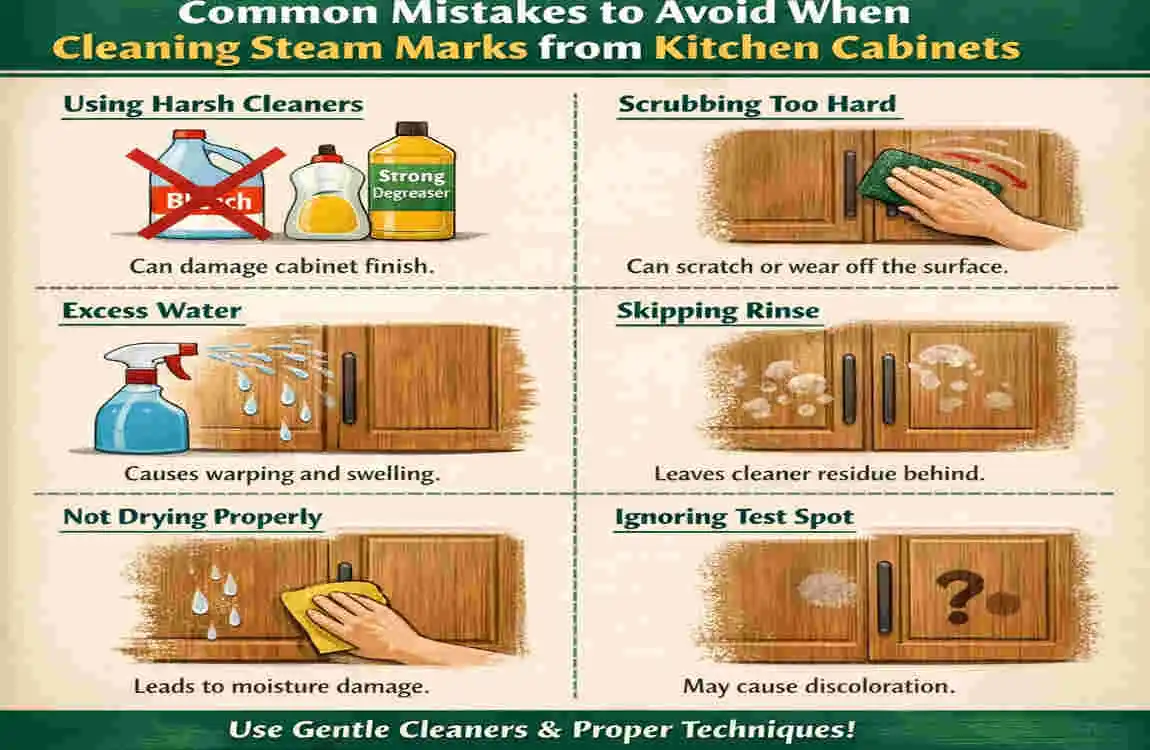
Even well-meaning cleaning can cause damage if you use the wrong approach. Avoid these common mistakes.
Using Harsh Chemicals
Strong cleaners can remove stains, but they can also strip paint, dull the finish, or damage wood. Bleach and abrasive chemicals are usually too harsh for cabinets.
Scrubbing Too Hard
A heavy hand can scratch the surface or wear away the finish. Always use gentle pressure and soft cloths.
Using Too Much Water
Water is one of the biggest risks for cabinets. If it sits on the surface too long, it can seep in and cause swelling or peeling.
Ignoring the Cabinet Material
What works on laminate may not work on wood. What is safe for sealed surfaces may not be safe for painted ones. Always match the method to the material.
Avoiding these mistakes will help you successfully learn how to remove steam marks from kitchen cabinets without causing new damage.
Frequently Asked Questions
Can I use bleach to clean steam marks from cabinets?
It is not a good idea. Bleach is too harsh for most cabinet finishes and may cause fading, discoloration, or damage. A gentler cleaner is usually safer.
How often should I clean my cabinets to prevent steam marks?
A light wipe-down once a week is a good habit, especially around the stove and dishwasher. If your kitchen gets a lot of steam, clean more often.
Are steam marks permanent?
Not always. Many steam marks can be removed with gentle cleaning. If the cabinet has swollen, peeled, or changed color deeply, some damage may remain.
What is the best method for painted cabinets?
Start with warm, soapy water. If that does not work, try a very mild vinegar solution after testing a hidden spot. Painted cabinets need gentle care.
Does the type of wood or finish affect how I clean steam marks?
Yes, it does. Sealed, painted, stained, and raw wood all react differently. The best way to learn how to remove steam marks from kitchen cabinets is to start with the mildest method and test carefully.