Dealing with a pest problem at home can feel overwhelming, especially when insects seem to appear out of nowhere and refuse to leave. One tool many homeowners reach for is the bug bomb. But before you set one off, it helps to understand how these products work, how to use them safely, and most importantly, how long the entire process actually takes.
| Topic | Key Information |
|---|---|
| What Is a Bug Bomb? | A total-release fogger that disperses insecticide throughout an enclosed area to control certain household pests. |
| Main Purpose | Used for pests such as cockroaches, fleas, ants, and some flying insects, depending on the product label. |
| Before Treatment | Remove people and pets, protect food and dishes, and follow all preparation instructions on the label. |
| Fire Safety | Follow warnings about flames, pilot lights, electrical equipment, and other ignition sources. |
| How To Use It | Place and activate the fogger exactly as directed by the manufacturer, then leave the treated area immediately. |
Understanding Bug Bombs and How They Work
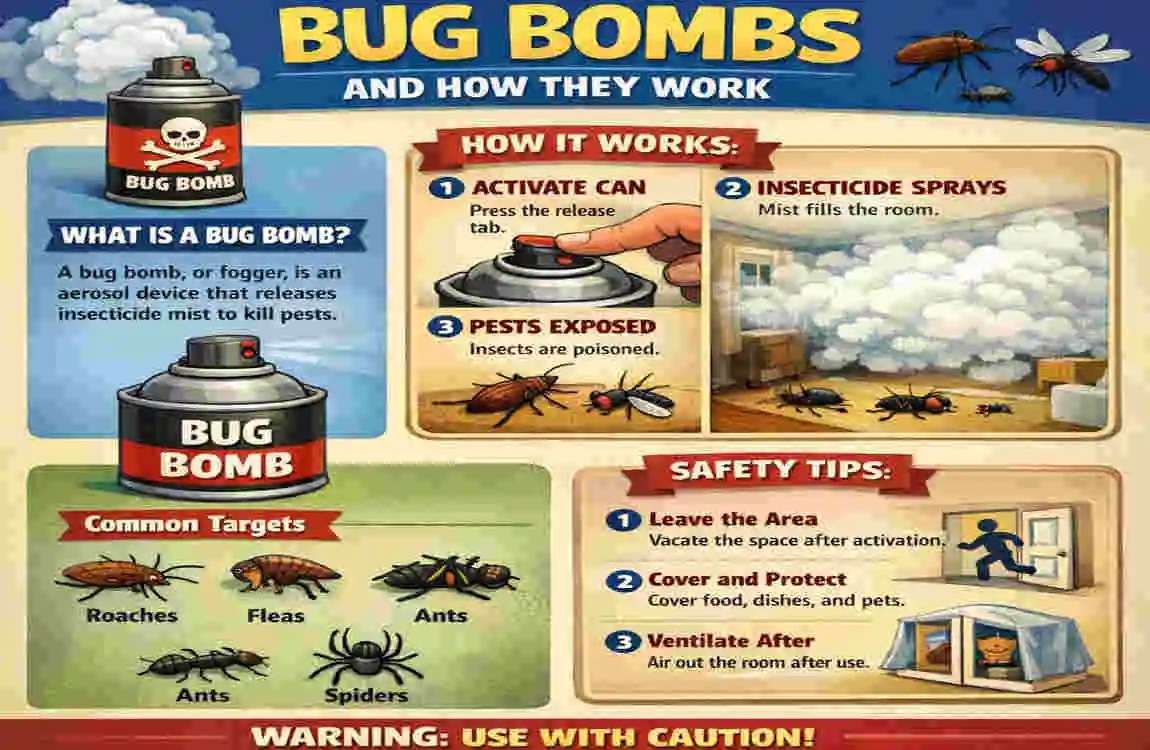
Bug bombs, often called total-release foggers, are pesticide products designed to fill a room with insecticide. When you activate one, it releases a fine mist or fog into the air. That mist settles onto exposed surfaces, aiming to reach pests hiding in open areas of a room.
The clean house idea sounds simple, but remember one important detail. Every fogger is slightly different, and the manufacturer’s label is your most reliable source of instructions. Always treat the product label as the final word on how to use it correctly and safely.
What Is a Bug Bomb?
A bug bomb is a pressurized canister that discharges insecticide once you press or trigger it. It works automatically, spreading the product throughout the treated space without you needing to spray anything by hand.
People typically use foggers to treat an open area rather than a single crack or corner. Because the mist floats through the air before settling, it’s meant to cover wide, exposed surfaces in a room.
Which Pests Can It Help Control?
Foggers are commonly marketed for pests such as certain fleas, cockroaches, ants, and flying insects. However, whether a product actually works on a specific pest depends entirely on that product.
Some foggers are labelled for one type of insect but not another. That’s why you should always check the label to confirm the pest you’re dealing with is listed. If it isn’t, the product may not deliver the results you’re hoping for.
When Is Bug Bombing Appropriate?
Here’s something many people don’t realize: foggers aren’t the right solution for every pest problem. Because the mist mostly settles on open surfaces, it may struggle to reach insects hiding inside walls, deep in cracks, or under heavy furniture.
For stubborn or hidden infestations, targeted treatments or professional pest control may work better. If you’re unsure whether a fogger fits your situation, pause and consider your options before reaching for one.
How To Prepare Your House Before Bug Bombing
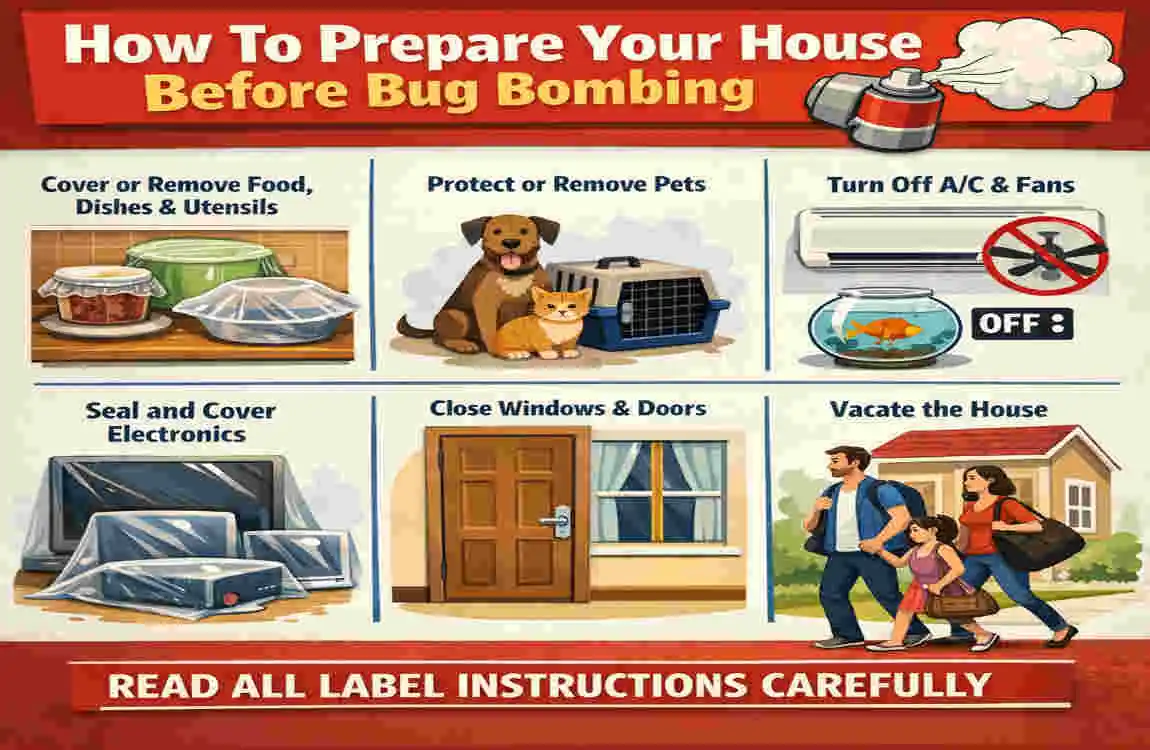
Preparation is one of the most important steps, and rushing through it can create real safety risks. Before you activate any fogger, take time to get your clean house ready and read the label thoroughly.
Good preparation protects your family, your pets, and your belongings. Here’s what you need to do.
Remove People and Pets
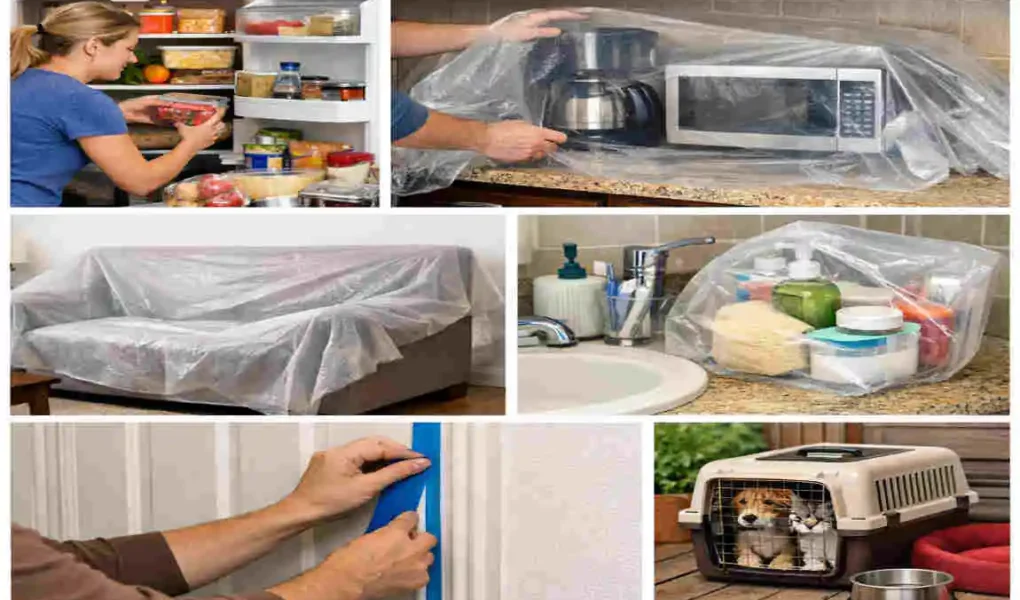
Everyone must leave the treatment area before you set off a fogger. This includes people, children, and pets of all kinds, from dogs and cats to birds and fish.
The label will tell you exactly how long everyone needs to stay away. Never allow anyone to remain inside “just for a minute,” because the released insecticide is not safe to breathe during the treatment period.
Protect Food and Household Items
Next, look around for anything that shouldn’t come into contact with the mist. Cover or remove exposed food, dishes, utensils, and pet food and water bowls as directed on the label.
Don’t forget items like toys, toothbrushes, and open containers. Anything used for eating, drinking, or by children deserves extra attention, so put it away in clean house or remove it from the treated space entirely.
Eliminate Ignition Sources
This step is critical for your safety. Many foggers are flammable, which means open flames or sparks can cause a dangerous reaction.
Follow the label’s warnings carefully and turn off or address flames, pilot lights, electrical appliances, and other ignition sources. Some labels ask you to unplug certain devices or shut off gas appliances. Take these warnings seriously, because ignoring them has led to fires and, in some cases, explosions.
How To Bug Bomb A House Safely
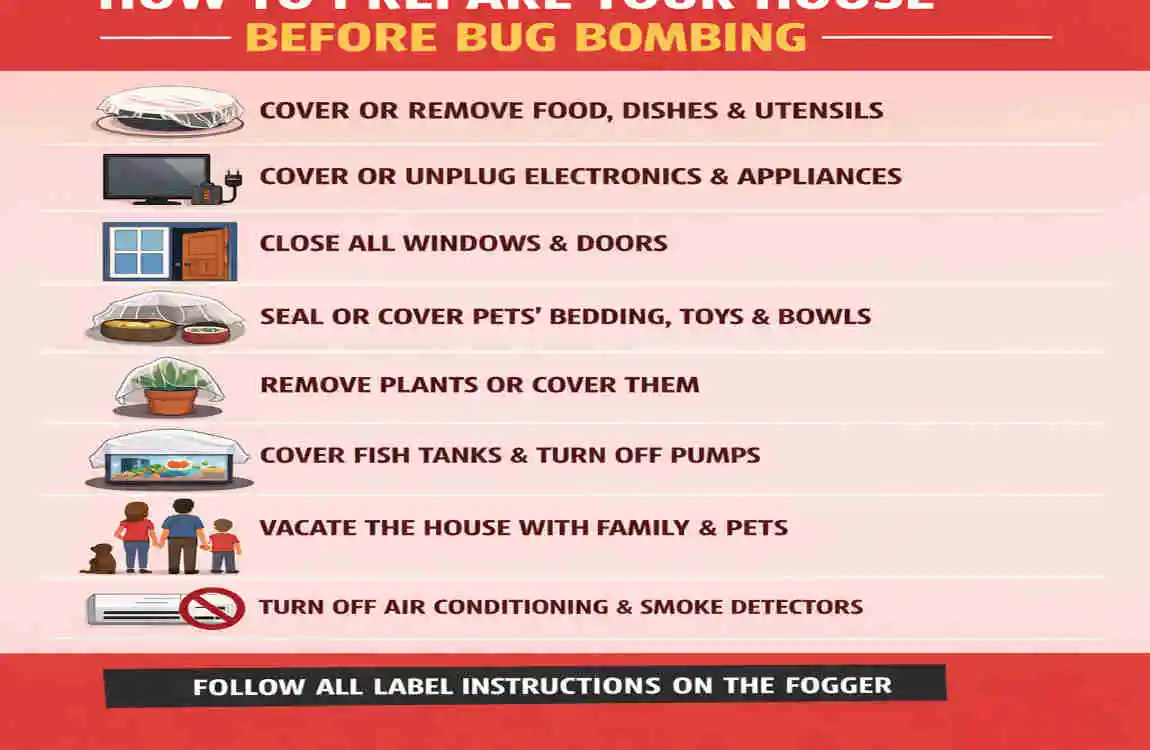
Now that your clean house is prepped, it’s time to use the fogger. Don’t follow one product’s steps as though they apply everywhere; the product label is the final authority on placement, quantity, activation, and evacuation.
Below are general principles to keep in mind, but always defer to the instructions printed on your specific product.
Place the Fogger Correctly
Position the canister exactly where the manufacturer tells you to. Some labels recommend placing it on a raised, stable surface and protecting the surface underneath.
Correct placement helps the mist spread as designed. Setting the fogger in the wrong spot could reduce its effectiveness or create a mess, so follow the recommended location.
Activate and Leave Immediately
Once you trigger the fogger, don’t linger. Occupants should leave the treated area promptly and stay outside for the full period listed on the label.
Plan your exit route ahead of time so you can activate the device and walk out without hesitation clean house. The goal is to avoid breathing in the mist as it releases.
Never Use More Than Recommended
It might seem like using more foggers would kill more bugs, but that’s a dangerous myth. Extra devices don’t necessarily improve pest control, and they can significantly increase your exposure and fire risk.
Stick to the number of foggers the label recommends for your space size. More is not better here, and overuse has caused serious accidents.
How Long Does It Take To Bug Bomb a House?
This is the question most people want answered, so let’s tackle it directly. The honest answer is that it depends on several factors, and there’s no single number that fits every situation.
The total time to bug bomb a clean house includes three main stages: preparation, treatment, and ventilation. Together, they give you a realistic sense of how long the whole project will take.
Here’s a simple breakdown to help you picture the process:
Stage What HappensT ime Factor
Preparation Removing people, pets, and food; covering items; addressing ignition sources Depends on home size and clutter
Treatment period The fogger releases and settles while everyone stays out Set by the product label.
Ventilation Airing out the clean house before re-entry Set by the product label
As you can see, most of the timing is tied to what the label says. Let’s look at each piece more closely.
How Long Should You Stay Out?
The required re-entry period varies by product. Some labels call for a couple of hours, while others may require longer.
Because these times differ, you should never rely on a number you heard from a friend or read on an unrelated product. Check your specific fogger’s label and follow that waiting period exactly.
How Long Does Ventilation Take?
After the treatment period ends, most labels instruct you to ventilate the property. This usually means opening doors and windows to let fresh air move through and clear out the fog.
The amount of ventilation time also depends on the product. Give the home enough time to air out fully, following whatever duration the label specifies, before you consider it ready for normal use.
When Is It Safe To Go Back Inside?
Return only after you’ve completed both the required waiting period and the ventilation instructions. Rushing this step can expose you to lingering insecticide.
Here’s a key point: don’t judge safety by smell alone. Even if the odour fades, that doesn’t mean the recommended time has passed. Always let the label guide your decision about when it’s truly safe to head back inside.
What To Do After Bug Bombing
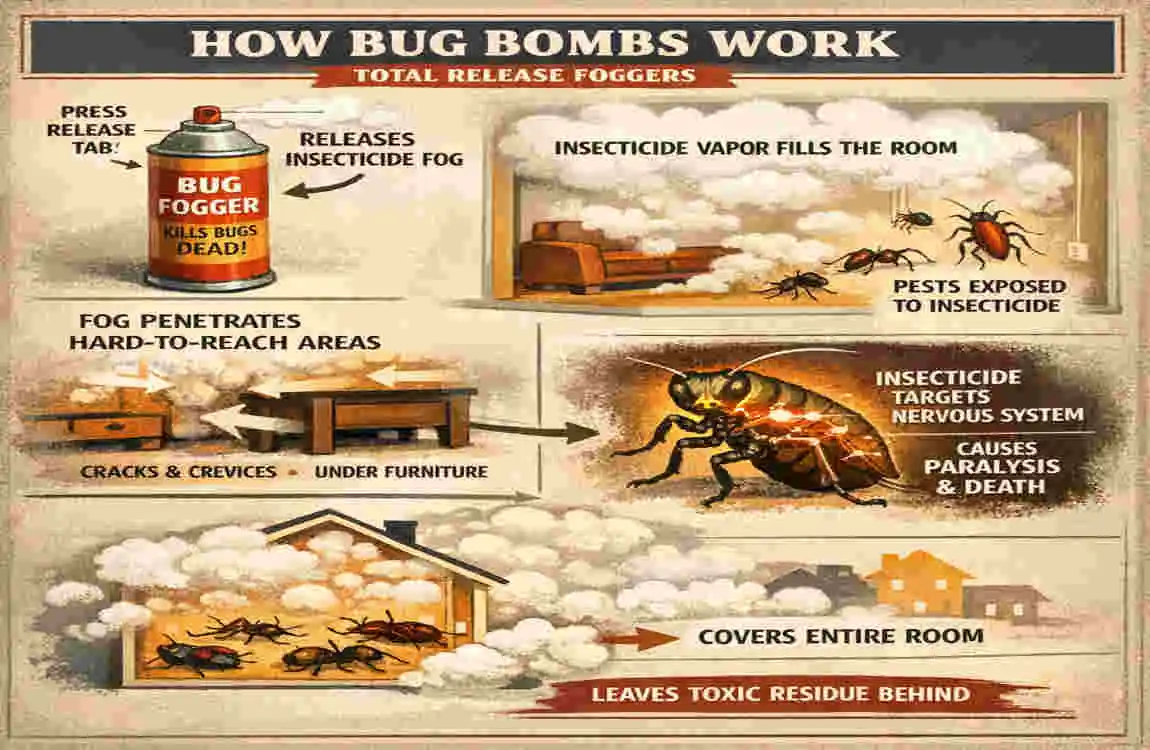
Once the treatment and waiting periods are over, a few important steps remain. Proper cleanup and inspection help you get back to normal life safely.
Don’t skip these final tasks, even if you’re eager to move on. They protect your household and help you confirm whether the treatment worked.
Ventilate the House
Before anyone settles back in, follow the manufacturer’s ventilation instructions completely. Open up the space and let fresh air circulate as directed.
Good ventilation clears out remaining fog and makes the environment more comfortable. Only consider the home ready for normal occupancy once you’ve completed this step.
Clean Food-Contact Surfaces
Exposed food-preparation and eating surfaces may need cleaning, depending on the product label. Think about countertops, tables, and any area where you’ll later prepare or eat food.
If the label recommends it, wash these surfaces before using them. This simple step reduces the chance of insecticide residue coming into contact with your food.
Check Whether Pests Remain
After clean house treatment, watch for continued pest activity. It can take some time to see whether the fogger reduced the problem.
If pests are still around, resist the urge to improvise a second treatment. Never attempt a second application unless the label allows it. If problems persist, that may be a sign to consider other approaches, including professional help.
FAQs
How long does it take to bug bomb a house? The complete process varies by product and home size. When estimating the total, include your preparation time, the label-required evacuation period, and the ventilation time afterward.
How long should you stay out of a house after bug bombing? Stay outside for the exact period stated on the fogger’s label. Since this differs between products, never guess or rely on a universal figure.
Do you have to wash everything after using a bug bomb? Not necessarily. Follow the product’s cleanup instructions, paying particular attention to food, dishes, food-contact surfaces, and exposed items.
Can you sleep in a house after bug bombing? Only after you’ve completed the label’s required re-entry and ventilation instructions. Comfortable air quality and a faded smell alone aren’t reliable signs that it’s safe.
Do bug bombs kill cockroaches? Some foggers are labelled for cockroaches, but results vary. Always check whether the specific product is registered and labelled for the pest you’re targeting.