what is a curb stop in house plumbing
Plumbing

What Is a Curb Stop in House Plumbing? Key Facts Explained
If you own a home, it helps to know where your house’s plumbing shutoff points are. A small part called a curb stop can make a big difference during leaks, repairs, or emergencies. If you have ever wondered what a curb stop in house plumbing is, this guide gives you a simple answer.

Aspect Key Facts Explained
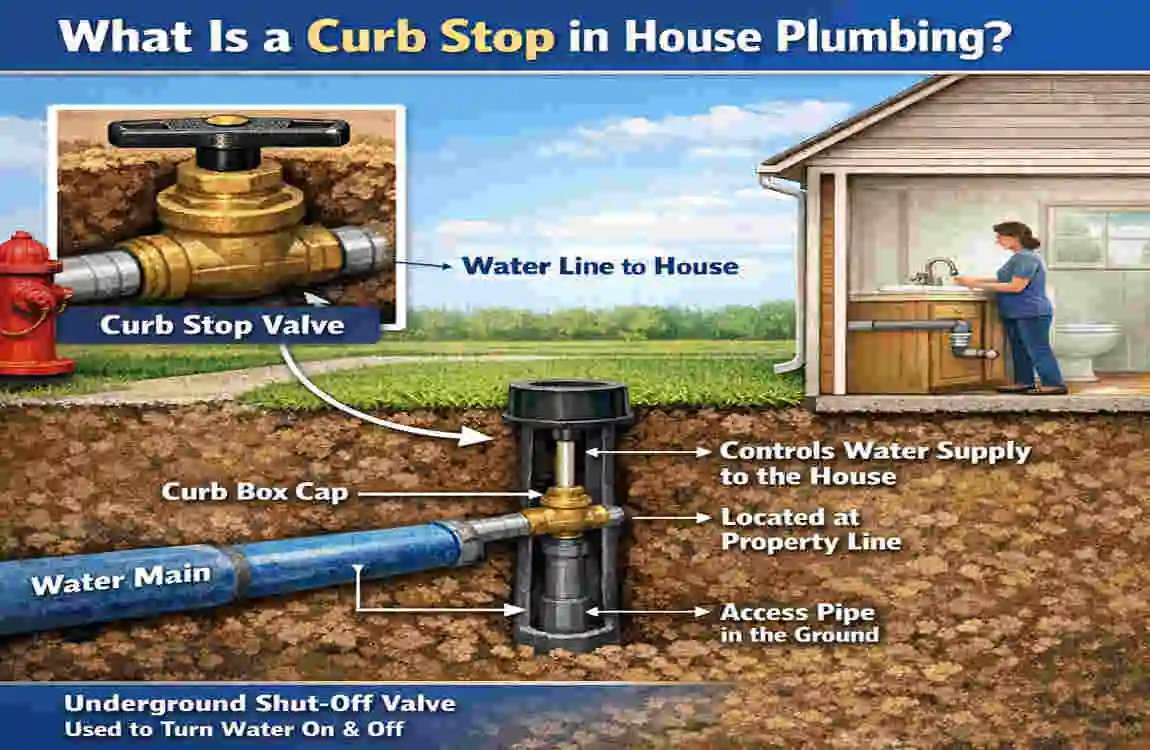
Basic definition A curb stop is an underground shutoff valve on the water service line that controls the flow of water from the city/main line into a specific property.
Location It is usually installed near the curb or property line, often in a small covered box at ground level that can be accessed from the sidewalk or front yard.
Main purpose It allows the water supply to a house to be turned off quickly for emergencies (like burst pipes) or for maintenance when interior shutoff valves cannot be used.
Who operates it In many cities, the curb stop is owned and operated by the water utility, and homeowners are not allowed to operate it without the utility’s permission.
How it’s accessed A special long-handled wrench or “curb key” is inserted through the curb box down to the valve so it can be turned on or off from the surface.

A curb stop is a water shutoff valve that controls the water coming from the city main into your home. It usually sits underground near the curb or property line. Hence, most homeowners never see it unless there is a plumbing issue. Still, this underground water valve can be very important when a pipe bursts or a plumber needs to stop the water quickly.

What Is a Curb Stop in House Plumbing?

what is a curb stop in house plumbing

Simple Definition of a Curb Stop

A curb stop is a valve that controls the water line between the public water main and your house. In simple terms, it helps start or stop the flow of water into the home.

This valve is part of the residential water main valve setup. It is usually buried outside, not inside the house. That is why many people only hear about it when a plumber needs to do emergency work.

Why It Is Called a “Curb Stop”

The name comes from its usual location. It is often placed near the curb, sidewalk, or edge of the property. That makes it easier for utility workers or plumbers to find the valve without digging up the whole yard.

You may also hear it called a plumbing curb valve. The name can change from place to place, but the job stays the same.

Who Owns the Curb Stop?

Ownership depends on your city or town. In some areas, the utility company owns and maintains the curb stop. In other places, the homeowner may be responsible for repairs after a certain point.

Because rules vary, it is smart to check local regulations. Knowing who owns the valve can save you time, stress, and surprise repair costs.

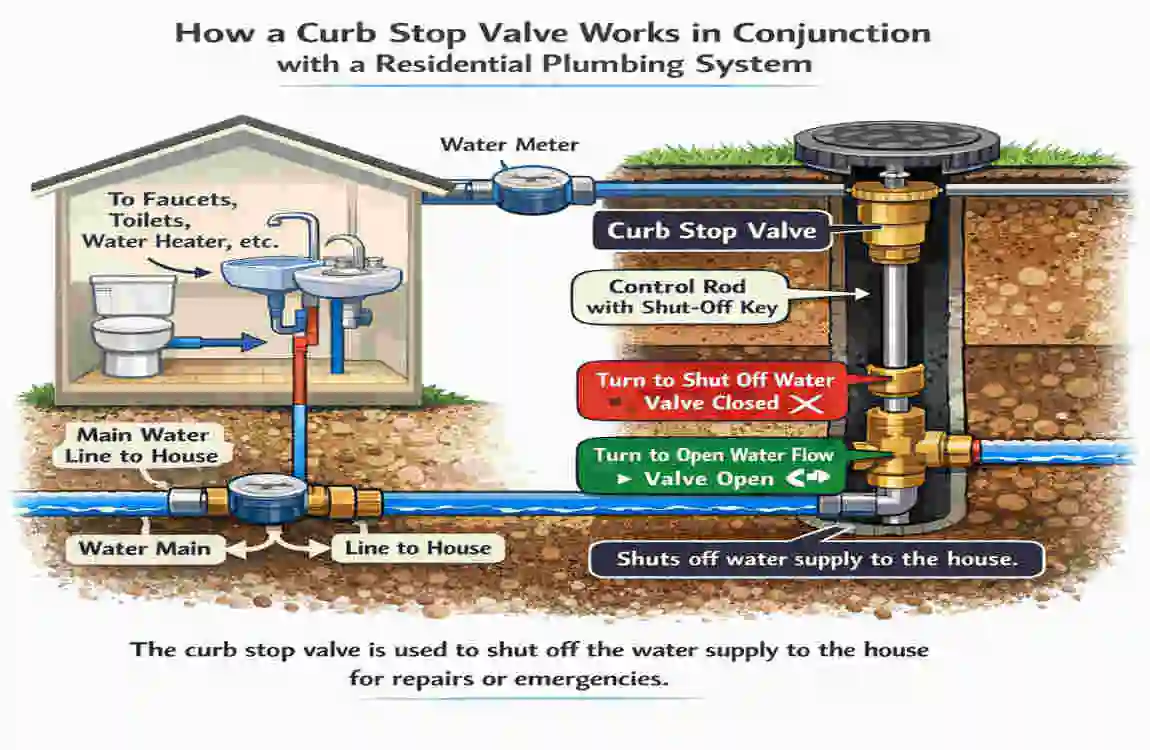
How a Curb Stop Works

Connection Between Water Main and House

Water usually travels from the city main through an underground service line and then into the home. The curb stop sits along that path. It acts like a control point for the water before it reaches the house plumbing.

This makes it an important part of the overall plumbing system. If the curb stop closes, water stops flowing into the house.

Turning Water On and Off

Plumbers and utility workers often use a special tool called a curb key to turn the valve. This tool reaches into the access point and carefully turns the valve.

When the curb stop closes, it shuts off water to the entire house. That is why it is so useful during an emergency water shutoff.

Difference Between a Curb Stop and an Indoor Shutoff Valve

A curb stop is outside and usually underground. An indoor shutoff valve is inside the home, often near the water heater, basement wall, or where the main water line enters.

Here is the basic difference:

  • Curb stop: controls water from outside the home
  • Indoor shutoff valve: controls water inside the home

If a problem happens before the water reaches the house, the curb stop is the valve that matters most.

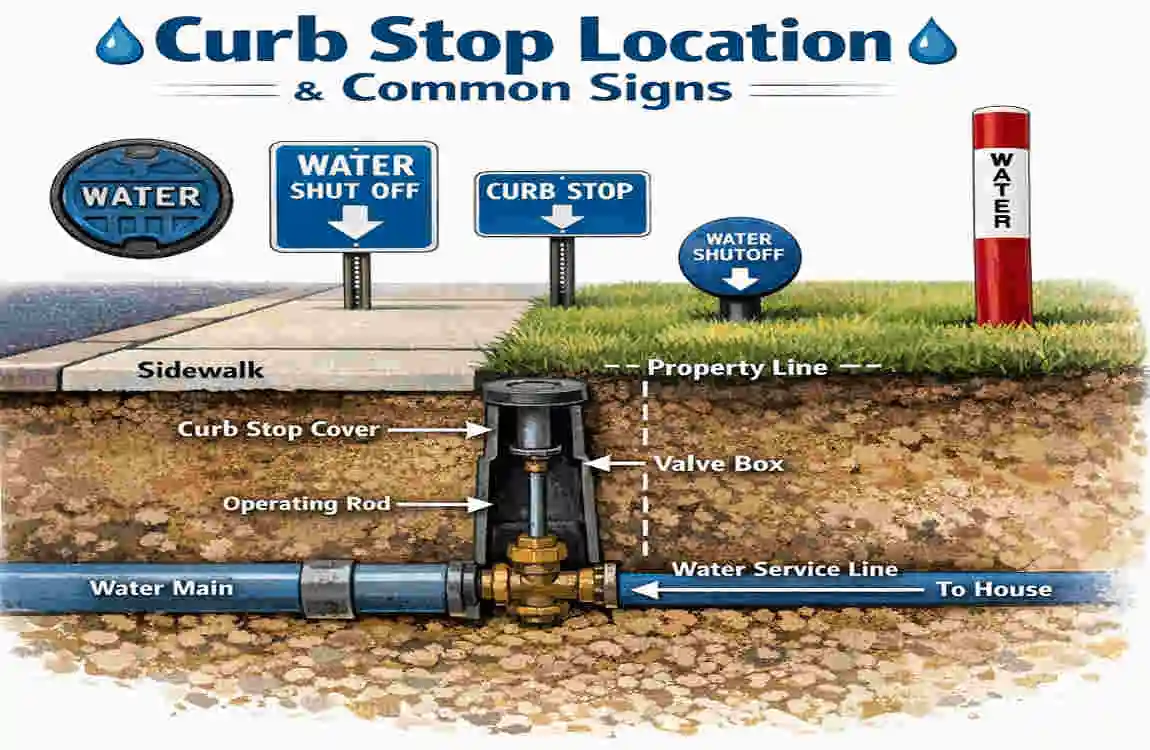
Where Is the Curb Stop Located?

Common Placement Areas

Most curb stops are found:

  • Near sidewalks
  • Along the property line
  • In front yards
  • In utility strips between the street and the home

Because they are buried, you may only see a small cover or box above them.

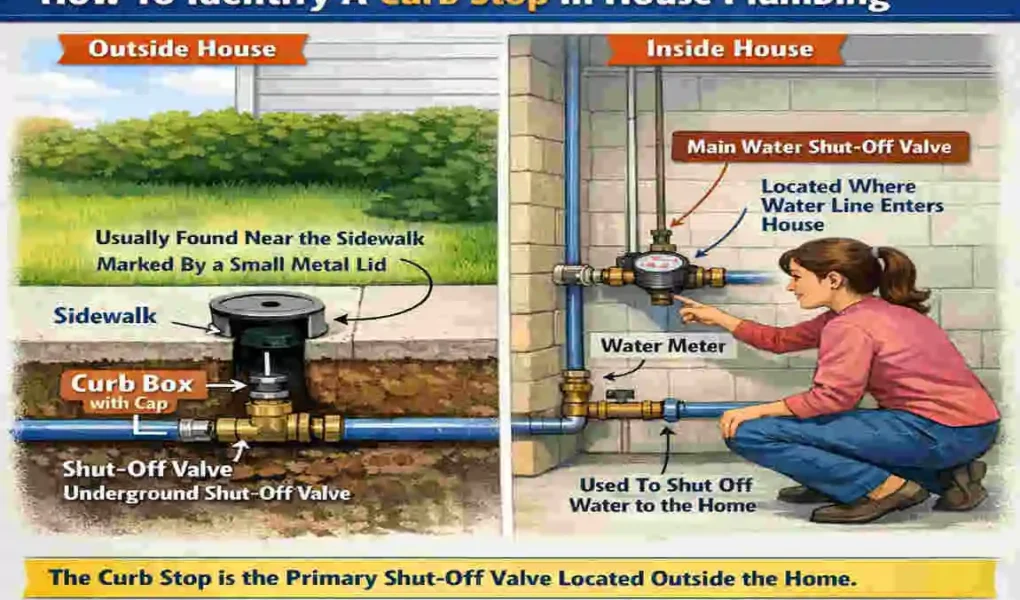
How to Identify a Curb Stop

A curb stop may have a metal lid, a small utility cover, or a valve box. The water company marks some. Others have no obvious label at all.

You may spot one by looking for:

  • A round or square cover
  • A metal lid in the grass or pavement
  • A narrow underground access sleeve

Why Some Curb Stops Are Hard to Find

Curb stops can be hard to locate because yards change over time. Grass grows over them, soil shifts, and landscaping can hide them. Snow, dirt, mulch, or pavement may also cover them.

Older homes can be even trickier. Some have buried valves that are no longer visible from the surface.

Main Components of a Curb Stop System

Curb Stop Valve

The valve itself is the main part. It opens and closes the water flow. Many modern valves use strong materials like brass or bronze because they withstand underground conditions.

A good curb stop valve should work smoothly and last a long time.

Valve Box or Access Sleeve

The valve box protects the curb stop and gives workers a way to reach it. It also helps keep dirt, rocks, and debris away from the valve.

Without this access point, finding and using the valve would be much harder.

Curb Key Tool

A curb key is a long tool used to reach the valve underground. Plumbers use it to turn the curb stop on or off.

Most homeowners should not try to use this tool themselves. If the valve is stiff, old, or damaged, forcing it can create a bigger plumbing problem.

Types of Curb Stops Used in Residential Plumbing

what is a curb stop in house plumbing

Ball Valve Curb Stops

Ball valve curb stops are popular because they shut off water quickly and work smoothly. They are also known for being durable.

These are often a good choice for modern systems because they are reliable and easy to operate.

Plug Valve Curb Stops

Plug valve curb stops are older-style valves. You may find them in older neighborhoods or older plumbing systems.

They still work well in many cases, but they may wear out or stick more easily over time.

Compression Style Curb Stops

Compression-style valves use pressure to seal the water flow. They are common in some plumbing setups and can work well when maintained properly.

They may need more care than newer styles, especially if they are exposed to age, corrosion, or freezing weather.

Modern vs Older Curb Stop Designs

Newer curb stop plumbing parts often use better materials and improved sealing methods. That helps reduce leaks and makes them more dependable.

Older designs may still function, but they are more likely to seize, corrode, or become hard to turn.

Why Curb Stops Are Important

Emergency Water Shutoff

A curb stop is one of the most useful tools for quickly stopping water. If a pipe bursts or a major leak starts, shutting off the curb stop can help prevent flooding and property damage.

That is why it matters to know where your home’s shutoff points are before an emergency happens.

Plumbing Repairs and Maintenance

Plumbers often need to stop the water before they can replace pipes, fix fittings, or work on the water meter. A curb stop makes this easier when the indoor valve is not working or the repair is outside the house.

It also helps during remodeling jobs where the water line needs to be controlled safely.

Water Utility Control

Utility companies may also use curb stops to manage water service. They may turn water on for new construction, stop service for maintenance, or shut things off when service rules require it.

That makes the curb stop an important part of city water management, not just home plumbing.

Can Homeowners Operate a Curb Stop?

Local Laws and Restrictions

In many areas, homeowners are not allowed to operate the curb stop themselves. Some cities restrict access because the valve belongs to the utility or because improper use can cause damage.

Before touching it, check your local rules.

Risks of DIY Operation

Trying to move a curb stop without training can cause trouble. You might break the valve, damage underground lines, or create a hard-to-fix leak.

You may also face liability if the valve belongs to the city or if your actions affect the water system.

When to Call a Licensed Plumber

Call a plumber if:

  • The valve is stuck or frozen
  • You have a major leak
  • The water will not shut off
  • You need valve replacement
  • You cannot find the curb stop

A licensed plumber can handle the job safely and use the right tools.

Curb Stop vs Other Plumbing Valves

Curb Stop vs Main Shutoff Valve

The curb stop sits outside, while the main shutoff valve is usually inside the house. The curb stop connects more directly to the utility side of the water line.

The main shutoff valve is useful for everyday home control. The curb stop is better for full-service shutoff when needed.

Curb Stop vs Water Meter Valve vs Gate Valve

Valve Type Location Main Job Typical Use

Curb stop Underground near property line Stops water from the main line Utility work, major repairs.

Water meter valve: Near the water meter; controls water flow to the meter and the house. Meter service, shutoff support.

Gate valve: inside plumbing system; opens or closes water flow; indoor plumbing control.

This table shows that each valve has a different job. They work together, but they are not the same.

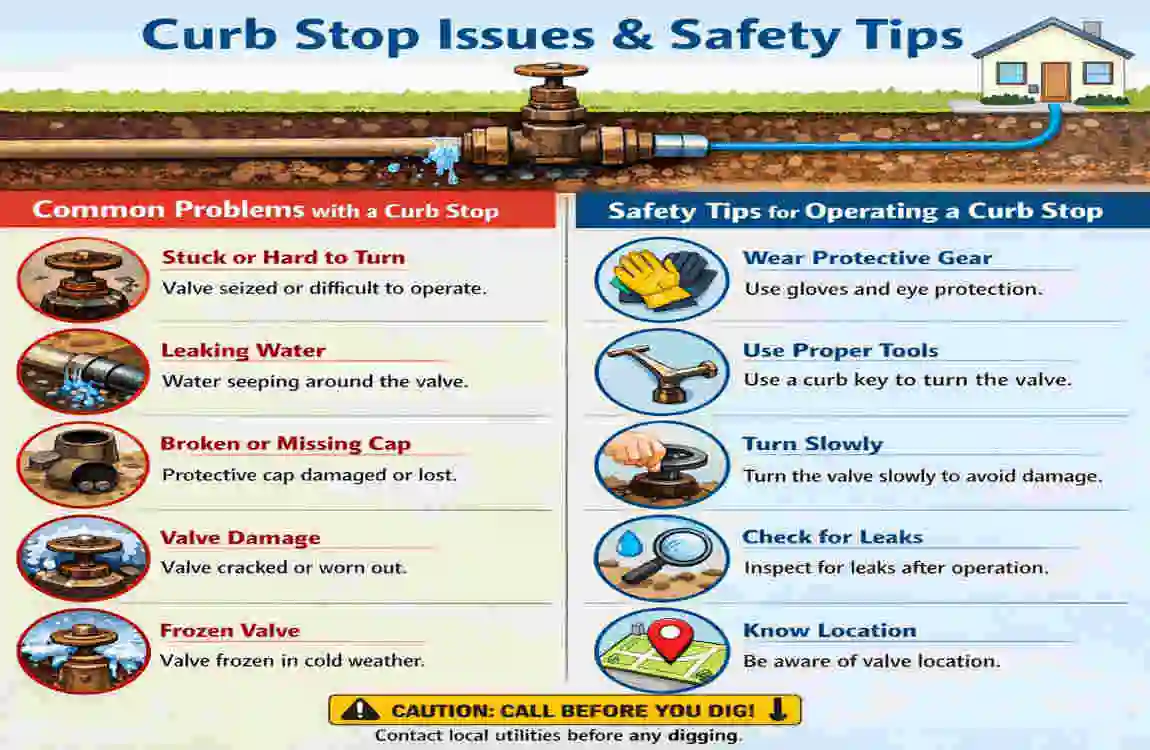
Common Curb Stop Problems and Maintenance

what is a curb stop in house plumbing

Signs of Trouble

A curb stop may need attention if you notice:

  • Wet ground near the property line
  • Muddy or soggy grass
  • Low water pressure
  • A valve that will not turn
  • Corrosion or visible wear

These signs can point to leaks or damage in the underground water valve system.

Simple Maintenance Tips

You do not need to work on the valve itself, but you can still help protect it.

  • Keep the area clear of dirt and heavy landscaping
  • Make sure the cover stays easy to reach
  • Watch for standing water after rain
  • Check for damage after freezing weather

Small checks can help you catch problems early.

Frequently Asked Questions About Curb Stops

Is a curb stop the same as a shutoff valve?

Not exactly. A curb stop is a type of shutoff valve, but it is usually installed outside and underground. An indoor shutoff valve works inside the house.

Can I turn off my curb stop myself?

Sometimes, but not always. In many places, only a plumber or utility worker should handle it. Always check local rules first.

Who pays for curb stop repairs?

That depends on local ownership rules. The utility may pay for its side, while the homeowner may pay for private line repairs.

How deep is a curb stop buried?

Depth varies by location and climate. Some are only a few feet down, while others are deeper to protect against freezing.

What happens if a curb stop fails?

If it fails, water may continue to flow when it should not, or the valve may not shut off at all. That can lead to leaks, flooding, or delays in repairs.

How do plumbers find buried curb stops?

They may use utility maps, valve locators, or visible access covers. Sometimes they must inspect the area carefully to find the exact spot.

How long does a curb stop last?

A curb stop can last for many years, especially if it is made from strong materials and stays protected. Still, age, corrosion, and soil movement can shorten its life.

You may also like...

Leave a Reply

Your email address will not be published. Required fields are marked *