If you are hearing scratching in the attic at night, heavy thumping above the ceiling, or strange noises coming from the walls, you may already be asking a very specific question: how to get raccoon out of house without making the problem worse. You are not alone. Raccoons often sneak into attics, crawlspaces, chimneys, and even wall voids because these places feel warm, dark, and safe to them.
That is the tricky part. A raccoon in your home is not just a nuisance. It can tear insulation, chew wires, damage vents, and leave behind waste that creates health risks. If there are babies in the nest, the situation becomes even more delicate. You cannot just scare them out and hope for the best. You need a careful plan that protects your family, the raccoons, and your property.
| Step | What to Do | Why It Matters |
|---|---|---|
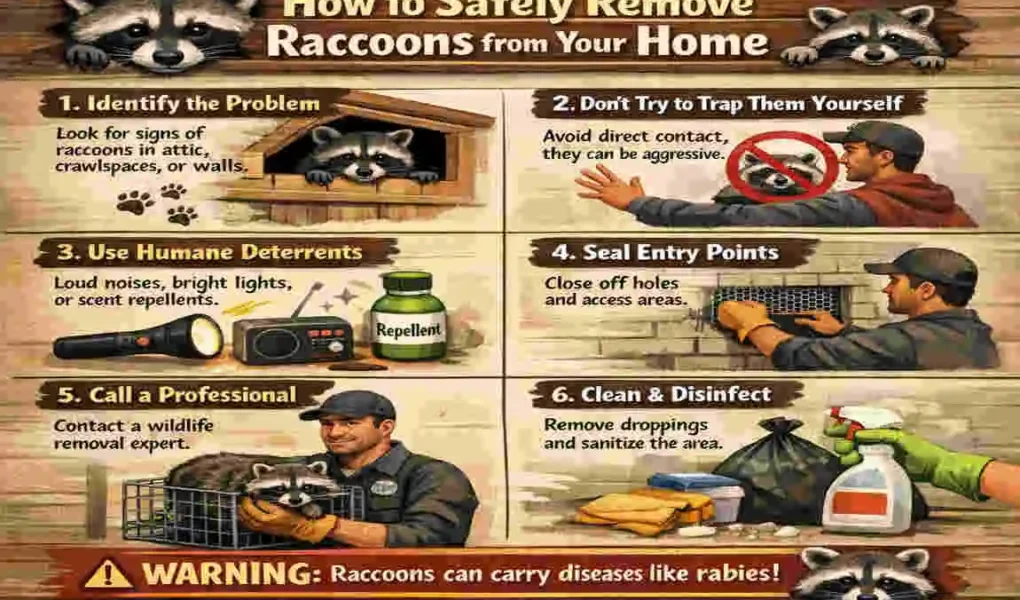
| Identify the problem | Check attic, under decks, and crawl spaces for noise, droppings, or paw prints at night. | Knowing where raccoons live helps you plan safe removal and avoid surprises. |
| Secure your property | Lock trash cans, remove pet food, and clear fallen fruit or bird feeders. | Eliminating food sources reduces raccoon activity and discourages them from staying. |
| Seal entry points | After raccoons leave, close gaps in roofs, vents, and siding with metal mesh or hardware cloth. | Blocks re‑entry and prevents future infestations once the animals are gone. |
| Use humane exclusion | Install one‑way doors or exclusion devices so raccoons can leave but not return. | Humanely removes raccoons without trapping or harming them. |
Why Raccoons Enter Homes in the First Place
Raccoons are clever, strong, and surprisingly patient. They do not enter homes by accident. They look for places that give them food, warmth, quiet, and shelter from predators. Your attic, roofline, or crawlspace can look like the perfect hideout.
Warmth, Safety, and Easy Access
A home gives raccoons something they want most: a protected nesting spot. Attics are especially attractive because they are high up, dry, and usually undisturbed. A mother raccoon looking for a place to raise babies will often choose an attic over an outdoor den if she finds a small opening.
They do not need a giant hole. A weak vent, a loose soffit, a broken roof edge, or a damaged chimney area may be enough. Once a raccoon gets inside, it can widen the hole by pushing, pulling, and chewing.
Food Sources Near the House
Raccoons are opportunistic eaters. They often stay near homes because food is readily available. Trash cans, pet food, bird seed, compost piles, and even fallen fruit can attract them. If your yard offers a steady food supply, a raccoon may keep returning even after you chase it away.
Why This Matters to You
Understanding why raccoons enter homes helps you solve the problem effectively. If you only remove the animal without addressing the reason it came in, it may come right back. That is why the best answer to how to get raccoon out of house always includes both removal and prevention.
Signs of Raccoon Infestation
Before you can remove a raccoon, you need to know for sure that it is there. Sometimes people mistake raccoon activity for squirrels, rats, or even plumbing noises. The signs below can help you identify the problem more clearly.
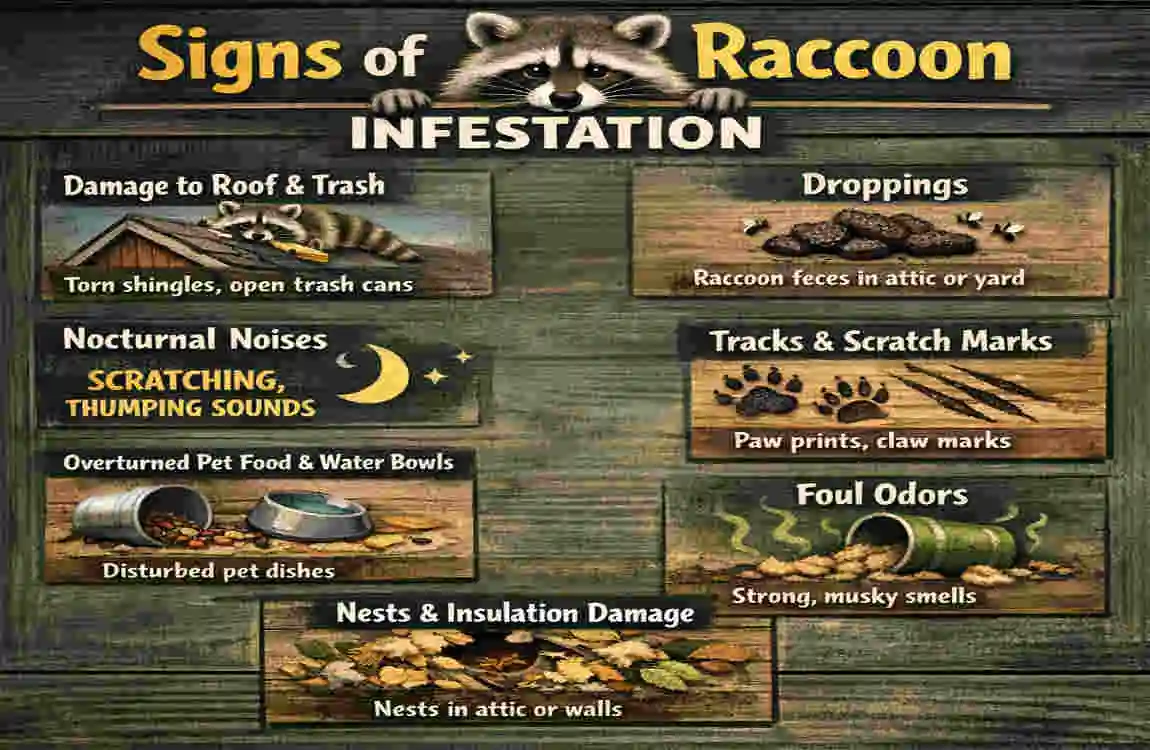
Noisy Scratching, Thumping, and Movement at Night
One of the biggest clues is sound. Raccoons are active at night, so you may hear:
- scratching in the attic
- heavy walking or thumping overhead
- dragging sounds
- sudden bursts of movement
- low chattering or whining noises
If you keep hearing raccoon sounds in the attic, especially after dark, that is a strong sign that something is living above you.
Droppings, Urine, and Odors
Raccoons leave behind waste that can create serious cleanup issues. Their droppings are usually cylindrical and may be about 2 to 3 inches long. You might also notice urine stains on insulation, wood, or ceilings below the nesting area.
A strong odor is another warning sign. If a raccoon has created a latrine area or if young animals have died inside a wall or attic space, the smell can become very unpleasant very quickly.
Damage Around the Home
Raccoons are strong enough to tear into many weak spots. Look for:
- torn vents
- bent flashing
- damaged soffits
- chewed wires
- ripped insulation
- debris piles in the attic
- widened entry holes near the roof
They can also leave greasy marks along beams and pipes as they move through tight spaces. These marks often appear where they travel in and out repeatedly.
Visible Tracks or Nest Material
If you see footprints in dusty attic areas or shredded insulation and leaves piled into a nest, that is another sign of infestation. Raccoons often build soft beds for their young using whatever they can find.
If you notice these signs, do not wait too long. The longer raccoons stay in your house, the more damage they can do.
Legal and Safety Considerations Before You Start
Before you try to remove a raccoon yourself, you need to understand the legal and safety side of the problem. Humane wildlife control is not just a nice idea. In many places, it is the law.
Why Humane Removal Matters
Raccoons can carry diseases and bite if cornered or threatened. A frightened animal becomes harder to manage, not easier. That is why direct contact is dangerous.
You should never try to grab, trap by hand, or corner a raccoon inside a tight space. If a raccoon feels trapped, it may fight back aggressively. The same warning applies to babies. A mother raccoon protecting her young can become extremely defensive.
Check Local Wildlife Rules
Wildlife rules vary by area. In some places, you may not be allowed to relocate raccoons far from where they were caught. In others, some traps or methods may require permission or a license. Poison is especially risky and often illegal for this kind of problem.
This is why safe raccoon removal laws matter so much. If you break local rules, you may face fines or make the infestation worse.
Protective Gear You Should Use
If you must work near raccoon waste or around an active entry area, protect yourself. Use:
- heavy gloves
- a mask or respirator
- long sleeves
- eye protection
- sturdy shoes
Never touch droppings, urine-soaked insulation, or nesting material with bare hands. Cleanup can expose you to harmful germs and parasites, so caution is important.
DIY Risks vs. Professional Benefits
Here is a simple comparison to help you think clearly before you act.
AspectDIY RisksPro Benefits
Health Exposure to bites, waste, and contamination Licensed handling and safer cleanup
Legality Fines or problems from improper trapping or relocation Methods that follow local rules
Effectiveness Higher chance of return if entry points are missed Better chance of long-term removal
Stress You handle all the noise, mess, and uncertainty Less pressure and more confidence
Timing Can take longer if you are unsure Often faster and more organized
If the raccoon is in a high-risk area, if babies are present, or if you are unsure about local rules, a professional is usually the safer choice.
Step-by-Step: How to Get Raccoon Out of House
This is the heart of the process. If you want to know how to get raccoon out of house the right way, follow these steps in order. Do not skip around. Humane removal works best when each step builds on the one before it.
Inspect and Locate the Entry Point
Start by finding where the raccoon gets in and out. Check the attic, roofline, soffits, vents, crawlspaces, and chimney areas. Use a flashlight and look for damaged materials, droppings, greasy marks, insulation pulled apart, or obvious holes.
Focus on gaps that are about 3 to 4 inches wide or larger. That may not sound like much, but raccoons are strong enough to exploit small weak spots. Also check for baby raccoons. In spring and fall, mothers are more likely to nest inside homes.
If you are looking for raccoon entry points, inspect the exterior of your clean home carefully during daylight. Look for torn mesh, loose boards, or bent edges near the roof.
Do not rush this step. If you fail to identify the access point, you may remove one animal only to have another one return later.
Remove Food Sources Around the Home
The next step is simple but powerful. Make your home less attractive.
Bring pet food indoors at night. Lock trash cans with tight lids. Clean up spilled bird seed. If possible, temporarily take down bird feeders. Also secure compost bins and remove fallen fruit from the yard.
When raccoons cannot find easy food nearby, they are less likely to stay around your home. This does not remove them on its own, but it supports every other step you take.
Use Deterrents to Push the Raccoon Out
Now you want to make the space uncomfortable enough that the raccoon decides to leave. This is called humane harassment. The idea is to disturb the animal without harming it.
Common deterrents include:
- bright motion-activated lights
- loud radios
- sprinklers near access points
- strong odors near openings
- ammonia-soaked rags placed near entry areas
These methods can work best when used together. A raccoon that feels exposed, noisy, and disturbed is more likely to move on.
Deterrent Comparison
DeterrentEffectivenessCostEase
Motion Lights High Low Easy
Sprinklers Medium Medium Medium
Ultrasonic Devices Variable Low Easy
Radio Noise Medium Low Easy
Strong Odors Variable Low Easy
These tools work best when the animal can still leave. They are less effective if the raccoon is already trapped inside or if babies are present and the mother refuses to abandon them.
Install One-Way Exclusion Devices
This is one of the most important parts of how to get raccoon out of house. A one-way exclusion door lets the raccoon exit but blocks it from reentering. This method is humane and often very effective when installed correctly.
You attach the device over the active entry hole. The raccoon pushes it open to leave, but once it is outside, it cannot push its way back in. The device usually stays in place for several days to make sure all animals are out before the hole is sealed.
How One-Way Doors Help
This method is useful because it removes the animal without trapping it inside. It also reduces the chance that the raccoon will tear more of the clean house apart trying to return.
Important Warning
Be sure there are no babies left behind. If young raccoons are still inside, the mother may keep trying to get back in. That can create a bigger mess and more damage. If you suspect a nest, it is smart to get professional help before sealing anything.
Simple Exclusion Setup
- Locate the active entry hole.
- Attach the one-way door securely.
- Watch for signs that the raccoon has exited.
- Keep monitoring for several days.
- Seal the opening permanently once you are sure the space is empty.
This is one of the most reliable ways to evict raccoons from attics without causing harm.
Remove Any Raccoons Still Inside
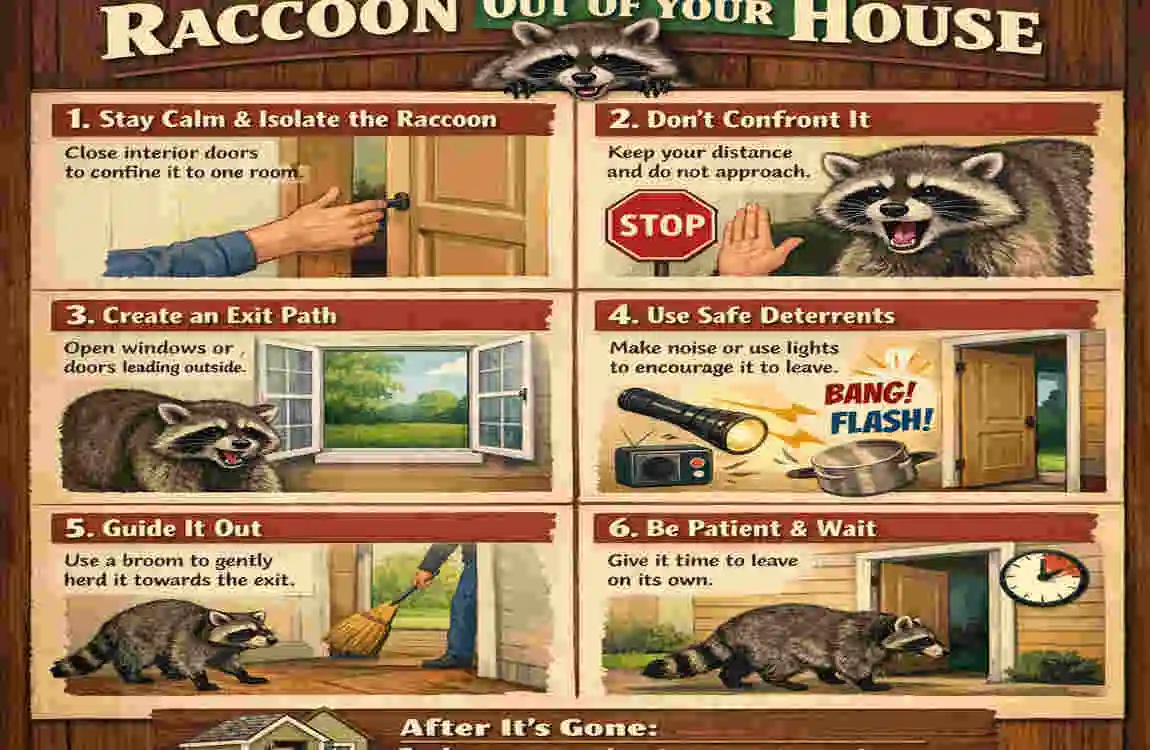
Sometimes a raccoon is trapped in a room, garage, or lower space and needs to be removed immediately. If the animal is visible and calm, stay at a safe distance. Never try to corner it.
In some cases, professionals use live traps with appropriate bait. If a trap is used, it must be checked often and handled safely. After capture, the animal must be released only if local laws allow it and only in a permitted way.
If a raccoon is in plain view and needs to move away from a doorway, some people use gentle noise or a broom from a safe distance to encourage it toward an exit. Do not swing at the animal. The goal is to guide, not attack.
Clean and Decontaminate the Area
Once the raccoon is out, the work is not finished. You still need to clean up the mess carefully. Raccoon waste can contaminate insulation, wood, and surfaces.
Start by lightly wetting the droppings before removal to prevent dust from spreading into the air. Use a HEPA vacuum if possible. Clean affected areas with an enzyme-based cleaner or another appropriate disinfectant. Replace badly contaminated insulation if needed.
Also seal vents, repair holes, and check for damaged wiring. Cleanup is not just about smell. It is about making the space safe again.
DIY vs. Professional Removal
Many homeowners want to know whether they can handle raccoon removal on their own. The answer depends on the situation. A single raccoon in an accessible area may be manageable for a careful homeowner. But if the animal has babies, if there is heavy damage, or if the entry point is difficult to reach, a professional is often the smarter choice.
When DIY Might Be Enough
A DIY approach may work if:
- the infestation is small
- the raccoon has a clear exit route
- there are no babies
- you can safely reach the entry point
- local laws allow the methods you plan to use
DIY can save money, but it takes time, patience, and attention to detail.
When You Should Call a Pro
Professional help makes sense if:
- babies are in the nest
- the raccoon is aggressive
- you cannot find the entry point
- the attic or roof is hard to access
- there is major damage
- you suspect multiple animals
- the smell or waste is severe
Professionals know how to work with wildlife, sealants, cleanup, and legal requirements. In many cases, they can solve the issue faster and with less stress.
DIY vs. Pro Comparison Table
Method Cost Time Success Rate Best For
DIY $50–200 1–2 weeks 60–70% Mild cases
Professional $300–800 1–3 days 95%+ Attics, babies, complex infestations
If you are on the fence, ask yourself one simple question: Can I solve this safely without making the raccoon more defensive? If the answer is no, professional help is worth it.
How to Prevent Raccoons From Coming Back
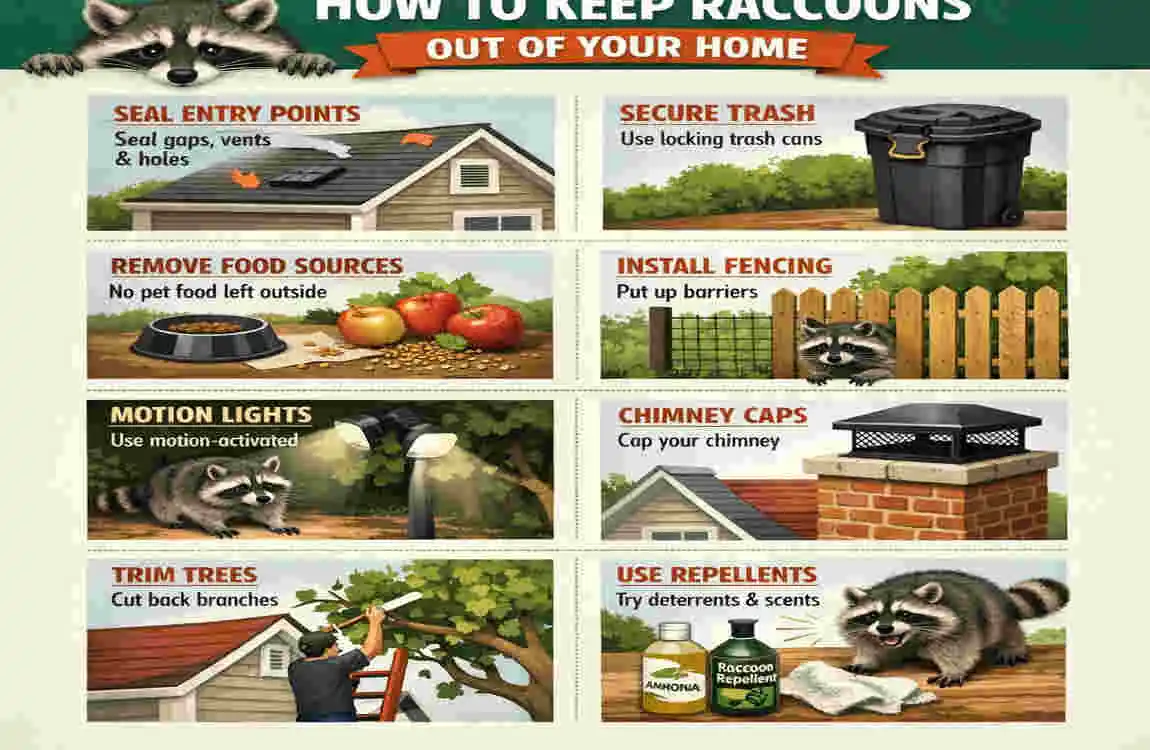
Getting the raccoon out is only half the job. The real win is making sure it does not come back. If you want a truly raccoon-proof clean home, prevention must be part of your plan.
Seal Every Weak Spot
Raccoons are strong, so weak materials are not enough. Use durable metal mesh, hardware cloth, steel flashing, or other tough barriers. Do not rely on chicken wire alone. It is often too flimsy for determined wildlife.
Inspect the roofline, vents, soffits, and chimney areas. Patch even small openings before they become larger problems.
Trim Trees and Limit Roof Access
Raccoons often climb trees to reach roofs. Trim branches so they stay at least 10 feet away from the house if possible. This makes it harder for the animal to jump or climb onto your roof.
Also check fences, sheds, and outdoor structures that might act as stepping stones.
Clean Up the Yard
A messy yard gives raccoons more reasons to stay nearby. Keep these areas tidy:
- secure trash cans
- remove fallen fruit
- limit access to compost
- do not leave pet food outside
- keep bird seed off the ground
A clean yard is not just prettier. It is less welcoming to wildlife.
Watch for Grubs and Outdoor Food Sources
Raccoons may dig in lawns in search of grubs or insects. If your yard has easy food sources underground, they may keep coming back. Good yard maintenance can help reduce that attraction.
Long-Term Barrier Checklist
Prevention StepWhy It HelpsPriority
Seal holes with metal mesh Blocks entry High
Repair roof edges and vents Stops weak-point access High
Trim tree branches Reduces climbing routes High
Secure trash bins Removes easy food High
Bring pet food inside Cuts nighttime rewards Medium
Remove compost odors Lowers attraction Medium
Think in Layers
The best protection is not one single fix. It is a layer of fixes. When you seal the roof, trim the trees, clean the yard, and secure the trash, raccoons lose the reasons to come near your home in the first place.
That is how you move from temporary removal to real, lasting prevention.
Common Mistakes to Avoid
Many homeowners make good decisions at first, only to accidentally undo their own progress. If you want your effort to work, avoid these mistakes.
Using Poison
Poison is a bad idea for raccoon control. It can harm pets, birds, and other wildlife. It may also create secondary risk when another animal eats the poisoned carcass. In many places, it is neither legal nor safe for home use.
Sealing Too Soon
If you seal the entry before you are sure all the raccoons are out, you may trap them inside. That can lead to more noise, more damage, and a worse smell. Always confirm the space is empty before final closure.
Ignoring Babies
This is one of the biggest mistakes people make. If babies are left behind, the mother may rip open the structure trying to get back in. That can cause serious damage and a stressful cleanup.
Giving Up on Prevention
Some people remove the raccoon and stop there. Then the animal comes back a few weeks later. If you do not repair the openings and remove attractants, the problem will likely repeat.
Half-Hearted Deterrents
One motion light alone may not be enough. One radio alone may not work either. Humane eviction usually needs multiple methods working together.
People Also Ask
How long does it take to get a raccoon out of the house?
In many cases, it can take 1 to 2 weeks to achieve results with humane deterrents and one-way exclusion devices. The exact timeline depends on whether babies are present, where the raccoon entered, and how quickly you can secure the area.
Can raccoons chew through walls?
Yes, raccoons can damage drywall, insulation, vents, and weak building materials. They may not chew through every surface the same way a rodent would, but they can absolutely tear through vulnerable parts of a home.
How much does raccoon removal cost?
Costs typically range from $300 to $800 for professional removal. However, the price can vary based on the size of the infestation, the location of the entry point, and the amount of repair or cleanup needed.
What is the most humane way to remove a raccoon?
The most humane approach is to encourage the raccoon to leave on its own, then install a one-way exclusion device and seal the home afterward. This avoids harm and reduces the chance of repeat entry.