Many homeowners start asking about wiring only after something goes wrong. A light may flicker. A breaker may keep tripping. Or an electrician may warn that the home has old electrical wiring that is no longer safe.
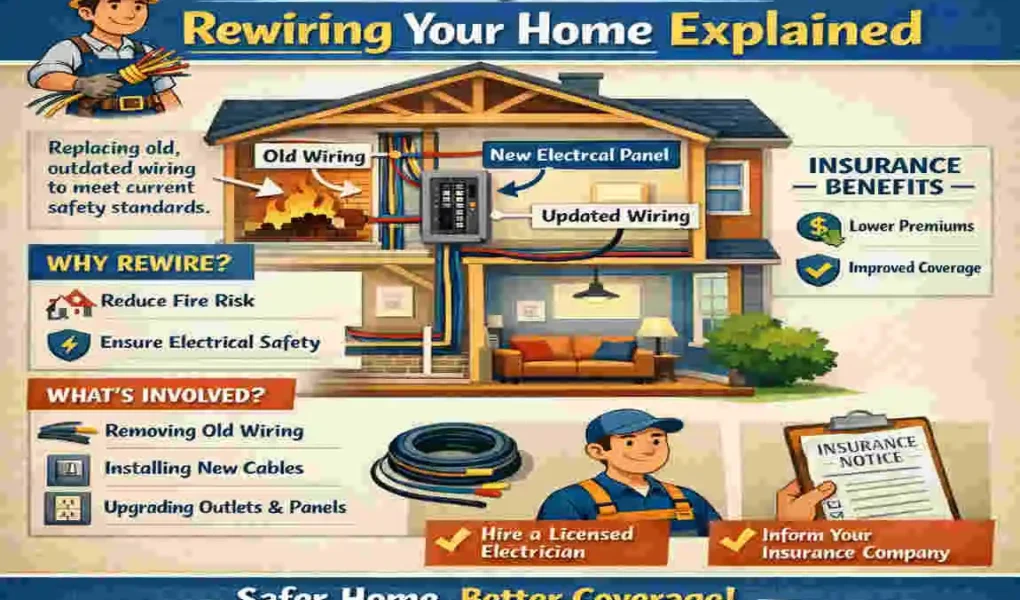
In some cases, home rewiring insurance may help if the damage is caused by a covered event such as a fire, storm, or sudden electrical failure. In other cases, the insurance company may say the problem came from age, wear and tear, or poor maintenance, which usually means no payment.
| Topic | Key Point | Why It Matters for You |
|---|---|---|
| Does insurance pay for rewiring? | Most policies do not pay for planned rewiring if it is just old or worn out; that is treated as maintenance, not a sudden loss. | You usually need to budget for a rewire yourself instead of expecting the insurer to fund a planned upgrade. |
| When can insurance help? | Insurance may help if wiring is damaged by a covered event (for example, fire, lightning, or a severe storm), depending on your policy wording. | If damage is caused by an insured peril, rewiring associated with repairs might be included in the claim. |
| Why insurers care about rewiring | Older or unsafe wiring increases fire risk; upgraded wiring can make a home a more “standard” and safer risk for insurers. | Rewiring can sometimes help you qualify for coverage or better terms, and reduce the chance of an electrical fire. |
| Evidence insurers may ask for | Insurers or brokers may ask for an electrical inspection report, completion certificate, or electrician’s documentation after a rewire. | Keeping paperwork from your electrician makes it easier to prove the work was done properly and to update your policy. |
This is why it helps to understand electrical wiring insurance claims before you face a major repair bill. Rewiring can be expensive, and the cost often surprises homeowners. If you know how your policy works, you can avoid confusion, delays, and denied claims.
What Does Home Rewiring Mean?
Definition of Home Rewiring
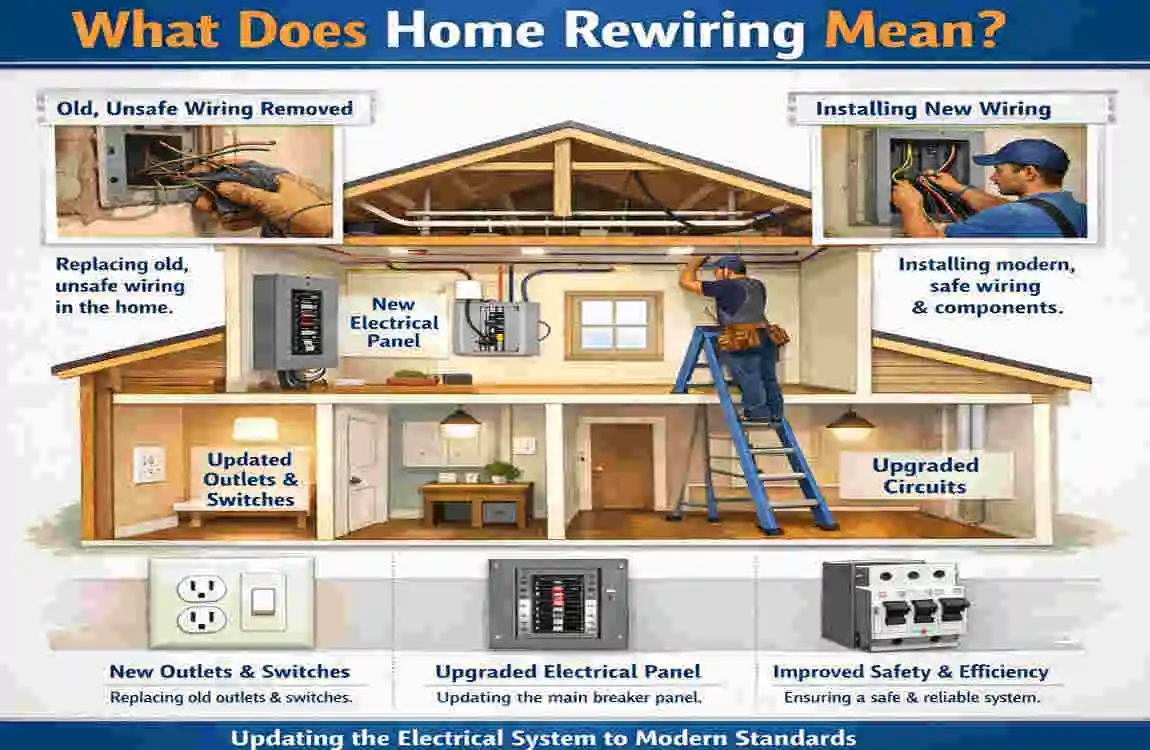
Home rewiring involves replacing old, damaged, or unsafe electrical wiring in a house. It may also include upgrading outlets, switches, panels, and circuits to ensure the home can safely handle modern power use.
In simple terms, house rewiring is about making the home’s electrical system safer and more reliable.
Signs Your Home Needs Rewiring
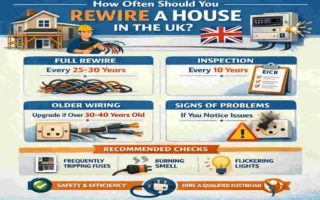
Some warning signs are easy to notice. Others are hidden inside the walls. If you see any of these, your home may need an inspection:
- Flickering lights
- Frequent breaker trips
- Burning smells
- Warm outlets or switches
- Aluminum or knob-and-tube wiring
- Old fuse boxes
These signs do not always mean danger right away, but they often point to old electrical wiring that needs attention.
Why Rewiring Is Important
Rewiring is more than a repair. It is a safety upgrade.
It can:
- Prevent electrical fires
- Improve energy flow
- Support modern appliances
- Boost property value
Many homes built decades ago were never designed for today’s power use. Extra devices, large appliances, and charging equipment can overload weak wiring. That is why electrical safety upgrades matter so much.
Does Home Insurance Cover Rewiring?
The Short Answer
Sometimes, but not always.
When homeowners ask, “Will insurance pay to rewire my house?” the answer depends on what caused the damage, what your policy covers, and which exclusions apply.
When Insurance Might Cover Rewiring
Insurance may pay for rewiring when the damage comes from a covered event, such as:
- Fire
- Storms
- Flooding if you have the right flood coverage
- Fallen trees
- Accidental damage
For example, if a house fire damages the walls and electrical system, your insurer may cover the wiring repair because the fire was sudden and covered.
When Insurance Usually Won’t Pay
Insurance usually does not cover rewiring when the issue is caused by:
- Old age
- Wear and tear
- Poor maintenance
- DIY wiring mistakes
- Code upgrades not tied to a covered loss
This is a key point in many electrical wiring insurance claim disputes. Insurance is there for sudden damage, not for paying to update a home just because the system is outdated.
Understanding “Sudden vs Gradual Damage”
This idea matters a lot.
Insurance often covers sudden damage. That means something happened quickly and unexpectedly, such as a fire or a storm.
Insurance usually does not cover gradual damage. That means the wiring has deteriorated over time due to age, neglect, or normal wear and tear.
So, if you are wondering again whether insurance will pay to rewire my house, ask yourself: did a covered event cause the problem, or did the wiring simply wear out over time?
Types of Insurance Policies That May Affect Coverage
Standard Homeowners Insurance
A standard homeowners policy may cover structural damage caused by certain events. If those events damage the electrical system, wiring repairs may be included.
Dwelling Coverage
This is the part of the policy that helps repair the home itself. If a covered event damages the wall wiring, panels, or built-in electrical parts, dwelling coverage may help.
Personal Property Coverage
This part of the policy may help if the wiring problem damages your electronics, appliances, or other belongings.
Additional Riders and Endorsements
Some policies include extra protection for special situations. These may include:
- Electrical system coverage
- Service line endorsements
If you are reviewing homeowners insurance coverage for wiring, these add-ons are worth considering. They can make a big difference in an electrical repair insurance claim.
Quick Coverage Snapshot
Policy Type What It May Cover Common Limitations
Standard homeowners insurance Damage from covered events Excludes age and wear
Dwelling coverage Built-in home repairs Must be tied to a covered loss
Personal property coverage Damaged appliances or devices Does not cover normal breakdown
Endorsements Extra electrical protection Only if added to the policy
Common Situations Where Insurance May Pay for Rewiring
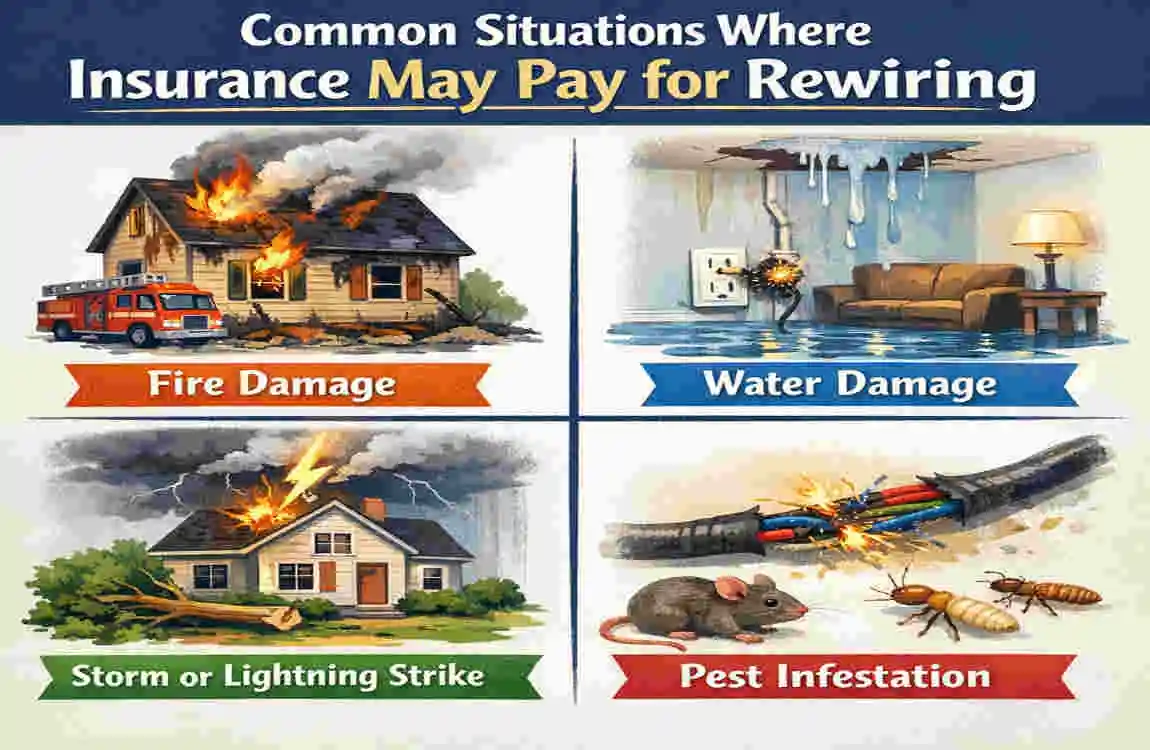
Fire-Damaged Wiring
If a fire damages the electrical system, insurance may help cover the cost of rewiring. The insurer will usually want to know:
- What started the fire
- How much damage the fire caused
- Whether the wiring can be safely repaired
You may need photos, fire reports, and a licensed electrician’s opinion.
Lightning Strike Damage
A lightning strike can burn circuits, panel boxes, and hidden wires. In this case, the claim may be approved because the damage was sudden and linked to a covered event.
Water Damage to Electrical Systems
Water from a burst pipe or storm can harm electrical wiring. If your policy covers the water damage, the rewiring may be covered as well.
Rodent-Chewed Wiring
Sometimes rodents chew through wires inside walls or attics. Coverage can vary here. Some insurers treat this as sudden damage, while others see it as a maintenance issue.
Short-Circuit Caused by Covered Event
If a short circuit occurs due to a covered event, the wiring repair may be included in the claim. The insurer will look closely at what caused the short and whether the damage was direct.
In all of these cases, the insurer usually wants proof. That means inspection reports, electrician notes, and photos of the damage.
Situations Where Insurance Will Likely Deny Rewiring Claims
Aging Electrical Systems
If the wiring is simply old, insurance usually will not pay. Many homes older than 30 to 50 years may need updates, but age alone is not a covered loss.
Lack of Maintenance
If warning signs were ignored for years, the insurer may say the damage was preventable. That often leads to an insurance denial of a rewiring claim.
Outdated Knob-and-Tube Wiring
Some insurers exclude knob-and-tube wiring or charge more for it. Even if the system still works, it may be seen as too risky.
DIY Electrical Work
Unlicensed electrical work can create safety problems and coverage issues. If a repair was done poorly by the homeowner, the insurer may deny the claim.
Renovation Upgrades
If you want to modernise the home, that upgrade is usually not covered. Insurance pays for damage, not general improvement.
This is where many people learn that electrical repairs not covered by insurance are often the ones tied to age, code changes, or cosmetic upgrades.
How Insurance Companies Evaluate a Rewiring Claim
Home Inspection Reports
Adjusters may review past inspection reports to see whether the wiring was already in poor condition before the loss.
Cause of Damage
The main question is simple: what caused the problem? If the cause is covered, the claim has a better chance of being approved. If it is old age or neglect, the claim may be denied.
Policy Exclusions
Every policy has exclusions. These are things the insurer will not pay for. Electrical damage from wear and tear is a common exclusion.
Age of Wiring
Older wiring can make it harder to prove a claim. The company may argue the system was already failing before the event.
Safety Compliance
Insurers may ask whether the repairs meet current safety standards. A licensed electrician report can help show what needs to be fixed and why.
In many cases, the claims adjuster will ask for:
- Photos of the damage
- Repair estimates
- Inspection notes
- Proof of the cause
How to File a Claim for Electrical Rewiring
Identify the Damage
Look for visible signs such as smoke, scorch marks, tripped breakers, or dead outlets.
Prevent Further Loss
Turn off the power if it is safe to do so. Do not keep using damaged wiring.
Contact Your Insurance Provider
Tell them what happened as soon as possible. Early reporting can help protect your claim.
Gather Photos and Evidence
Take clear pictures of the damage before repairs begin.
Hire a Licensed Electrician
A professional can inspect the system and explain what needs repair.
Submit Repair Estimates
Send the insurer written estimates for the rewiring work.
Wait for Adjuster Review
The adjuster will review the claim, compare it with the policy, and decide what is covered.
Helpful Claim Tips
- Keep all receipts
- Write down dates and events
- Do not throw away damaged parts too soon
- Ask questions if the decision is unclear
How Much Does It Cost to Rewire a House Without Insurance?
The cost to rewire a house can be very high, especially if the home is older or large. The final price depends on access, labour, and the extent of the work required for the home.
Cost Factors
Several things affect electrical rewiring expenses:
- House size
- Accessibility
- Age of home
- Local labor rates
- Panel upgrades
Estimated Costs
Home SizeApproximate Rewiring Cost
Small home $3,000–$8,000
Medium home $8,000–$15,000
Large home $15,000–$30,000+
Hidden Costs
The price can rise because of:
- Drywall repairs
- Permit fees
- Inspection costs
So even when the wiring itself is the main issue, the total bill can be much higher than expected.
Can You Increase Insurance Approval Chances?
Yes, you can improve your chances.
Maintain Updated Electrical Systems
Keep your system in good shape before problems start.
Keep Inspection Reports
A recent inspection can show that you took the home’s safety seriously.
Use Licensed Contractors
Always hire qualified pros for electrical work. It protects both safety and coverage.
Report Damage Immediately
Do not wait too long. Quick reporting helps show the damage was sudden.
Understand Your Policy Before Filing
Read your policy carefully so you know what is included and what is not.
If you want to avoid a future insurance denied rewiring claim, preparation matters.
Preventive Steps to Avoid Electrical Problems
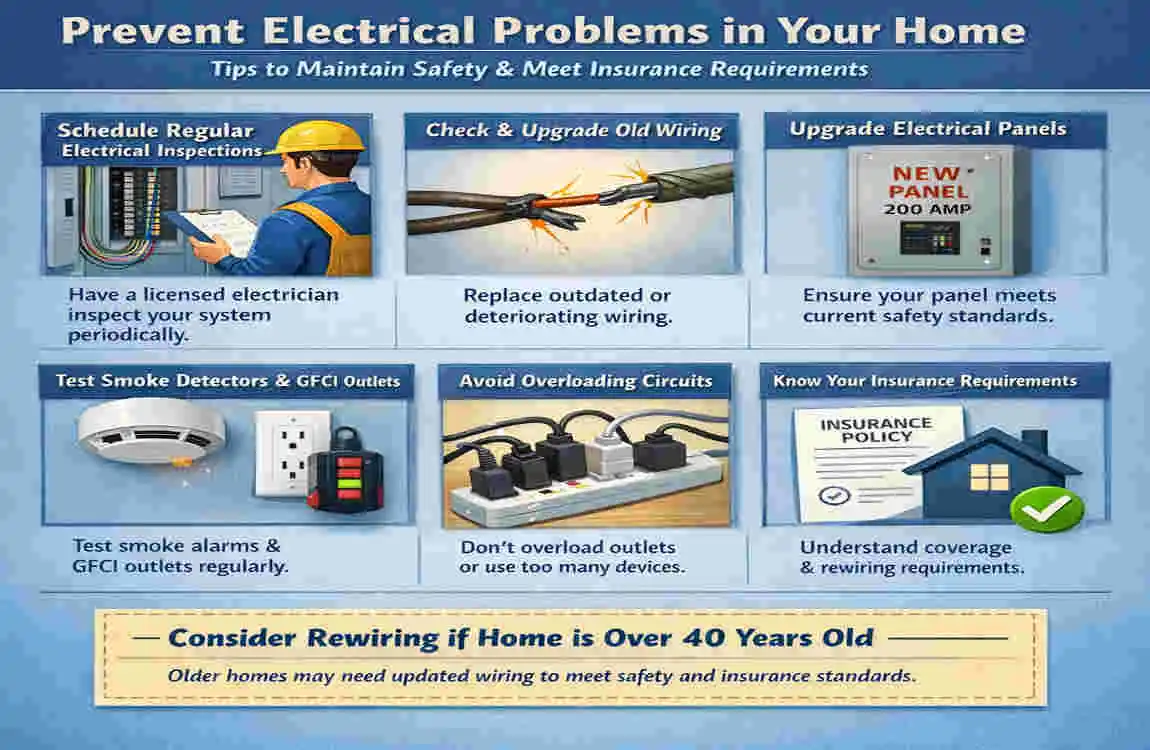
Schedule Routine Inspections
Have a licensed electrician check the system every few years, especially in older homes.
Replace Old Panels
An old panel can be a warning sign that the whole system is under stress.
Upgrade Unsafe Wiring
If an electrician says the wiring is unsafe, do not delay in acting.
Avoid Overloaded Circuits
Too many devices on a single circuit can cause overheating and damage.
Install Surge Protection
Surge protection can help protect your home from lightning and power spikes.
These steps lower safety risks and can also reduce the risk of future claim disputes.
FAQs
Will insurance cover the cost of rewiring my house if the wiring is old?
Usually no. If the wiring is old due to age or wear, insurance often treats it as a maintenance issue, not a covered loss.
Does homeowners insurance cover faulty wiring?
Sometimes, but only if a covered event damaged the faulty wiring. If the wiring was simply bad from the start, coverage may not apply.
Can storm damage lead to a need for rewiring coverage?
Yes. If a storm, lightning strike, or fallen tree damages the wiring, the policy may help pay for repairs.
Is knob-and-tube wiring insured?
The wiring itself may not be the problem, but some insurers exclude it, limit coverage, or charge more because of the risk.
What proof is needed for an electrical claim?
You usually need photos, repair estimates, inspection notes, and a report from a licensed electrician.
Can insurance deny negligence claims?
Yes. If the insurer believes the damage resulted from poor maintenance, ignored warnings, or unsafe DIY work, the claim may be denied.