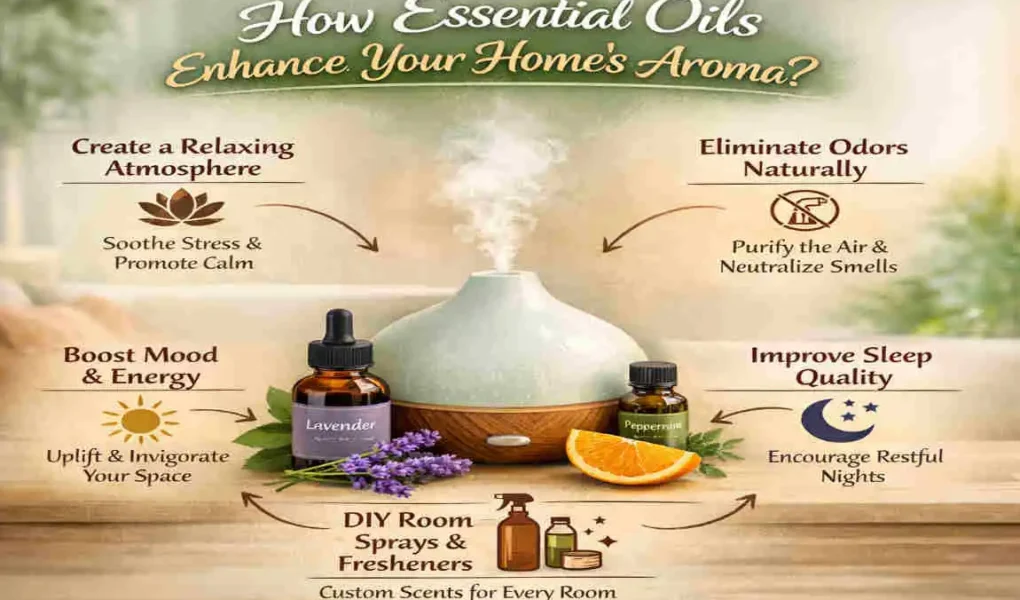
A home that smells clean and pleasant instantly feels more comfortable. The scent in your space can affect your mood, your energy, and even how welcoming your home feels to guests. But common smells like cooking, pets, damp air, and stale rooms can quickly take over.
| Benefit | How it works | Example oils & use |
|---|---|---|
| Mood elevation | Aromas trigger limbic system responses | Sweet orange or bergamot in a diffuser, 3–5 drops |
| Odor neutralizing | Masks and breaks down unpleasant smells | Lemon or grapefruit added to cleaning spray (1 cup water + 10–15 drops) |
| Relaxation & sleep | Calming scents reduce stress/arousal | Lavender on a bedside diffuser, 3–4 drops before sleep |
| Energizing & focus | Stimulating scents increase alertness | Peppermint or rosemary in a diffuser in home office |
| Natural freshness | Botanical notes replace synthetic scents | Eucalyptus or pine in common areas |
| Seasonal ambiance | Creates themed sensory atmosphere | Cinnamon + clove for winter; citrus + mint for summer |
That is why many people are turning to essential oils instead of chemical air fresheners. They offer a simple, natural way to refresh your home while also creating a relaxing atmosphere. If you want to know how to make your house smell good with essential oils, the good news is that it is easier than you think.
Why Essential Oils Are Great for Home Fragrance

Natural Alternative to Artificial Air Fresheners
Essential oils are a popular choice because they come from plants and are often used naturally to make a house smell good. Unlike many store-bought sprays, they do not rely on harsh synthetic fragrances.
When used correctly, they can be a cleaner and more eco-friendly option for home fragrance with essential oils. They also let you control the scent strength, so your home smells pleasant without feeling overpowering.
Long-Lasting and Customizable Aroma
One of the best things about essential oils is how easy they are to blend. You can mix citrus, floral, herbal, or warm scents to match your style and your season.
This makes it easy to create the best essential oil blend for home fragrance based on your preferences. You are not limited to one scent, and that gives you more freedom to make your home feel personal.
Additional Wellness Benefits
Many people enjoy essential oils not just for the smell, but for how they make them feel. Lavender may help create a calm mood, citrus oils can feel energizing, and minty oils can feel refreshing.
That is why essential oils for bad odours are often chosen for multiple reasons. They can make a space feel fresher while also supporting a more peaceful home environment.
Best Essential Oils for Making Your House Smell Good
Citrus Oils for Freshness
Lemon, orange, grapefruit, and bergamot are bright and cheerful. These are some of the best essential oils to make a house smell fresh, as they help create a clean, lively feeling.
Citrus oils work especially well in kitchens, living rooms, and entryways. They give your home an immediate fresh touch.
Floral Oils for Relaxation
Lavender, rose, and jasmine offer a soft, calming aroma. These oils are a great choice if you want your home to feel peaceful and inviting.
They are often used in bedrooms and bathrooms because they create a gentle scent that never feels too heavy.
Herbal and Minty Oils
Peppermint, eucalyptus, and tea tree are crisp and clean. These are excellent diffuser oils for house smells because they can help a room feel fresh and open.
Many people like them in bathrooms, laundry rooms, and kitchens, where odours tend to build up.
Warm and Cozy Oils
Cinnamon, clove, vanilla, and cedarwood create a comforting scent. These are ideal if you want your home to feel warm and welcoming.
They are especially nice during cooler months, when you want a richer, cosier atmosphere.
Seasonal Oils
Pine works beautifully in winter, lemongrass feels light and fresh in summer, and pumpkin spice-inspired blends can make fall feel even more inviting.
Seasonal scent changes are among the easiest natural home scent ideas because they help keep your home from feeling repetitive.
How to Make Your House Smell Good with Essential Oils
Use Essential Oil Diffusers
A diffuser is one of the simplest ways to enjoy scent throughout the day. Ultrasonic, reed, and nebulising diffusers all work a little differently, but each can spread fragrance throughout your home.
Place them in living rooms, bedrooms, or entryways for the best effect. If you want a soft scent, use fewer drops. If you want a stronger smell, add a little more, but avoid overdoing it.
Make a DIY Essential Oil Room Spray
A DIY essential oil room spray is easy to make and useful for quick freshness.
Use this simple mix:
- Distilled water
- Witch hazel
- 10–20 drops of essential oil
Shake it well before spraying. Use it on curtains, the air, and fabric-safe areas to naturally make your home smell fresh.
Freshen Carpets and Rugs
If odours linger in carpets, baking soda and essential oils can help neutralise them. Mix a few drops of lavender or lemon oil into baking soda, sprinkle it over rugs, and let it sit before vacuuming.
This works well for cleaning and freshness, as it helps remove stale odours from soft surfaces.
Use Cotton Balls in Small Spaces
Cotton balls are a simple fix for closets, drawers, trash bins, and shoe cabinets. Add a few drops of oil and place them where you need a quick scent boost.
This method is small, low-cost, and very effective for tight spaces that need regular freshening.
Try a Simmer Pot
A simmer pot is a cozy way to scent your home. Add water, citrus peels, cinnamon sticks, and a few drops of essential oil to a pot and let it gently steam on the stove.
This is a great option when you want your home to smell warm and inviting, especially during gatherings.
Add Oils to Cleaning Water
You can also use essential oils in mop water or cleaning solutions, as long as they are properly diluted and safe for the surface.
This is one of the easiest how to freshen house naturally methods because it combines cleaning and fragrance in one step.
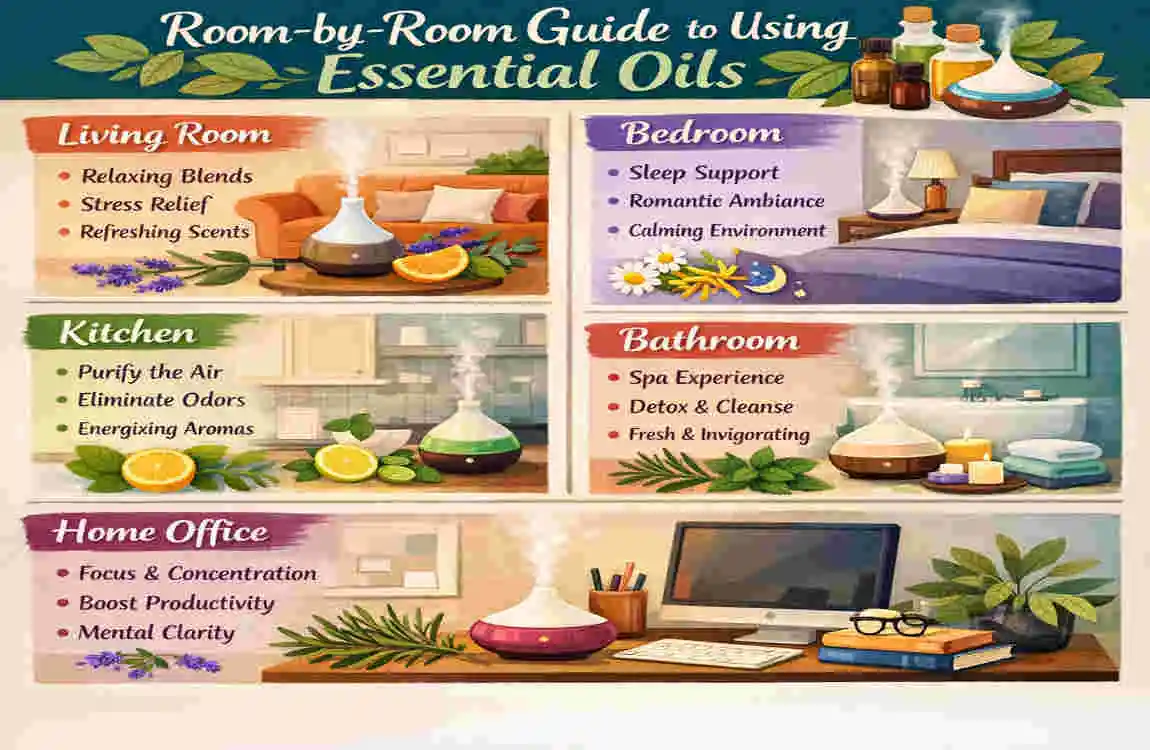
Room-by-Room Guide to Using Essential Oils
Living Room
Use citrus and woody scents like orange, bergamot, or cedarwood. These create a clean and welcoming feeling.
Kitchen
Lemon, peppermint, and tea tree are popular here because they smell fresh and help mask strong cooking odours.
Bathroom
Eucalyptus and lavender work well in bathrooms because they smell clean and soothing.
Bedroom
Chamomile and lavender are ideal for calm, restful spaces. They help create a soft and peaceful mood.
Entryway
Fresh floral and citrus blends make a strong first impression and help the whole house feel fresher.
Closets and Laundry Areas
Cotton balls, sachets, or small diffusers are great here. These spots need light but steady fragrance.
DIY Essential Oil Blends for a Pleasant-Smelling Home
Fresh Clean Blend
Mix lemon, eucalyptus, and tea tree for a crisp, clean scent.
Cozy Winter Blend
Mix cinnamon, cloves, and orange for a warm, seasonal aroma.
Spa-Like Blend
Mix lavender, peppermint, and eucalyptus for a relaxing, refreshing feel.
Floral Calm Blend
Mix rose, geranium, and lavender for a soft, gentle fragrance.
Energy Boost Blend
Mix grapefruit, peppermint, and lemon for a bright, uplifting scent.
Tips to Make Essential Oil Fragrance Last Longer
To help your scent last, start by removing any bad smells. Clean drains, trash bins, carpets, and upholstery before adding fragrance.
Also, keep air moving. Open windows when possible and use exhaust fans in kitchens and bathrooms. Fresh air helps the scent stay balanced instead of heavy.
You can also layer your fragrance by using a diffuser in one room, a room spray in another, and cotton balls in small spaces. That creates a fuller and longer-lasting home scent.
Safety Tips When Using Essential Oils at Home
Essential oils are helpful, but they should be used carefully. Always dilute them properly and avoid using too much at once.
Keep them away from children and pets, since some oils may not be safe for them. Also, be careful with wood, marble, and delicate fabrics because oils can leave marks.
If you have sensitivities, test a small amount first. Good airflow matters too, especially if you diffuse oils every day.
Essential Oils vs Traditional Air Fresheners
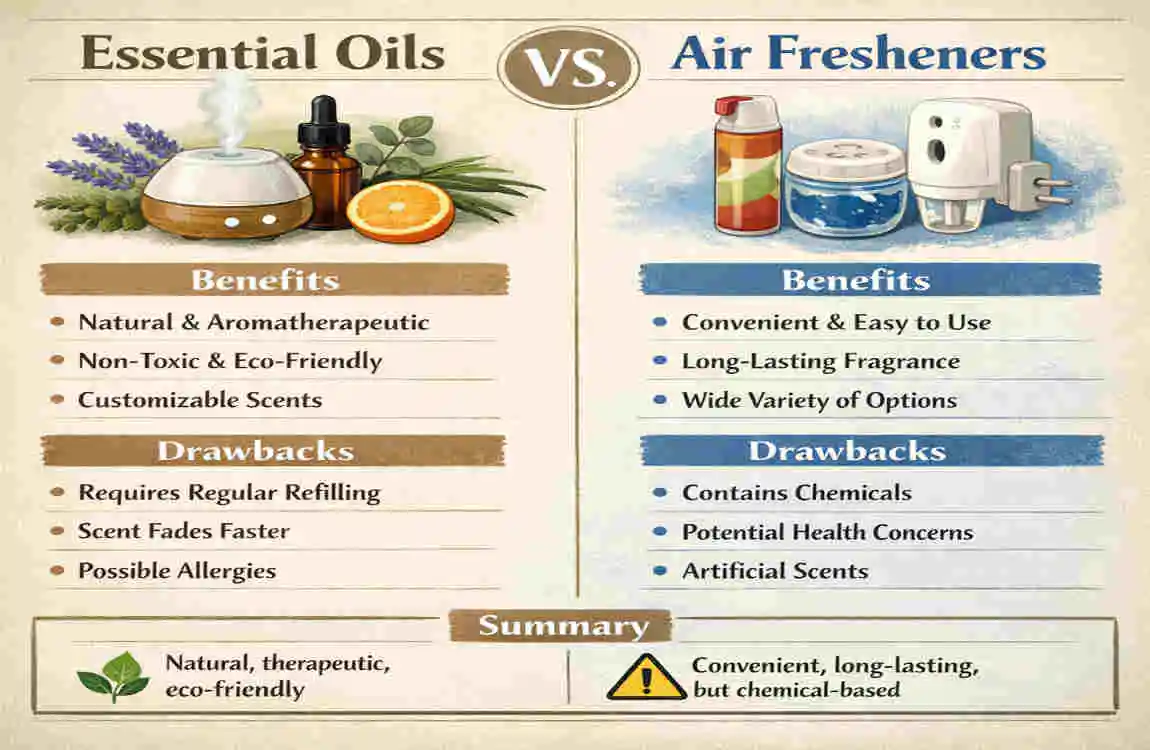
Feature Essential Oils Traditional Air Fresheners
Natural Ingredients Yes Often synthetic
Customizable High Limited
Chemical Exposure Lower Higher
Aromatherapy Benefits Yes No
Cost Over Time Moderate Repetitive purchases
Common Mistakes to Avoid
- Using too much oil
- Covering odors instead of cleaning them
- Choosing strong oils for small rooms
- Ignoring airflow
- Buying cheap synthetic fragrance products
FAQ
What essential oil makes a house smell the best?
Citrus, lavender, eucalyptus, and vanilla are some of the most popular choices because they feel fresh and pleasant.
How many drops of essential oil should I use in a diffuser?
Most diffusers work well with 5–10 drops, but the right amount depends on the size of the room and the diffuser.
Can essential oils remove bad odors?
They can help freshen the air, but cleaning is still important if you want to remove the source of the odor.
Is it safe to diffuse oils every day?
Yes, in moderation and with good ventilation. It is best not to overuse them.
How can I make my house smell luxurious naturally?
Try layering woody, floral, and citrus scents. A balanced blend often feels the most elegant and inviting.