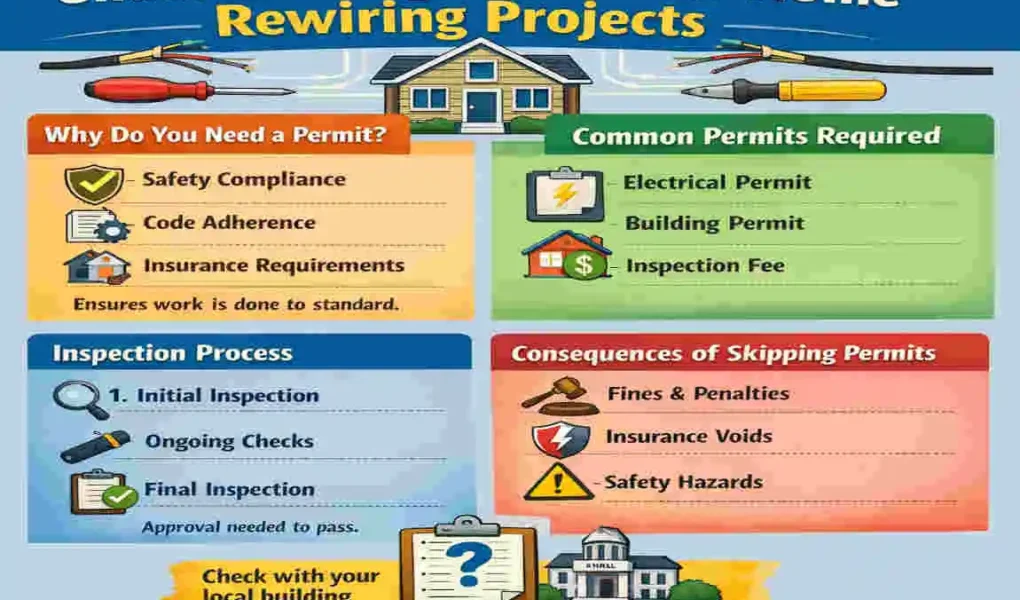
Home rewiring is one of those upgrades that can make a huge difference in a house. It improves safety, supports modern appliances, and helps prevent electrical problems before they become serious. If your home still has old wiring or you are planning a renovation, this is a topic worth paying attention to.
| Topic | Key Details |
|---|---|
| What is a rewiring permit? | Official approval required to legally perform electrical rewiring in a home |
| Why it is needed | Ensures safety, compliance with electrical codes, and insurance validity |
| Who issues it | Local building authority or municipal electrical department |
| When it is required | Full house rewiring, panel upgrades, or new circuit installations |
| Risks of no permit | Fines, insurance issues, safety hazards, and resale complications |
| Inspection requirement | Final inspection is usually mandatory after work completion |
| Who applies for it | Homeowner or licensed electrician (varies by region) |
| Approval time | Usually a few days to a few weeks depending on authority |
Many homeowners ask, whether“Do you need a permit to rewire a house?” In most cases, the answer is yes. A permit helps ensure the work complies with local safety rules and building codes. It also protects you from problems with inspections, insurance, and future home sales.
What Does Rewiring a House Mean?
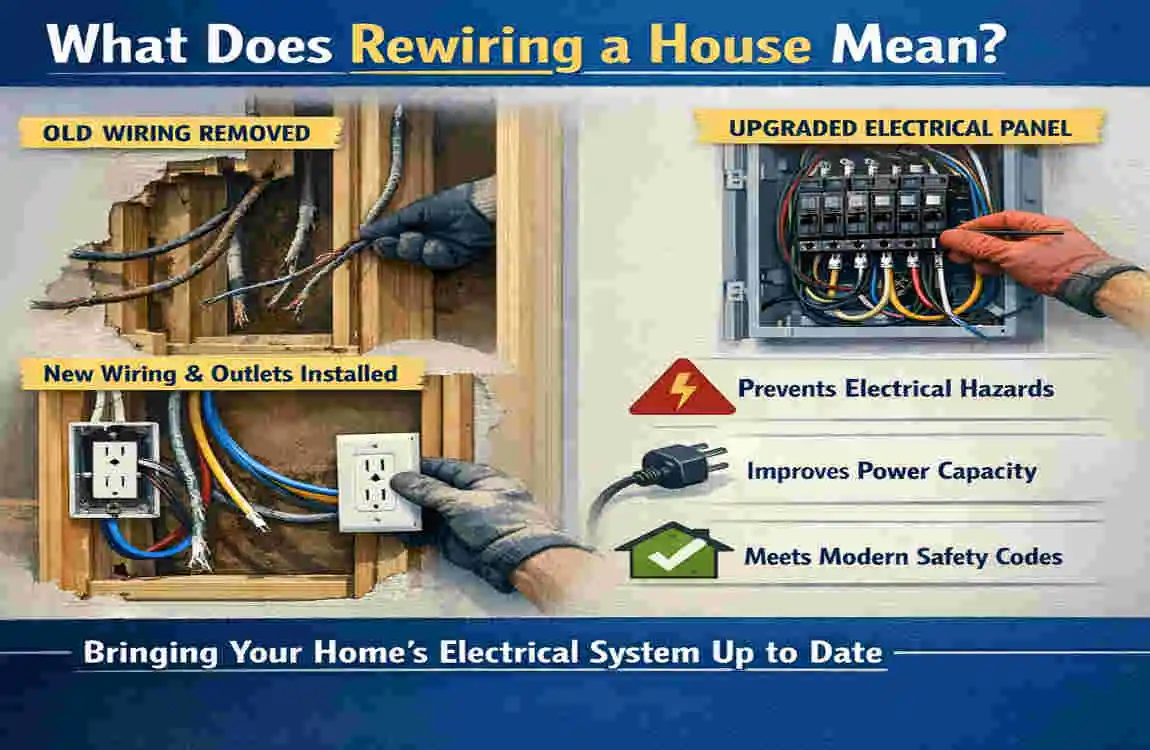
Rewiring means replacing old or unsafe electrical wiring with new wiring that can handle your home’s current power needs. It may involve a full house rewiring or only a partial update in certain rooms.
Homeowners usually rewire because the existing system is old, damaged, or no longer safe. Some houses still have outdated cloth-insulated wiring or aluminum wiring, which may not meet modern standards.
Common Signs You May Need Rewiring
- Frequent breaker trips
- Flickering lights
- Burning smell from outlets
- Outlets that feel warm
- Buzzing sounds near switches
If you notice these warning signs, it is best to have the system checked by a licensed electrician.
Do You Need a Permit to Rewire a House?
In most places, yes, you need a permit to rewire a house. Electrical work is closely regulated because it affects safety, code compliance, and property value. A permit indicates to the local authority that the project will be properly reviewed and inspected.
Usually, the permit is issued by the local building department or municipal electrical office. Full rewiring, panel upgrades, and new circuit installation almost always require approval.
There may be a few small exceptions for minor repairs in some areas, but rewiring is usually not one of them. Skipping the permit can create legal and safety problems later.
Why Electrical Permits Are Important
Electrical permits are not just paperwork. They help make sure the work is safe and done correctly. This matters because poor wiring can lead to fire, shock, or damage to appliances.
Permits also help protect your insurance coverage. If something goes wrong and the work was done without approval, your claim may be questioned or denied. On top of that, a permitted and inspected job can help maintain your home’s resale value.
Risks of Rewiring a House Without a Permit
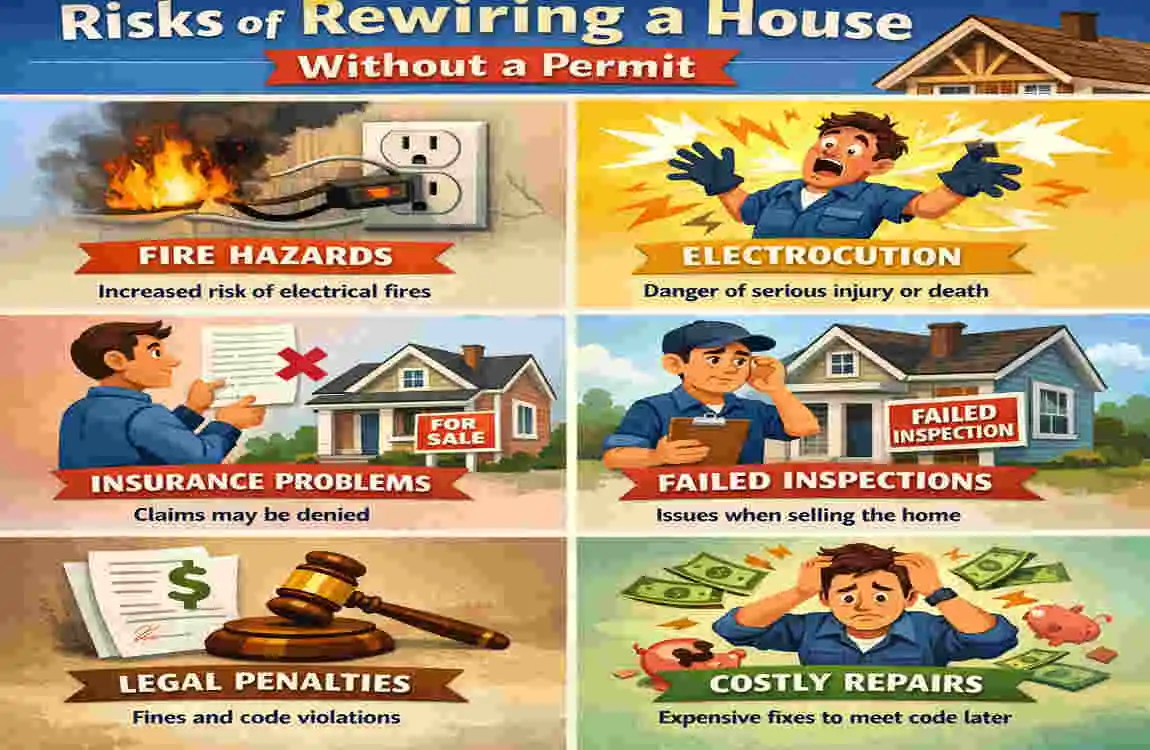
Doing the work without a permit can cause serious trouble. You may face fines, be forced to redo the work, or run into issues when you try to sell the house.
Common Risks
- Legal penalties
- Insurance claim problems
- Failed home inspections
- Safety hazards
- Delays in future renovations
Unpermitted electrical work can also make you liable if an accident happens later.
Types of Electrical Permits for Home Rewiring
Different projects may need different permit types. A full rewiring permit covers major electrical replacement, while a service upgrade permit is used when the main electrical panel needs improvement.
Some projects may also require a new circuit permit if you are adding power for a kitchen, an addition, or an appliance. In many cases, the permit process includes one or more inspections before and after the work is completed.
Step-by-Step Process to Get a Permit for Rewiring
The permit process is usually simple when you plan. First, you apply to your local authority and submit the needed documents. In many places, you may need a basic electrical plan showing what will be changed.
If required, hire a licensed electrician to perform the work. Then pay the permit fee and wait for approval. After that, the rewiring can begin.
Once the work is done, the inspector checks the wiring to confirm it meets code requirements. If everything looks good, the permit is closed, and the project is approved.
Cost of Electrical Permits for House Rewiring
Permit costs vary by location, house size, and job complexity. Some permits are low-cost, while larger projects may cost more because they require multiple inspections or extra review.
Here is a simple overview:
Factor: How It Affects Cost
House size : Larger homes usually cost more
Project scope : Full rewiring costs more than small repairs
Local rules Fees vary by city or county
Inspections Extra inspections may add charges
Even with these costs, a permit is usually far cheaper than fines or later repair work.
Can You Rewire a House Yourself Without a Permit?
DIY rewiring may sound tempting, but it is risky. Electrical work must follow strict safety rules, and many regions limit what homeowners can do without a licensed professional.
If the wiring is not done correctly, you could face shocks, fire hazards, or inspection failures. Insurance problems can also arise if the work was not permitted or professionally inspected.
Common Mistakes Homeowners Make
Many homeowners run into trouble because they start work before checking local permit rules. Others hire unlicensed workers or skip inspections to save time.
A few common mistakes include:
- Ignoring local code requirements
- Underestimating the job
- Forgetting to update the electrical panel
- Skipping final inspection
These mistakes often lead to higher costs and more stress later.
How Long Does It Take to Get a Rewiring Permit?
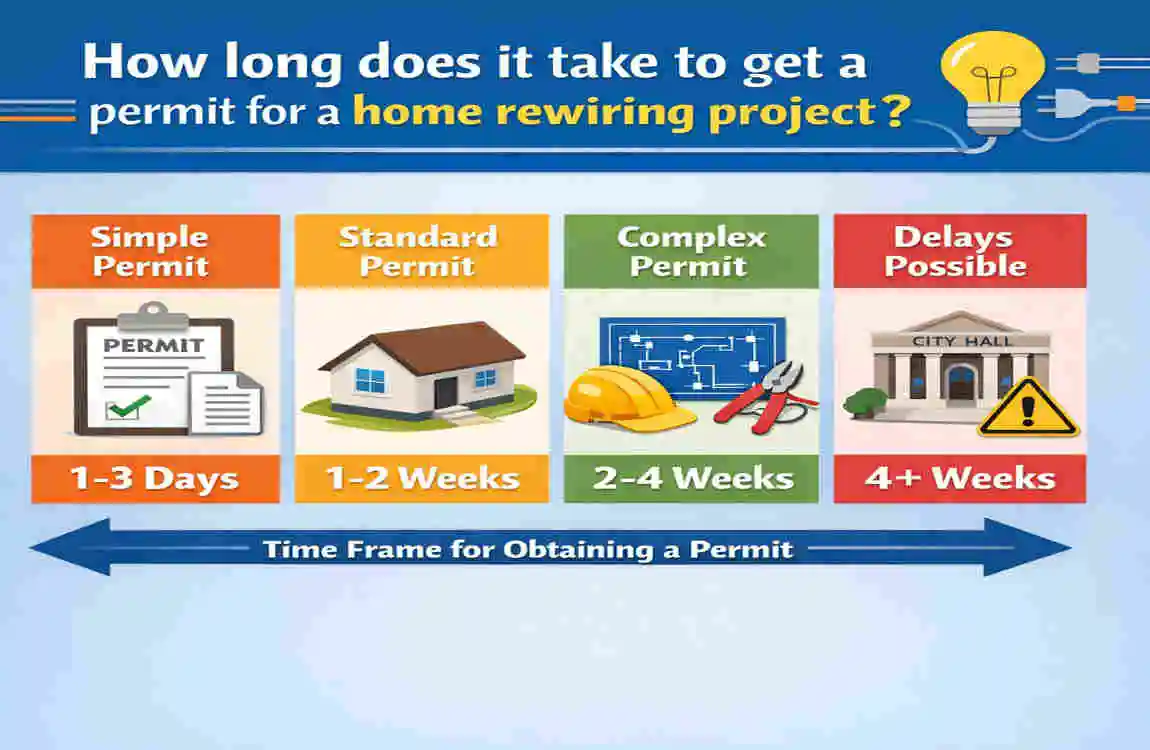
Approval time depends on your local office and the completeness of your application. Some permits are approved in a few days, while others may take a few weeks.
If you prepare your paperwork early and provide clear details, the process usually moves faster.
Tips to Speed Up the Permit Approval Process
Be organized before you apply. Use a licensed electrician who understands local rules, and make sure your plans are complete and accurate.
A few simple tips can help:
- Gather documents early
- Submit clear electrical plans
- Follow local building rules
- Book inspections as soon as possible
Benefits of Following Proper Permit Procedures
When you follow the permit process, you protect your home, your money, and your peace of mind. The work is more likely to meet safety standards, pass inspection, and support future resale.
It also gives you confidence that the wiring was done correctly.
FAQs (Frequently Asked Questions)
Do you need a permit to completely rewire a house?
Yes, full house rewiring almost always requires a permit.
What happens if you rewire without a permit?
You may face fines, insurance issues, or be forced to redo the work.
Can a homeowner apply for a permit?
In many places, yes, but the work may still need to be done or inspected by a licensed electrician.
Is inspection required after rewiring?
Yes, final inspection is usually required before the project is fully approved.