A pergola with a roof can completely change your outdoor space. It gives you shade, adds style, and makes your backyard more useful in all kinds of weather. If you have ever wanted a cozy place to relax, dine, or host friends, this project is worth a serious look.
If you are searching for how to build a pergola with a roof, the good news is that it is very doable with the right plan. You do not need to be a master carpenter to get started. You need clear steps, solid materials, and a little patience.
What Is a Pergola with a Roof?
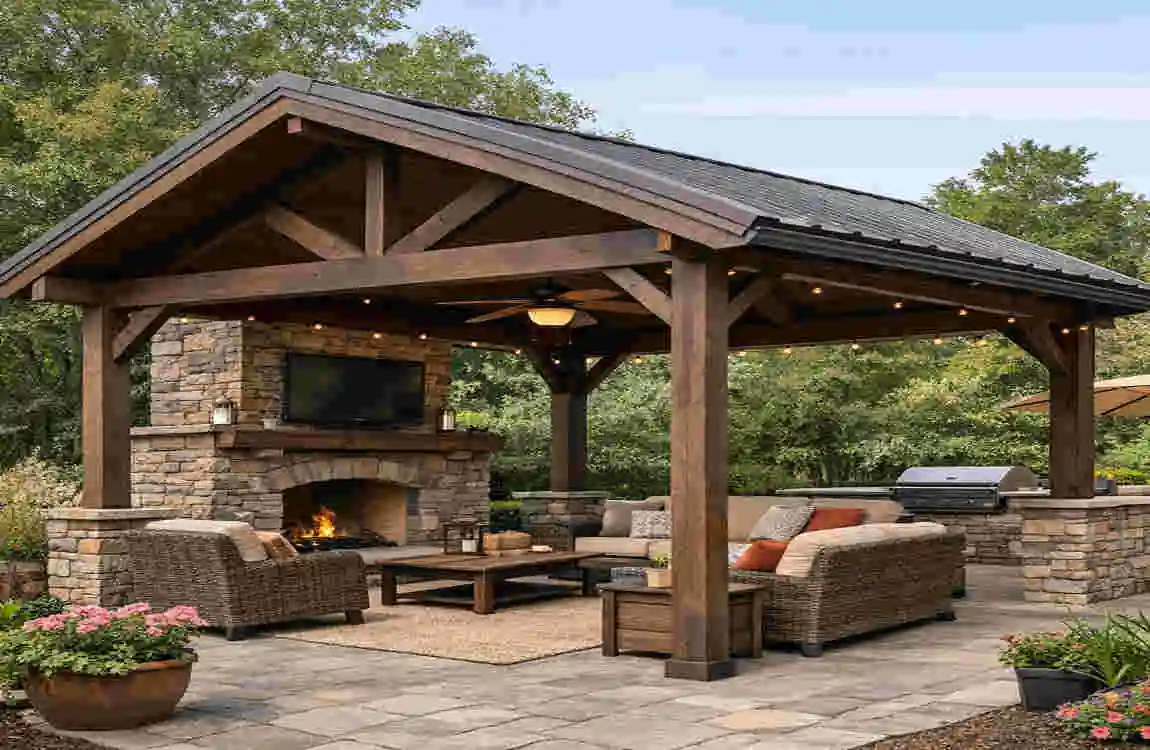
A pergola with a roof is a garden or patio structure built with posts, beams, and rafters. That roofing gives you more protection than a standard open pergola.
Pergola vs. Gazebo
A pergola usually has an open frame or a partially covered top. It creates shade, but it does not always block rain.
A gazebo is more enclosed and usually has a full roof built into the design. It feels more like a standalone outdoor room.
A roofed pergola sits somewhere in between. It keeps the open, stylish look of a pergola while adding more weather protection.
Benefits of a Roofed Pergola
A roof changes the whole function of a pergola. It is not just decorative anymore. It becomes much more practical too.
Better shade is one of the biggest benefits. You can sit outside without feeling overwhelmed by direct sun.
Rain protection is another major plus. Light rain will not send everyone rushing indoors.
You also get more usable outdoor space. That means more room for seating, dining, grilling, or relaxing.
And yes, it can also increase your home’s value by making your outdoor area more attractive and useful.
Planning Before You Build
Good planning makes the difference between a smooth build and a frustrating one. Before you cut a single board, take time to think things through.
Choose the Right Location
Start by deciding where the pergola should go. Think about how you will use the space.
If you want shade in the afternoon, place it where it will block the strongest sun. If you want it near the house, choose a spot close to a patio, deck, or back door.
Also think about views, privacy, and wind. A smart location makes the pergola more comfortable and more useful.
Check Local Building Codes
This step is easy to skip, but it matters a lot. Some areas require permits for outdoor structures, especially if the pergola has a roof.
Check local rules about height, property lines, setbacks, and structural requirements. Doing this early can save you from costly changes later.
Decide the Pergola Size
The size should match both your yard and your goals. A small pergola works well for a quiet sitting area. A larger one is better if you want outdoor dining or entertaining space.
Measure the area carefully. You want enough room for furniture, walking space, and the roof structure itself.
Select the Roof Style
This is where the project starts to feel personal. Different roof styles create different looks and levels of protection.
Here are the main options:
- Flat roof
- Sloped roof
- Metal roof
- Polycarbonate roof
- Shingle roof
A flat roof gives a modern look, while a sloped roof helps water drain more easily. Metal and polycarbonate are popular for low maintenance, while shingles match many home styles. Pick the one that fits your climate, budget, and overall design.
Tools and Materials Needed
Before you begin building, gather everything in advance. That keeps the job organized and reduces delays.
Essential Tools
You will need a few basic tools to complete the build safely and properly.
- Tape measure
- Level
- Drill
- Circular saw
- Ladder
- Post hole digger
- Safety equipment
These tools help you measure, cut, dig, fasten, and work safely throughout the project.
Materials List
The materials will depend on your exact design, but most roofed pergolas need the same core items.
- Pressure-treated posts
- Beams
- Rafters
- Roofing panels
- Concrete
- Screws and bolts
- Brackets
Materials and Their Purpose
MaterialPurpose
6×6 Posts Main support
Beams Structural frame
Rafters Roof support
Roofing Panels Weather protection
Concrete Anchor posts
Lag Bolts Secure framing
This table gives you a simple idea of what each part does. The posts hold everything up, the beams carry the load, the rafters support the roof, and the panels protect you from the weather.
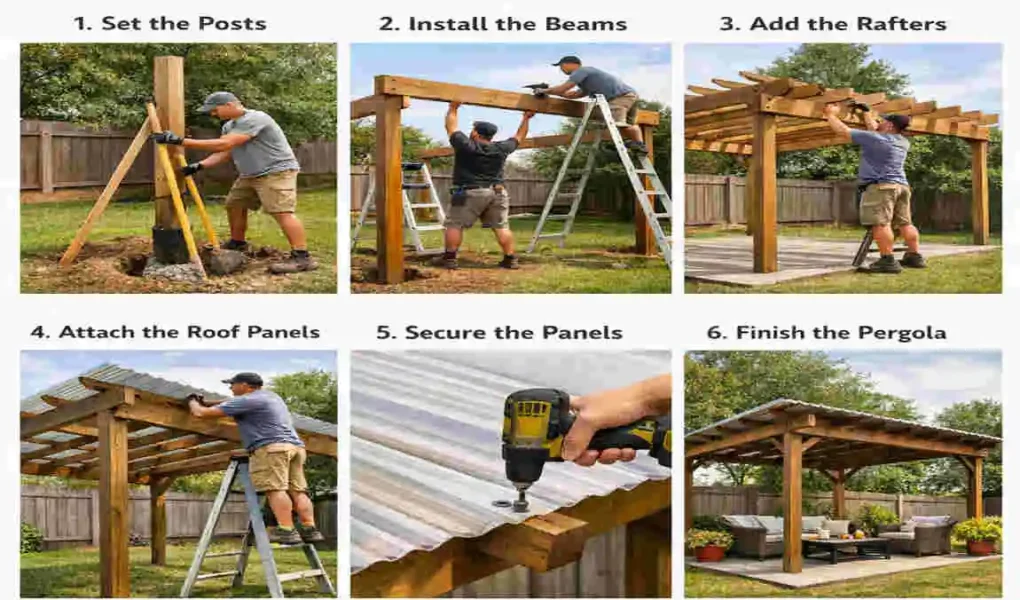
How to Build a Pergola with a Roof: Step-by-Step
Now let’s get into the actual build. Take your time with each step. Strong construction starts with careful work.
Mark the Layout
Use stakes, string, or spray paint to mark the pergola’s footprint. This helps you see the full shape before digging.
Double-check the measurements. A small mistake here can affect the whole structure later.
Dig Post Holes
Dig the holes for the support posts at the corners of the layout. Make sure they are deep enough for good stability, especially if your area has wind or soft soil.
The holes should be even and aligned. That helps the structure stay square and level.
Set Posts with Concrete
Place the posts in the holes and pour in concrete around them. Check that each post stands straight before the concrete hardens.
This step matters a lot because the posts are the main support system. If they are not strong and level, the rest of the pergola will not sit correctly.
Install Support Beams
Once the posts are secure, attach the beams across the top. These beams connect the posts and create the main frame.
Use strong bolts or brackets to keep the frame solid. This part should feel firm, not loose.
Attach Rafters
Next, install the rafters across the beams. These give shape to the roof and support the roofing material.
Keep spacing even so the structure looks neat and performs well. The rafters also add a nice visual rhythm to the pergola.
Add Roof Sheathing If Needed
Some roof styles require a base layer, such as plywood or other sheathing. Others, like some metal or polycarbonate systems, may not need this.
Follow the roof material’s requirements closely. The right base helps the roof sit properly and last longer.
Install Roofing Material
Now add the roof panels, shingles, or sheets. Work slowly and make sure each piece overlaps or fits correctly.
This is the part that gives your pergola real weather protection. Pay attention to sealing and fastening so water does not sneak through.
Finish with Trim and Paint
Add trim pieces to clean up the edges and give the pergola a finished look. You can also paint or stain the wood to match your home or patio style.
A good finish does more than improve appearance. It also helps protect the wood from weather damage.
Best Roofing Materials for Pergolas
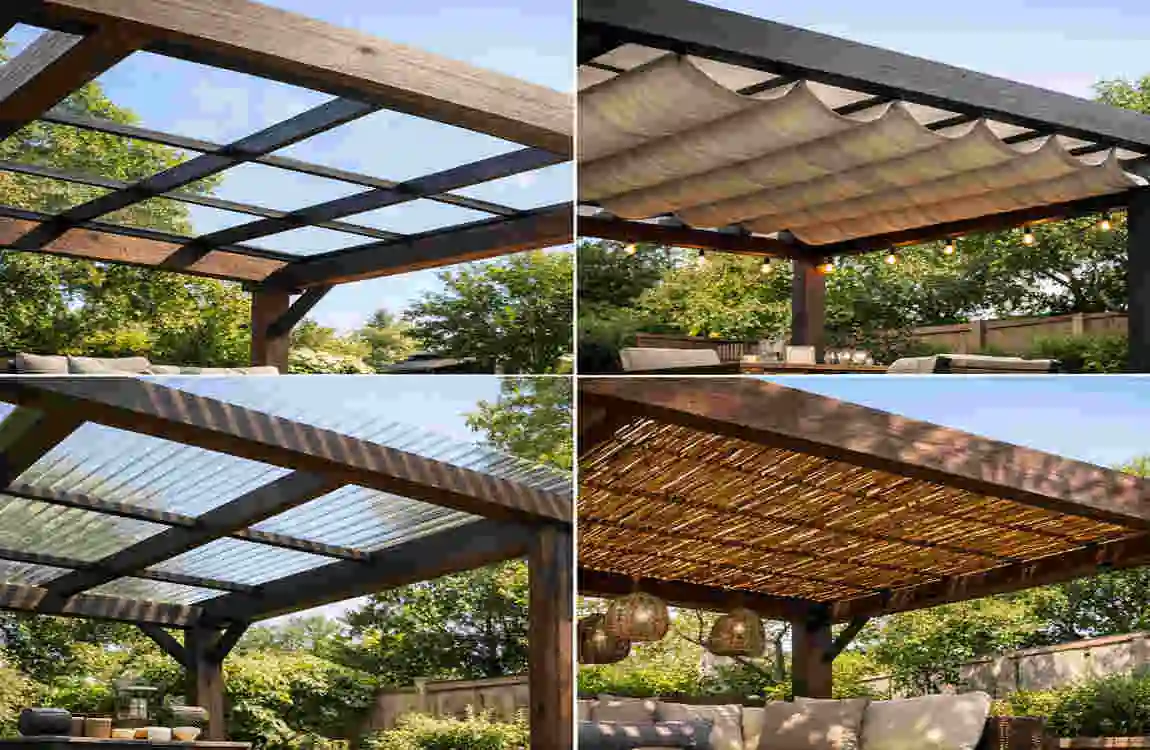
The roof material affects the look, cost, maintenance, and lifespan of your pergola. Choose based on your climate and the level of protection you want.
Metal Roofing
Metal is one of the strongest choices. It lasts a long time, handles rain well, and needs very little maintenance.
It also gives the pergola a clean, modern look. If durability is your top priority, metal is a smart option.
Polycarbonate Panels
Polycarbonate is light, strong, and lets in natural light. It is a good choice if you want protection without making the space too dark.
This material works especially well in areas where you want shade but still want brightness.
Asphalt Shingles
Shingle roofing works well if you want the pergola roof to match your home. They offer good weather protection and a familiar look.
They usually need more support than lightweight roof panels, so plan for that in your structure.
Corrugated Plastic
Corrugated plastic is budget-friendly and easy to install. It gives basic weather protection and is often used for simpler builds.
It may not last as long as metal, but it can be a practical choice for a low-cost DIY project.
Wooden Roof
A wooden roof gives a warm, natural look. It can be beautiful, especially in rustic or traditional outdoor spaces.
However, it usually needs more maintenance than other materials. Wood can wear faster when exposed to moisture for long periods.
Common Mistakes to Avoid
Many pergola problems stem from simple planning mistakes. Avoiding them early will save you time and repair work later.
Incorrect Post Spacing
If the posts are too far apart, the structure may not support the roof well. Keep spacing balanced and follow your design plan.
Weak Foundation
A pergola needs a solid base. If the posts are not set correctly, the whole structure can shift over time.
Poor Drainage
Water should never pool around the posts or roof area. Good drainage helps prevent wood rot and damage to the concrete base.
Choosing the Wrong Roofing Material
Not every material works in every climate. Think about sun, rain, snow, and wind before making your choice.
Ignoring Local Codes
Rules exist for a reason. Skipping permits or building restrictions can lead to trouble if you need to make changes later.
Estimated Cost to Build a Pergola with a Roof
Cost is one of the biggest questions for DIY builders. Your total will depend on size, material choice, roof type, and whether you do all the labor yourself.
Material Costs
A small roofed pergola may cost much less than a large custom one. Pressure-treated lumber, concrete, hardware, and roofing panels make up most of the budget.
DIY vs Professional Installation
Doing the work yourself can save money, but it also takes time and effort. Hiring a professional usually costs more, but it may be worth it if you want faster results or need structural help.
Ways to Save Money
You can lower the budget by keeping the design simple, choosing affordable roofing, and buying materials carefully. You may also save by comparing suppliers before you purchase.
A DIY pergola with a roof typically costs between $1,500 and $5,000, depending on size and materials. Bigger or more decorative projects can cost more.
Maintenance Tips
Once your pergola is built, a little care will help it last longer. Regular maintenance is much easier than major repairs.
Inspect the Roof Regularly
Look for loose screws, cracks, rust, or missing pieces. Checking it a few times a year is a smart habit.
Clean Debris
Leaves, dirt, and branches can trap moisture on the roof. Clean them off so the structure stays dry and tidy.
Repaint or Reseal Wood
If your pergola is made of wood, protect it with paint, stain, or sealant. This helps prevent fading, water damage, and decay.
Tighten Fasteners
Wind and weather can loosen bolts and screws over time. Tighten them when needed to keep the frame secure.
Prevent Water Damage
Make sure the roof drains properly and that water does not sit around the posts. Good water control helps extend the life of the whole structure.
Design Ideas
A pergola with a roof can look very different depending on the style you choose. You can make it simple, cozy, modern, or bold.
Modern Pergola
A modern pergola often uses straight lines, dark finishes, and sleek roofing materials. It looks clean and stylish in newer homes.
Rustic Wooden Pergola
This style uses natural wood tones and a warm finish. It feels relaxed and inviting, especially in gardens or country-style yards.
Attached Pergola
An attached pergola connects to the house. This creates a smooth transition from indoor to outdoor space and often works well for patios.
Freestanding Pergola
A freestanding pergola stands on its own in the yard. It gives you more freedom in placement and can become a true outdoor destination.
Pergola with Lighting
Lighting makes the space more useful after sunset. String lights, lanterns, or built-in fixtures can turn the pergola into a great evening hangout spot.
Is Building a Pergola with a Roof Worth It?
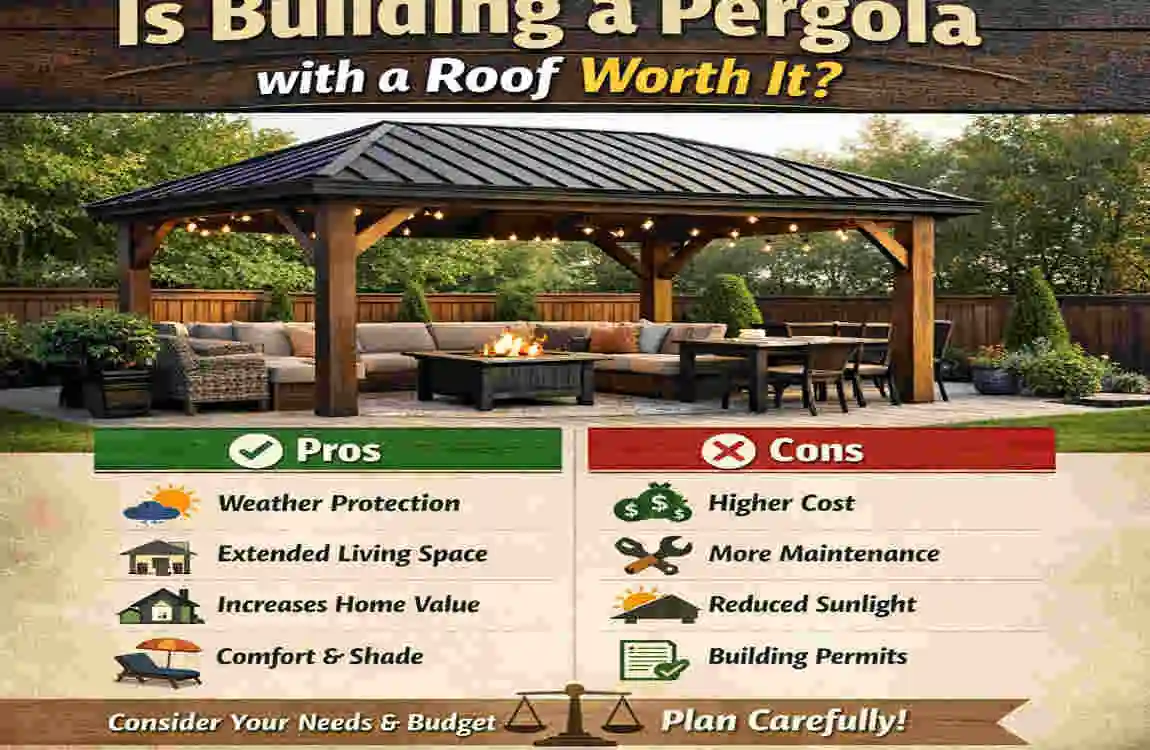
For many homeowners, the answer is yes. A roofed pergola adds comfort, beauty, and practical use to outdoor space.
Advantages
You get more shade, rain protection, and a space that feels more complete. It can also improve the look of your backyard and add value to your home.
Disadvantages
It does take time, planning, and money. If you choose the wrong materials or skip important steps, the build can become frustrating.
Long-Term Value
A well-built pergola can last many years with proper care. That makes it a good long-term improvement for the right home.
Best Situations for Installing One
This project is ideal if you already use your patio or yard often and want to make it more comfortable. It is also a great fit if you enjoy DIY projects and want a custom outdoor feature.
Frequently Asked Questions (FAQ)
How do I build a pergola with a roof for beginners?
Start with planning, set sturdy posts in concrete, install beams and rafters, then attach the roofing material.
What is the best roof for a pergola?
Metal and polycarbonate roofs are popular because they are durable, weather-resistant, and low maintenance.
Do I need a permit to build a pergola with a roof?
In many places, yes. Always check local building regulations before starting.
How much does it cost to build a pergola with a roof?
A DIY project often costs $1,500 to $5,000, depending on size, materials, and roofing type.
What wood is best for a pergola?
Pressure-treated pine, cedar, and redwood are common choices because they hold up well outdoors.
| Step | What to Do | Key Tips |
|---|---|---|
| Plan the Design | Choose the pergola size, roof style, and location. | Check local building codes before starting. |
| Gather Materials | Buy pressure-treated lumber, roofing panels, concrete, screws, and brackets. | Use weather-resistant materials for durability. |
| Mark the Layout | Measure and mark the post locations accurately. | Ensure the layout is square using diagonal measurements. |
| Install the Posts | Dig post holes, set posts in concrete, and let them cure. | Posts should be level and securely anchored. |
| Attach Support Beams | Fasten horizontal beams to the tops of the posts. | Use galvanized bolts for extra strength. |