
“Hey! I’m planning a trip to your city next month. Do you have a place for me to crash?” For many apartment dwellers and homeowners with limited square footage, this simple text message triggers a wave of panic. You want to be the gracious host. You want to say, “Yes! Come stay!” But then reality hits: you don’t have a guest room. You are left with two awkward options: suggest they book a hotel (which feels cold and expensive), or offer them the dreaded air mattress on the floor (which guarantees they will wake up with back pain). Air mattresses often deflate overnight, provide uneven support, and lack the stability of a real bed frame, leading to discomfort for 70% of users according to sleep studies. But there is a third option, one that has quietly undergone a design revolution in the last few years: the Convertible Sleeper Sofa. Gone are the days of clunky, metal-spring traps that looked like dorm furniture and felt like sleeping on a bag of rocks. Modern models now offer queen-size sleeping surfaces (typically 60×80 inches) with weight capacities up to 500 pounds, blending daily comfort with overnight reliability. The modern sleeper sofa is a marvel of engineering, designed to save your social life without sacrificing your living room’s style. Here is how to master the art of hosting, even when you don’t have a spare room to your name.
The “Guest Room” is an Endangered Species
First, let’s normalize the lack of a guest room. With rising real estate costs and the trend toward urban living, dedicating an entire room to guests who might visit for only 10 days a year is simply inefficient. In the U.S., average home sizes have shrunk 20% since 2000 to about 2,000 square feet, per Census data, pushing multifunctional spaces. That room sits empty for 355 days, gathering dust, when it could be a home office, a gym, or a nursery. The smartest homeowners are embracing the concept of the “Hybrid Room.” Your living room needs to moonlight as a bedroom. But for this to work, the furniture has to be deceptive. It needs to be a stunning, comfortable sofa at 7:00 PM for movie night, and a supportive, spacious bed at 11:00 PM when your guests are ready to turn in. Ideal hybrid setups measure 80-90 inches wide to fit standard doorways while maximizing open floor space.
The Comfort Revolution: Debunking the “Bar in the Back” Myth
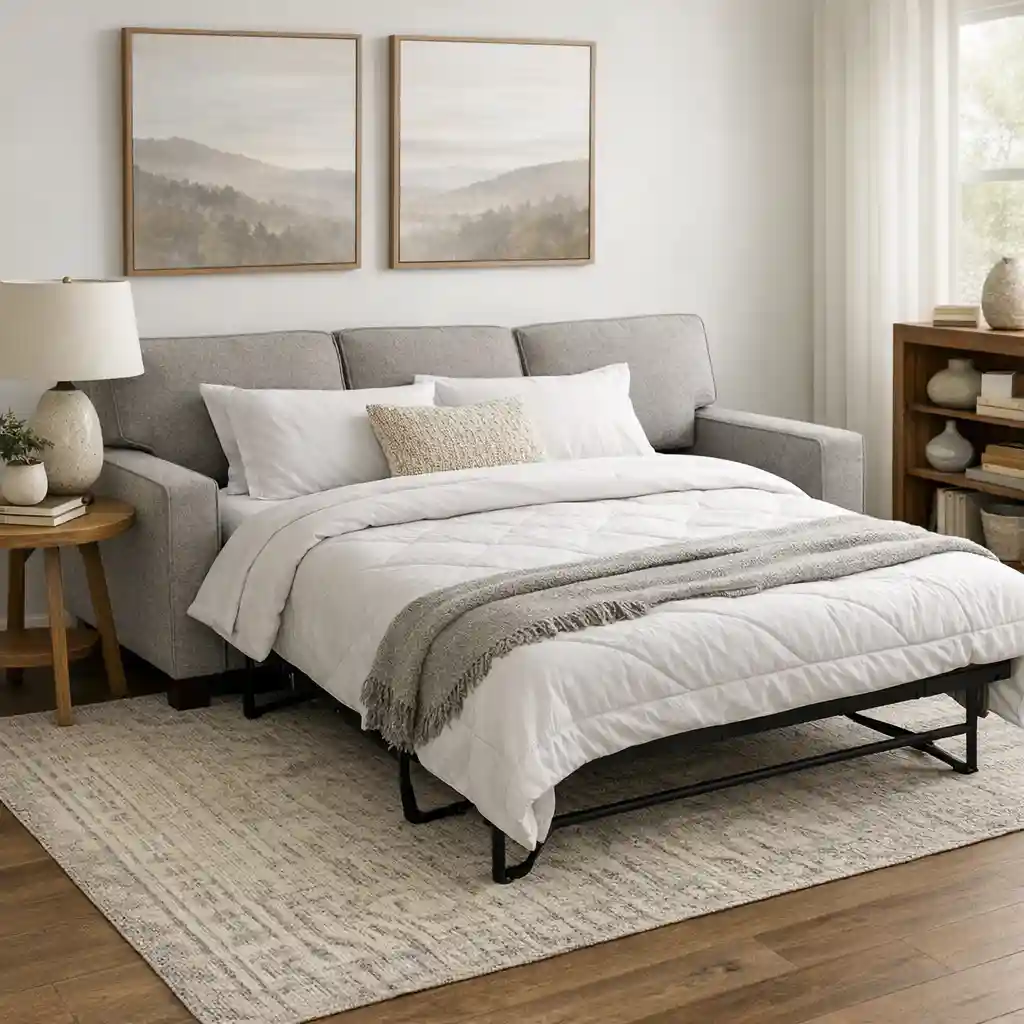
If you grew up sleeping on sofa beds in the 90s, you likely have trauma. You remember the thin, flimsy mattress. You remember the metal bar digging into your spine. You remember the squeaking sounds every time you rolled over. That reputation is outdated. Today’s manufacturers have prioritized sleep ergonomics. The best sleeper sofa on the market now utilizes high-density memory foam or hybrid mattress technologies that rival the bed you sleep on every night—often with 10-12 inches of thickness for proper spinal alignment, certified by bodies like CertiPUR-US for low emissions. By replacing the old “trampoline” suspension with solid platforms or advanced webbing systems, designers have eliminated the dreaded support bar entirely. These upgrades reduce motion transfer by up to 80%, ensuring undisturbed sleep for couples. Now, when your guests wake up, they aren’t complaining about their necks; they are asking where you bought the sofa. This shift in quality means you no longer have to apologize before you make the bed.
Mechanism Magic: From Struggle to Smooth
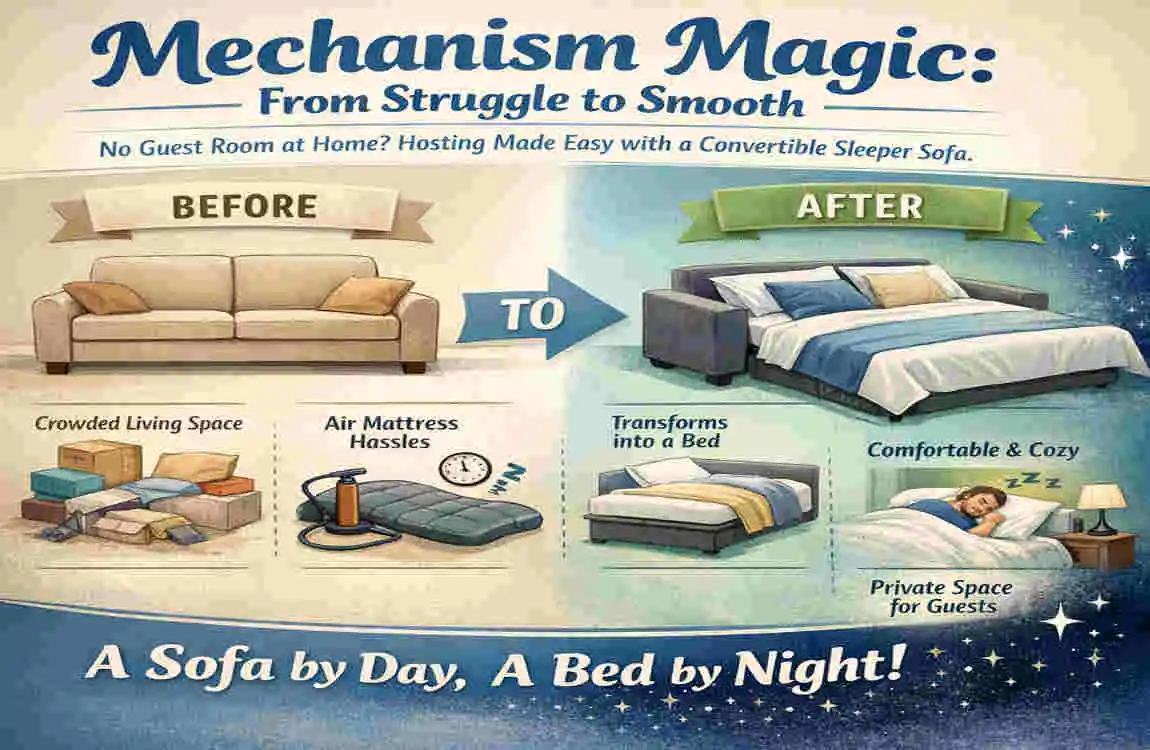
Hosting should be effortless. The old “pull-out” sofas required a wrestling match to open. You had to remove all the cushions, find a handle, yank with all your strength, and hope you didn’t throw out your back. Modern convertible sofas focus on “ease of transition.” The Click-Clack: A simple mechanism where the backrest folds flat to become the mattress. It takes three seconds and supports up to 300 pounds per section. The Pull-Out Drawer: A hidden section under the seat glides out on smooth wheels and pops up to align with the seat, creating a large, flat sleeping surface—perfect for apartments with 7-8 foot ceilings. The Fold-Over: The entire seating mechanism flips forward in one fluid motion, often with gas-lift pistons for zero-strain operation. When shopping, look for a mechanism that a single person can operate with one hand. The transformation should feel like a magic trick, not a chore. This allows you to transition from “Evening Cocktails” to “Bedtime” smoothly, keeping the vibe relaxed. Test weight ratings: queen-size models handle 600+ pounds total.
Aesthetics: Hiding in Plain Sight
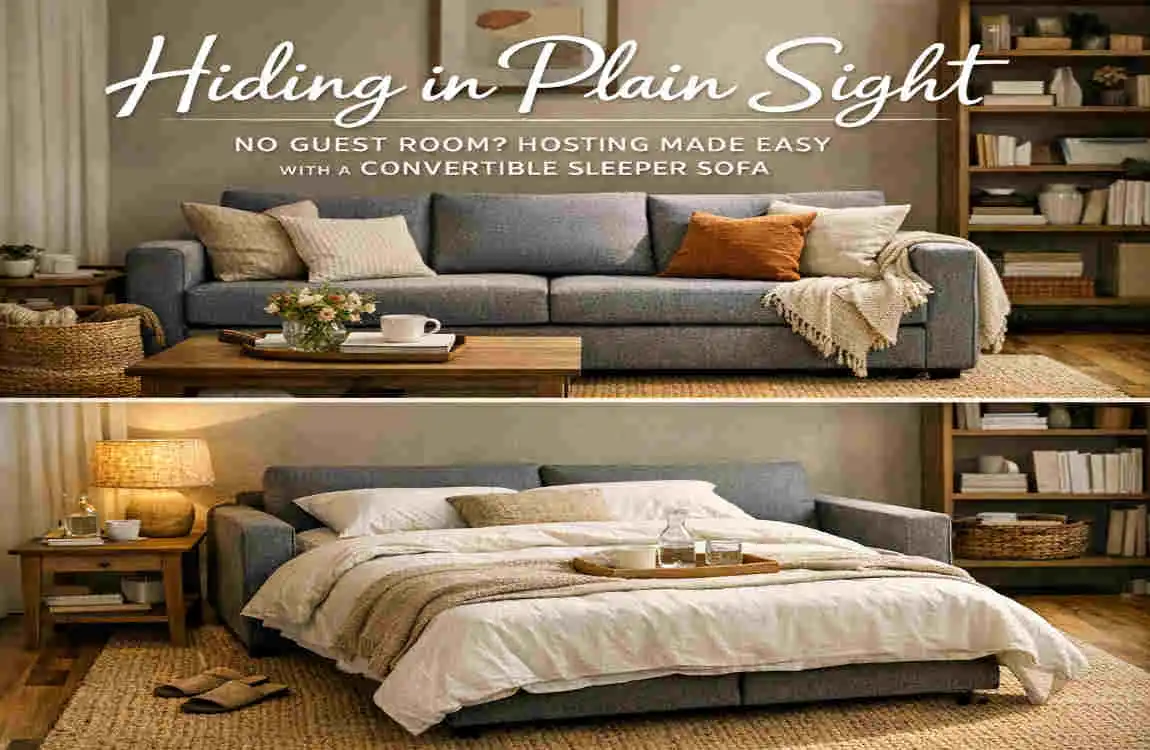
The biggest barrier to buying a sleeper sofa used to be the look. You could spot a sofa bed from a mile away—they were boxy, heavy, and covered in cheap fabric. Today, the goal is “Invisibility.” Top-tier furniture brands have figured out how to hide the mattress mechanism inside sleek, low-profile designs. You can find mid-century modern sleeper sofas with tapered wooden legs, tufted velvet upholstery, and slim armrests—depths as low as 34 inches to fit tight spaces. Your guests shouldn’t know it’s a bed until you tell them. This is crucial for small spaces. You don’t want your living room to look like a bedroom during the day. You want it to look like a curated, stylish lounge. The functionality should be a secret superpower, revealed only when needed. Pro tip: Opt for modular sectionals that expand for larger groups.
Choosing the Right Fabric for Double Duty
When you buy a regular sofa, you only worry about sitting. When you buy a sleeper sofa, you have to worry about sleeping and sitting. This makes fabric selection critical. Breathability: Leather is sleek, but sleeping on leather can get hot and sticky. If you choose a leather sleeper, ensure you have a good mattress topper or thick sheets—aim for fabrics with 300+ GSM for airflow. Durability: Performance fabrics (like high-quality polyester blends or boucle) are excellent choices. They are soft to the touch for sleeping but tough enough to handle the friction of the conversion mechanism being used repeatedly, with abrasion ratings over 50,000 double rubs (Wyzenbeek test). Stain Resistance: Guests mean food and drinks. A sleeper sofa is a high-traffic zone. Look for fabrics that are easy to clean, so you aren’t stressing about a spilled glass of wine right before bedtime—Crypton or Sunbrella options repel liquids in seconds.
The Economics of Hospitality
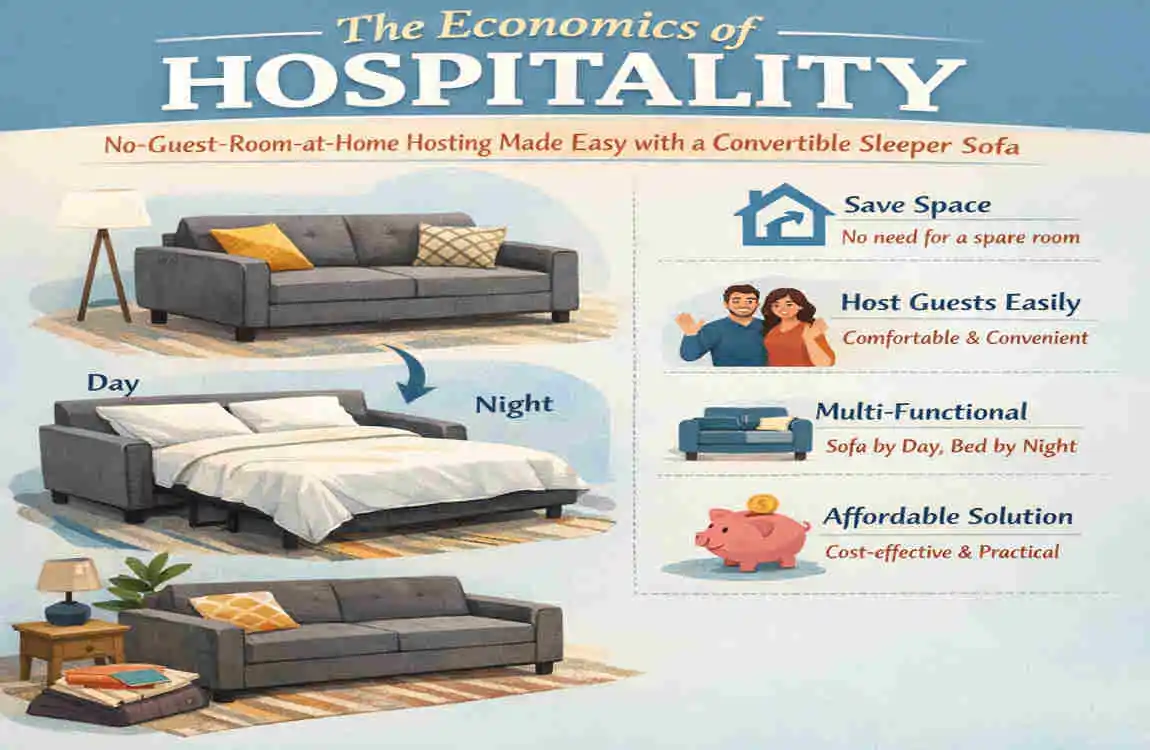
Let’s look at the financial side. A high-quality sleeper sofa is an investment, often costing more than a standard sofa. However, compare that to the cost of alternatives. Premium models range $1,500-$4,000, lasting 10-15 years with proper care. The Hotel Cost: If your parents visit for a week, a decent hotel might cost $1,000+. If they visit twice a year, that’s $2,000. A good sleeper sofa pays for itself in just a few visits. The Larger Apartment: Renting a two-bedroom apartment instead of a one-bedroom just to have a guest room could cost you an extra $500-$800 per month. Over a year, that is thousands of dollars wasted on empty space—equivalent to 350+ square feet unused. By investing in a premium convertible sofa, you are essentially “hacking” the housing market. You get the utility of a two-bedroom home for the price of a one-bedroom.
Conclusion: Say “Yes” with Confidence
There is a special joy in being a host. It is about sharing your space, cooking breakfast for friends, and staying up late talking in the living room. Don’t let a lack of square footage rob you of those moments. The “Guest Room” isn’t a physical location anymore; it is a function. With the right convertible sleeper sofa, you can turn any corner of your home into a sanctuary for your loved ones. So the next time that text message comes in—”Can I crash at your modern place?”—you won’t have to hesitate. You can text back immediately: “Absolutely. I’ve got the perfect bed for you.”
Frequently Asked Questions (FAQs)
What size sleeper sofa fits a small living room?
Most queen sleeper sofas are 80-90 inches wide and 34-38 inches deep, ideal for rooms under 150 sq ft. Measure your space with doors open for easy access.
How often should I rotate the mattress in a sleeper sofa?
Every 3-6 months to prevent sagging; use fitted sheets with 15-inch drop for full coverage and add a topper for extra plushness.
Are sleeper sofas good for daily use?
Yes, modern ones support daily sleeping with innerspring or foam cores rated for 7+ nights weekly, unlike older models limited to occasional use.
How do I maintain the conversion mechanism?
Lubricate hinges yearly with silicone spray; avoid excess weight during folding to extend life to 10,000+ cycles.
What’s the best budget for a durable sleeper sofa?
$1,200+ for quality mechanisms and fabrics; under $800 often means thin mattresses and weak frames.