Dormers are a simple roof feature, but they can make a big difference in how a home looks and feels. If you have ever seen a small window structure sticking out of a sloped roof, that is likely a dormer.
So, what are dormers on a roof? In simple terms, dormers are roof extensions that usually house a window and add light, space, and style. They are popular in both traditional and modern homes because they enhance comfort and make the roofline more attractive.
What Are Dormers on a Roof?
Definition of a Roof Dormer
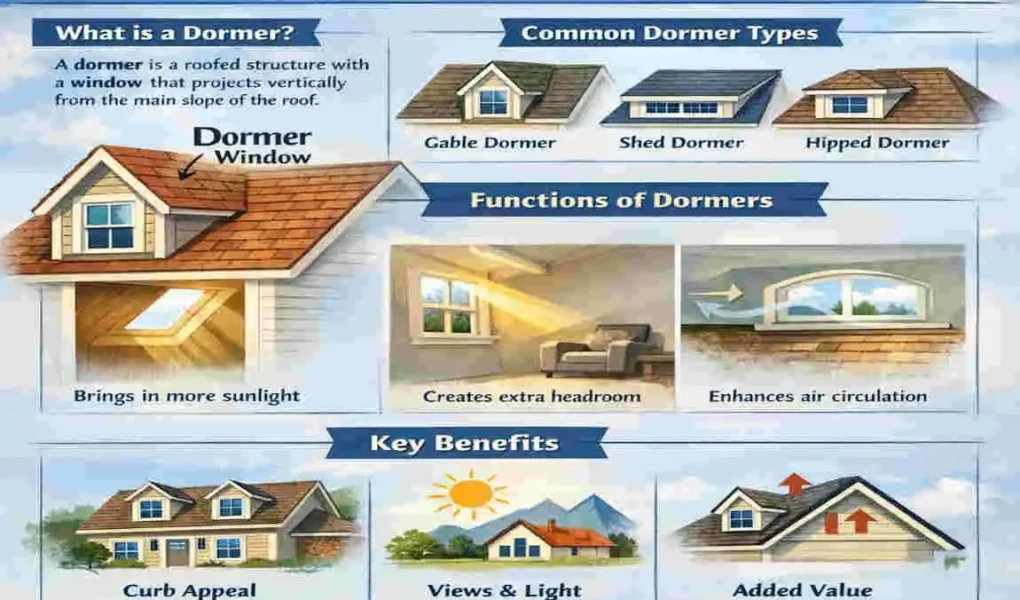
A roof dormer is a structure that projects out from the main roof. It has its own little roof and usually includes a window. The goal is to create extra usable space inside while changing the roof’s exterior appearance.
Main Purpose of Dormers
Dormers are added for both functional and design purposes. They help bring in daylight, give people more headroom, and make attic spaces easier to use. At the same time, they add detail and character to the outside of the house.
How Dormers Improve Roof Design
A plain roof can look flat or unfinished. A dormer adds shape and dimension, making the home feel more balanced and interesting. It can also help break up a large roof area so the house looks less heavy from the street.
Basic Components of a Dormer
A dormer usually includes:
- Dormer roof
- Window
- Side walls
- Flashing
- Roofing materials
Each part matters because the dormer must remain weatherproof, strong, and well-connected to the main roof.
History of Roof Dormers
Origin of Dormers
Dormers have been used in architecture for many years. They first became popular in homes where people needed more light and space in upper rooms.
Evolution in Residential Architecture
Over time, dormers became both practical and decorative. In older homes, they often helped turn attic space into living space. Today, they are also used for style, curb appeal, and better home design.
Modern Uses of Dormers
Modern homeowners still use dormers to make attic rooms more useful. They are common in bedrooms, offices, bathrooms, and loft spaces where extra light and height matter.
Common Types of Roof Dormers
There are several types of dormers, each suited to a different kind of home.
Gable Dormer
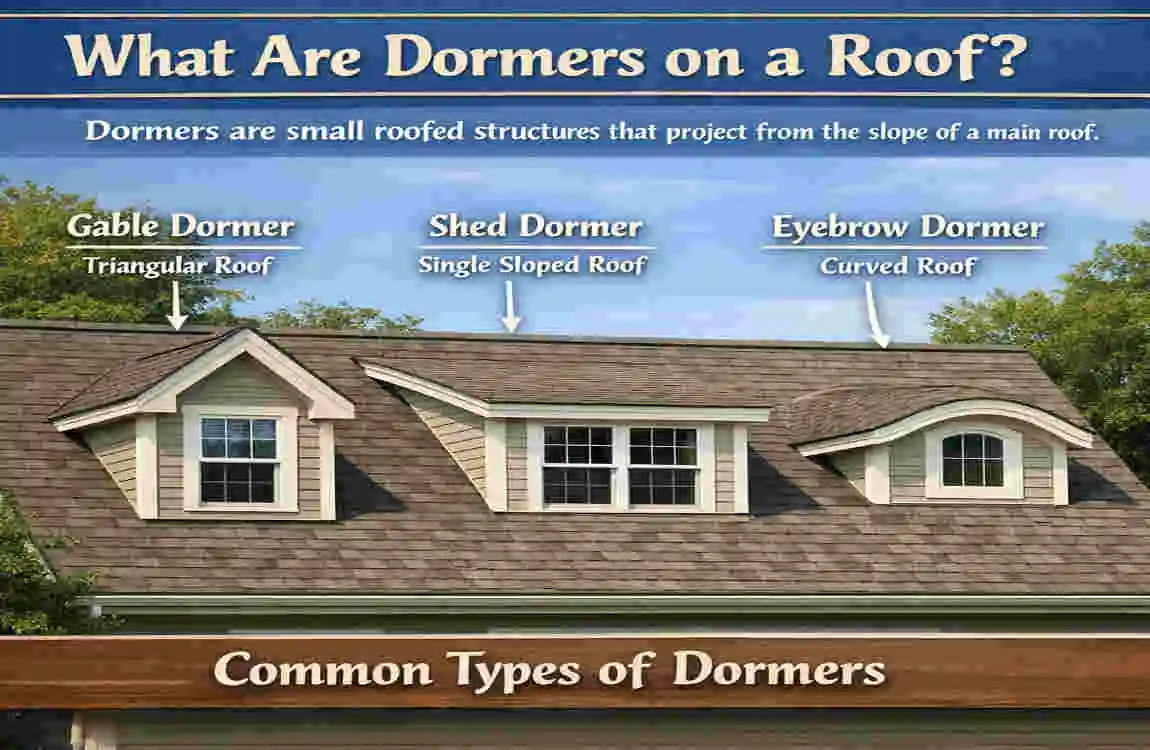
A gable dormer has a peaked roof. It is one of the most common types and works well with classic house styles.
Shed Dormer
A shed dormer has a single sloping roof. It often adds the most usable space and works well for attic conversions.
Hip Dormer
A hip dormer has slopes on three sides. It blends nicely with many roof types and gives a softer look.
Eyebrow Dormer
This type has a curved shape and is more decorative than practical. It gives homes a unique, elegant look.
Wall Dormer
A wall dormer rises from the wall line rather than sitting deep in the roof. It can add extra headroom and is often useful in larger homes.
Arched Dormer
An arched dormer has a rounded top and a more custom feel. It is often seen in luxury or traditional architecture.
Flat Roof Dormer
A flat-roof dormer has a simple profile and works well in contemporary homes.
Recessed Dormer
A recessed dormer sits back into the roof structure. It is less common, but it can be useful on certain smaller homes.
Comparison Table: Popular Roof Dormer Types
Dormer TypeBest ForRoof StyleAdds SpaceDifficulty
Gable Traditional Homes Gable Roof High Medium
Shed Attics Sloped Roof Very High Medium
Hip Modern Homes Hip Roof Moderate High
Eyebrow Decorative Design Curved Roof Low High
Wall Extra Headroom Various Roofs High Medium
Flat Contemporary Homes Flat Roof Moderate Medium
Arched Luxury Homes Custom Roof Low High
Recessed Small Houses Various Roofs Moderate High
Why Are Dormers Added to a Roof?
Increase Living Space
Dormers help create more room where the ceiling would otherwise slope down. That extra space can make a big difference in attic rooms.
Improve Natural Light
A dormer window brings daylight into spaces that may feel dark or closed off. This makes the room feel brighter and more comfortable.
Better Ventilation
Some dormers help air move more easily through upper floors and attics. Better airflow can reduce heat and moisture.
Enhance Exterior Appearance
Dormers add visual interest to the roof. They can make a home look more charming, more balanced, and more finished.
Increase Property Value
When a dormer adds usable space and better design, it may also improve resale value. Buyers often like homes that feel bigger and more functional.
Advantages of Roof Dormers
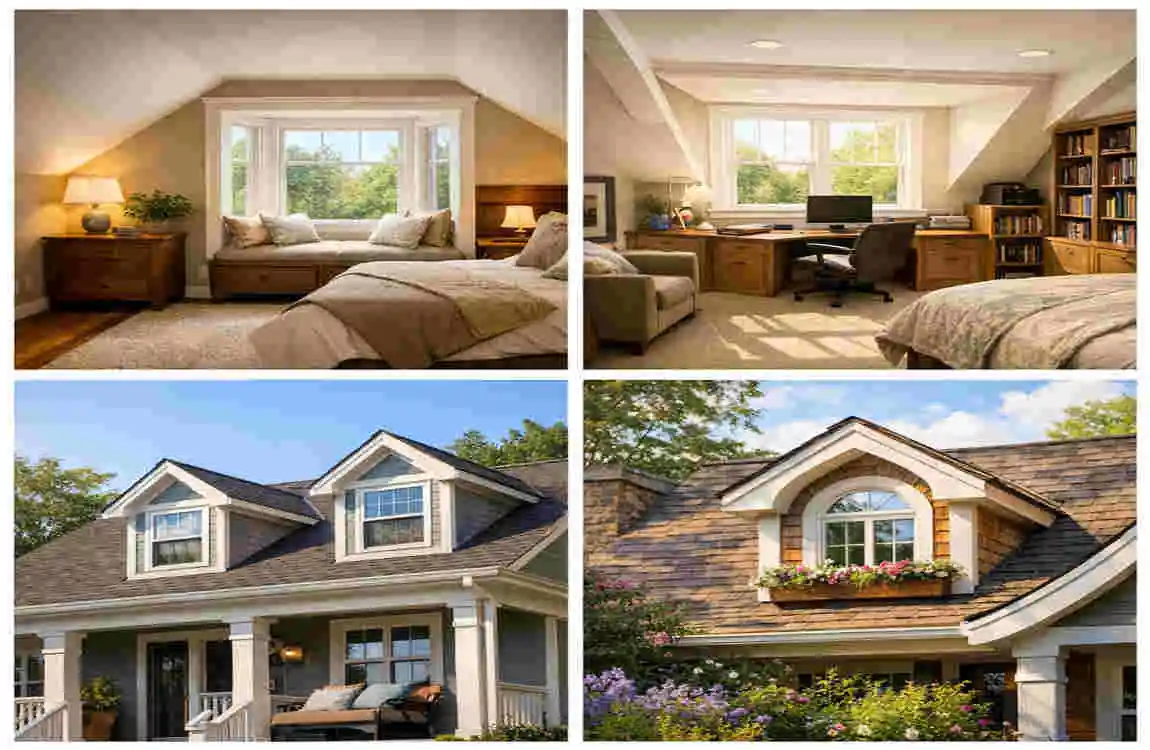
More Headroom
One of the biggest benefits of a dormer is the extra standing space it provides. That can turn a cramped attic into a room you can actually use.
Better Air Circulation
Dormers can support better ventilation, which helps keep the home more comfortable.
Increased Usable Attic Space
Dormers make it easier to convert attic areas into bedrooms, home offices, or storage spaces.
Energy Efficiency Benefits
More daylight can reduce the need for artificial lighting during the day. Some dormers also improve ventilation, which can enhance indoor comfort.
Improved Home Aesthetics
Dormers give a roof more shape and style. They can improve curb appeal without changing the whole home.
Disadvantages of Roof Dormers
Higher Installation Cost
Dormers are not a small upgrade. They usually cost more than basic roof repairs or simple window additions.
Roof Leak Risks
A dormer creates more roof joints and seams. If the flashing is not done well, leaks can happen.
Additional Maintenance
Because dormers have more parts, they need regular checking. You should watch the flashing, seals, shingles, and window edges.
Structural Changes Required
Some homes need major roof changes before a dormer can be added. That can raise the project cost and complexity.
Best Roofing Materials for Dormers
Asphalt Shingles
These are the most common and budget-friendly. They work well for many dormers and are easy to match with the main roof.
Metal Roofing
Metal is durable and long-lasting. It can be a smart choice if the rest of the roof is already made of metal.
Slate
Slate looks beautiful and lasts a long time, but it is heavy and expensive.
Cedar Shakes
Cedar gives a natural look and fits rustic or traditional homes. It needs more care than some other materials.
Composite Roofing
Composite roofing is a flexible option that can mimic the look of other materials while offering good durability.
Dormer Window Styles
Double-Hung Windows
These are a classic option. They open from the top and bottom and work well in many dormer styles.
Casement Windows
Casement windows open outward and allow strong airflow. They are a good fit for modern dormers.
Picture Windows
These windows do not open, but they bring in a lot of light and offer wide views.
Awning Windows
Awning windows open outward from the bottom. They work well in small dormers where ventilation matters.
Bay Windows
Bay windows extend outward, creating a more dramatic look. They are often used when the goal is both style and extra interior space.
How Dormers Improve Home Value
Better Curb Appeal
A dormer can make the exterior of a home look more attractive and well-designedwell-designed. That first impression matters to buyers.
Increased Functional Living Space
Adding a usable room or improving attic space increases the home’s value by providing more practical square footage.
Improved Marketability
Homes with well-designed dormers often stand out more in the market. Buyers like spaces that feel bright, open, and usable.
Roof Dormer Installation Process
Planning and Design
The first step is to decide on the dormer type, size, and location. This part should match the roof style and the room inside.
Structural Inspection
A contractor should check whether the roof can safely support the dormer.
Framing the Dormer
The new roof opening and wall framing are built. This is one of the most important steps.
Roofing Installation
The dormer is covered with matching roofing materials and sealed properly.
Window Installation
The window is added and sealed so water cannot get inside.
Interior Finishing
The inside walls, ceiling, and trim are completed so the dormer looks clean and finished.
How Much Does It Cost to Build a Roof Dormer?
Factors Affecting Cost
Several things affect price:
- Size
- Roof type
- Materials
- Labor
- Windows
- Permits
A larger or more complex dormer always costs more.
Average Cost Estimates
Dormer Type Estimated Cost
Small Gable Dormer $4,000–$8,000
Shed Dormer $8,000–$20,000
Hip Dormer $10,000–$25,000
Custom Dormer $20,000+
Roof Dormer Maintenance Tips
Inspect Flashing Regularly
Flashing is one of the most important areas for leak protection. Check it often.
Clean Gutters
Clogged gutters can send water toward the dormer and roof edges.
Check Window Seals
If seals wear out, water can get in around the window.
Replace Damaged Shingles
Do not ignore broken shingles around the dormer area.
Look for Water Damage
Stains, soft spots, or peeling paint can be early warning signs.
Common Roof Dormer Problems
Roof Leaks
Leaks are among the biggest risks, especially if the flashing fails.
Poor Insulation
Without good insulation, the dormer area may feel too hot or too cold.
Condensation Issues
Warm air and moisture can collect in the dormer if ventilation is weak.
Rotting Wood
If water gets into the structure, wood can weaken over time.
Ice Dams
In cold weather, ice can build up and force water under the roof material.
Are Roof Dormers Worth It?
For many homeowners, the answer is yes.
Dormers are worth considering if you want more light, more space, and a better-looking home. They work especially well in attics or upper floors that feel dark and cramped.
If your goal is long-term comfort and better resale appeal, a dormer can be a smart investment. But if your roof is not a good structural fit, you may need another solution.
Tips for Choosing the Right Dormer Design
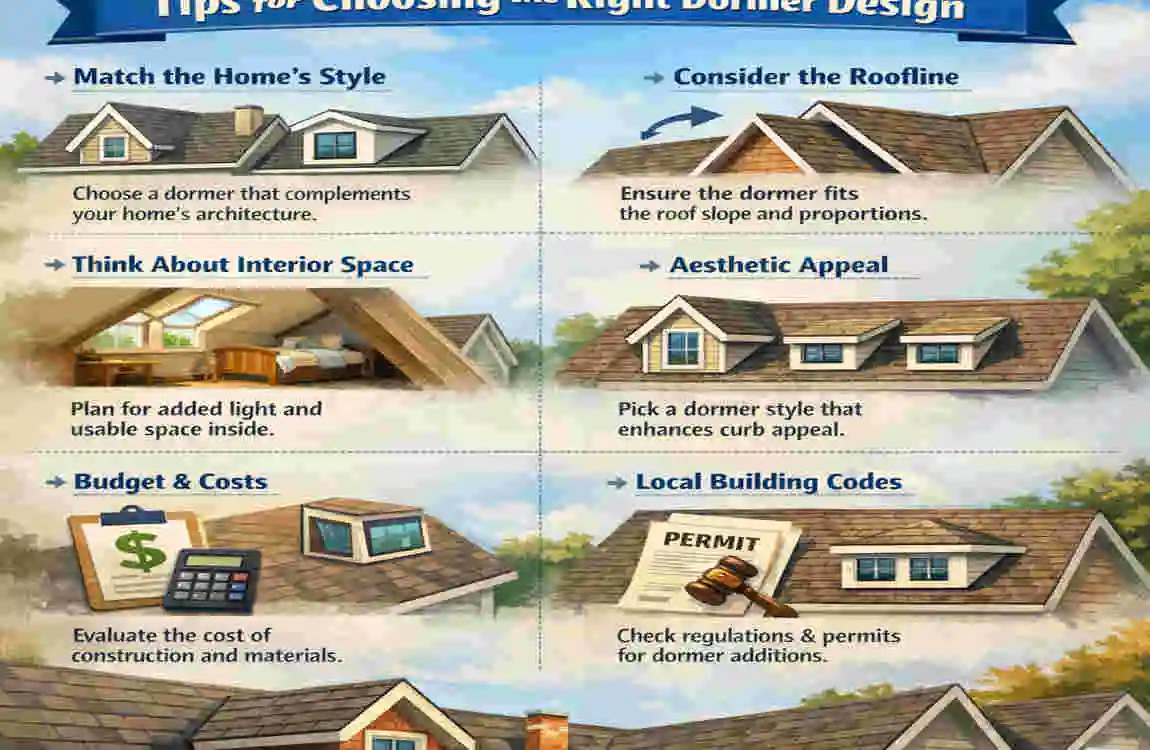
Match Existing Roof Style
The dormer should look natural with the home rather than stand out in a bad way.
Consider Budget
Some styles cost much more than others, so choose one that fits your budget.
Follow Local Building Codes
Always check local rules before starting the project.
Hire an Experienced Contractor
Dormers roof require careful work, so experience matters a lot.
Frequently Asked Questions
What are dormers on a roof?
Dormers are roof structures that extend from a sloped roof and usually contain a window.
What is the purpose of a roof dormer?
The purpose is to add more light, headroom, ventilation, and usable space.
Do roof dormers add value to a home?
Yes, they can increase the home’s value by making it more attractive and functional.
What is the most common type of roof dormer?
The gable dormer is one of the most common styles.
Are dormers expensive to build?
They can be. Cost depends on size, materials, roof type, and labor.
Can you add a dormer to an existing roof?
Yes, but the roof structure must be checked first to see if it can support the change.
Do dormers require planning permission?
In many places, yes. Local rules will decide what is allowed.
How long do roof dormers last?
With good materials and maintenance, dormers can last many years, often as long as the roof itself.
What roofing material is best for dormers?
Asphalt shingles are common, but the best choice depends on the home and roof style.
Are roof dormers prone to leaks?
They can be if flashing or seals are not installed correctly, so quality work is very important.
| Aspect | Information |
|---|---|
| What Is a Roof Dormer? | A roof dormer is a structure that extends vertically from a sloped roof, usually containing a window. |
| Primary Purpose | Adds natural light, improves ventilation, and increases usable attic or upper-floor space. |
| Common Types | Gable dormer, shed dormer, hip dormer, eyebrow dormer, wall dormer, and flat-roof dormer. |
| Key Benefits | Enhances curb appeal, boosts interior headroom, improves airflow, and may increase home value. |
| Common Materials | Wood framing, asphalt shingles, metal roofing, vinyl, brick, or fiber cement siding. |
| Best For | Homes with finished attics, loft conversions, Cape Cod, Colonial, Victorian, and Craftsman-style houses. |
| Installation Considerations | Requires structural modifications, proper flashing, waterproofing, and compliance with local building codes. |
| Maintenance Needs | Regularly inspect roofing, flashing, siding, windows, and seals to prevent leaks and water damage. |