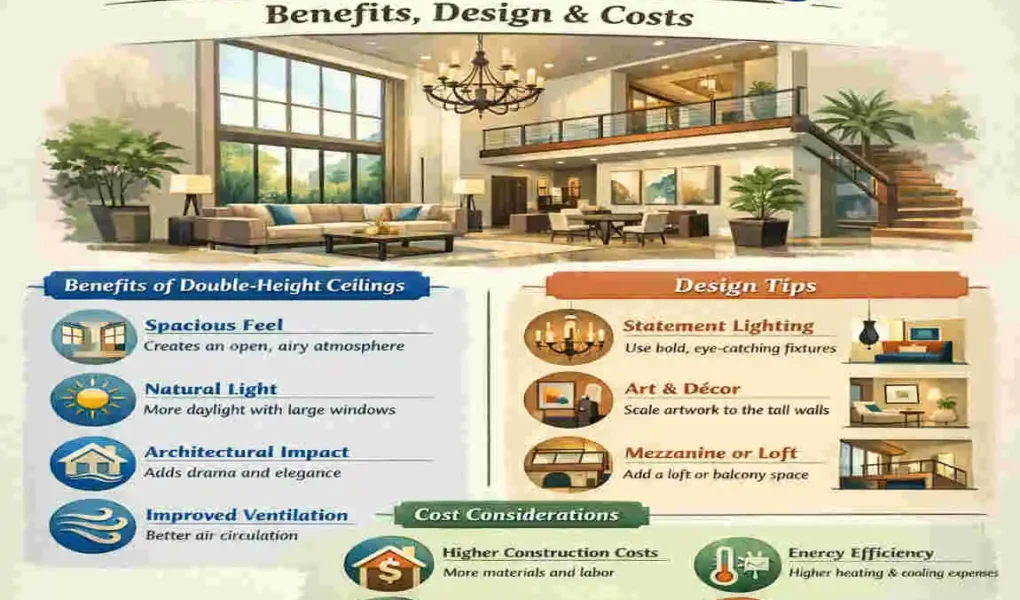
A double-height ceiling can completely change the way a home feels. Instead of a standard room height, the space opens up over two levels, creating a much larger, airier look. This design feature is often used in modern homes, luxury villas, and open-plan layouts because it makes a strong visual statement.
Many homeowners love it because it adds drama without requiring much decoration. A tall space can bring in more sunlight, improve the sense of openness, and make a home feel more premium. At the same time, it also comes with a few practical concerns, such as higher construction costs and more heating or cooling needs.
What Is a Double-Height Ceiling?
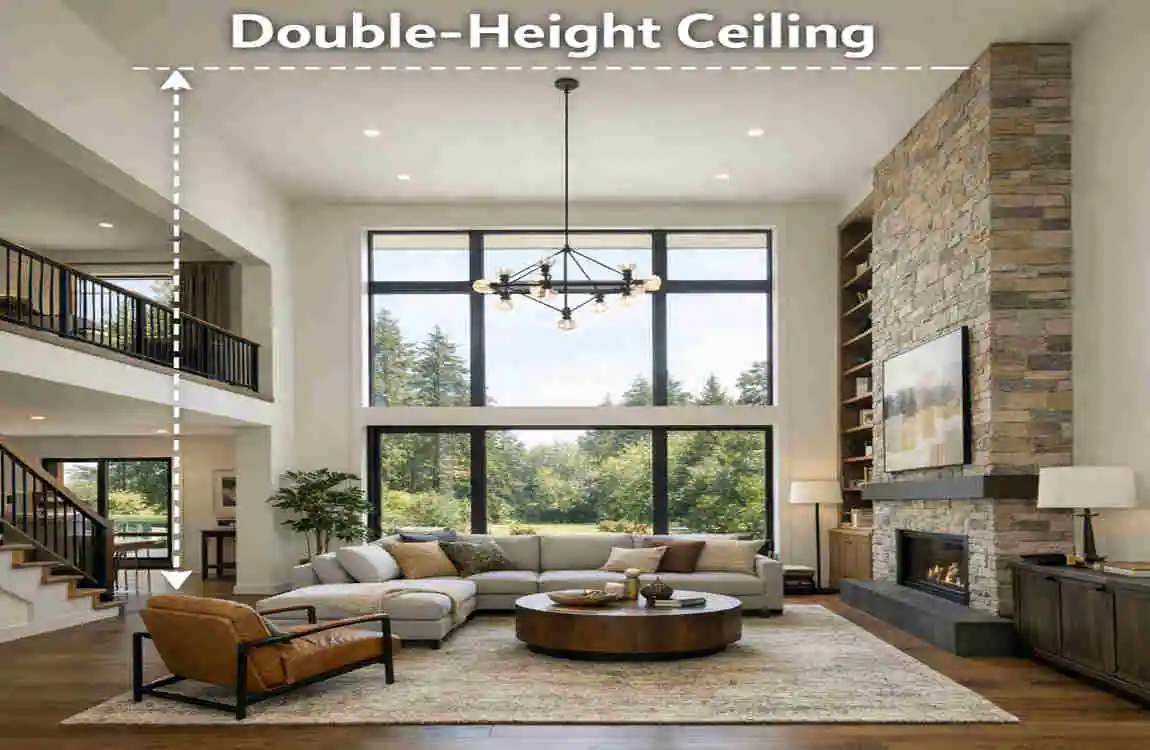
Definition of a double-height ceiling
A double-height ceiling is a room design in which the ceiling rises through two full floors instead of stopping at one. This creates a tall vertical space that feels open and dramatic.
You often see this feature in living rooms, foyers, luxury homes, and modern duplexes. It gives the room a larger presence and makes the interior feel more impressive.
Standard ceiling height vs. double-height ceiling
A standard ceiling usually ranges from about 8 to 10 feet. That height works well in most homes because it feels balanced and easy to heat, cool, and maintain.
A double-height ceiling, on the other hand, is much taller. It may rise to 18 feet, 20 feet, or even more depending on the design. The result is a much more open and striking interior.
Common applications in modern homes
This type of ceiling is used in spaces where people want to make a strong first impression or create a sense of luxury. It is especially common in:
- Living rooms
- Entrance foyers
- Dining areas
- Luxury villas
- Duplex homes
Benefits of a Double-Height Ceiling
Creates a spacious interior
One of the biggest reasons people choose this feature is the sense of space it provides. A tall room feels bigger even if the floor area does not change.
That extra vertical volume makes the home feel open, airy, and less cramped. If you want a home that feels grand, this is one of the easiest ways to achieve that.
Maximizes natural light
A double-height ceiling allows for larger windows and taller glass openings. That means more sunlight can enter the room during the day.
Natural light makes the space feel warmer and more welcoming. It also reduces the need for artificial lighting during the day.
Improves airflow and ventilation
Taller spaces can help air move more freely through the room. This can make the home feel fresher and more comfortable, especially in warm climates.
When used with ceiling fans, vents, and good window placement, the room can feel more breathable and pleasant.
Enhances luxury and visual appeal
A double-height ceiling creates immediate visual impact. It often becomes the highlight of the home because it draws the eye upward and makes the room feel more elegant.
This design is especially attractive in modern and luxury homes where style matters as much as function.
Increases property value
Many buyers see this feature as a premium upgrade. It can make a home more attractive on the market by giving the interior a more upscale feel.
That does not mean every buyer will want one, but in many cases, the design can improve resale appeal.
Flexible interior design options
A tall ceiling gives you more freedom in how you style the room. You can use oversized artwork, tall curtains, statement lighting, and large furniture pieces without making the space feel crowded.
That flexibility is one of the most enjoyable parts of designing around this feature.
Potential Drawbacks
Higher construction costs
A tall ceiling is not as simple or cheap as a standard one. It often requires more structural work, more materials, and more design planning.
You may also need custom windows, special framing, and taller walls, which can push up the budget.
Increased heating and cooling expenses
A bigger room takes more energy to heat or cool. Warm air can rise and collect near the top, while cooled air may take longer to spread evenly.
If the room is not planned well, energy use can become a concern.
Cleaning and maintenance challenges
Tall windows, high walls, and large light fixtures are harder to clean and maintain. You may need special tools or professional help for some tasks.
That can add time and cost over the life of the home.
More complex lighting installation
Lighting a tall room well is not always easy. Standard fixtures may look too small, and wiring for large hanging lights often takes extra planning.
Good lighting design is important so the room feels balanced and bright at all times.
Possible sound echo issues
Large open spaces sometimes create echo. Sound can bounce around more easily in a tall room, especially if there are hard surfaces like glass, tile, or stone.
Soft furnishings, rugs, and curtains can help reduce that effect.
Popular Double-Height Ceiling Design Ideas
Floor-to-ceiling glass windows
Tall glass windows work beautifully with a double-height ceiling. They bring in natural light and make the room feel even more open.
If you have a view, this is one of the best ways to showcase it.
Modern chandelier lighting
A statement chandelier can stylishly fill the vertical space. It also gives the room a strong focal point.
This works especially well in entryways and main living areas.
Exposed wooden beams
Wood beams can soften the room’s height and make it feel warmer. They add character without making the ceiling feel heavy.
This style works well in rustic, farmhouse, and modern organic designs.
Indoor balconies and loft spaces
Some homes use the extra height to add a balcony or loft overlooking the main room. This creates a dynamic and interesting layout.
It also makes the upper floor feel more connected to the lower level.
Accent walls with stone or wood
A tall feature wall can make a strong statement in a room with high ceilings. Materials like wood slats or stone panels add texture and visual interest.
This helps the room feel complete instead of empty.
Minimalist contemporary interiors
Minimalist styling often works very well in tall spaces. Clean lines, simple furniture, and a restrained color palette keep the room calm and elegant.
This helps the ceiling remain the star of the space.
Best Rooms for a Double-Height Ceiling
Living room
The living room is one of the best places for this feature. It is a social space where families gather, and guests spend time, so the dramatic height makes a strong impression.
Entrance foyer
A tall foyer gives visitors an immediate sense of luxury and openness. It creates a memorable first impression the moment someone walks in.
Dining area
A dining room with a double-height ceiling can feel refined and special. It works especially well with pendant lighting or a chandelier above the table.
Luxury villas
High-end villas often use this feature to make the home feel more spacious and impressive. It adds architectural interest and can support a more premium design style.
Duplex homes
Duplex homes are a natural fit for double-height ceilings because they already feature multiple levels. The design can connect the floors beautifully.
Double-Height Ceiling Construction Costs
Factors affecting cost
Several things affect the final price of a double-height ceiling project:
- House size
- Materials
- Structural engineering
- Labor
- Location
A larger home or a more complex design will usually cost more. If you want custom windows, high-end finishes, or special lighting, the budget can rise even further.
Average construction cost estimates
Cost Factor Estimated Impact
Structural support High
Premium windows Medium to High
Lighting installation Medium
HVAC modifications Medium
Interior finishing Medium to High
The exact numbers depend on your region, contractor, and design choices, but it is safe to say that this is usually a premium architectural feature.
Lighting Ideas for Double-Height Ceilings
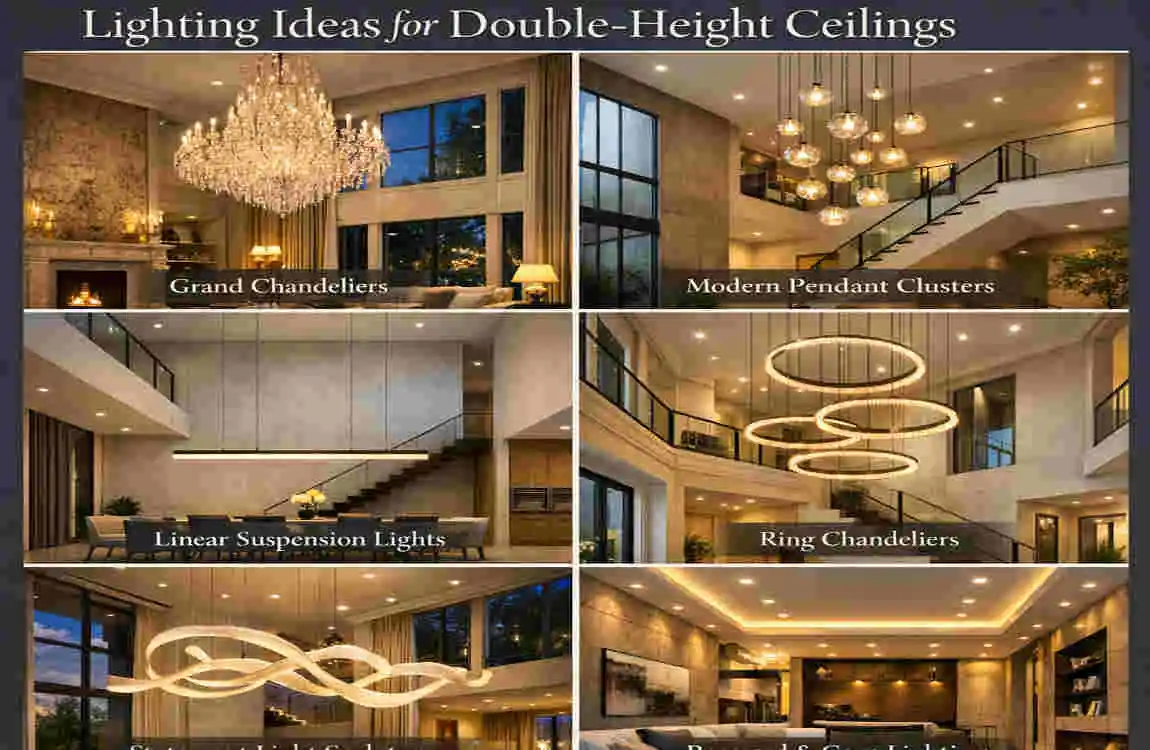
Statement chandeliers
A large chandelier can become the centerpiece of the room. It fills the vertical space while adding elegance.
Pendant lights
Pendant lights work well in groups or as a single bold feature. They can be modern, classic, or artistic depending on the style you want.
Wall sconces
Wall sconces can help balance the height by adding light lower down the wall. They also make the room feel warmer at night.
Recessed LED lighting
Recessed lighting provides a clean look and helps brighten the whole space evenly. It works well when you want a minimal design.
Smart lighting systems
Smart lighting gives you more control over brightness and mood. In a tall room, that flexibility can be very useful.
Heating and Cooling Considerations
Energy efficiency tips
Because hot air rises, tall spaces can be harder to regulate. To keep the room efficient, use good insulation and well-placed vents.
Ceiling fans
Ceiling fans can help move air more evenly through the room. In high spaces, they are especially useful for comfort.
Proper insulation
Good insulation helps keep the temperature stable. It reduces energy waste and makes the room easier to manage.
High-performance windows
Quality windows help limit heat loss or heat gain. That matters a lot in a room with large glass surfaces.
HVAC system planning
Your heating and cooling system should be designed with the room’s size in mind. A professional can help make sure it is strong enough for the space.
Decorating a Double-Height Ceiling Space
Large artwork
Tall walls give you space for oversized art. A single large piece can look more balanced than many small ones.
Tall indoor plants
Plants help soften the vertical lines and bring life into the space. They also make the room feel more relaxed.
Feature walls
A feature wall can add color, texture, or material contrast. It helps anchor the room visually.
Curtains for tall windows
Long curtains can make the windows look even more elegant. They also help with privacy and light control.
Stylish furniture placement
Furniture should feel grounded in the space. Larger pieces often work better than tiny ones because they match the room’s scale.
Maintenance Tips
Cleaning tall windows
Tall windows need regular cleaning to stay bright and clear. Because they are harder to reach, you may need special tools or help.
Dusting light fixtures
High chandeliers and pendant lights collect dust over time. Clean them carefully to keep them looking their best.
Painting high walls
Painting tall walls can be more difficult than regular walls. You may need extension tools or professional painters.
Regular HVAC maintenance
Because climate control is more important in a large room, keep your HVAC system in good shape with regular service.
Safety precautions
Use ladders, lifts, or professionals when needed. Do not take risks to save time on hard-to-reach tasks.
Is a Double-Height Ceiling Worth It?
Best for luxury homes
If you want your home to feel high-end and visually striking, this feature can be a strong choice.
Ideal for open floor plans
Open layouts and tall ceilings work well together. The room feels connected, bright, and spacious.
Budget considerations
This is not the cheapest design option. You should plan carefully if budget matters a lot.
Long-term value
If designed well, a double-height ceiling can improve comfort, visual appeal, and resale value over time.
Double-Height Ceiling vs. Standard Ceiling
FeatureDouble-Height CeilingStandard Ceiling
Visual appeal Excellent Good
Natural light High Moderate
Construction cost Higher Lower
Energy efficiency Moderate Better
Maintenance Higher Easier
Property value Higher Standard
Expert Tips Before Installing a Double-Height Ceiling
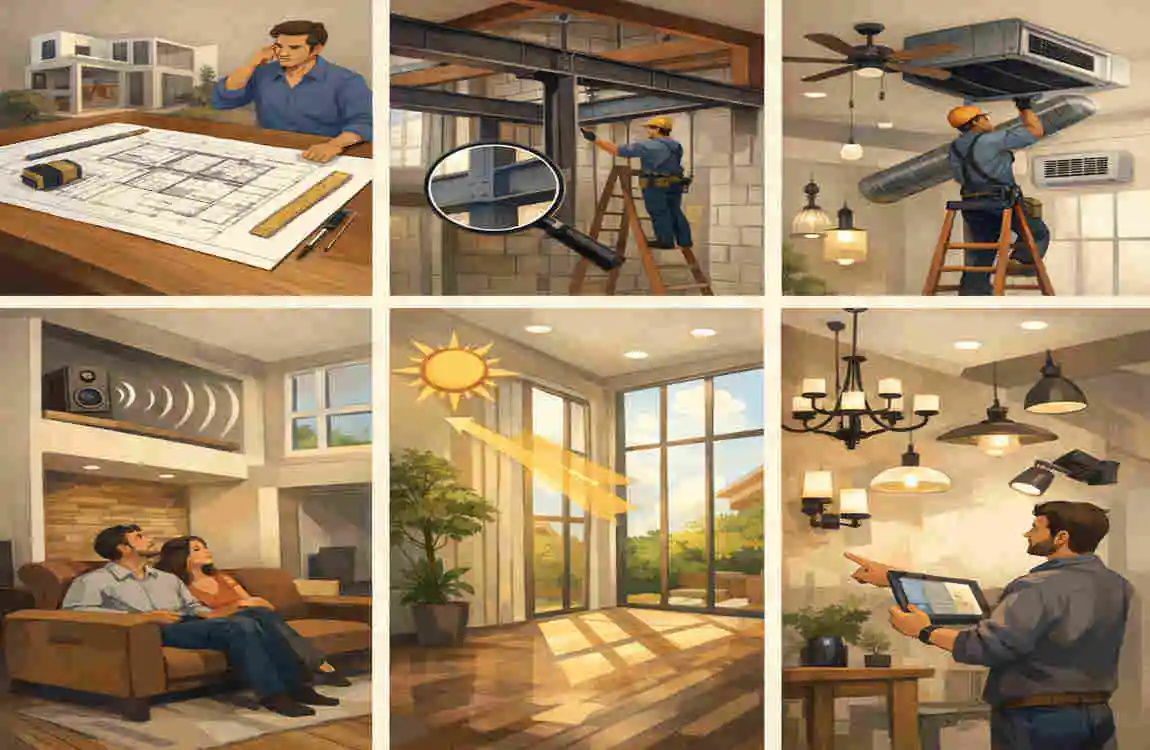
- Hire an experienced architect.
- Plan HVAC and insulation early.
- Choose energy-efficient windows.
- Invest in quality lighting.
- Consider long-term maintenance costs.
- Follow local building codes.
These steps help you avoid problems later and make sure the space works well in real life.
Frequently Asked Questions
What is a double-height ceiling?
A double-height ceiling is an interior space that extends across two floors, creating a taller and more open living area.
Are double-height ceilings expensive?
Yes, they usually cost more because they need extra structural work, larger windows, specialized lighting, and HVAC planning.
Does a double-height ceiling increase home value?
In many cases, yes. It can improve the home’s appearance and make it more attractive to buyers.
Which rooms are best for a double-height ceiling?
Living rooms, entrance foyers, dining areas, luxury villas, and duplex homes are often the best fit.
Are double-height ceilings energy efficient?
They can be, if you use proper insulation, energy-efficient windows, and a well-planned HVAC system.
| Category | Details |
|---|---|
| Definition | A double-height ceiling is a ceiling that is approximately two stories high, creating a spacious and open interior. |
| Typical Height | Usually 16–24 feet (4.9–7.3 meters), depending on the home’s design. |
| Best Locations | Living rooms, entry foyers, great rooms, luxury homes, lofts, and modern villas. |
| Main Benefits | Creates an open feel, increases natural light, improves ventilation, enhances luxury appearance, and boosts property value. |
| Design Styles | Modern, Contemporary, Industrial, Minimalist, Scandinavian, Traditional, and Luxury homes. |
| Lighting Ideas | Statement chandeliers, pendant lights, recessed lighting, skylights, and wall sconces. |