Keeping your siding clean is one of the simplest ways to protect your home and make it look better fast. Dirt, mildew, algae, pollen, and stains can build up over time and make even a nice house look tired. The good news is that pressure washing house siding is not hard to learn when you use the right tools, the right pressure, and the right technique.
Pressure washing can restore curb appeal, help stop mold growth, and keep siding in better shape for longer. But it also needs care. Too much pressure or the wrong spray angle can damage siding, force water behind panels, or strip paint.
Why Cleaning House Siding Is Important

Improves Your Home’s Curb Appeal
Clean siding makes a home look fresh, bright, and well-cared-for. Even a quick wash can change the way your house looks from the street.
Prevents Mold, Mildew, and Algae Growth
When dirt and moisture remain on siding, they can lead to mold and algae growth. Regular washing helps prevent that buildup from spreading.
Extends the Life of Your Siding
Grime, stains, and growth can wear down siding over time. Cleaning it helps protect the surface and may reduce the need for repairs.
Helps Maintain Property Value
A clean exterior gives a better first impression. If you plan to sell your home, fresh siding can help it look more valuable and inviting.
Can You Pressure Wash Every Type of House Siding?
Vinyl Siding
Vinyl is one of the easiest siding types to clean. Use low to moderate pressure and keep the spray moving.
Fiber Cement Siding
This siding can withstand pressure washing, but you still need to be in control. Use moderate settings and avoid spraying too close.
Wood Siding
Wood needs extra care. Use lower pressure, spray with the grain, and avoid soaking the surface.
Brick and Stone Exteriors
Brick and stone can usually handle stronger pressure than other siding types. Still, old mortar or weak spots need caution.
Stucco
Stucco is more delicate. Use a softer approach because too much pressure can crack or chip the surface.
Siding Material Recommended PSI Safe to Pressure Wash Notes
Vinyl 1,300–1,600 Yes Most common choice
Fiber Cement 1,500–2,000 Yes Moderate pressure
Wood 500–1,200 Yes, carefully Spray with grain
Brick 2,000–3,000 Yes Stronger pressure allowed
Stucco Under 1,200 Limited Use caution
Tools and Supplies You’ll Need
Pressure Washer
An electric washer is usually easier for small jobs. A gas model gives more power for bigger cleaning tasks.
Garden Hose
You will need a hose to connect water to the machine and rinse the surface when needed.
Pressure Washer Detergent
A siding-safe detergent helps loosen dirt and stains before rinsing.
Soft Brush
A brush helps clean stubborn spots without scratching the surface.
Safety Glasses and Gloves
These protect your eyes and hands from spray, dirt, and cleaning solution.
Extension Wand and Plastic Sheets
An extension wand helps reach higher areas, while plastic sheets can protect nearby plants and fixtures.
How to Prepare Your Home Before Pressure Washing
Inspect the Siding
Look for cracks, loose panels, peeling paint, or damaged spots. Fix these before washing.
Close Windows and Doors
This keeps water from getting inside the home.
Cover Electrical Fixtures
Use plastic covers or waterproof material around outlets, lights, and exposed wiring.
Protect Plants and Landscaping
Lightly water plants before cleaning and cover delicate ones if needed.
Move Outdoor Furniture
Take chairs, tables, and decorations away from the cleaning area.
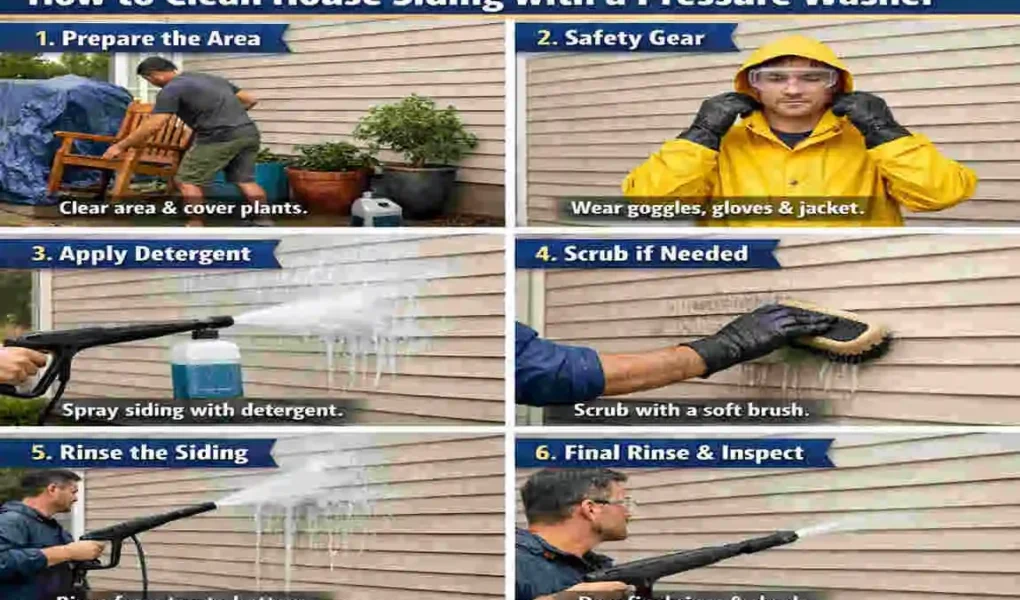
How to Pressure Wash House Siding Step by Step
Choose the Right Nozzle
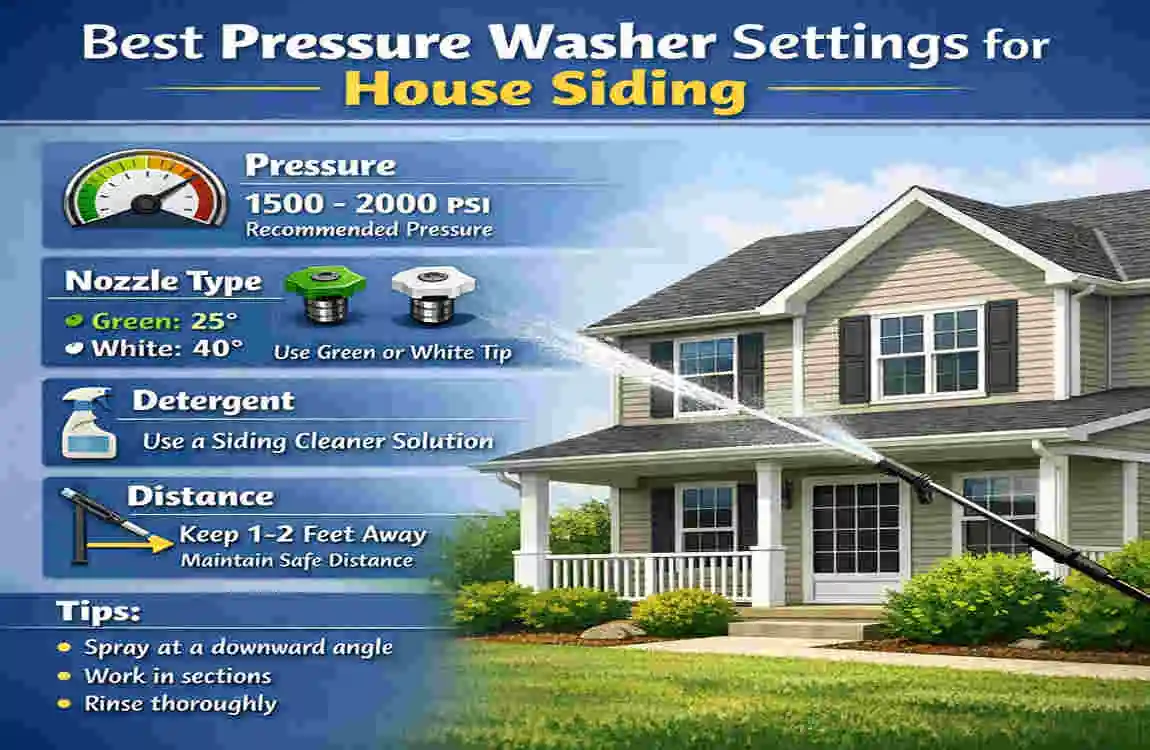
Use a green or white nozzle for most siding jobs. The soap nozzle helps apply detergent. Avoid the red nozzle because it is too strong for siding.
Apply Cleaning Solution
Spray the detergent evenly across the siding. Let it sit long enough to loosen dirt and stains.
Let the Detergent Work
Give the cleaner a few minutes to break down grime. Do not let it dry completely on the wall.
Start Washing the Right Way
Work from top to bottom. This helps prevent streaks and lets dirty water flow downward naturally.
Keep a Safe Distance
Hold the nozzle far enough away to clean without damage. Staying too close can leave marks or push water behind the siding.
Rinse Thoroughly
Rinse each section thoroughly so no soap remains. Leftover detergent can leave spots or streaks.
Let the Siding Dry
Let the siding dry naturally. Once dry, check for any missed spots or areas that may need a second light wash.
Best Pressure Washer Settings for House Siding
Correct PSI
For most homes, lower pressure is safer. Vinyl siding usually needs around 1,300–1,600 PSI, while wood needs even less.
Proper GPM
GPM means how much water flows through the washer. A balanced flow helps wash dirt away without using too much force.
Correct Spray Angle
A wider spray angle is safer for siding because it spreads the water more gently.
Best Spray Pattern
Use smooth, overlapping strokes. This gives an even clean and reduces streaking.
Common Mistakes to Avoid
- Using too much pressure
- Spraying upward under siding panels
- Standing too close to the wall
- Ignoring cracked or loose siding
- Using household bleach the wrong way
These mistakes can damage your home or make the job less effective. A careful approach always works better.
Safety Tips While Pressure Washing
Wear Protective Gear
Use gloves, eye protection, and closed shoes before starting.
Avoid Electrical Hazards
Keep water away from outlets, lights, and cords.
Use Stable Footing
Do not work on slippery surfaces or unsafe ladders.
Keep Children and Pets Away
This helps prevent accidents while you work.
Eco-Friendly Cleaning Tips
Use Biodegradable Detergents
Choose cleaners that are safer for plants and outdoor spaces.
Minimize Water Waste
Use only the water you need and avoid unnecessary spraying.
Protect Nearby Plants
Rinse plants before and after cleaning if detergent may reach them.
Dispose of Chemicals Properly
Do not let cleaning runoff collect where it could harm soil or drains.
When You Should Not Pressure Wash House Siding

Loose or Cracked Siding
Water can get behind damaged siding and create bigger problems.
Painted Wood in Poor Condition
If paint is peeling badly, pressure washing may make it worse.
Older Homes
Older materials may be more fragile and need a gentler method.
Severe Mold Damage
Heavy mold may need special treatment or professional help.
DIY vs Hiring a Professional
DIY Advantages
Doing it yourself can save money and lets you work at your own pace.
Professional Benefits
A professional knows how to handle various siding types and can complete the job more quickly.
Cost Comparison
DIY is usually cheaper upfront, but hiring a pro may be worth it for large homes or difficult stains.
Which Option Is Right for You?
If your siding is in good shape and you feel confident, DIY can work well. If the home is tall, damaged, or heavily stained, a pro may be the safer choice.
How Often Should You Pressure Wash House Siding?
Most homes benefit from washing once a year. If you live in a humid area, near lots of trees, or in a place with high pollen levels, you may need to clean more often. Homes in dry, cleaner climates may need it less often.
Maintenance Tips After Pressure Washing
Inspect for Damage
After washing, check the siding for cracks, loose spots, or missed stains.
Trim Nearby Trees
Trees can drop sap, pollen, and leaves onto your siding. Trimming helps reduce future buildup.
Wash Dirt Before It Builds Up
A light rinse now and then can make big cleaning jobs easier later.
Clean Gutters Regularly
Clean gutters help stop dirty water from running down your siding.
Quick Tips for Better Results
- Measure the wall area before you start.
- Keep the spray at eye level or slightly below.
- Use a gentle detergent made for siding.
- Work in small sections for better control.
- Finish with a full rinse and a final inspection.
Frequently Asked Questions
How do you pressure wash house siding without damaging it?
Use low to moderate pressure, the correct nozzle, and keep a safe distance from the wall.
What PSI is safe for vinyl siding?
Vinyl siding is usually safe between 1,300 and 1,600 PSI.
Should I use detergent before pressure washing?
Yes, detergent helps loosen dirt, mildew, and stains before rinsing.
How often should house siding be pressure washed?
Most homes should be cleaned about once a year.
Can a pressure washer remove mold from siding?
Yes, it can remove surface mold and mildew, especially when used with the right cleaner.
| Topic | Details |
|---|---|
| Task | Clean house siding using a pressure washer |
| Best Pressure Range | 1,300–2,500 PSI (depending on siding material) |
| Recommended Nozzle | 25° (green) or 40° (white) spray tip |
| Suitable Siding Types | Vinyl, fiber cement, aluminum, and painted wood (use caution on wood) |
| Cleaning Solution | Pressure washer detergent or a mild siding cleaner |
| Spray Direction | Spray downward at a slight angle to prevent water behind siding |
| Safe Distance | Keep the nozzle 2–3 feet (60–90 cm) from the siding and adjust as needed |
| Cleaning Method | Apply detergent, let it sit for 5–10 minutes, then rinse from top to bottom |
| Avoid | High pressure on damaged siding, windows, electrical outlets, and loose paint |