Learning how to wire a house can feel overwhelming at first, but it becomes easier when you break it into simple steps. House wiring is the system that carries electricity from the main panel to lights, outlets, switches, and appliances in your home.
Good wiring matters for safety, comfort, and reliability. When it is done right, your home runs smoothly, and your electrical system lasts longer. When done the wrong way, it can cause electric shocks, fire risks, and costly repairs.
What Does House Wiring Mean?
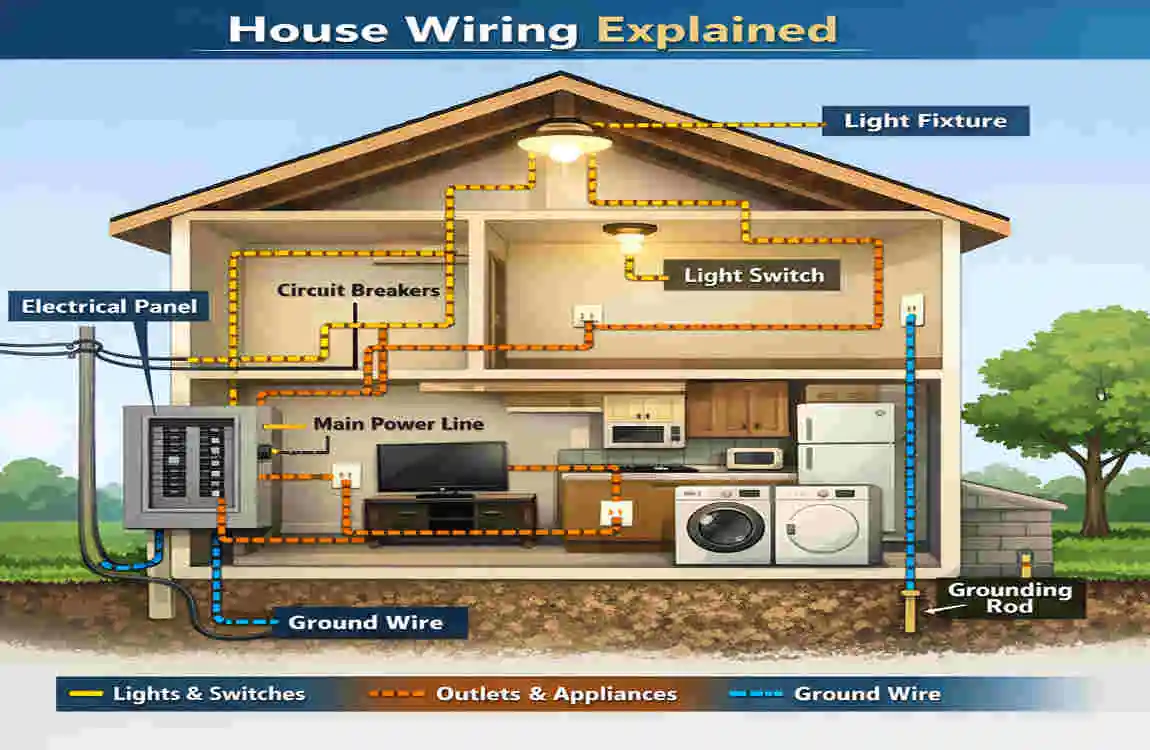
Understanding Residential Electrical Wiring
House wiring is the network of wires, boxes, breakers, outlets, switches, and fixtures that brings power into every part of a home. Electricity starts at the utility supply, enters the breaker panel, and then moves through different circuits.
Each circuit serves a purpose. One may power lights in a bedroom. Another may handle kitchen outlets. A larger one may serve a heavy appliance like a dryer or HVAC unit.
Why Proper Wiring Is Important
Proper wiring is important for three main reasons:
- Safety – It helps reduce the risk of fire and electric shock.
- Efficiency – It keeps power flowing without waste or strain.
- Reliability – It helps your home work properly for years to come.
When wiring is planned well, you avoid overloaded circuits, loose connections, and future repair problems.
Things to Know Before You Wire a House
Learn Local Electrical Codes
Before you begin, learn your local electrical rules. Most places require a permit and an inspection for major electrical work. Codes tell you where outlets should go, what wire size to use, and how circuits should be protected.
This step is not optional. Electrical codes protect your home and your family.
Create an Electrical Plan
A good plan saves time and prevents mistakes. Walk through the house room by room and decide where you need:
- Outlets
- Light switches
- Ceiling lights
- Appliance connections
Think about how people will use each space. For example, kitchens usually need more outlets than bedrooms. Bathrooms also require special protection due to moisture.
Estimate Electrical Load
Electrical load means how much power your home will use. You need to think about:
- Kitchen appliances
- Heating and cooling systems
- Laundry machines
- Water heaters
- Future upgrades
A home with many high-power appliances needs more circuits and possibly a larger panel. Planning for future needs is smart because it helps avoid costly upgrades later.
Tools and Materials Needed to Wire a House
Essential Electrical Tools
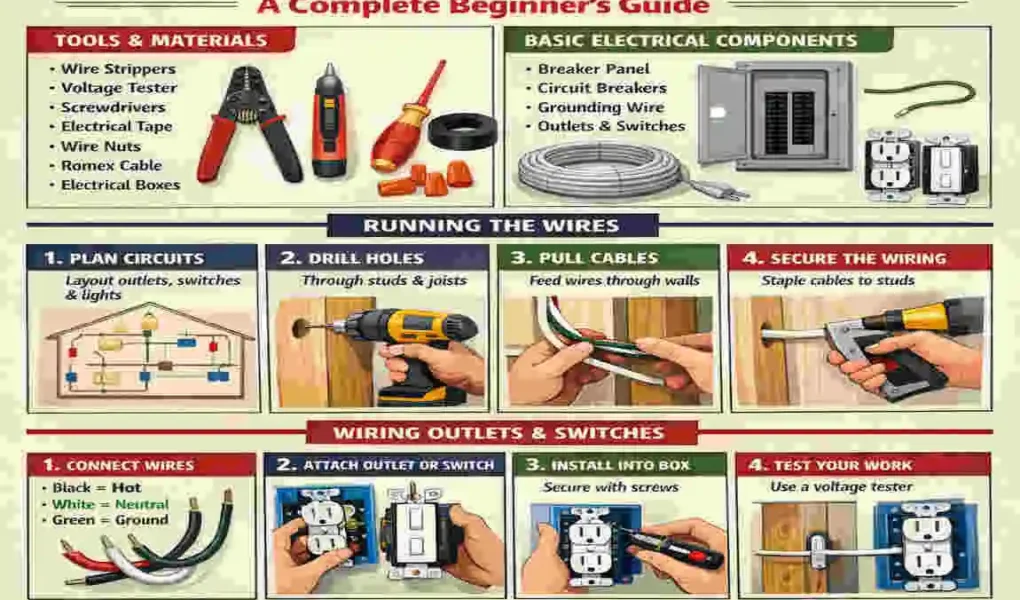
You do not need a huge workshop, but you do need the right tools. The most common ones include:
- Wire stripper – removes insulation from wire
- Voltage tester – checks if power is off
- Fish tape – helps pull wire through walls
- Screwdrivers – tighten terminals and fixtures
- Drill – makes holes for cable runs
Common Wiring Materials
Here is a simple overview of common materials used in a home wiring project.
Tool/MaterialPurpose
Wire Stripper Remove insulation
Voltage Tester Check power safely
NM Cable Carry electricity
Breaker Panel Distribute power
Electrical Box Protect connections
Wire Nuts Connect wires
You will also need switches, outlets, circuit breakers, junction boxes, and grounding materials.
Types of Electrical Wires Used in Homes
NM (Romex) Cable
NM cable is one of the most common choices in residential homes. It is often used inside walls and ceilings in dry areas. It is popular because it is simple to install and works well for standard home circuits.
THHN Wire
THHN wire is often used inside conduit. It is common in more advanced or specific installations. It is usually found in garages, basements, or places that need added protection.
Ground Wire
The ground wire is a safety wire. It provides a safe path for stray electricity away from people and equipment. This reduces the risk of shock and helps protect your home.
Wire Gauge Explained
Wire size matters a lot. Using the wrong size can overheat the circuit.
- 14 AWG – often used for 15-amp circuits
- 12 AWG – often used for 20-amp circuits
- 10 AWG – often used for heavier loads
Choosing the right size depends on the circuit and the appliance. When in doubt, follow code requirements or ask a licensed electrician.
How to Wire a House Step by Step
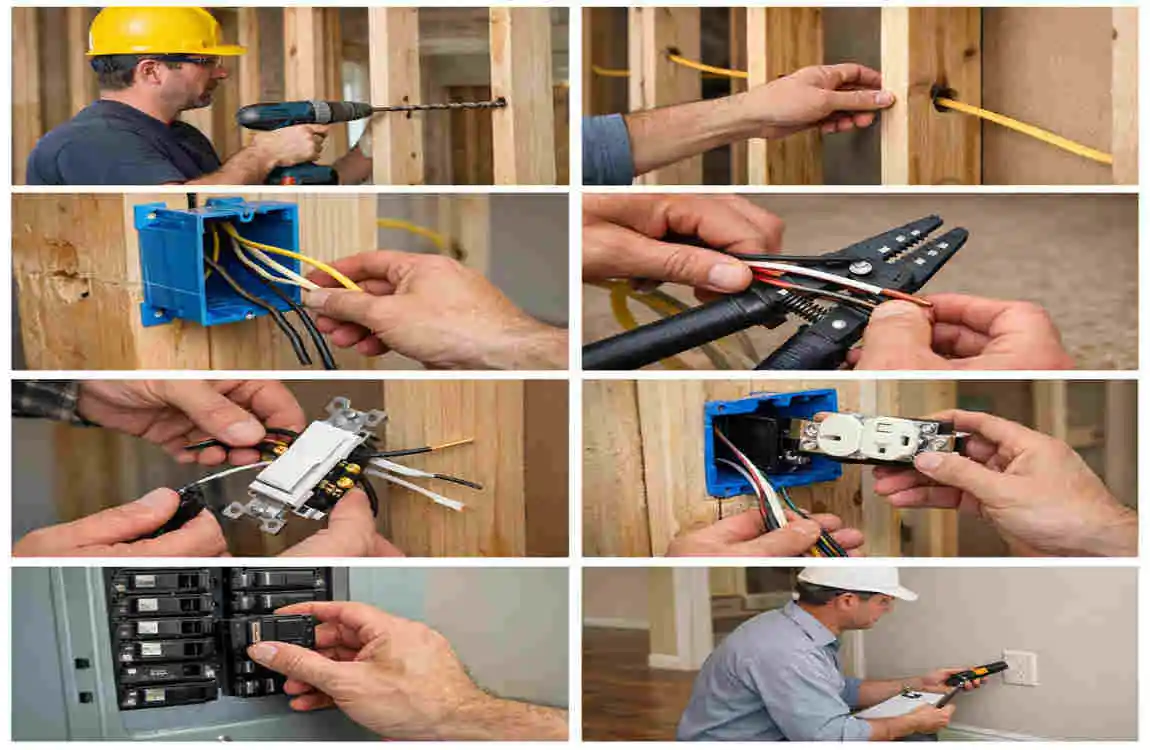
Design the Wiring Layout
Start with a clear floor plan. Mark every outlet, switch, fixture, and appliance location. This is the point where you decide how circuits will be divided across the house.
A good layout makes the rest of the project easier and safer.
Install the Electrical Panel
The electrical panel is the heart of the system. It receives power and sends it to the different circuits in the house. The panel should be installed in a dry, accessible location that complies with code requirements.
Install Electrical Boxes
Electrical boxes hold outlets, switches, and fixture connections. Place them securely in walls or ceilings before running the cable. Make sure the box is the correct size for the wires and devices you plan to use.
Run Electrical Cables
Run the cables from the panel to each box along the planned route. Try to keep the wiring neat and organized. Avoid sharp bends and physical damage to the cable.
This step often takes patience. Clean cable runs make future repairs much easier.
Connect Switches and Outlets
Once the cable is in place, connect the wires to outlets and switches. The hot wire, neutral wire, and ground wire must go to the correct terminals.
Loose or incorrect wiring can cause serious problems, so work carefully.
Wire Lighting Fixtures
Lighting fixtures connect to the appropriate ceiling or wall box. Make sure the fixture is supported properly and wired according to the circuit plan.
Connect Circuit Breakers
Each circuit goes to a breaker in the panel. The breaker protects the wire from overload by shutting power off if too much current flows through it.
Ground the Electrical System
Grounding is one of the most important safety steps. It helps protect the system from faults and reduces the risk of shock. All grounding conductors must be connected properly.
Test Every Circuit
Testing is the final step. Use a voltage tester and other approved tools to confirm that every outlet, switch, and light works properly. Never assume a circuit is safe without testing it first.
Basic House Wiring Diagram Explained
Understanding Circuit Layout
A basic wiring diagram shows how power flows from the panel to the devices in each room. It helps you see which outlets, lights, and switches belong to each circuit.
This makes troubleshooting much easier later.
Hot, Neutral, and Ground Wires
These three wires do different jobs:
- Hot wire – carries power to the device
- Neutral wire – returns power to the panel
- Ground wire – provides a safety path
If you understand these three, you understand the core of most home wiring.
Single-Pole vs Three-Way Switches
A single-pole switch controls one light from one location. A three-way switch controls one light from two locations, such as at the top and bottom of a staircase.
Electrical Safety Tips
Safety should always come first. Keep these rules in mind:
- Turn off main power before touching wires.
- Wear safety gear such as gloves and eye protection.
- Use proper wire sizes for each circuit.
- Never overload circuits with too many devices.
- Follow local and national codes at all times.
Even small mistakes can be dangerous, so take your time and stay focused.
Common House Wiring Mistakes to Avoid
Using Incorrect Wire Gauge
Using wire that is too small for the circuit can cause overheating. That is a fire risk, so always match the wire size to the breaker and load.
Loose Connections
Loose wire connections can spark, overheat, or stop working. Tight connections matter.
Overfilled Electrical Boxes
If a box is packed too tightly, the wires can be damaged, and the connections can become unsafe.
Missing Ground Connections
Skipping grounding is a major mistake. The ground wire is there for protection and should never be ignored.
Skipping Inspections
Inspections help catch mistakes before they become dangerous. They also help confirm that your work meets code.
How Much Does It Cost to Wire a House?
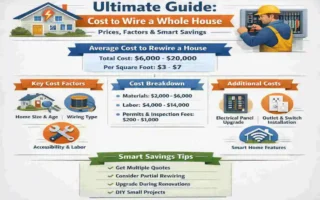
The cost depends on the home size, the type of materials, and whether you hire labor. Here is a simple estimate.
House Size Estimated Wiring Cost
Small Home Lower cost
Medium Home Medium cost
Large Home Higher cost
Average Material Costs
Materials may include wire, boxes, breakers, outlets, switches, and the panel. A larger home needs more materials, which increases the price.
Labor Costs
Labor can be a major part of the total cost. Licensed electricians charge for skill, time, and safety. In many cases, paying for expert help is worth it.
Factors That Affect Cost
- Home size
- Number of circuits
- Type of wire and panel
- Local labor rates
- Code requirements
- Whether the home is new or being rewired
DIY vs Hiring a Professional Electrician
Benefits of DIY
DIY work can save you money and help you better understand your home. If the project is small and local rules allow it, some homeowners handle parts of the work themselves.
When You Should Hire an Electrician
Hire a professional if the job involves:
- A full house wiring project
- Panel replacement
- Complicated circuit design
- Older homes with outdated wiring
- Any work you do not fully understand
Cost vs Safety Comparison
DIY may cost less upfront, but mistakes can be expensive and dangerous. A professional may cost more, but you get better safety, code compliance, and peace of mind.
House Wiring Maintenance Tips
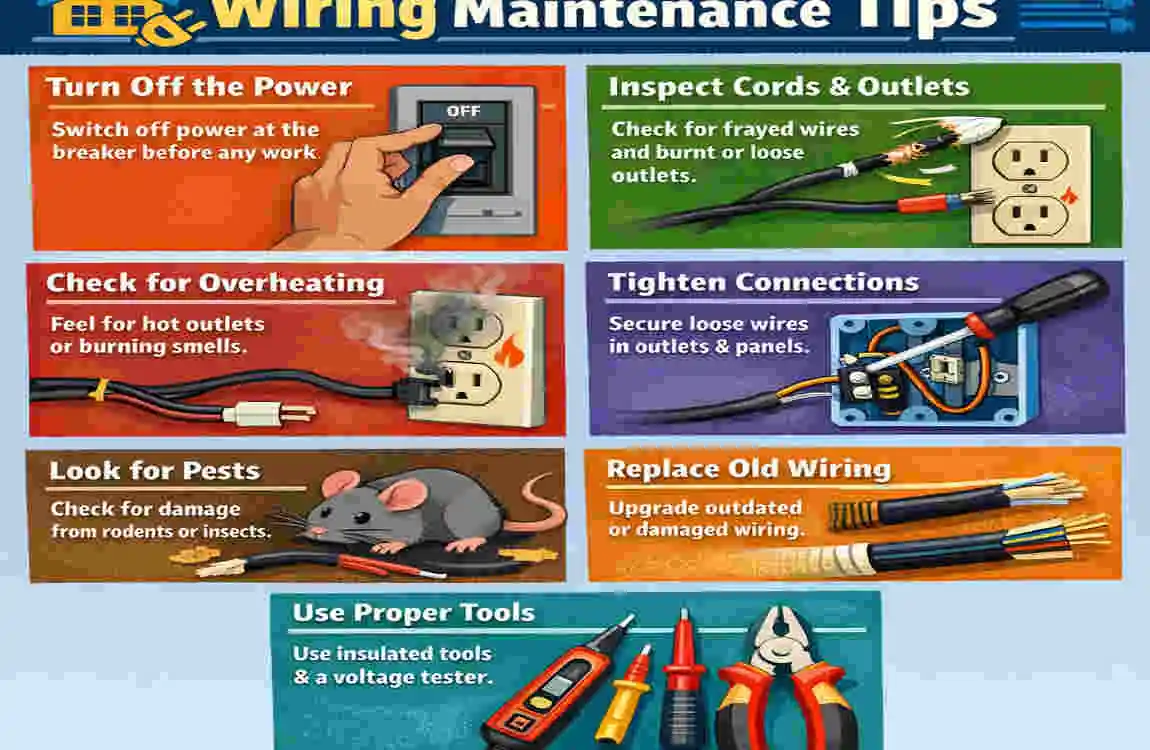
Inspect Outlets Regularly
Check outlets and switches for heat, buzzing, discoloration, or loose fit. These can be signs of trouble.
Replace Damaged Wiring
If wiring is damaged, cracked, or worn, replace it quickly. Do not ignore visible problems.
Test GFCI Outlets
GFCI outlets protect areas like bathrooms, kitchens, and outdoor spaces. Test them often to make sure they still work.
Upgrade Old Electrical Panels
Old panels may not support modern power needs. If your panel is outdated, have it inspected and upgraded if needed.
FAQs
How do you wire a house for beginners?
Start by learning the basics, making a wiring plan, and understanding safety rules. For large projects, work with a licensed electrician.
What type of wire is commonly used in residential homes?
NM cable is one of the most common types used in homes.
Can I wire my own house legally?
In some places, yes, but you usually need permits and inspections. Check your local rules first.
How much does it cost to wire a house?
The cost changes based on home size, materials, labor, and code requirements.
What size wire should I use for outlets?
It depends on the circuit. Common sizes are 14 AWG for 15-amp circuits and 12 AWG for 20-amp circuits.
Do I need a permit to wire a house?
Most major wiring jobs require a permit. Inspections are also common.
| Topic | Information |
|---|---|
| Purpose | House wiring provides safe and reliable electricity to lights, outlets, appliances, and electrical systems. |
| Skill Level | Beginner to intermediate (major electrical work should be performed or inspected by a licensed electrician). |
| Main Steps | Create a wiring plan, install electrical boxes, run cables, connect outlets and switches, wire the electrical panel, and test the system. |
| Common Wire Types | NM-B (Romex) cable for indoor residential wiring, THHN wire for conduit installations. |
| Essential Tools | Wire stripper, voltage tester, fish tape, drill, screwdriver, pliers, cable staples, and electrical tape. |