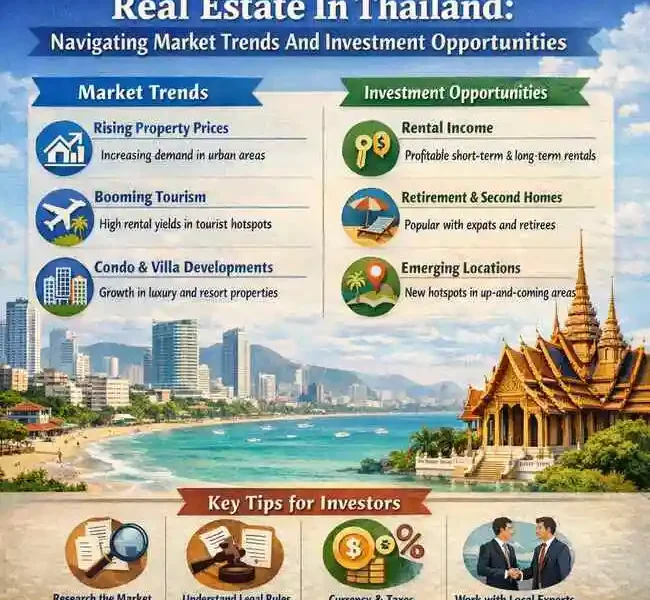
Thailand’s property market is no longer just about tropical villas and glossy brochures. It is a layered, fast-evolving ecosystem shaped by technology, demographic change, and shifting global capital flows. Platforms such as Thailand-Real.Estate reflect this transition, serving as digital gateways where buyers compare assets, analyze yields, and explore entire neighborhoods without boarding a plane.
In 2024, Thailand’s PropTech sector reached USD 1.2 billion. That number alone signals something larger than simple market growth. It points to a structural transformation in how real estate is discovered, evaluated, and transacted. The industry is becoming data-driven, transparent, and increasingly accessible to both local and international investors.
Market Overview: Stability With Selective Momentum

Despite global economic turbulence, Thailand’s residential property market has remained remarkably steady. By Q2 2025, the Nationwide Residential Property Price Index had risen by 2.71 percent year on year. Single detached houses increased by 2.64 percent, while townhouses outperformed with a 4.88 percent rise.
That growth may appear moderate, but in property terms, controlled expansion often signals health rather than overheating. Developers are carefully calibrating supply. Mid-market housing projects dominate new launches, particularly in Greater Bangkok. Mixed-use complexes are multiplying, blending retail, residential, and office space into integrated micro-environments.
Downtown condominiums, meanwhile, are evolving. Developers are no longer competing on square meters alone. They differentiate through smart layouts, integrated technology, sustainability credentials, and lifestyle-oriented amenities. The result is a market that feels less speculative and more strategic.
Price Dynamics: From Vertical Living To Landed Homes
Thailand offers a striking range of price points, from compact studios to multimillion-baht beachfront estates. Understanding the segmentation is crucial.
Prime Condominium Segment
By the end of 2024, prime Bangkok condominiums averaged THB 285,518 per square meter. This reflected a 1.8 percent decline compared to mid-year levels. The adjustment was not a collapse, but a tactical recalibration. Developers trimmed prices to clear inventory and maintain transaction flow.
For high-net-worth buyers, this created a subtle window of opportunity. Premium apartments in Thailand’s most established districts remain attractive for long-term capital preservation, particularly those located near mass transit hubs.
House Valuations Across Urban And Suburban Zones
The average cost of a house in Thailand ranges from THB 3.64 million to THB 5.09 million, with an average of THB 144,832 per square meter. However, averages conceal nuance.
In suburban Bangkok districts such as Nonthaburi and Pathum Thani, townhouses and detached homes priced between THB 2 million and THB 5 million are targeting middle-income families. These projects emphasize gated security, shared green spaces, and proximity to new infrastructure corridors.
Landed homes continue to symbolize stability and upward mobility for Thai households. Space, privacy, and long-term residency potential drive this segment.
Resort Residences And Lifestyle Assets
Thailand’s coastal markets operate by different rules. In Phuket, Koh Samui, and Pattaya, villas in Thailand’s premier resort destinations command significant premiums. High-end beachfront properties typically begin around THB 30 million. More modest holiday residences and flats in Thailand’s resort areas start closer to THB 10 million.
Here, lifestyle and yield intersect. Investors frequently blend personal usage with short-term rental strategies, especially in high-tourism districts.
Table 1: Key Market Metrics
| Key Metric | Statistic |
|---|---|
| 2024 PropTech Market Value | USD 1.2 billion |
| Q2 2025 Residential Price Index Growth | +2.71% y o y |
| Prime Bangkok Condo Price per sqm end 2024 | THB 285,518 |
| Early 2026 Average Gross Rental Yield | 6.4% |
| PropTech Market CAGR 2025 to 2030 | 15 to 18% |
Rental Yields And Investment Logic
Rental performance is one of Thailand’s strongest competitive advantages. As of early 2026, gross rental yields average approximately 6.4 percent nationwide.
Prime Bangkok districts such as Thonglor and Sathorn typically generate yields between 3.5 percent and 5.5 percent. Entry prices are high, compressing returns, but liquidity remains strong. These areas attract expatriates, executives, and long-term tenants.
In resort zones, returns can be more dynamic. Villas in Phuket can reach yields of up to 7.05 percent, supported by robust tourist inflows and seasonal rental surges. Investors who structure properties for short-term leasing often achieve higher income volatility but potentially stronger annual performance.
Five Structural Drivers Reshaping The Market

- Urbanization fueling demand for vertical and high-density living.
- Government initiatives such as Long Term Resident visas supporting foreign participation.
- Tourism recovery strengthening resort rental demand.
- Sustainability integration including solar systems and energy-efficient design.
- Widespread digital adoption transforming transaction processes.
Each driver reinforces the others, creating a reinforcing cycle of modernization.
Emerging Segments And Niche Opportunities

Studios And Entry-Level Condominiums
Studio for sale in Thailand is increasingly sought after by young professionals and digital nomads. Entry prices often fall below THB 2 million, lowering the barrier to ownership. Compact units emphasize functionality over size, offering shared amenities that compensate for limited space.
Affordable Suburban Growth
Condominiums priced between THB 1 million and THB 3 million in satellite towns are capturing middle-income demand. Improved transport networks enhance their appeal. Investors may find stronger yield ratios here due to lower acquisition costs.
Luxury Villas And Bespoke Design
At the opposite end of the spectrum, high-end villas cater to privacy-driven buyers. Custom architecture, panoramic sea views, and controlled-access estates define this niche. While resale timelines can be longer, exclusivity sustains long-term value.
Co-Living Concepts
Urban co-living spaces are emerging as a response to affordability pressures. These developments blend private sleeping areas with communal kitchens and social zones. Millennials and short-term renters gravitate toward flexibility and built-in community.
Conclusion: A Market Defined By Layers And Strategy
Real estate in Thailand cannot be reduced to a single narrative. It is at once conservative and innovative, domestic and international, traditional and tech-enabled. From suburban houses providing long-term stability to high-rise apartments engineered for urban efficiency and villas perched above turquoise waters, the spectrum is vast.
For disciplined buyers who combine regulatory awareness, digital tools, and data-driven analysis, Thailand’s property market offers not only lifestyle appeal but structured investment potential.
Real Estate in Thailand: Navigating Market Trends and Investment Opportunities – FAQ
Why is Thailand attractive for real estate investment?
Thailand offers a combination of strong tourism, growing infrastructure, attractive lifestyle destinations, and relatively affordable property prices compared to many global markets.
What are the current trends in Thailand’s property market?
Key trends include continued demand for condominiums from foreign buyers, growth in luxury properties, increased interest in sustainable developments, and expanding opportunities in tourism-driven regions.
Which locations are most popular for investment?
Popular investment areas include Bangkok, Phuket, Pattaya, Koh Samui, and regions connected to the Eastern Economic Corridor (EEC).
Are condominiums a good investment in Thailand?
Condominiums remain one of the most popular property types, particularly in Bangkok and tourist destinations where rental demand and foreign buyer activity are strong.
Can foreigners buy property in Thailand?
Foreigners can generally own condominium units under certain legal conditions, but land ownership rules are more restrictive and often require alternative ownership structures.
What opportunities exist in resort destinations?
Tourism-focused markets such as Phuket and Koh Samui often offer strong rental income potential and long-term appreciation driven by international visitors and expatriates.
What risks should investors consider?
Key risks include household debt levels, lending restrictions, political uncertainty, oversupply in some segments, and fluctuations in foreign buyer demand.
Is the luxury property market growing?
Yes. High-end condominiums, villas, and premium developments continue to attract wealthy domestic and international buyers.
What is the biggest investment opportunity in Thailand today?
The strongest opportunities are often found in prime urban locations, tourism-driven destinations, and infrastructure-linked growth areas, where demand remains resilient and long-term growth prospects are favorable.