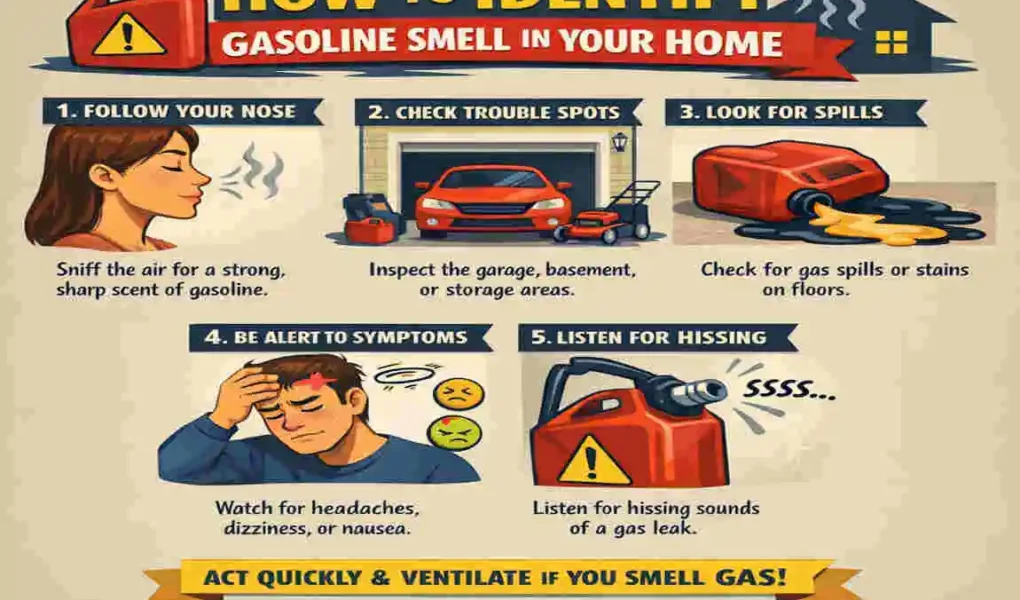
A gasoline odor indoors is not normal, and it should never be brushed off as something that will go away on its own. In many homes, the smell comes from something simple, like fuel stored in a garage or a tool that leaked a little gasoline. In other cases, it can point to a bigger problem, such as a vehicle leak, HVAC contamination, an appliance issue, or even fumes drifting in from outside.
That is why a gasoline smell in a house requires a calm but careful response. You do not want to guess. You want to find the source, reduce risk, and act quickly if the odor is strong.
What Gasoline Smell Means and How It Differs From Other Odors
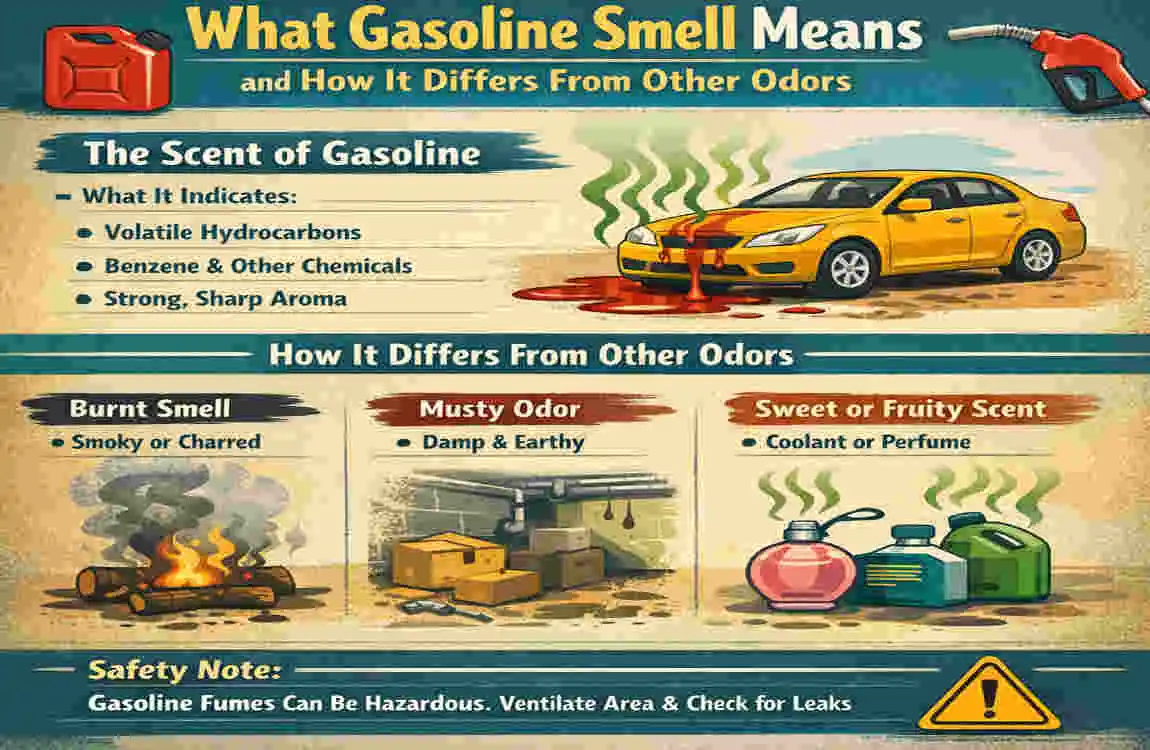
A gasoline odor usually smells sharp, chemical-like, fuel-like, or a little like solvent. Some people also describe it as harsh, oily, or “like a car gas station smell” that seems to linger indoors.
That said, homeowners often confuse the smell of gasoline with other odors. And that matters, because the cause and the danger level can be very different.
Here is a simple way to think about it:
Odor Type Common Description Possible Cause Safety Concern
Gasoline smell Sharp, chemical, fuel-like Fuel cans, garage fumes, vehicle leaks, spills Flammable vapors, breathing irritation
Natural gas smell Rotten eggs or sulfur Gas line or appliance leak Serious explosion risk
Sewer gas Dirty, rotten, moldy Drain or plumbing issue Air quality and health concern
Burning plastic or electrical smell Hot, acrid, melted Wiring, outlets, appliance failure Fire risk
This is why correctly identifying the odor matters. If you assume it is just a fuel smell when it is actually a gas leak or an electrical problem, you could delay the appropriate response. If you assume it is harmless, you could expose your family to gasoline fumes in your home, which may be unsafe.
Even if you do not see a spill, a gasoline smell can still mean flammable vapors are present. Those vapors can travel, accumulate, and pose a serious hazard. So if your home smells like gasoline, do not ignore it.
Common Reasons Your House Smells Like Gasoline
There are several possible reasons for a gas odor in house situations. Some are simple. Some are more serious. The key is to look at where the smell is strongest, when it appears, and what changed recently in your home.
Stored Gasoline, Fuel Cans, or Lawn Equipment
One of the most common reasons for a gasoline smell from garage areas is stored fuel.
Gas cans can leak a little vapor even when they are closed. If the lid is loose, cracked, or old, fumes can escape and move into the house. The same thing can happen with lawn mowers, trimmers, pressure washers, leaf blowers, or generators that still have fuel residue in the tank or lines.
Sometimes the problem is not a big leak at all. It is a small spill on the floor, on a rag, or on a tool that sat in the garage for too long. Gasoline evaporates quickly, so even a little spill can create a strong odor.
Common signs include:
- The smell is strongest near the garage, storage shelf, or utility corner
- The odor gets worse after someone used or refueled equipment
- You notice fuel residue near cans or tools
- The smell comes and goes depending on temperature
If you store gasoline indoors, even in a garage, keep it in approved containers with tight lids. A small mistake in storage can quickly turn into a lingering smell.
Attached Garage Fumes Entering the Home
An attached garage is a very common path for fuel odor to enter the house.
If the garage has a car, fuel cans, lawn equipment, or spilled gasoline, the fumes can drift through gaps, cracks, or unsealed doors. Once that happens, the smell may move into hallways, mudrooms, laundry areas, or rooms above the garage.
This is one reason people often say, why does it smell like gasoline in my house even though the source seems to be “somewhere else.” In many homes, the source really is the garage.
Watch for these clues:
- The smell is strongest near the door between the garage and the house
- The odor gets worse in rooms above the garage
- You notice drafty spots, worn weatherstripping, or gaps around doors
- The smell is stronger after a car has been parked inside
A vehicle with a small leak or a poorly sealed fuel can can create fumes that enter the house. Warm weather can make it worse because gasoline vapors rise more quickly as temperatures rise.
Fuel Leak From a Vehicle or Small Engine
Sometimes the smell is coming from a vehicle, not the home itself.
A car, truck, motorcycle, riding mower, generator, or other small engine can leak fuel due to a loose gas cap, a damaged fuel line, a cracked seal, or a faulty connection. If you park that vehicle in a garage, the smell may build up and spread indoors.
You might notice:
- The odor appears after parking the car
- The smell gets stronger when the vehicle is warm or recently driven
- There is a fuel spot under the vehicle
- The smell is strongest around the garage floor or near where the vehicle sits
This kind of issue can be easy to miss because the leak may be small. But even a minor leak can create a persistent fuel smell indoors if the vehicle stays in an attached garage or a closed space.
If the odor is clearly coming from a vehicle, do not keep driving it without checking the problem. Fuel leaks need proper repair.
HVAC System Pulling in Fumes
Your heating and cooling system can also spread a gasoline odor through the house.
This can happen if the air intake is pulling in fumes from a garage, crawl space, basement, or another contaminated area. It can also happen if ductwork carries the smell from one part of the clean house to another.
This is especially important when the smell appears only when the furnace or air conditioner turns on. If that happens, the HVAC system may be part of the problem.
You may notice:
- The smell is stronger near vents
- The odor starts when the system kicks on
- One area of the house smells first, then the rest
- The smell seems to move through multiple rooms
When this happens, the issue may not be gasoline itself but the way air is moving through the home. A gasoline fumes in home problem can grow quickly if the system spreads the odor from a garage or utility room into living spaces.
Appliance, Furnace, or Mechanical Equipment Issues
Some fuel-like smells come from mechanical equipment in the house.
A furnace, boiler, water heater, or other appliance can create odors if there is a problem with combustion, fuel delivery, or nearby storage. In some cases, a spill near utility equipment can also create the smell.
If the odor is strongest in the basement, laundry room, or mechanical room, that is an important clue. A gasoline smell in basement areas can come from stored fuel, a small spill, an old generator, or recently serviced equipment.
Reasons to take this seriously:
- Fuel-related equipment may need professional inspection
- A combustion problem can affect air quality
- A hidden leak can become a fire hazard
- The smell can spread through ductwork or open return vents
You should not try to fix fuel-based appliances yourself unless you are qualified to do so. These systems can be dangerous if handled improperly.
Contaminated Items Brought Indoors
Sometimes the source is something simple that came with the fuel.
Clothing, shoes, gloves, rags, towels, or tools can carry gasoline residue. If someone worked on a lawn mower, refueled a generator, or handled a fuel container, the smell can transfer to entryway floors, laundry baskets, storage bins, or the mudroom.
This can be tricky because the odor may seem to come from the whole house when it is really attached to one item.
Ask yourself:
- Did anyone refuel equipment recently?
- Were work clothes left in the laundry area?
- Were fuel-soaked rags brought inside?
- Was gasoline spilled on shoes, tools, or gloves?
If yes, the odor may fade once the contaminated item is removed and cleaned. But if the smell is strong or keeps returning, keep looking.
Nearby External Sources
Sometimes the fuel smell is not from your property at all.
It can drift in from a neighbor’s garage, outdoor equipment, a generator, or a nearby construction site, or from a fuel spill. Open windows, crawl spaces, attic vents, and foundation gaps can all let fumes into the home.
This matters because a home smells like gasoline even when the house itself is not the source.
External sources may include:
- Neighboring garage fumes
- Outdoor generators or construction machinery
- Fuel spills on a nearby driveway or street
- Vapors entering through open windows or vents
If the smell appears at certain times of day or only when the wind changes, an outside source may be the reason.
When the Smell Is Not Gasoline
Not every harsh odor is actually gasoline.
Some cleaning chemicals, paint thinners, solvents, adhesives, and electrical problems can smell similar. People sometimes describe an electrical burning smell as fuel-like because both can be sharp and unpleasant.
That is why you should avoid making a quick guess. A smell that seems like gasoline may actually be something else, and the right response depends on the real source.
If you cannot tell what it is, take it seriously. A mystery odor is not something to ignore.
Immediate Safety Steps If You Smell Gasoline Indoors
If the smell is strong, spreading, or making you feel unwell, act first and ask questions later.
What to Do Right Away
Follow these basic steps:
- Do not ignore the smell.
- Leave the house immediately if the odor is strong or getting worse.
- Do not light matches or candles.
- Do not smoke or use lighters.
- Do not flip electrical switches on or off.
- Do not plug in or unplug devices.
- Open doors or windows only if it is safe and easy to do on the way out.
- Move away from the home before making calls.
Gasoline vapors can be flammable. That means a small spark can create a danger. Even actions that seem harmless, like turning on a light, can be risky in the wrong situation.
If you notice headache, dizziness, nausea, eye irritation, or trouble breathing, treat that as a warning sign. Those symptoms may indicate the exposure is unsafe.
Once you are away from home, contact the fire department, emergency services, or the appropriate professional, depending on the situation. If the smell is strong, do not wait to “see if it goes away.”
A strong fuel odor is not the time to stay inside and investigate at length.
How to Safely Investigate the Source of the Smell
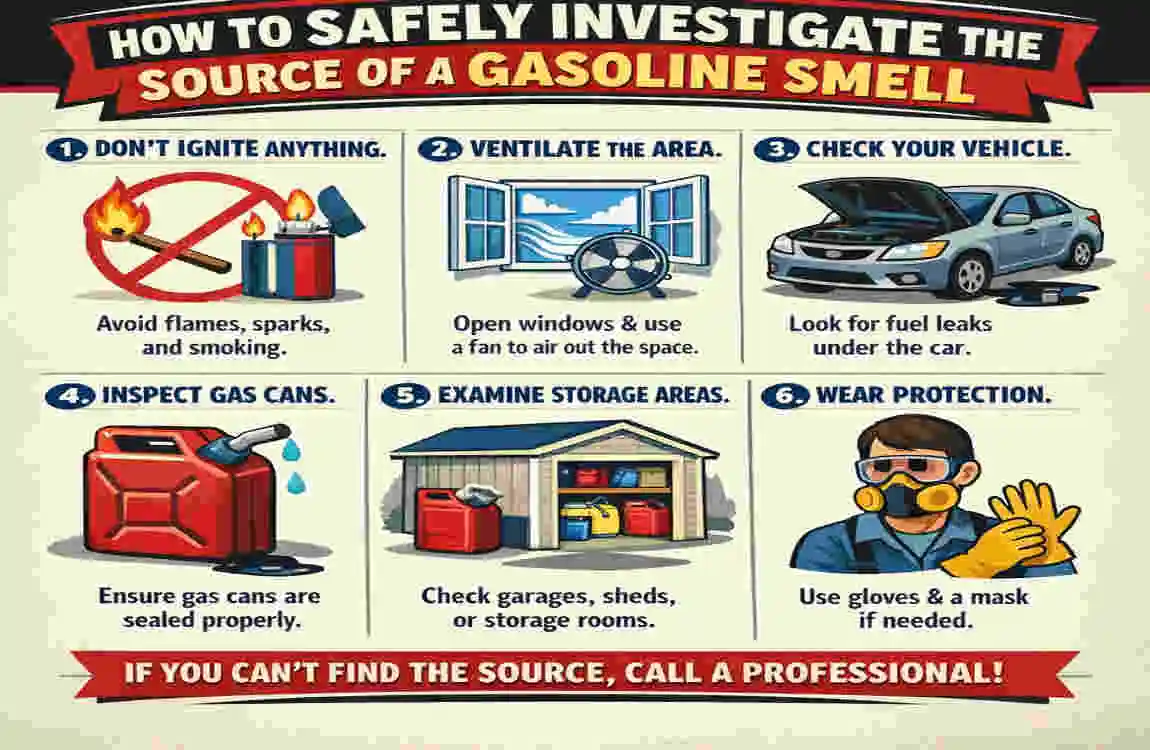
You should only investigate if the smell is mild and you already feel safe staying inside.
If you do not feel safe, stop here and get help.
Start With the Most Likely Areas
Begin with the garage, basement, utility room, and storage spaces. These are the places where fuel-related smells usually start.
Look for:
- Open or loose fuel containers
- Recently used lawn equipment
- Wet spots or visible spills
- Fuel-soaked rags or towels
- Leaking tools or equipment
- Containers that were stored near heat
Check Where the Smell Is Strongest
Try to notice where the odor is strongest:
- Near vents?
- Near the garage door?
- In one room only?
- Stronger when the HVAC system runs?
These patterns can tell you a lot. For example, if the smell gets worse when the air system turns on, that points to a venting or duct issue. If it is strongest near the garage door, the garage may be the source.
Ask a Few Simple Questions
Think through recent activity in the home:
- Did anyone refuel equipment recently?
- Was the car parked inside?
- Was gasoline stored indoors?
- Was any cleaning solvent used?
- Did anyone spill fuel and clean it up quickly?
A small event can be easy to forget, but it may explain the smell.
Stop if the Odor Gets Stronger
If the odor increases while you investigate, stop immediately. Leave the area if needed.
And remember this important point: do not try to repair fuel-related systems yourself. Fuel lines, appliances, and ventilation systems can be dangerous. If the source is unclear, proceed to a professional inspection.
When to Call a Professional
Call a professional when the smell keeps returning, the source is unclear, or the odor appears to involve more than a simple spill.
You should get help if:
- You cannot find the source
- The smell comes back after ventilation
- The odor gets stronger when heat or AC turns on
- You suspect a garage, appliance, or vehicle leak
- The smell is strongest in the basement or utility area
Who to Call
The right professional depends on the cause:
- Fire department for immediate safety concerns or a strong odor
- HVAC technician for duct, vent, or air-intake problems
- Plumber or appliance specialist if equipment is involved
- Restoration or remediation expert if there was a spill or contamination
Why Professional Help Matters
Professionals can:
- Identify the source more accurately
- Test air quality if needed
- Lower exposure risk
- Recommend cleanup or repair
- Help prevent the smell from coming back
If you have already asked yourself, “Why does it smell like gasoline in my house?” and you still cannot find the cause, that is a good sign that you should stop guessing and bring in help.
How to Get Rid of a Gasoline Smell in the House
The only real way to get rid of a gasoline smell is to remove the source.
Ventilation can help, but only if it is safe to do so. If the smell is strong or dangerous, leave first and wait for professionals.
Safe Cleanup Steps
If the odor came from a small, controlled spill or contaminated item, you may be able to handle the cleanup carefully:
- Remove the source of the smell
- Clean up small spills using safe methods
- Wash contaminated clothing or textiles
- Dispose of fuel-soaked materials according to local rules
- Move fuel storage away from living areas
- Seal or relocate fuel containers in the garage or basement
If the smell is in the HVAC system, do not rely on DIY fixes. Schedule an inspection. A system that keeps pulling in fumes will keep spreading the odor no matter how many windows you open.
A fresh-scent spray or air freshener will not solve a gasoline smell in the house problem. It may mask the odor temporarily, but it will not remove the cause.
The source must be addressed first. That is the key point.
How to Prevent Gasoline Smells in the Future
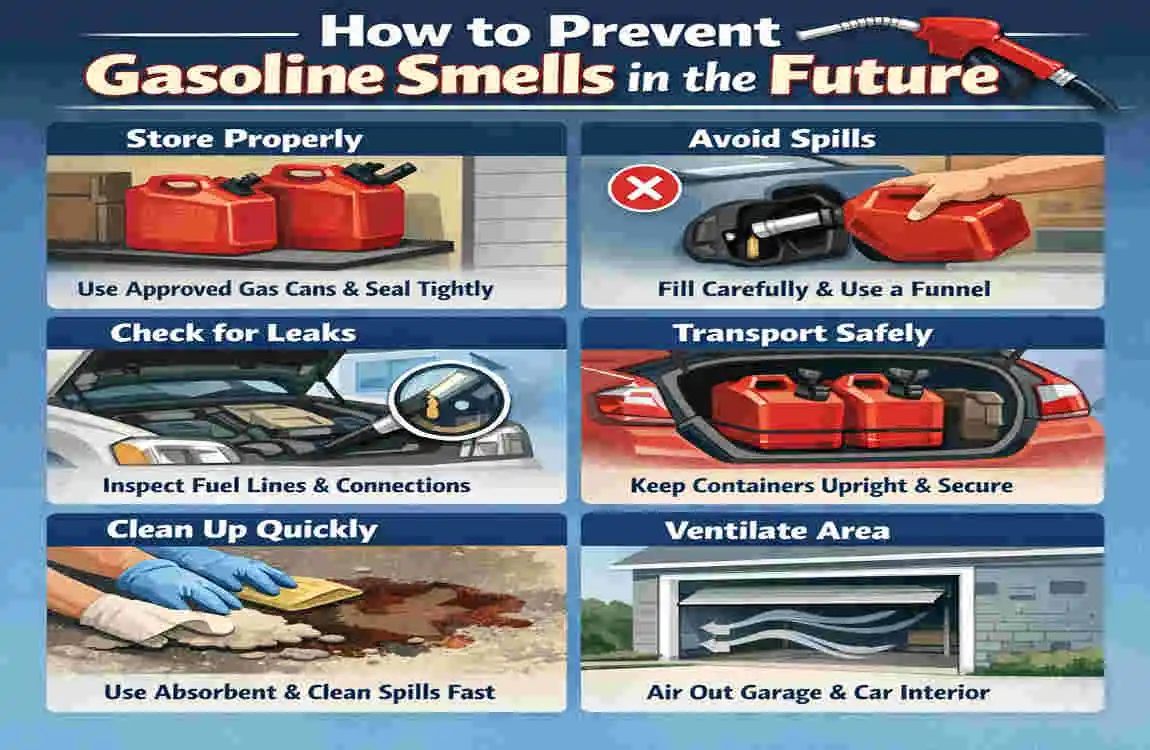
Prevention is much easier than dealing with a strong fuel odor after it starts.
Simple Prevention Habits
Use these habits to lower your risk:
- Store gasoline in approved containers with tight lids
- Keep fuel away from living spaces whenever possible
- Never store leaking equipment indoors
- Maintain vehicles and lawn equipment regularly
- Seal garage gaps and add weatherstripping to doors
- Avoid refueling equipment in enclosed areas
- Inspect HVAC systems and garage-to-home connections
- Keep absorbent materials and cleanup supplies ready for small spills
Build a Fuel Storage Safety Routine
A simple routine can prevent many problems. You can check containers, wipe up drips, inspect equipment after use, and make sure fuel is not left sitting in warm or enclosed spaces.
If you use gas-powered tools often, create a habit of checking them before bringing them inside. That one step can prevent a lingering fuel smell indoors and reduce fire risk simultaneously.
Good storage and regular checks go a long way. Small habits make a big difference.
Frequently Asked Questions
Why does it smell like gasoline in my house but I can’t find a leak?
The source may be hidden. Common causes include garage fumes, an HVAC intake pulling in odors, contaminated items such as clothes or rags, or a leak from nearby equipment. Sometimes the problem isn’t in the room where you smell it most.
Is a gasoline smell in the house dangerous?
Yes. Gasoline vapors are flammable, and they can also irritate your eyes, nose, and throat. If the smell is strong or makes you feel dizzy, nauseous, or short of breath, leave the area and get help.
Can my HVAC system make the house smell like gasoline?
Yes. If the HVAC system pulls air from a garage, crawl space, basement, or contaminated area, it can spread the odor throughout the house. If the smell gets worse when the system runs, that is a strong clue.
What should I do if the smell is only in the basement?
Check for stored fuel, small spills, mechanical equipment, and ventilation issues. Basements often hold fuel cans, tools, or appliances that may contribute to the problem. If the source is not obvious, call a professional.
Should I call 911 for a gasoline smell?
If the smell is strong, spreading, or causing symptoms, yes, treat it as a safety issue. It is better to be cautious than to wait too long. If you are unsure, leave the home first and call for guidance from a safe distance.
| What You Notice | Possible Source | What to Check |
|---|---|---|
| Strong smell near the garage | Vehicle leak, fuel cans, lawn equipment | Look for open containers, spilled fuel, or a dripping vehicle |
| Smell gets stronger when HVAC runs | Air system pulling fumes in | Check vents, ducts, and any garage-to-home air gaps |
| Odor in the basement or utility room | Stored fuel, appliance issue, or contaminated materials | Inspect for gas cans, fuel-soaked rags, or equipment leaks |
| Smell only after parking the car inside | Vehicle fuel leak or evaporating fumes | Check under the vehicle, fuel cap, and garage ventilation |
| Smell on clothing, shoes, or rags | Fuel residue carried indoors | Wash or remove contaminated items and see if the smell fades |