
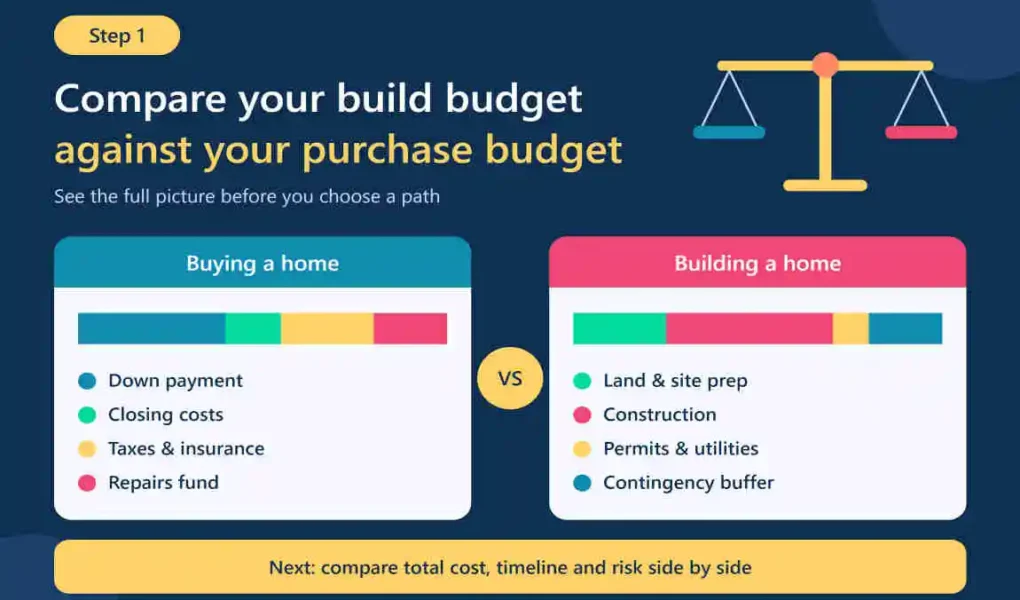
If you’re wondering is it cheaper to build or buy a house in Georgia, you’re asking the right question at a strange moment in the housing market. Mortgage rates are still high, builders are cutting prices, and for the first time in decades, new homes are often priced below resale homes. That changes the math, and it’s why a one-line answer can mislead you.
The typical Georgia home sold for about $343,833 (Zillow, data through September 30, 2026), while building a 2,000-square-foot home at the commonly cited $150–$300 per square foot costs roughly $300,000–$600,000 before you buy land. Building only wins when you already own the lot, choose a production builder, or build smaller than the homes you’re comparing.
How Much Does It Cost to Buy a House in Georgia in 2026?
Georgia remains one of the more affordable large house. Zillow puts the typical Georgia home value at $329,115, down 0.6% from a year earlier, with a median sale price of $343,833. The Georgia Realtors midyear report showed a year-to-date median sales price of $360,000. The numbers differ because each source measures something slightly different (typical value versus closed sales), but both tell the same story: prices have flattened, not exploded.
Your purchase budget should include more than the price tag:
- Down payment: Conventional loans can start low, but a larger down payment cuts your monthly cost and may remove mortgage insurance.
- Closing costs: Buyers commonly budget a few percent of the price for lender fees, title work, prepaid taxes, and insurance.
- Property tax: Georgia assesses homes at 40% of fair market value, then applies your local millage rate after a $2,000 standard homestead exemption. The statewide effective rate is about 0.79% of a home’s value (Tax Foundation data cited by AARP), which works out to roughly $2,700 a year on a $343,833 home. Your county can be higher or lower.
- Insurance, maintenance, and utilities: A resale home may need a new roof, HVAC, or water heater sooner than a new build.
Georgia Down Payment Help
First-time buyers should look at the Georgia Department of Community Affairs’ Georgia Dream program, which offers down payment assistance with income limits and sales-price caps that reach up to $625,000 depending on the county. Program terms change, so confirm current amounts with a participating lender before you rely on them.
How Much Does It Cost to Build a House in Georgia?
For new construction, most 2026 estimates land between $150 and $300 per square foot, excluding land. Production builders working from set floor plans sit at the low end, around $130–$175 per square foot, while custom builds climb quickly. Nationally, Autodesk’s construction blog reports a similar $150–$300 range.
| Build Type | Cost per Sq Ft | Estimated Total |
|---|---|---|
| Production / builder-grade | $150 | $300,000 |
| Mid-range custom | $200 | $400,000 |
| High-end custom | $300 | $600,000 |
Totals are simple multiplication (2,000 sq ft × cost per sq ft) using the ranges above. Get written bids for your specific plan and lot.
Where the Money Goes
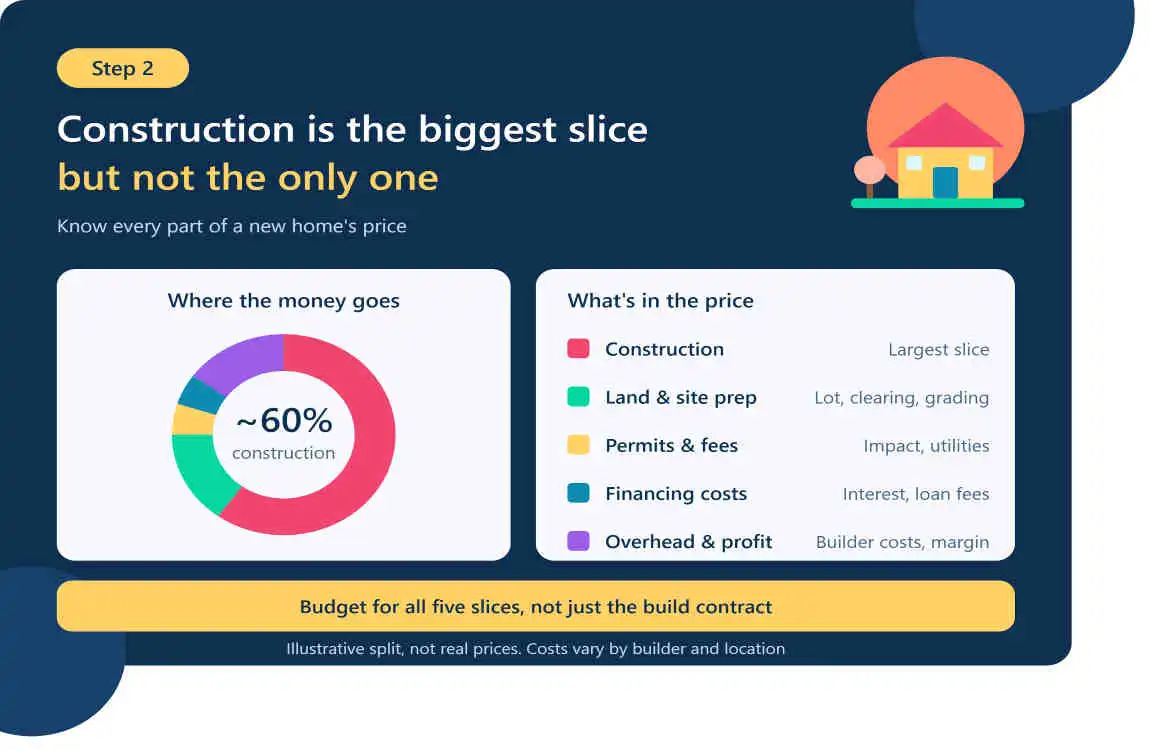
The National Association of Home Builders’ latest Cost of Construction Survey found that construction costs made up 64.4% of the average new-home price, a record. The finished lot was the second-largest piece at 13.7% of the sales price, and builder profit averaged 11.0%. NAHB notes these are national averages, so treat them as a yardstick, not a Georgia quote.
The takeaway for your budget: if you buy a lot separately and hire a builder, expect to pay for the lot, the build, and the financing, with no resale-style discount baked in.
Why Construction Financing Costs More
A construction loan is not a normal mortgage. Lenders release money in stages called draws that follow inspections, and you typically pay interest only on what’s been drawn. The rate is usually about a percentage point above a traditional 30-year mortgage, and terms often run up to 18 months before you move to permanent financing. Some lenders offer a single-close loan that converts automatically; others require a second closing, which means paying closing costs twice.
Build vs. Buy in Georgia: Side-by-Side Budget Example
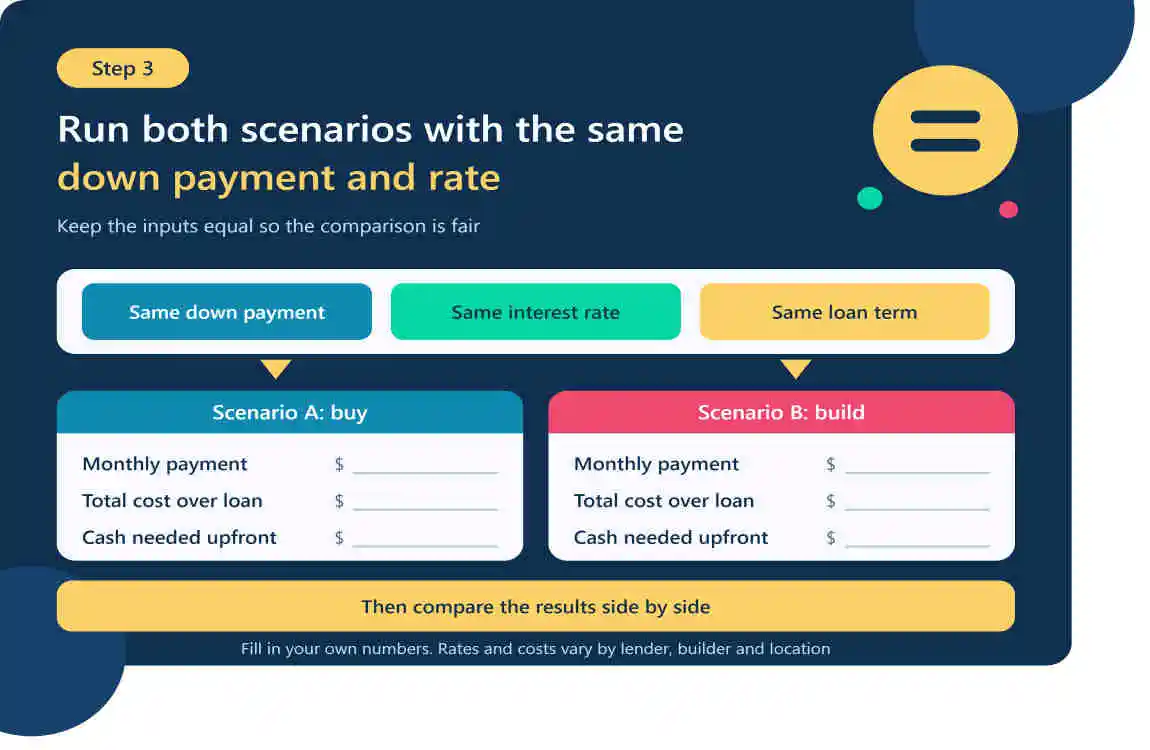
Here’s an illustrative comparison. The purchase uses Georgia’s median sale price from Zillow. The build uses a mid-range 2,000-square-foot home at $200 per square foot, an assumed $60,000 lot, a 15% contingency, and roughly $16,000 in construction-period interest. Both assume 20% down and a 7.18% rate for simplicity, even though construction loans usually cost more.
| Budget Item | Buy Existing Home | Build New Home |
|---|---|---|
| Home price / construction | $343,833 | $400,000 |
| Land | Included | $60,000 (assumption) |
| Contingency (15%) | Optional repair fund | $60,000 |
| Construction-period interest (est.) | None | $16,000 |
| Estimated total | ≈ $343,800 | ≈ $536,000 |
| Loan after 20% down | ≈ $275,100 | ≈ $428,800 |
| Estimated monthly principal & interest | ≈ $1,860 | ≈ $2,900 |
The monthly figures use the standard loan-payment formula at 7.18% over 30 years and exclude taxes, insurance, and mortgage insurance. The construction interest estimate assumes about $200,000 drawn on average over 12 months at roughly 8.2%. Your numbers will differ.
Notice the gap: roughly $190,000 in total cost and about $1,000 a month in payment. That’s the main reason buying wins in most comparisons. But this example isn’t perfectly fair, because a new home 2,000-square-foot home is not the same as the median Georgia resale home. If you compare a similar-size, similar-age house in your target neighborhood, the gap often narrows.
Why Buying a New Home May Be the Cheapest Option Right Now
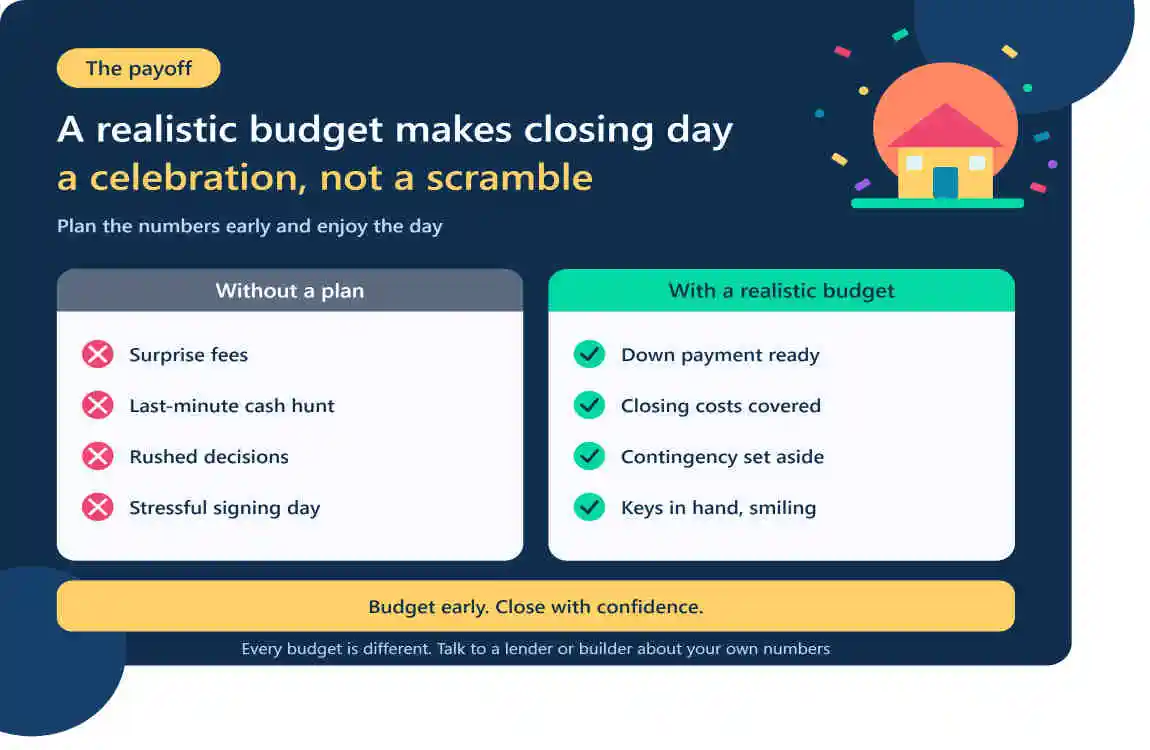
There’s a third path that many Georgia shoppers overlook: buying a brand-new home that a builder has already built. In September 2026, the Census Bureau reported a median new-home price of $400,400, down 3.9% from a year earlier, versus $417,500 for existing homes from the National Association of Realtors. That was the seventh straight month new homes cost less than resale homes. NAHB’s own analysis shows the same pattern, with a second-quarter 2026 gap of about $25,000.
Builders are also competing for buyers. NAHB data summarized by Inman shows 43% of builders cut prices in October. In practice, that can mean closing-cost credits or mortgage rate buydowns on completed “spec” homes. National figures don’t guarantee the same in your Georgia county, so ask local builders what incentives they’re offering.
Hidden Costs to Budget For (Build or Buy)
If You’re Building
- Site work: Clearing, grading, driveways, and foundation prep vary by lot. Slopes and poor soil raise costs.
- Utilities: Well and septic in rural counties, or tap and impact fees in growing suburbs.
- Permits and inspections: Fees vary by county and city.
- Design changes: Change orders after construction starts are among the most common causes of overruns.
- Landscaping, fencing, and appliances: Often excluded from builder bids.
- Temporary housing: If you sell first, you may pay rent or storage during the build.
- Builder’s risk insurance and delays: Weather and supply issues extend interest costs.
If You’re Buying
- Inspection and repairs: Set aside money for what the inspector finds.
- Homeowners insurance: Premiums can run higher near the coast.
- Updates: Kitchens, flooring, and paint are rarely free.
- HOA dues: Common in newer subdivisions and condo-style communities.
How to Budget for a Georgia Home: 7 Steps
- Set a monthly payment ceiling first. Work backward from what you can comfortably pay in principal, interest, taxes, insurance, and upkeep. Don’t start with the purchase price.
- Get pre-approved on both paths. Ask lenders for a standard mortgage quote and a construction-to-permanent quote. Comparing at least a few lenders helps; Freddie Mac has noted that shopping around can save $600 to $1,200 a year when rates are high.
- Price your target area. Georgia isn’t one market. Home values vary widely by county, so look up your specific county and compare resale with new construction nearby.
- For a build, get itemized bids. Ask for the lot, site work, permits, and allowances in writing. Vague “allowances” are where budgets quietly grow.
- Add a contingency. Plan for 10%–20% on top of a build quote for surprises. Even a resale purchase deserves a repair fund.
- Estimate property tax with the real formula. Multiply the home’s fair market value by 40%, subtract the homestead exemption, then apply the local millage rate. Use Georgia Department of Revenue guidance as your reference.
- Check assistance programs. If you’re a first-time buyer, ask a participating lender whether Georgia Dream fits your income and target price.
When Building Makes Sense in Georgia
- You already own land or can get a family lot, which removes the biggest upfront cost.
- You’re choosing a production builder with fixed plans rather than a fully custom design.
- You’re building smaller, simpler, or on a flat, easy-to-develop lot.
- Resale inventory in your area doesn’t offer the layout, accessibility, or energy efficiency you need.
- You value customization and are comfortable paying a premium for it.
When Buying Makes More Sense
- You need to move quickly and can’t wait 8–12+ months for a build.
- You want the lowest total cost and the most predictable budget.
- You’re comfortable home with a few repairs or cosmetic updates.
- You’re in an established neighborhood where land is scarce and expensive.
Frequently Asked Questions
Is it cheaper to build or buy a house in Georgia?
Usually, buying is cheaper. Georgia’s typical home sold for about $343,833 this fall, while a new 2,000-square-foot build costs roughly $300,000–$600,000 before land. Building can be cheaper if you own the lot, use a production builder, or build small.
How much does it cost per square foot to build a house in Georgia?
Most 2026 estimates range from about $150 to $300 per square foot, excluding land. Production builders often fall between $130 and $175 per square foot, and high-end custom homes can exceed that range.
What is the average price of a house in Georgia right now?
Zillow reports a typical Georgia home value of $329,115 and a median sale price of $343,833 as of September 30, 2026. Georgia Realtors reported a year-to-date median sales price of $360,000 at midyear. The figures differ by methodology.
What are current mortgage rates in Georgia?
Mortgage rates are set nationally and by lender, not by state. The Freddie Mac weekly average for a 30-year fixed loan was 7.18% on November 5, 2026. Your quote depends on credit, down payment, and loan type.
How much should I set aside as a contingency when building?
A common planning range is 10%–20% of the construction cost. This covers change orders, site surprises, and price increases, and it’s wise to keep it separate from your base budget.
How are property taxes calculated in Georgia?
Georgia assesses homes at 40% of fair market value. The county or city millage rate is applied to that assessed value after exemptions such as the $2,000 standard homestead exemption. The statewide effective rate is about 0.79% of a home’s value, but local rates vary.
Are there first-time buyer programs in Georgia?
Yes. The Georgia Department of Community Affairs runs the Georgia Dream Homeownership Program, which offers down payment assistance to eligible first-time buyers. Income limits and sales-price caps apply, so confirm details with a participating lender.
Is it cheaper to buy a new home from a builder than to build a custom home?
Often, yes. Builder-owned “spec” homes avoid your lot purchase, construction-loan interest, and design changes. Nationally, new-home median prices have recently been lower than existing-home prices, and many builders are offering incentives.
The Bottom Line
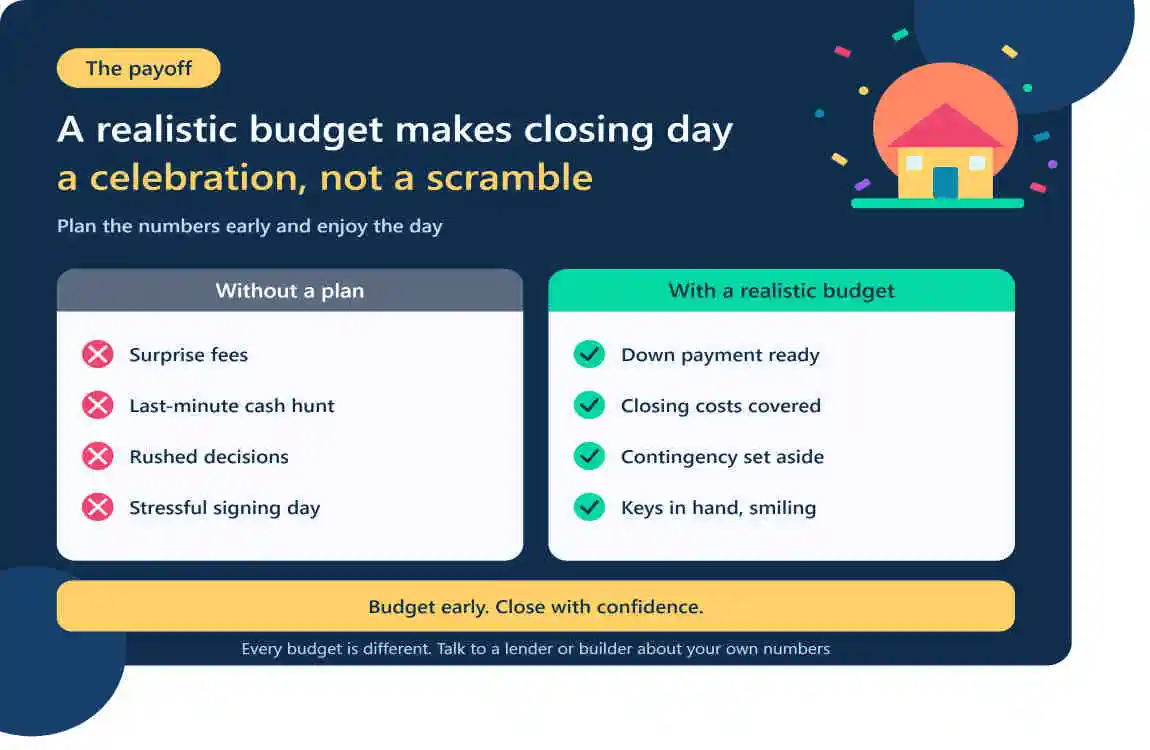
So, is it cheaper to build or buy a house in Georgia? For most households, buying wins on total cost, speed, and predictability. Building pays off when you control the land cost, keep the design simple, and protect yourself with a real contingency. Before you decide, price both paths with the same down payment and interest rate, and ask local builders what incentives they’re offering on finished homes. The cheapest route in 2026 may be neither a custom build nor a resale, but a move-in-ready new home with a rate buydown.