
Selling your house is a big milestone, but your paperwork responsibilities do not end when the sale is complete. From property deeds and sale contracts to tax records, mortgage statements, and legal documents, keeping the right records is important. If you have sold your house, knowing how long to keep your papers can help you avoid future legal or financial problems.
Why the IRS Clock Matters After a Home Sale
When you sell your home, your taxable gain is the amount you realized from the sale minus your adjusted basis. The IRS requires you to keep records connected to property cost to figure depreciation and to figure gain or loss when you sell it. That is why paperwork from the day you bought the home still matters years after you hand over the keys.
Most homeowners owe no federal tax on the sale thanks to the home sale exclusion. If you meet the ownership and use tests, you may exclude up to $250,000 of gain, or $500,000 if married filing jointly. But records still protect you. Prices have risen over time, and gains can exceed the limit, especially after decades of ownership.
The IRS “Period of Limitations” Explained Simply
The period of limitations is the window in which you can amend a return to claim a refund, or in which the IRS can assess additional tax. According to IRS recordkeeping guidance, the general periods are:
- 3 years from the date you filed your original return (a return filed early is treated as filed on the due date), for most situations.
- 6 years if you did not report income that is more than 25% of the gross income shown on your return.
- Indefinitely if you did not file a return, or if you filed a fraudulent return.
You can read the official list on the IRS Recordkeeping page (Topic 305).
A Real-World Timeline Example
Say you close on the sale of your home in June 2026. You report the sale on your 2026 return and file it on April 15, 2027. The standard three-year window then runs until April 15, 2030. To be safe, keep every home sale and ownership record at least until then, and consider keeping them a little longer if you have any open questions.
Which Home Records Matter Most?
Purchase and Sale Closing Statements
These two documents bookend your gain calculation: what you paid and what you received, along with many buying and selling costs. Store both together.
Improvement Receipts
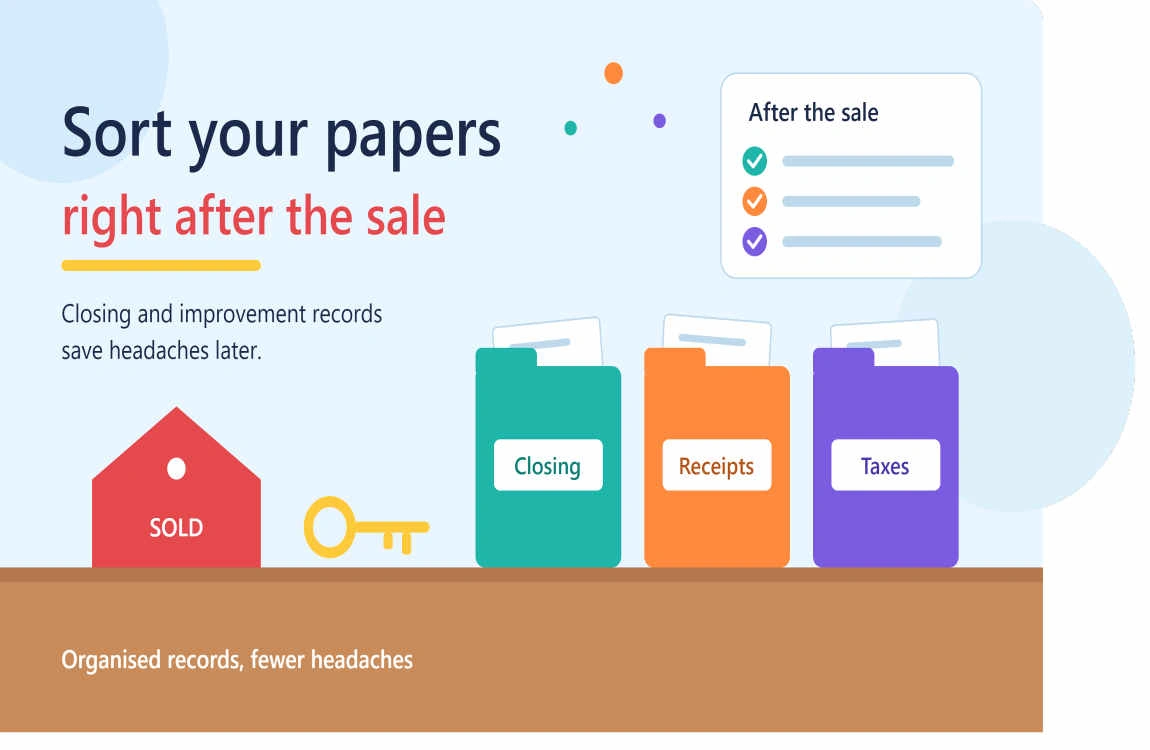
Capital improvements, such as a new roof, an addition, or a kitchen remodel, generally add to your basis. Routine repairs generally do not. The IRS explains the difference in Publication 523, Selling Your Home. Keep invoices, contracts, permits, and proof of payment.

Form 1099-S and Your Tax Return
If the closing agent sent you Form 1099-S, keep it with your return. Save a full copy of the filed return and any supporting forms.
Depreciation Records for Home Office or Rental Use
If you claimed depreciation because part of the home was a rental or a dedicated business space, that deduction can affect your gain when you sell. Keep those records with your sale file. The IRS notes that property records are needed to figure any depreciation, amortization, or depletion deduction.
Seller Disclosures and Inspection Reports
These are not tax records, but they can matter if a buyer later alleges a hidden defect. Time limits for such claims vary by state, so many sellers keep them for seven years or more. A local real estate attorney can give you the right number for your state.
When You Should Keep Records Longer Than 3 Years
- You claimed depreciation on part of the home.
- You acquired the home in a nontaxable exchange or through a trade. The IRS says you must keep records on both the old and new property until the period of limitations expires for the year you dispose of the new property.
- Your gain exceeded or came close to the exclusion limit. Solid basis records matter most here.
- You are in a state with its own rules. State tax agencies can have different time limits.
- A lender, insurer, or attorney requires it. The IRS itself reminds taxpayers that other parties may require longer retention. See the IRS guidance on how long to keep records.
Paper or Digital? Best Ways to Store Your Documents
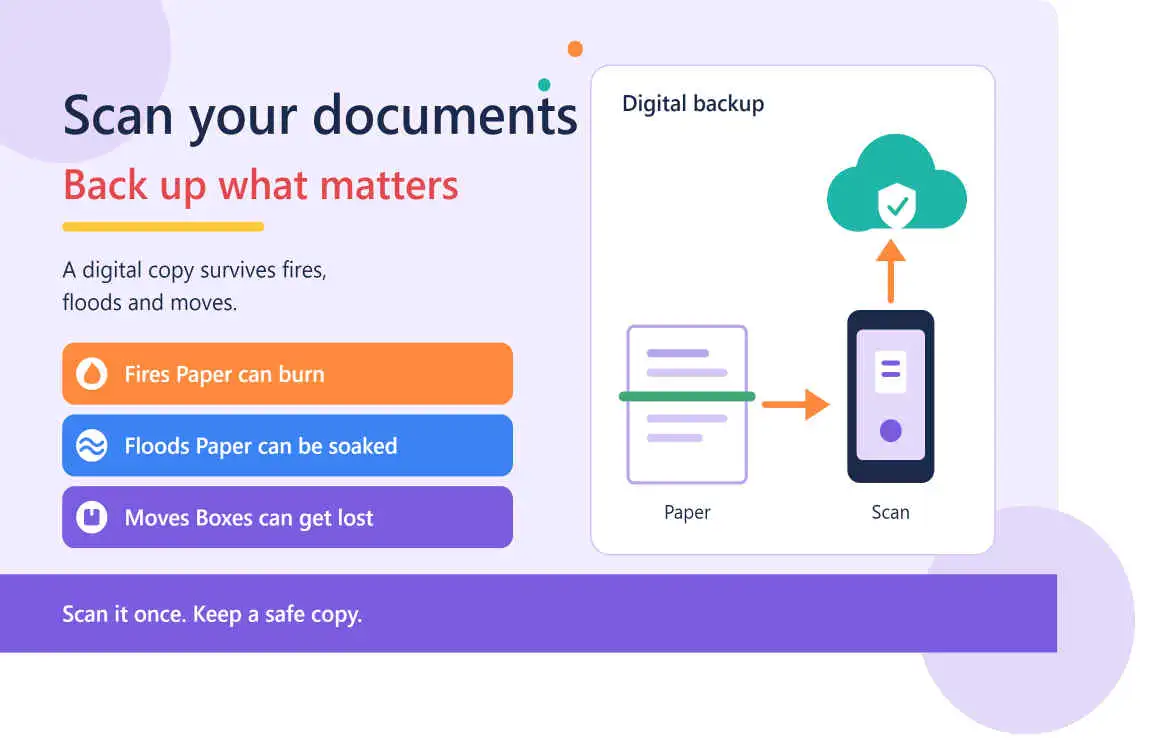
- Scan everything. Save clear PDF copies of each document.
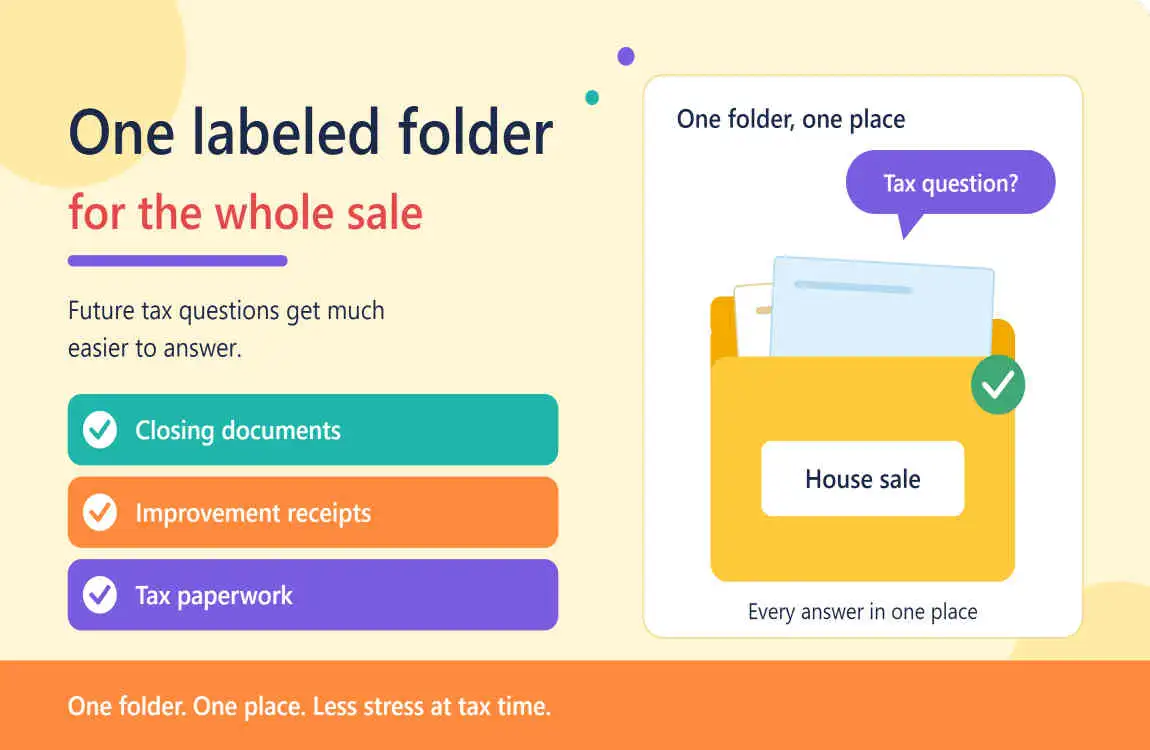
- Use a simple folder name. For example: Home Sale 2026 – 123 Main St.
- Keep two backups. One in secure cloud storage and one on an external drive.
- Keep a running improvement list. A spreadsheet with date, description, and cost makes your basis easy to prove.
- Shred carefully. Once the retention period is over, securely destroy paper copies because they contain personal and financial details.
Common Mistakes to Avoid
- Throwing away improvement receipts because “I’ll never owe tax.”
- Keeping only the sale paperwork and not the original purchase documents.
- Starting the countdown from the closing date instead of the date you filed the return reporting the sale.
- Relying on the real estate agent, lender, or title company to keep your records for you.
- Discarding records before a state or non-tax deadline has passed.
Frequently Asked Questions
How long should I keep documents after selling a house?
Keep them for at least three years after you file the tax return that reports the sale. Keep them longer if you claimed depreciation, underreported income, or have other legal or insurance needs.
Do I need to keep my original home purchase documents after selling?
Yes. Your original closing statement shows your starting cost basis. Keep it with your sale records until the tax period of limitations for the sale year has ended.
Should I keep home improvement receipts if I qualify for the $250,000 or $500,000 exclusion?
Yes, it is wise to. If your gain turns out to be higher than expected, or your circumstances change, improvement records can reduce the taxable amount.
Can I throw away my closing disclosure after selling?
Not right away. Keep the closing disclosure or settlement statement for at least three years after filing the return that reports the sale, and consider keeping it longer.
What happens if I lose my home sale records?
Ask the title or escrow company, your lender, and your contractors for copies. Banks and public records offices may also help. Without proof, you may not be able to add improvements to your basis.
Do state rules differ from IRS rules?
They can. Check with your state’s tax agency or a local tax professional.
Final Takeaway
For most sellers, the rule is simple: keep all home purchase, improvement, and sale records for at least three years after the tax return that reports the sale is filed. If depreciation, a trade, or a large gain is involved, hold them longer. A tax professional can confirm the right timeline for your situation.