The fastest way to find out how old your house is is to check your title deeds, property survey or sale paperwork, then confirm the date using old maps, census or directory records, and your local council’s planning files. If paperwork is missing, the style of your windows, doors, roof and building materials can place your home within a few decades.
Knowing the age of your home is about more than curiosity. It affects insurance quotes, repair choices, energy upgrades, resale value and whether you need special permission to make changes. The good news: you rarely need an expert to get a reliable answer.
Why does the age of your house matter?
- Insurance: Insurers often ask for the build year or era to price cover correctly.
- Maintenance: Older homes use different materials, so the right repair method depends on how the house was built.
- Value: Period or historic properties can be valued differently from modern builds.
- Planning: If your home is listed or in a conservation area, changes may be restricted.
7 ways to find out how old your house is
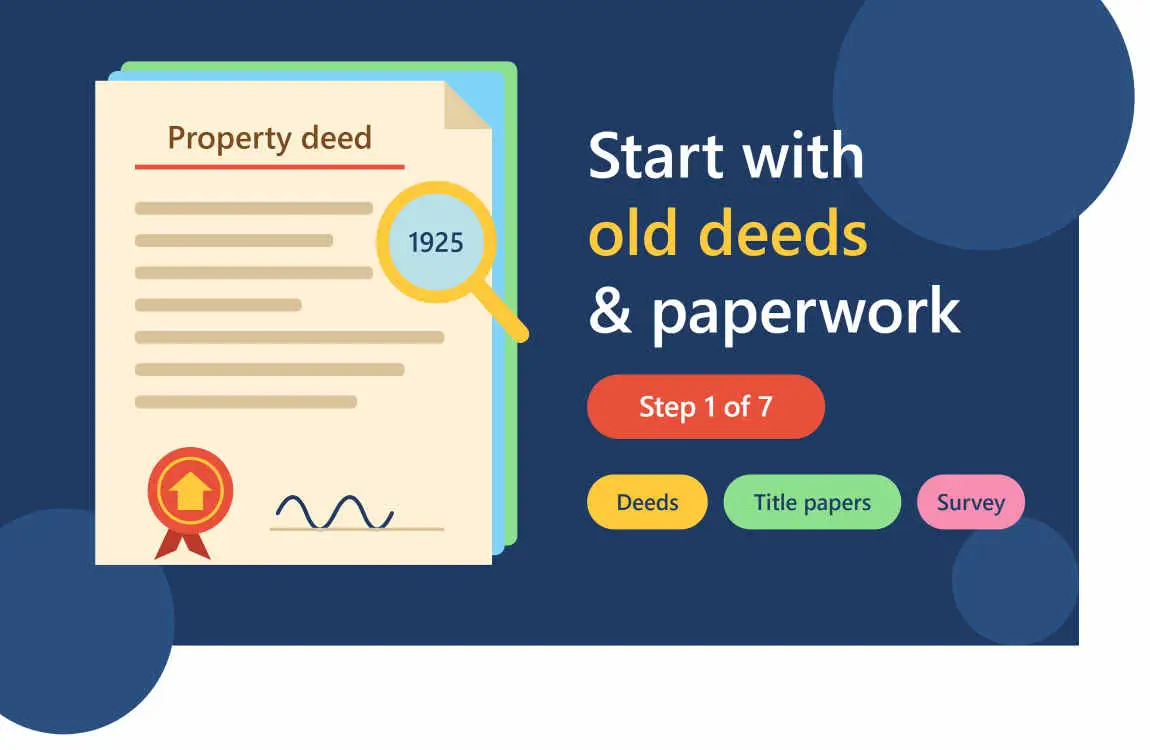
Check your title deeds and purchase paperwork
Your solicitor’s or conveyancer’s file, mortgage survey and original sale particulars often state the build date or era. In England and Wales, HM Land Registry explains that it records land ownership rather than what is built on the land, so it may only help if your home was first sold by the developer who built it. In that case the date of the first transfer gives you a strong clue.
Look your property up in official heritage lists
If your home has historic or architectural interest, it may be listed. Historic England’s house history guide points homeowners to the National Heritage List for England, where listed buildings have an entry summarising their date and notable features. Welsh homeowners can use Cadw’s database of historic assets.
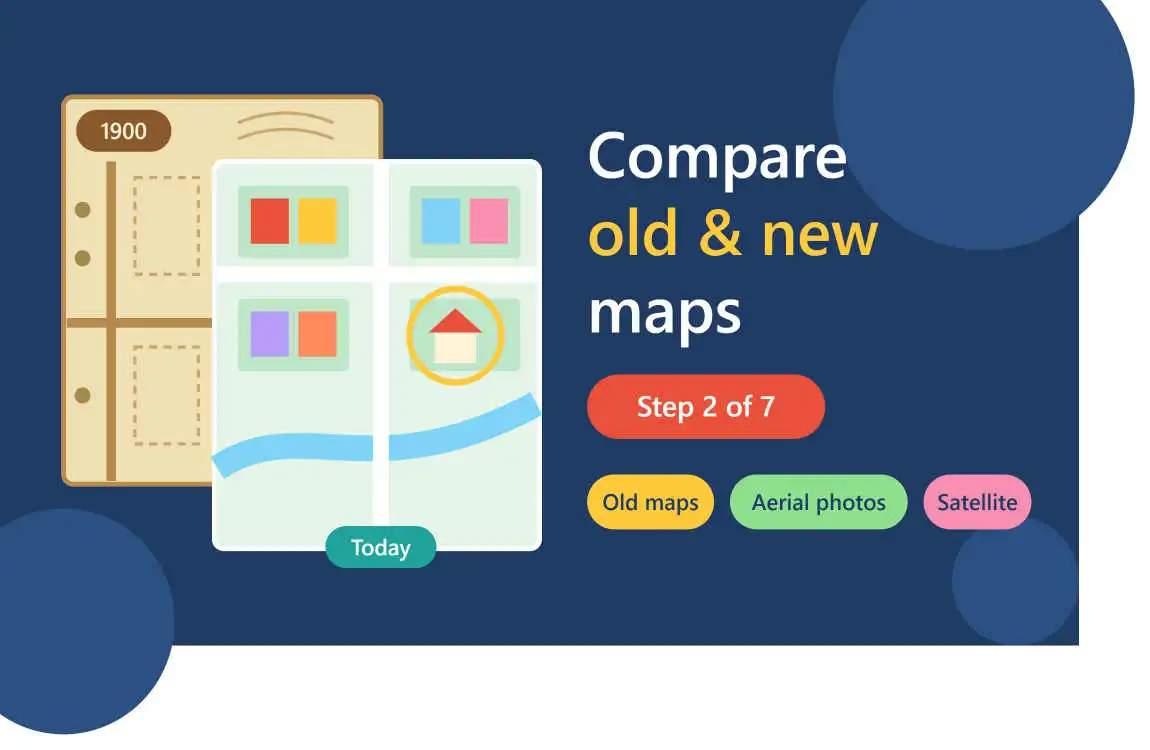
Study historic maps
Comparing maps from different years shows when a building first appears. In the UK, old Ordnance Survey and National Library of Scotland maps are widely used for this. In the United States, Sanborn Fire Insurance Maps at the Library of Congress show individual buildings, construction types and street layouts in thousands of towns and cities from the 1860s into the 20th century. If your house is missing from an earlier map and present on a later one, you have a date window.
Search census returns, electoral rolls and directories
In the UK, census returns taken every ten years from 1841 to 1911 can show the first time your address appears. Oxfordshire County Council’s house history guide notes that these records reveal who lived in a home design, including household members, their ages and occupations. In the US, county records and city directories play a similar role. Remember that street names and house numbers change over time, so cross-check with maps.
Ask your local council or county office
Planning departments and local archives may hold building control or planning records for your street. In the US, your county assessor or recorder’s office usually lists a year built and may hold older permits. Local record offices and libraries often guide you to the right collection.
Contact a local history society
Volunteer historians often know the development history of a neighbourhood, including which builder put up which street and when. Many societies keep photographs and plans that never reached official archives.
Read the clues in the building itself
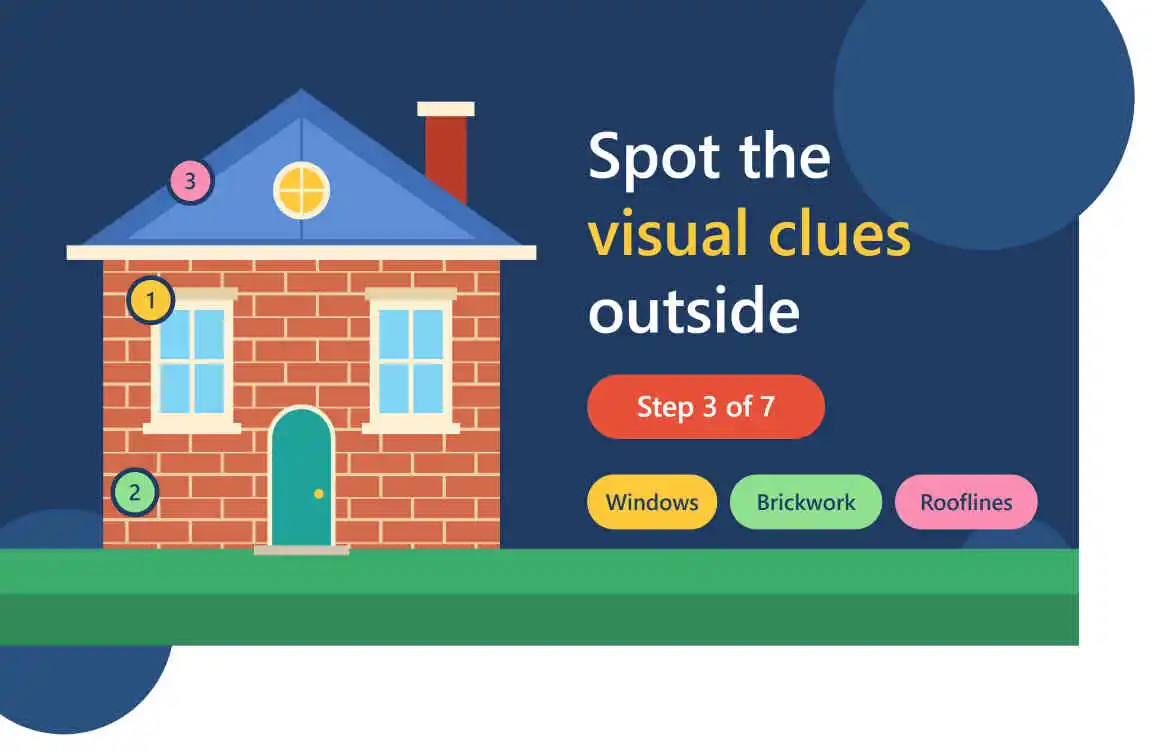
If paperwork fails, the house still tells a story. RICS highlights that understanding your home’s age helps you understand how it was built and how to repair it. Look at windows, doors, roof shape, brickwork, chimneys, fireplaces and the wall construction.
Quick guide: estimate your house’s era from its features
Use this table as a starting point only. Styles overlapped and varied by region, so always confirm with documents.
| Era (UK) | Approximate dates | Common clues |
|---|---|---|
| Georgian | 1714 to 1830 | Symmetrical front, tall sash windows, panelled doors, brick or stone |
| Victorian | 1837 to 1901 | Bay windows, decorative brickwork, terraced rows, slate roofs |
| Edwardian | 1901 to 1910 | Wider hallways, stained-glass details, larger gardens |
| Interwar | 1918 to 1939 | Semi-detached layouts, pebble-dash or render, bay windows |
| Post-war and modern | 1945 onward | Cavity walls, concrete tiles, open-plan layouts, double glazing |
What if you still cannot find the exact year?
Many homes simply do not have a precise date on record. That is normal. A reliable estimate, such as “built between 1900 and 1910”, is accepted for most practical purposes. A chartered surveyor can give a professional opinion on age and construction if you need one for insurance or a major renovation.
Step-by-step checklist
- Gather your deeds, mortgage survey and sale paperwork.
- Check whether your home is listed in an official heritage database.
- Compare old maps to see when the building first appears.
- Search census, directories and electoral records for the first mention of your address.
- Ask your local council, county office or archive about planning and permit records.
- Contact a local history house society.
- Match your home’s physical features to the era table above.

Frequently asked questions
How can I find out how old my house is for free?
Start with your own paperwork, then use free online map collections, heritage lists and your local library or archive. Most of the best resources cost nothing.
Can I find the exact year my house was built?
Sometimes. Title deeds, planning records or a first-sale record can give an exact year. Otherwise you will usually get a range based on maps, census data and architectural style.
Does the Land Registry show the age of a house?
Not directly. It records land ownership, not construction dates. It can help only if the first sale from the original builder is recorded.
What is classed as an old house?
There is no single definition. In the UK, “period” usually means Georgian, Victorian or Edwardian homes, while “historic” often refers to listed buildings. In the US, homes over 50 years old are commonly treated as historic candidates.
Does the age of my house affect insurance?
Yes. Insurers often use build year and construction type to estimate rebuild costs and risk, so give the most accurate information you can.
Final thoughts
Finding out how old your house is is a rewarding mix of detective work and paperwork. Start with your deeds, confirm with maps and records, and let the building’s own features fill any gaps. Within an afternoon, most homeowners can place their house within a decade or two.