
Maybe the kids moved out. Maybe the mortgage got heavier, or you’re just tired of an empty bedroom collecting laundry. Whatever the reason, renting a room to a lodger is one of the oldest ways to make a house work harder for you, and plenty of New Jersey homeowners do it.
But New Jersey is not a “just put up a listing” kind of state. There’s a state law aimed at rooming and boarding houses, local zoning to deal with, and a handful of landlord-tenant rules that can catch you off guard. Here’s how it all fits together.
The line that matters most: a roomer vs. a rooming house
New Jersey’s Rooming and Boarding House Act (N.J.S.A. 55:13B) is the law most homeowners never hear about until a neighbor complains. It defines a boarding house as a building with two or more units of dwelling space set up for single-room occupancy, not counting any unit the owner or operator lives in. A cozy rooming house is the same thing, just without meals or financial services.
Read that again with your own house in mind. If you live there and rent one bedroom, you’re not usually in that territory. If you rent out two, three, or four bedrooms to unrelated people who share the kitchen and bathrooms, you may be.
That matters because a rooming or boarding house needs a license from the state (or from your municipality, if it runs its own program), and the state’s licensing rules come with annual inspections. According to the statute, running one without a license can bring a civil penalty of up to $25,000 per building (that figure was raised from $5,000 in 2025), and knowingly operating without a license is a disorderly persons offense. The Act also expects the operator to live on the premises.
Check your town’s zoning and rental rules
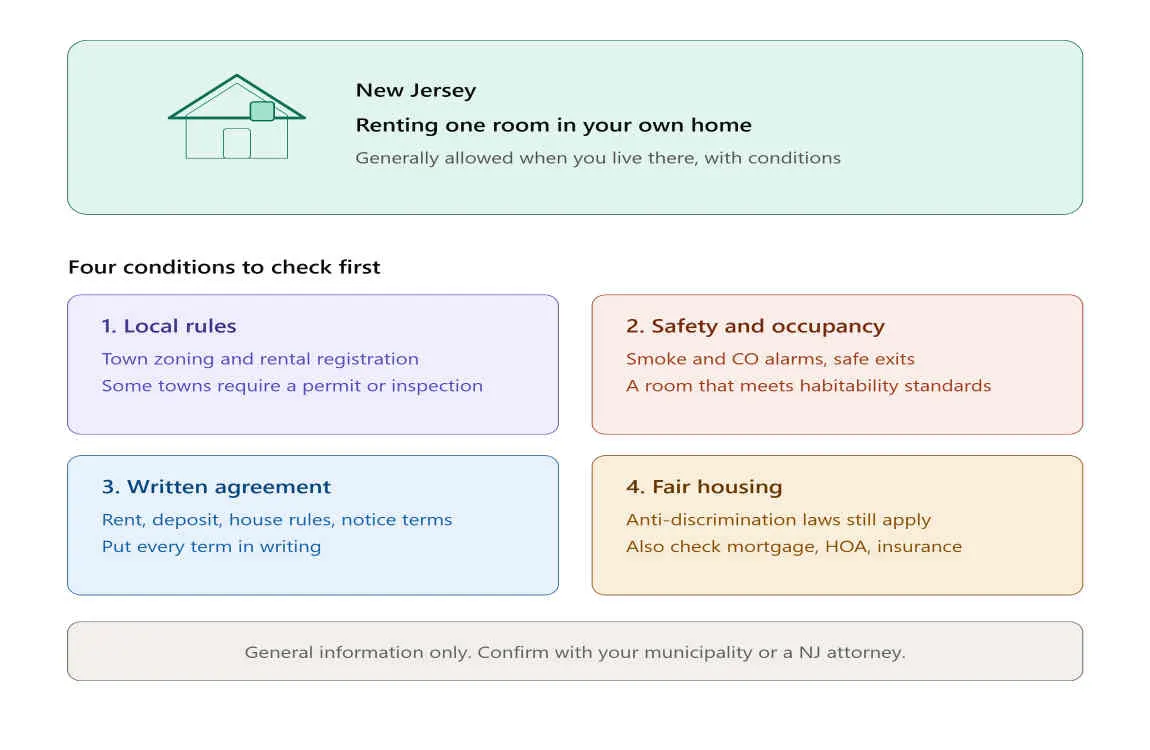
State law is only half the picture. Zoning in New Jersey is local, so each municipality decides what’s allowed in its residential zones. A town might welcome a lodger, limit the number of unrelated people living space in one house, or require a rental registration or inspection first. Some also ask landlords to carry liability insurance and to show proof when they register.
Call or email your municipal zoning officer or construction office before you advertise. Ask three things: is renting a room permitted in my zone, do I need a rental registration or certificate, and is there a cap on the number of occupants? Get the answer in writing if you can.
Put the agreement in writing
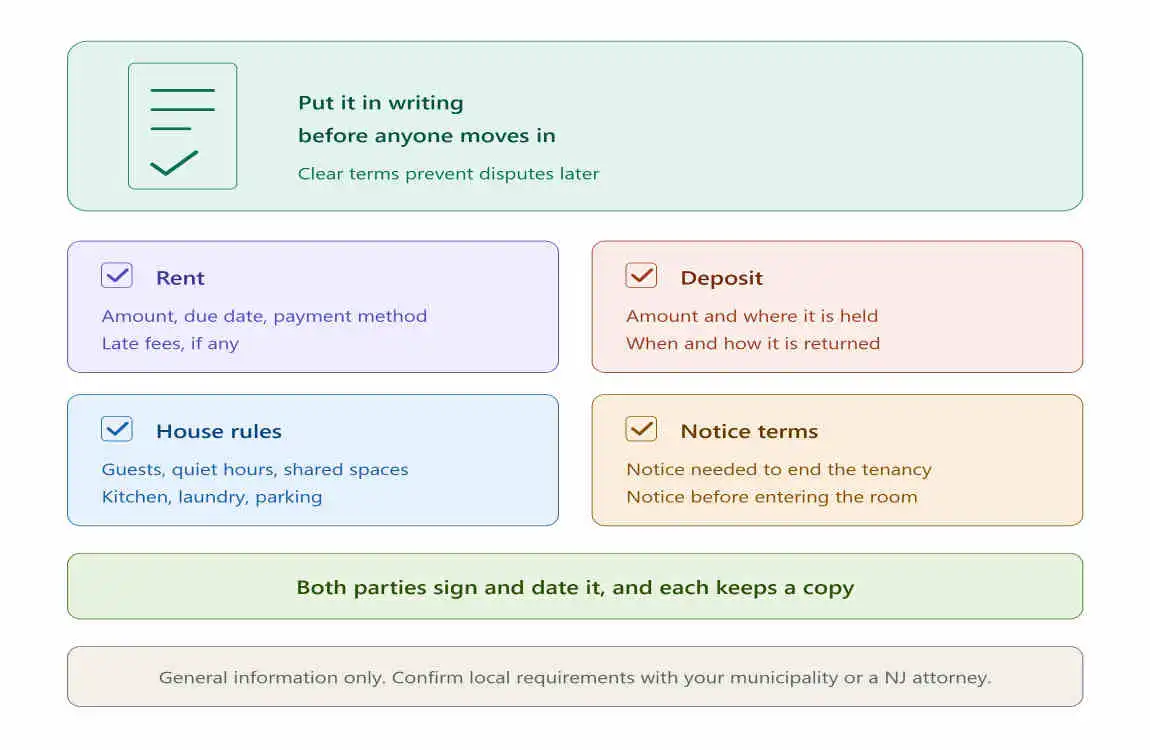
Even when the law doesn’t force you to hand over a formal lease, do it anyway. The Department of Community Affairs’ Truth in Renting guide explains that a dwelling unit can be an apartment, a house, or a room. Whether the Truth in Renting Act itself reaches a small owner-occupied home depends on how many units are in the building design, but the guide still shows what a clear lease should cover.
A good room rental agreement spells out:
- The monthly rent, due date, and any late fee
- The length of the stay (fixed term or month-to-month)
- What’s included: utilities, Wi-Fi, laundry, parking, kitchen access
- House rules on guests, quiet hours, smoking, and pets
- How much notice either side must give to end the arrangement
Security deposits
New Jersey caps a residential security deposit at one and a half months’ rent, and the money generally has to sit in an interest-bearing account, with the tenant told where it’s held. The statute (N.J.S.A. 46:8-19 and following) does have a carve-out for small owner-occupied homes, so the rules may not apply to you in the strict sense. Still, following them is a smart habit. It keeps your paperwork clean and removes any argument about where the money went. The DCA guide is a good starting point for the details.
Ending the arrangement: what an owner-occupant can and can’t do
New Jersey’s Anti-Eviction Act normally requires a landlord to prove “good cause” before removing a tenant. But it exempts owner-occupied premises with not more than two rental units. The state’s highest court looked at this exemption in McQueen v. Brown, and the courts have read it according to its plain language and history.
That doesn’t mean you can change the locks or toss belongings on the lawn. Even exempt owners are expected to go through the court’s summary dispossess process if a tenant won’t leave. Give proper written notice, keep records, and don’t take matters into your own hands.
If you ever do end up running a licensed rooming or boarding house, residents get extra protections, including the Anti-Eviction Act’s coverage and a bill of rights; Legal Services of New Jersey and the state’s Long-Term Care Ombudsman brochure explain those rights.
Smoke alarms, CO alarms, and basic safety
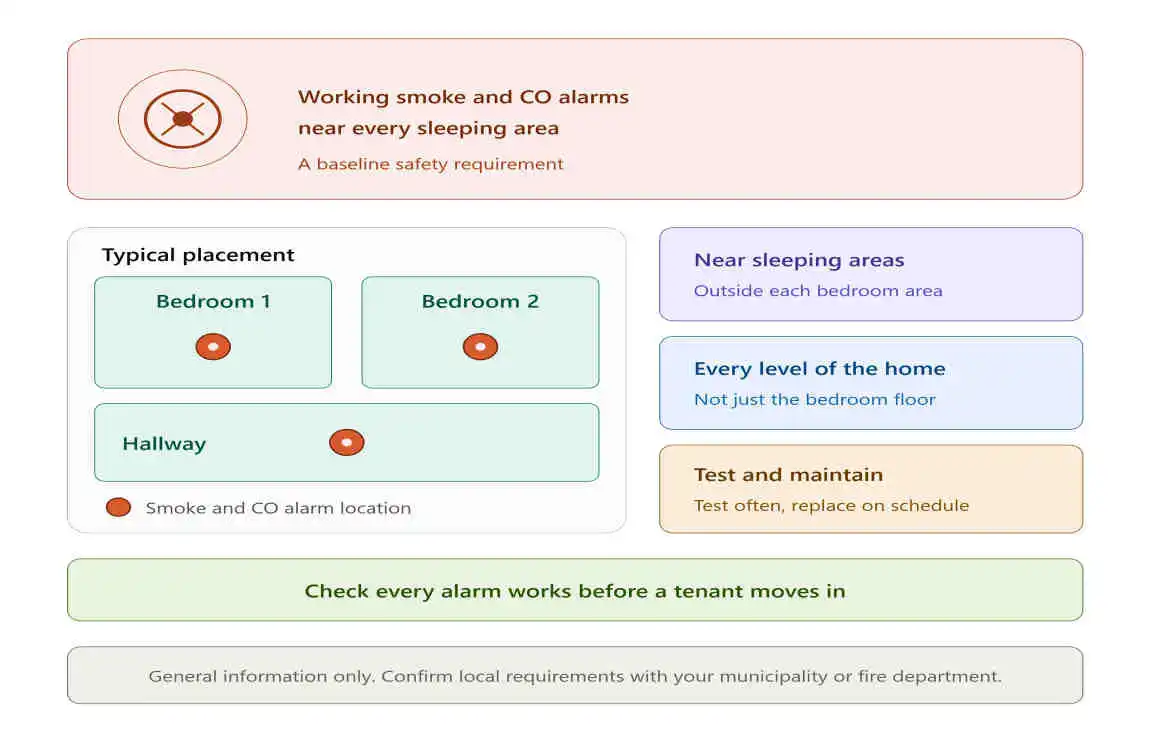
Safety rules apply to rentals of one- and two-family homes. Under N.J.A.C. 5:70-2.3, owners generally need a certificate of smoke alarm and carbon monoxide alarm compliance before a home is sold, leased, or otherwise changes occupancy for residential home use. Your local fire official issues it, and the fee and inspection process vary by town. Requirements around fire extinguishers have changed recently, so ask the fire official what your town expects today.
Fair housing still applies
Anti-discrimination law doesn’t switch off just because the room is in your home. New Jersey’s Law Against Discrimination has a limited exemption for renting a room inside your own residence, and it’s narrower than the federal one, so the safest approach is to screen every applicant the same way: same questions, same criteria, same paperwork. Base your decision on things like income, references, and rental history, and never on race, religion, national origin, family status, disability, or other protected traits. If you’re unsure, ask a New Jersey landlord-tenant attorney.
Taxes and insurance
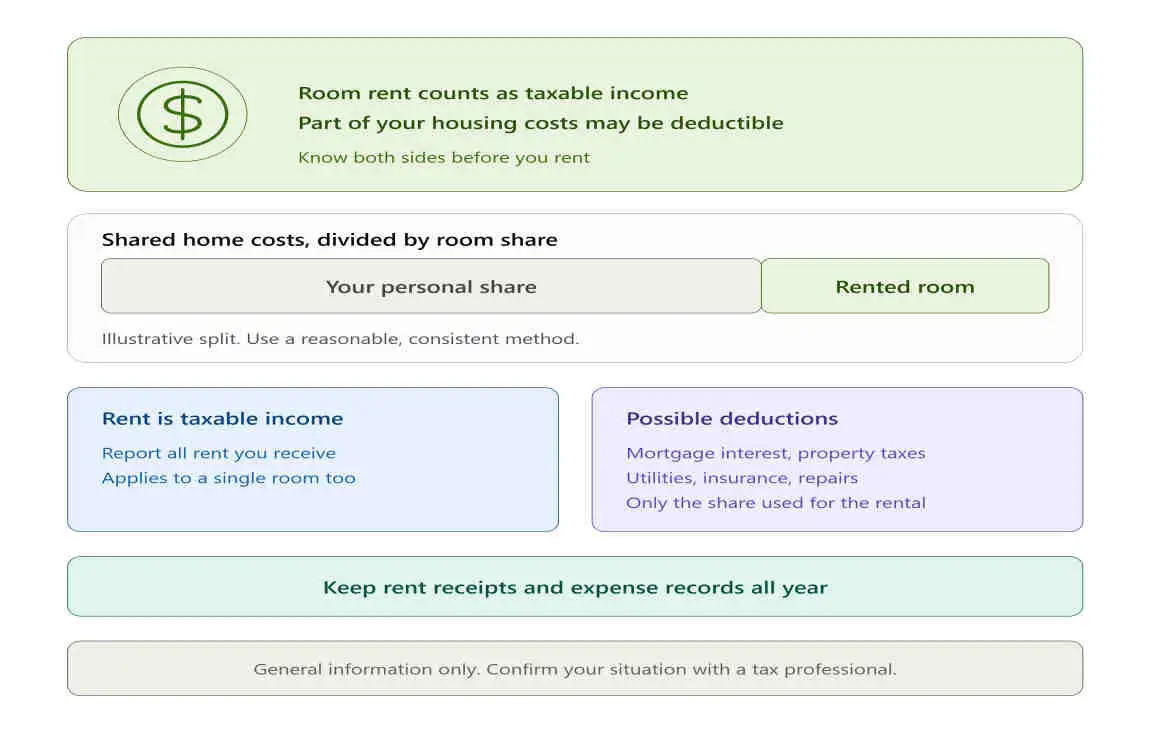
Rent from a lodger is income. The IRS says payments for renting a room are generally reported on Schedule E, and if you rent only part of your home you split expenses between the rented part and your own use. The agency’s Publication 527 walks through what counts as rental income and which expenses you can deduct, including how to handle a room in the home you live in.
Also call your homeowner’s insurer, and your mortgage lender if your loan documents say anything about occupancy. A standard policy doesn’t always cover a paying tenant’s belongings or liability the way you’d expect, and finding that out after a claim is the wrong time.
A simple checklist before you list the room
- Count how many cozy rooms you plan to rent. More than one? Talk to the state’s rooming and boarding house bureau first.
- Confirm with your town that a room rental is allowed and whether you need registration or a certificate.
- Get the smoke and carbon monoxide alarm certificate or inspection sorted out if your town requires it.
- Update your insurance and check your mortgage terms.
- Write a clear rental agreement and handle any deposit the way New Jersey’s rules describe.
- Screen every applicant consistently and keep records.
- Set aside records for tax time and report the income.
Frequently asked questions
Do I need a license to rent one room in my New Jersey home?
Usually not for a single room in a home you live in, because the state licensing law is built around buildings with two or more single-room units. Renting several rooms to separate people is where a license can become necessary. Your town may also have its own registration or zoning rules.
Can I rent a room in a house I’m renting myself?
Only if your lease allows subletting or taking a roommate. Check the lease and ask your landlord first, since renting out space without permission can put your own tenancy at risk.
How much can I charge as a security deposit?
State law generally caps residential deposits at one and a half months’ rent. Small owner-occupied homes have a carve-out from parts of the statute, but staying within the cap and handling the money properly is still the safer path.
Can I evict a roomer whenever I want?
The Anti-Eviction Act’s good-cause requirement doesn’t apply to owner-occupied premises with not more than two rental units, but you still need proper notice and, if the person won’t leave, the court process. Self-help measures like changing the locks are a bad idea.
Do I have to pay taxes on room rent?
Yes. Rent from a lodger is generally reportable rental income. The IRS’s Publication 527 explains how to allocate expenses when you rent part of the home you live in.
The bottom line
Renting a spare room in your New Jersey house is legal and common, as long as you stay on the right side of a few rules: don’t accidentally become an unlicensed rooming house, respect your town’s zoning, keep the place safe, put everything in writing, and report the income. Do those things and your spare room can earn its keep without turning into a legal headache.