Scroll through any listing site right now and a $50,000 house looks like a typo. Median prices across the US are several times that. But cheap homes haven’t vanished. They’ve just moved to places most buyers never think to look: land bank auctions, government foreclosure lists, fading Rust Belt streets, and, if you’re open to leaving the country, rural Japan and Italy.
First, a reality check on prices
Even the cheapest big markets are well above $50K. Opendoor’s 2026 ranking, which relies on National Association of Realtors data for the first quarter, puts Decatur and Peoria in Illinois, Youngstown in Ohio, Toledo, and Cumberland on the Maryland–West Virginia line among the cheapest metros, each with a median under $150,000.
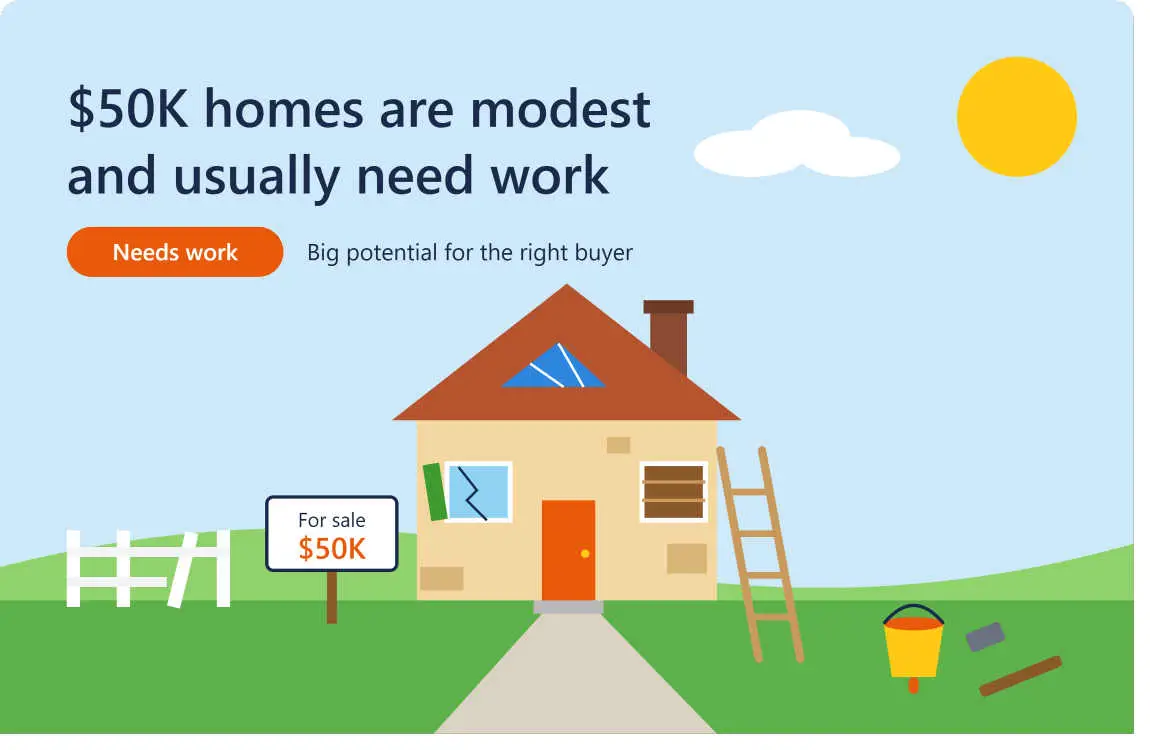
That tells you something useful. A $50K purchase isn’t a “median” home anywhere. It’s a distressed property, a very small house, a rural lot, or a home sold through a special program. Knowing that going in saves you from a lot of disappointment.
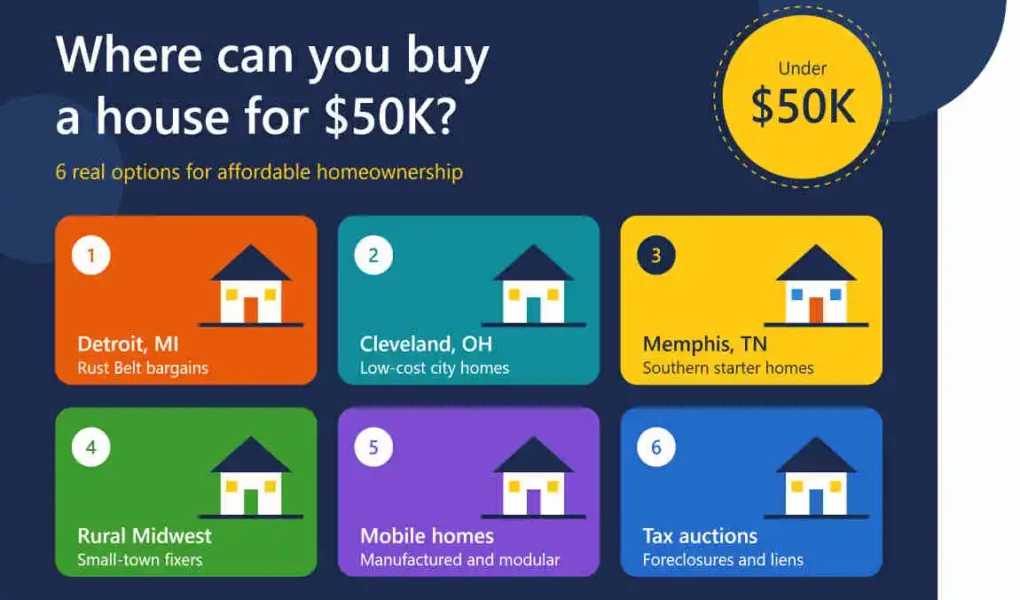
Detroit, Michigan: land bank homes from $1,000
Detroit is the classic answer to this question, and the reason is the Detroit Land Bank Authority (DLBA). Its Own It Now program lists vacant homes with a minimum offer price of $1,000.
Don’t read that as “houses for a thousand dollars” though. According to a Business Insider report on the auctions, homes start at $1,000 but the average sale lands just under $5,000, and some climb as high as $50,000. The bulk of the remaining inventory is modest single-family housing under 2,000 square feet.
The catch: the Land Bank issues a quitclaim deed, and the buyer takes on any delinquent taxes, water bills or liens attached to the property. Water service lines may also be damaged or disconnected. Budget for a serious renovation, and do not step onto a Land Bank house property without written permission; it counts as trespass.
Rust Belt cities: Cleveland, Toledo, Youngstown, Buffalo and Gary
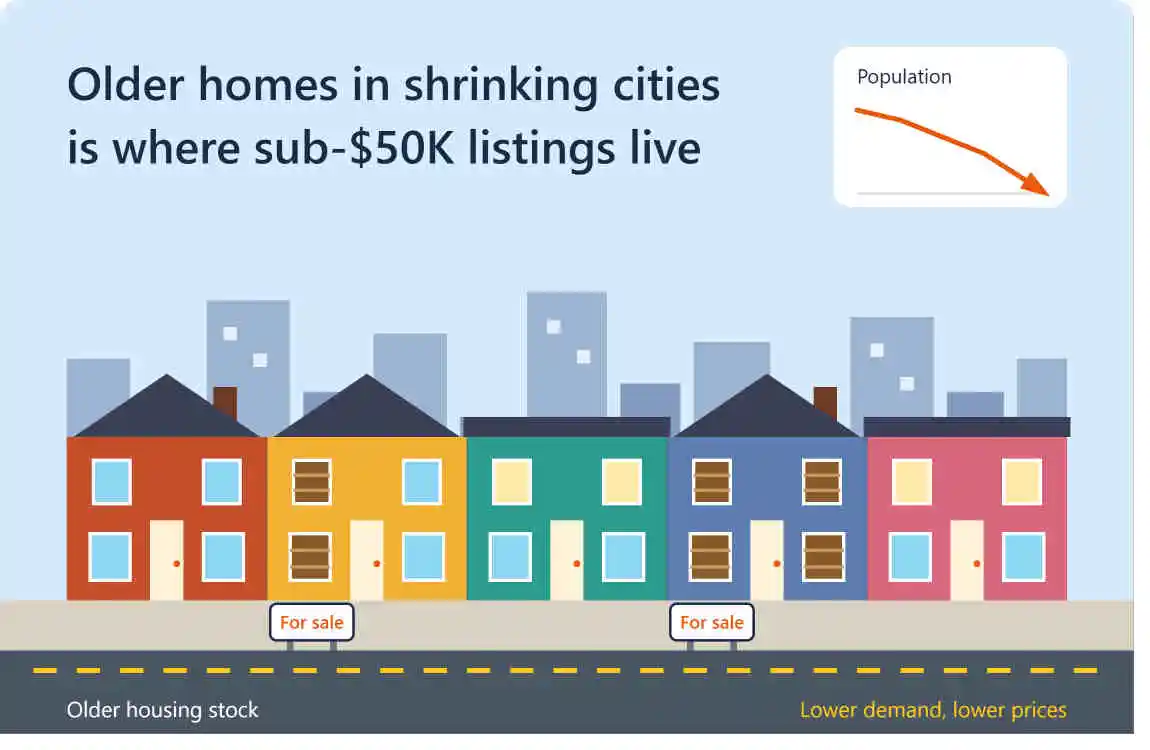
City-level roundups keep pointing to the same cluster: northern Ohio, upstate New York and northwest Indiana. These are places where the population shrank for decades, leaving plenty of older housing stock and weak competition from buyers.
Sub-$50K listings do turn up here, especially in individual neighbourhoods. The honest warning, repeated in several buyer guides, is that you have to research blight, vacancy rates and city services zip code by zip code. Two streets apart, the same price can mean a stable block or a street where half the homes are boarded up.
Practical move: pull up the listing, then look at the street on a map, check recent sales nearby, and, if you can, visit in person before making an offer.
Rural Mississippi, West Virginia and the Deep South
State rankings shift depending on who is counting. One 2026 list puts Iowa first, with a median around $228,000, according to The Close, while another puts Mississippi on top at roughly $205,000. Earlier editions crowned West Virginia. The takeaway is that all of these states sit near the bottom on price, and which one is “cheapest” changes by methodology.
For a $50K budget, state medians matter less than rural counties. Fixer-uppers in rural Mississippi counties can be found for under $50,000 on Zillow, though you need to factor in renovation honestly. Distance from hospitals, jobs and reliable internet is the real trade-off.
HUD homes: government foreclosures with owner-occupant priority
HUD homes are properties the US Department of Housing and Urban Development owns after a borrower defaulted on an FHA-insured mortgage. You search them on the official HUD Home Store, and the prices vary widely by state, so filter by price and look for the cheapest counties.
Three things make them interesting for a budget buyer:
- Owner-occupants get first shot. HUD’s platform favours buyers who plan to live in the home over cash-rich investors.
- Low down payments. Eligible owner-occupants using an FHA loan can buy marked properties through the $100 down program, which can also cover up to 3% of the price in closing costs.
- Agent required. You can’t bid directly; a HUD-registered agent has to submit the offer.
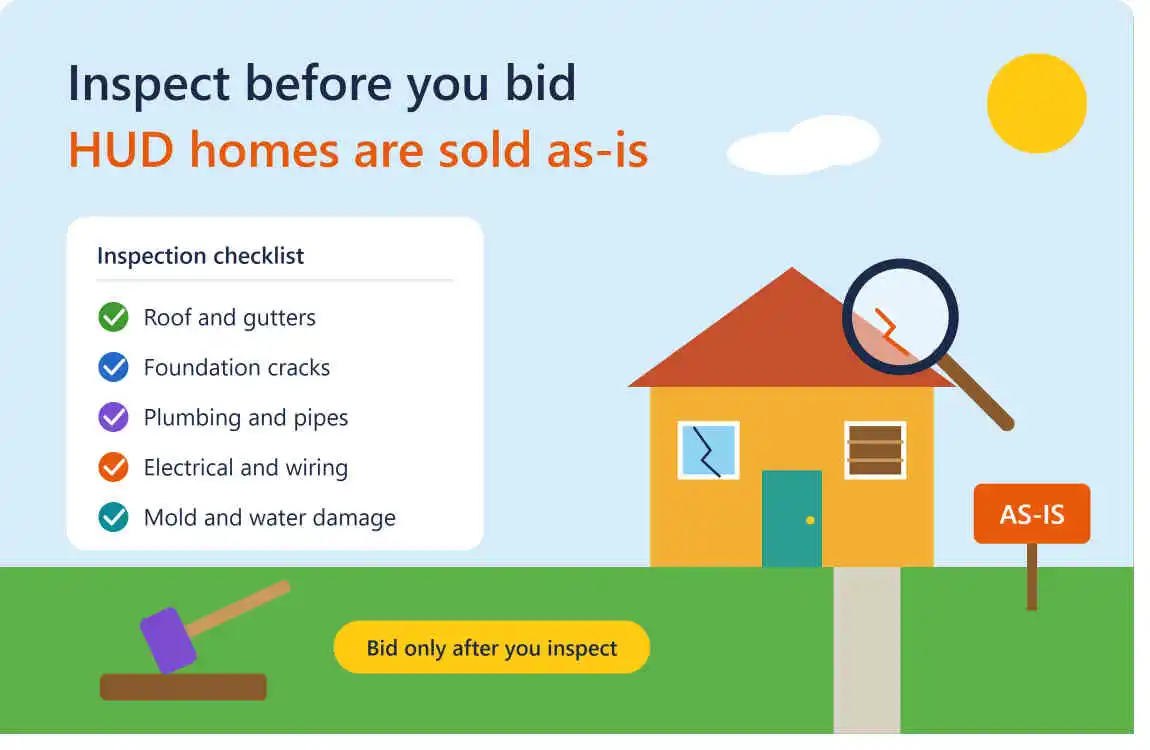
The catch: homes are sold as-is, with no warranties. Many previously foreclosed homes have major issues that need assessing before you offer. The $100 down route also requires living there as your primary luxury residence and offering the full list price.
Japan: akiya (abandoned homes) from a few thousand dollars
This is the option that keeps going viral, and it’s real. Japan has an estimated 8.5 million abandoned rural homes according to its 2018 housing survey, and foreign buyers have picked them up for as little as US$23,000. Current estimates are higher, with some sources putting vacant homes near 9 million, roughly one in seven.
Prices vary enormously. Municipal akiya banks list some houses from free up to about ¥1 million (around $7,000), usually in remote areas and needing major renovation, while habitable homes in regional towns often sit in the ¥1–5 million range. Foreigners face no legal restriction on buying.
The catch: the headline price is rarely the final one. Renovation cost, taxes, agent fees and upkeep add up, and owner-occupancy clauses on subsidised homes are easy to overlook. Remote villages can also mean long drives to shops and hospitals.
Italy: the €1 homes and the cheaper private market
Dozens of shrinking Italian villages sell houses for a symbolic €1 to attract new residents. It’s a genuine scheme, but the name is misleading. A €5,000 insurance deposit is typically needed to secure a home, and buyers then get a year to prepare for renovation and three years in total to finish it. Notary fees, taxes and renovation come on top.
Renovation is where budgets break. One 2026 breakdown puts typical costs for a 70–90 square metre townhouse at €20,000 to €60,000. Because of that, many buyers skip the €1 route entirely. Italy’s regular market also has homes priced between roughly €5,000 and €40,000, often in better condition and sometimes move-in ready.
If you’re not a resident, expect extra paperwork too: a tax code from the Italian Revenue Agency and, depending on your plans, visa questions.
The hidden costs of a $50K house
Whichever route you pick, the purchase price is only the first bill. Before you commit, add up:
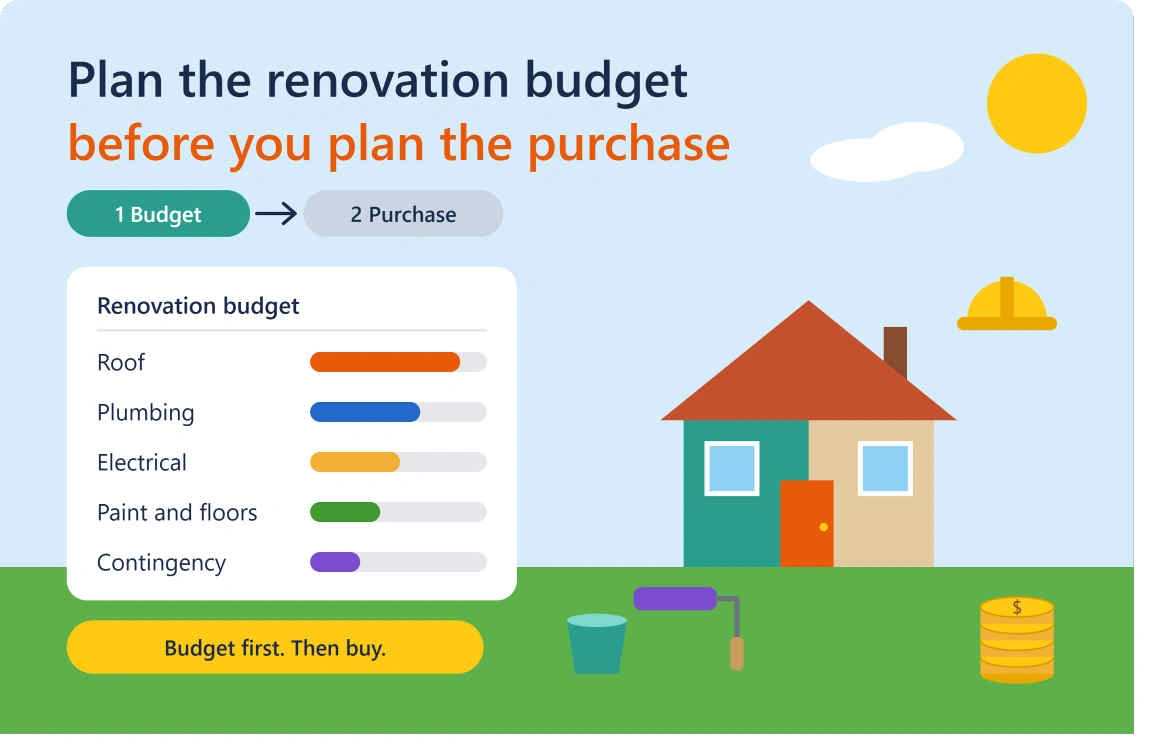
- Repairs and renovation. Roof, plumbing, electrics and heating are the big four.
- Back taxes, liens and utility debts. Especially with land bank and auction properties.
- Closing costs and legal fees. Often 2–5% of the price in the US, and higher in Italy and Japan once agents and notaries are involved.
- Insurance. Vacant or distressed homes can be hard and expensive to cover.
- Ongoing property tax and maintenance. They don’t shrink just because the house was cheap.
How to start your search
- Set a real total budget. If the house is $30K and repairs could hit $40K, you’re really shopping at $70K.
- Use filters, not hope. On Zillow or Redfin, cap the price at $50,000 and sort by newest; cheap homes sell fast.
- Check official channels. Land banks, county tax-sale pages and the HUD Home Store list properties that never reach the big portals.
- Get an inspection or a local contractor’s opinion before bidding, even on auction homes where you can only view from outside.
- Look at the neighbourhood, not just the house. Crime, vacancy, flood risk and city services matter more than a pretty kitchen.
Frequently asked questions
Can you really buy a house for $50,000 in the US?
Yes, but usually a fixer-upper, a small rural home, or a property sold through a land bank or foreclosure program. Move-in-ready homes at this price are rare in most metros.
What is the cheapest way to buy a house?
Land bank programs like Detroit’s Own It Now start at $1,000, and HUD’s $100 down program is the lowest-cash route for owner-occupants with an FHA loan. Both normally mean repairs.
Can foreigners buy houses in Japan?
Yes. There’s no general restriction on foreign buyers, though remote akiya often need heavy renovation.
Is a €1 house in Italy really €1?
No. Deposits, legal and notary fees, taxes and compulsory renovation deadlines mean the real cost is far higher.
The bottom line
A $50K house in 2026 is possible, but it rewards patience, research and a realistic repair budget. Start with the option that matches your situation: Detroit and HUD if you’re in the US and plan to live there, Rust Belt and rural Southern markets if you want a rental or long-term hold, and Japan or Italy if you’re ready for a bigger life change. Whatever you choose, inspect before you buy and count every cost, not just the price tag.