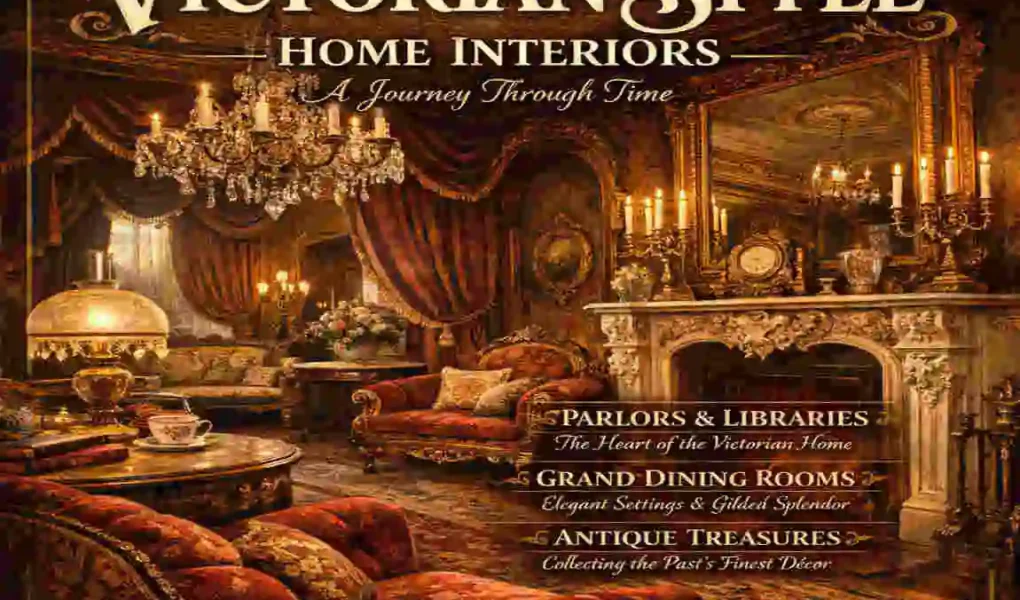
A victorian style house interior feels special because it combines history, beauty, and detail in one place. It comes from the Victorian era, which lasted from 1837 to 1901, when Queen Victoria ruled Britain. During this time, homes became more decorative, more elegant, and more expressive. People wanted their rooms to feel rich, warm, and full of character.
| Element | Description | Typical Features |
|---|---|---|
| Color & Wallpaper | Rich, saturated palettes and heavily patterned wall coverings | Deep reds, greens, browns; damask, floral, striped wallpapers |
| Furniture | Ornate, solid pieces with craftsmanship emphasis | Carved mahogany/rosewood, tufted upholstery, balloon-back chairs |
| Fabrics & Textiles | Luxurious, layered textiles for warmth and display | Velvet, brocade, heavy drapery, fringes, tassels |
| Floors & Rugs | Dark wood floors with layered rugs for comfort | Persian and Aubusson rugs, parquet or wide-plank flooring |
| Decorative Details | Abundant ornamentation and display of collections | Gilding, plasterwork, friezes, mantel displays, curios and portraits |
| Lighting | Transition from gas to electric with decorative fixtures | Chandeliers, gasoliers, shaded table lamps, layered lighting |
| Layout & Function | Formal rooms with specialized functions and defined hierarchy | Parlour, drawing room, library, morning room; separate servant areas |
That is one of the main reasons Victorian interiors still attract people today. They do not feel plain or rushed. Instead, they feel thoughtful and lived in. Every room often has carved wood, patterned wallpaper, plush fabrics, and beautiful accents that make the space feel layered and complete.
The Historical Roots of Victorian Style Interiors
Influence of Queen Victoria’s Era
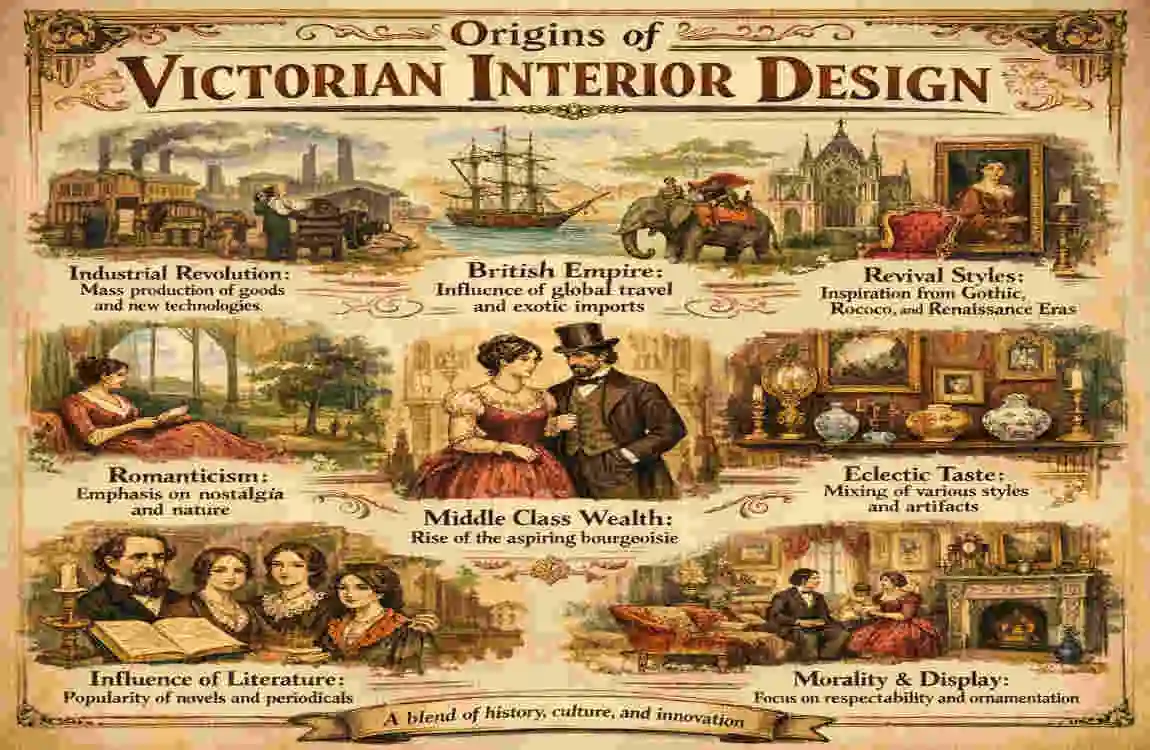
Victorian interior design grew during a time of big change. The Industrial Revolution made it easier to produce furniture, wallpaper, textiles, and decorative items. As more products became available, more homes could be decorated in rich and stylish ways.
At the same time, the decorative arts flourished. People began to enjoy rooms with layered colours, patterns, and ornate details. Homes became more than simple places to live. They became a way to show taste, education, and success.
Social Status and Home Design
During the Victorian era, a home often reflected a family’s place in society. Wealthy families used decorative interiors to show their status. Heavy drapes, polished wood, carved furniture, and detailed finishes all sent a clear message.
Even middle-class families wanted their homes to look refined. They copied the look in smaller ways, using floral wallpaper, framed art, and elegant furniture. That is why Victorian interior design spread so widely. It gave people a way to create beauty at home, no matter their background.
The result was a style that mixed luxury with comfort. That balance is still one of the main reasons classic Victorian house interiors remain admired today.
Signature Features That Define Victorian Interiors
A victorian style house interior has a clear identity. It is not random, and it does not feel bare. It uses strong colors, rich materials, and detailed finishes to create a full and elegant look.
Rich Color Palettes
Victorian rooms often use deep, dramatic colors. Think of burgundy, emerald green, deep navy, and gold accents. These shades give a room a warm, stately feel. Dark wood tones also play an important role, especially in floors, furniture, and trim.
These colors work well because they make the space feel layered and cozy. They also add a sense of depth that lighter modern spaces sometimes lack.
Ornate Architectural Details
Victorian interiors often feature beautiful architectural details. You may see crown molding, ceiling medallions, decorative trims, wainscoting, and fireplace mantels. These details make a room feel finished and special.
They also show the value placed on craftsmanship. In Victorian design, even the small parts of a room mattered. Walls, ceilings, and fireplaces were all treated as design features, not just background elements.
Patterned Wallpapers
Wallpaper was a major part of Victorian decorating. Floral prints, damask, stripes, and embossed patterns all helped create a sense of richness. These designs added movement and interest to the walls.
Instead of keeping walls plain, Victorian homes used them for decoration. That helped every room feel more complete and expressive.
Decorative Flooring
Flooring also mattered in Victorian homes. Many rooms used hardwood floors, often covered with Persian rugs for warmth and style. In some spaces, mosaic tiles added another decorative touch.
The floor was not just practical. It was part of the overall design. Rugs softened the room, added color, and tied the furniture together.
Elegant Furniture That Defined Victorian Homes
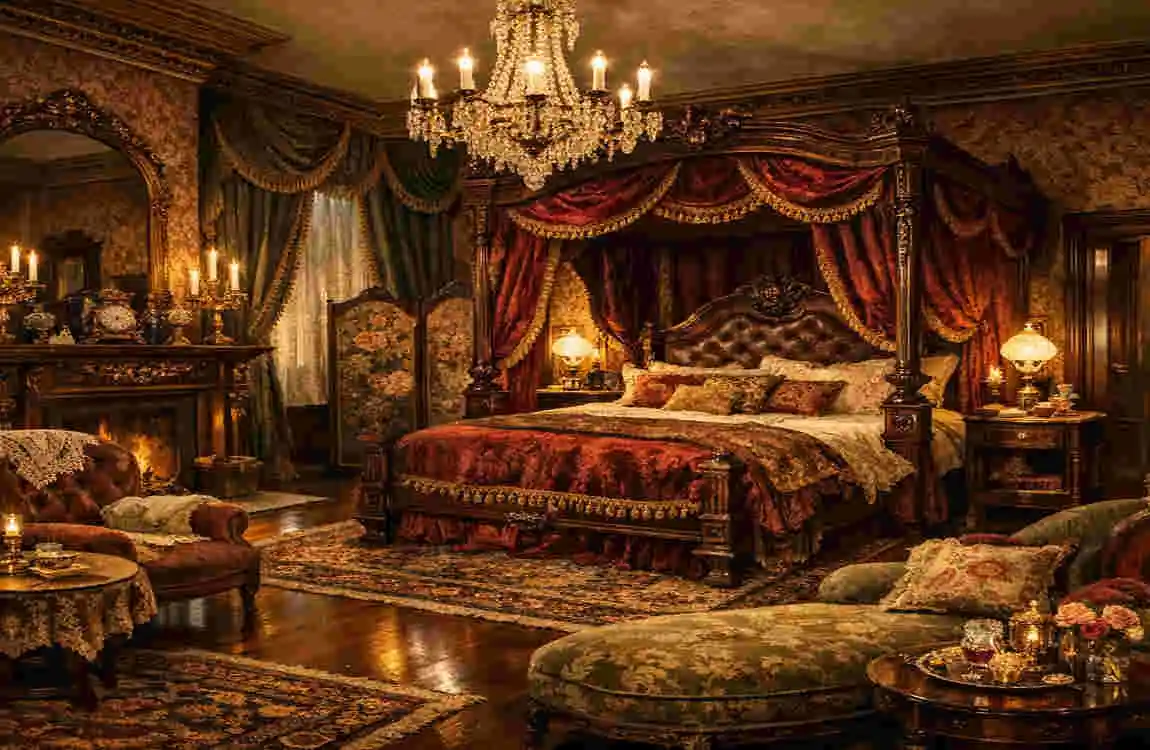
Common Victorian Furniture Pieces
Victorian furniture was designed to look impressive. Some of the most common pieces include Chesterfield sofas, tufted chairs, carved dining tables, canopy beds, and display cabinets.
These pieces often had curved lines, deep cushions, and decorative details. They were meant to stand out, not blend in. That is why they still look so distinctive today.
Materials Used
Victorian furniture often used strong, rich materials such as mahogany, walnut, and rosewood, as well as brass and velvet upholstery. These materials gave the furniture a polished and luxurious feel.
Wood played a major role. Dark wood finishes made the room feel grounded and elegant. Velvet added softness and a touch of drama. Brass brought shine and contrast.
Why Furniture Was Heavily Detailed
Victorian furniture was full of detail for three main reasons. First, it showed hand craftsmanship. Skilled makers took pride in carving and shaping each piece. Second, it served as a status symbol. Bigger, more decorative furniture often indicated greater wealth. Third, it followed the artistic tastes of the time, which favored beauty and ornamentation over simplicity.
That is why Victorian pieces often look bold and formal. They were created to make an impression and remain memorable.
How the Victorian Living Room Became the Heart of the Home
Layout and Purpose
The living room was one of the most important spaces in a Victorian home. It worked as a formal gathering area and an entertainment space. Families used it to host guests, talk, read, and spend time together.
Because of this, the room often looked elegant and carefully arranged. Seating was arranged to encourage conversation, while the décor created a polished, welcoming feel.
Décor Elements
A Victorian living room often includes chandeliers, heavy curtains, upholstered furniture, framed artwork, mirrors, and decorative clocks. These items help create a rich atmosphere.
Heavy curtains helped make the room feel private and warm. Mirrors reflected light and added a sense of space. Artwork and clocks brought personality into the room without making it feel empty.
Fireplace as a Focal Point
The fireplace often stood at the center of the living room. It was more than a source of heat. It was a design feature. Many Victorian fireplaces had marble mantels, intricate carvings, and decorative screens.
This focal point gave the room structure and a sense of balance. Even today, a fireplace can bring a strong Victorian feel into a modern living room.
Creating a Cozy Yet Grand Victorian Bedroom
Bedroom Furniture
Victorian bedrooms focused on comfort, privacy, and elegance. Common pieces included four-poster beds, vanity tables, wardrobes, and upholstered benches.
The bed was often the most dramatic item in the room. Tall posts, rich fabrics, and carved details made it feel grand. Vanity tables and wardrobes added both function and style.
Fabrics and Textiles
Textiles played a big part in the bedroom’s mood. Materials like lace, velvet, silk, and embroidered cushions added softness and texture.
These fabrics helped the room feel warm and inviting. They also added a romantic quality, often associated with the Victorian house style.
Decorative Accessories
Small accessories completed the space. Oil lamps, floral wallpaper, and antique mirrors all helped build the Victorian look.
The goal was to create a room that felt restful but still elegant. A Victorian bedroom should feel like a private retreat, not a plain sleeping space.
Traditional Spaces for Dining and Hospitality
Dining Room Features
Victorian dining rooms were made for formal meals and family gatherings. They often included large wooden tables, china cabinets, candle chandeliers, and decorative table runners.
These rooms often felt dignified and warm at the same time. The large table became the center of activity, while cabinets and lighting helped frame the room.
Victorian Kitchens
Victorian kitchens were more practical than decorative, but they still had style. Common features included cast iron stoves, open shelves, copper utensils, and wooden cabinetry.
Many kitchens were designed to support daily work while still feeling organized and sturdy. Copper and wood gave the room a classic look, even if the purpose was mostly functional.
In many homes today, this part of Victorian interior design is easy to update. You can keep the classic feel while adding modern convenience.
The Finishing Touches That Bring Victorian Charm
Lighting and accessories help a Victorian room feel complete. Without them, the space can look flat or unfinished.
Lighting
Victorian homes often used crystal chandeliers, wall sconces, and oil lamps. These lighting choices added both glow and character.
A chandelier creates a strong focal point. Wall sconces bring softness to the sides of a room. Oil lamps, whether real or decorative, add old-world charm.
Decorative Pieces
Victorian décor also relied on smaller accents. Portrait paintings, vases, brass clocks, sculptures, lace curtains, and floral arrangements all helped fill the room with personality.
These items did not just decorate the space. They told visitors something about the people who lived there. That personal touch is still part of the style’s appeal.
Why Bold and Rich Colors Were Essential
Colour is one of the most distinctive aspects of Victorian interior design. The era embraced deep, warm shades that made homes feel rich and dramatic.
Popular Victorian Shades
Some of the most common colors include ruby red, mustard yellow, forest green, plum, deep blue, and cream. These colors create a strong visual mood and work well with dark wood and brass details.
Accent Materials
Victorian rooms often used gold leaf, bronze, and dark timber as accent materials. These finishes helped the space feel luxurious without needing loud decoration.
Here is a simple look at how some Victorian colors affect a room:
Victorian ShadeBest Feeling It CreatesCommon Use
Ruby Red Warmth and drama Living rooms, dining rooms
Forest Green Depth and calm Libraries, bedrooms
Deep Blue Elegance and focus Parlors, studies
Plum Richness and romance Bedrooms, sitting rooms
Cream Balance and softness Ceilings, trims, accents
Mustard Yellow Warm vintage charm Hallways, dining areas
These colors work because they build atmosphere. They help a room feel full, historic, and inviting.
Patterns That Added Drama and Elegance
Victorian interiors loved pattern. In fact, pattern was one of the easiest ways to make a room feel luxurious.
Common Designs
Popular wall and fabric patterns included floral, botanical, brocade, damask, and geometric prints. Each one added character differently.
Floral and botanical designs brought nature indoors. Damask and brocade gave the room a formal and refined feel. Geometric prints added structure and variety.
Textiles
Victorian homes also used textured fabrics such as velvet drapes, tassels, embroidery, and fringed upholstery. These details made rooms feel rich and layered.
The key was to combine patterns with care. Victorian design was bold, but it still needed balance. Too many competing prints could make the room feel crowded.
Blending Old-World Charm with Modern Comfort
Modern homes often borrow from Victorian interior design, but they usually simplify it. This makes the style easier to live with today.
Modern Victorian Minimalism
Some people now use simpler layouts, fewer accessories, and neutral walls with vintage accents. This approach keeps the beauty of Victorian style without making the room too heavy.
You still get the charm, but the space feels lighter and easier to manage. That is a smart choice for everyday living.
Popular Modern Adaptations
Today, many homeowners mix old and new pieces. A room may include a statement chandelier, vintage furniture with modern sofas, wallpaper feature walls, and decorative fireplaces.
This blend works well because it keeps the Victorian mood while supporting modern comfort. You do not need a full period home to enjoy the style.
Why It Still Works
Victorian design still feels relevant because it offers timeless luxury, personality, and warmth. It helps a home feel lived in, not empty. It also gives you room to show your own taste.
That is why modern Victorian interior design remains popular in apartments, older homes, and even new builds.
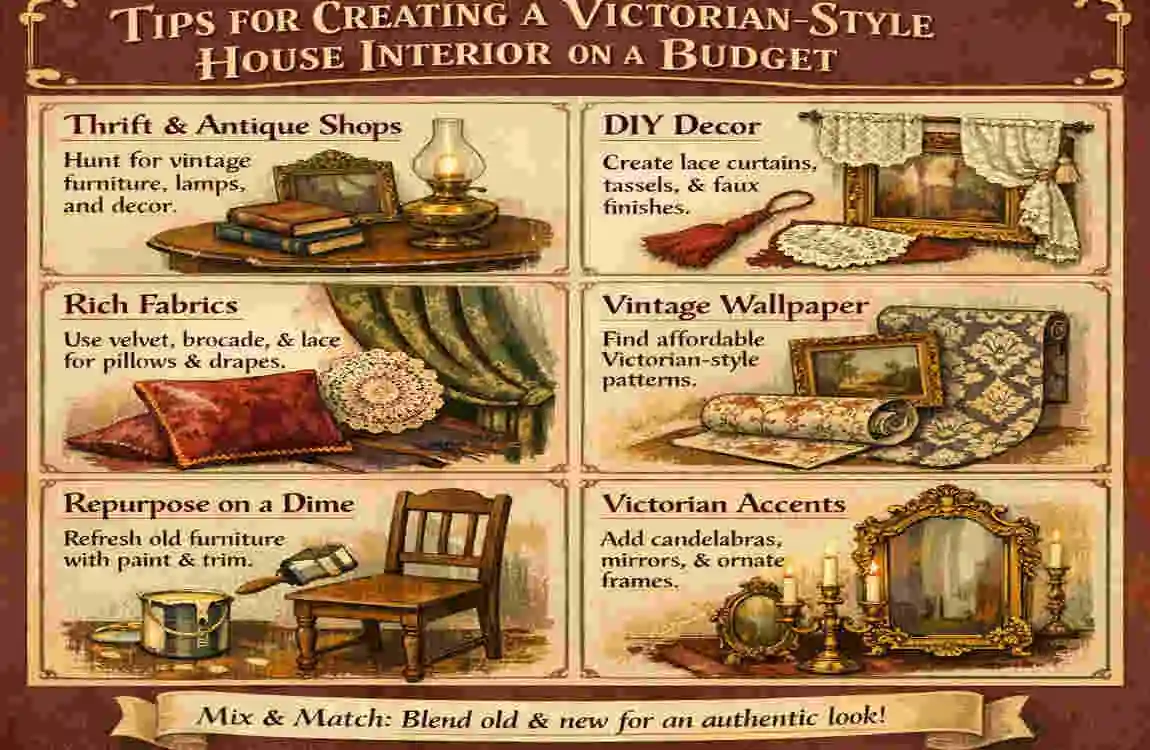
Affordable Ways to Achieve Victorian Elegance
You do not need a huge budget to create a Victorian-inspired home. A few smart choices can make a big difference.
Focus on Statement Pieces
Start with one or two strong items. Antique mirrors, tufted chairs, and vintage lamps can bring instant character to a room.
These pieces stand out and help guide the rest of the design. You do not need to fill every corner.
Use Wallpaper Strategically
Instead of covering every wall, try an accent wall with a Victorian pattern. This gives you drama without too much cost or visual weight.
Wallpaper works especially well behind a bed, a sofa, or a dining table.
Incorporate Fabrics
Soft furnishings are another budget-friendly tool. Use velvet curtains, patterned cushions, or a textured throw to create a more luxurious mood.
Small fabric changes can completely shift a room’s feeling.
Thrift Store Finds
Thrift stores and vintage shops can be gold mines. Look for wooden furniture, brass accessories, and old frames. With a little care, these pieces can fit beautifully into a Victorian-inspired space.
Here are a few smart budget ideas:
- Choose one focal point instead of decorating every surface.
- Mix real vintage items with simple modern pieces.
- Use paint or polish to refresh older furniture.
- Shop secondhand for mirrors, frames, and side tables.
- Add rich fabrics before buying expensive new furniture.
Designing Victorian Interiors Without Overdoing It
Victorian style can look beautiful, but it is easy to push it too far. A balanced room always works better than a crowded one.
Try to avoid too much clutter, because it can hide the beauty of the individual pieces. Also avoid mixing unrelated eras, since that can confuse the overall look.
You should also be careful with dark colors. They work well in Victorian design, but too much darkness can make a room feel small. Make sure to keep some light through windows, mirrors, or cream accents.
Finally, skip cheap-looking imitation décor. One well-made piece often looks better than several fake ones. Quality matters in this style.
FAQs About Victorian Style House Interior
What is a Victorian style house interior?
A Victorian-style house interior is a traditional design inspired by the 19th-century Victorian era. It often includes rich colors, detailed woodwork, patterned wallpaper, and ornate furniture.
What colors are common in Victorian interiors?
Common colors include jewel tones, dark wood shades, and warm neutrals. Popular examples are burgundy, emerald green, deep blue, plum, cream, and gold accents.
Can Victorian interiors work in modern homes?
Yes, absolutely. You can blend Victorian details with modern comfort by using balanced furniture, wallpaper, classic lighting, and a few antique-inspired pieces.
Is Victorian interior design expensive?
Not always. You can create the look on a budget by shopping secondhand, using wallpaper in small areas, and choosing a few strong statement pieces.
What furniture suits Victorian homes?
Furniture that fits this style includes tufted sofas, carved wood chairs, antique mirrors, canopy beds, and display cabinets. These pieces add the rich and formal feel that Victorian design is known for.