Have you ever walked across a black asphalt parking lot in the middle of July? You probably felt the heat radiating through the soles of your shoes. Now, compare that to walking on a light concrete sidewalk. The difference is night and day, right?
This simple observation leads many homeowners to ask a burning question when it comes time to replace their roof: “Are different-colored metal roofs hotter than asphalt shingles, and does the color actually make a difference inside my home?”
There is a common myth floating around neighborhoods and hardware stores that installing a metal roof is like putting a lid on a frying pan—that it will bake your home and turn your attic into a sauna. We are here to bust that myth wide open. The reality is actually quite the opposite.
Homeowners often ask whether different-colored metal roofs are hotter—spoiler: lighter ones aren’t. In fact, even darker metal roofs can be cooler than traditional materials if you choose the right technology.
When you understand the science of solar reflectance (how colors bounce heat away) and thermal emittance (how fast a material releases heat), you unlock the secret to a cooler home. We aren’t just talking about a degree or two; we are talking about potential cooling cost savings of 20% to 40%.
Heat Science Basics: How Your Roof Handles the Sun
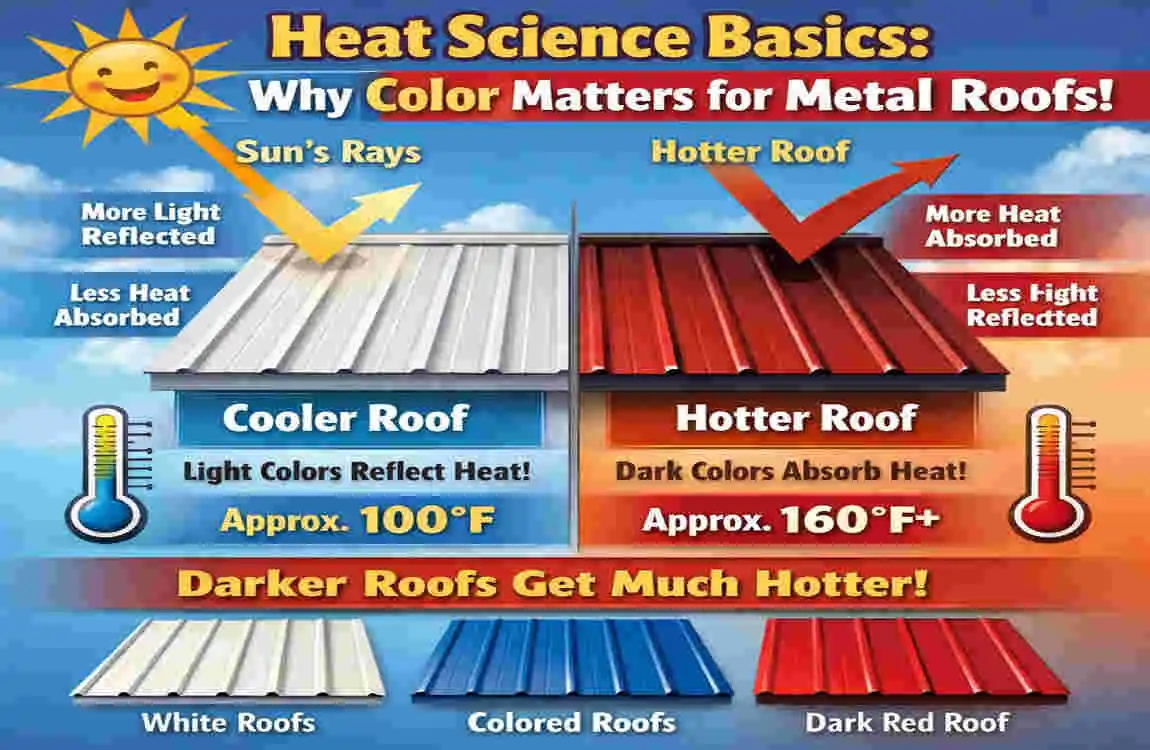
Before we start picking out colors, we need to understand a little bit about physics. Don’t worry, we aren’t going back to high school science class! We are going to keep this simple and practical.
To understand why your roof gets hot, you need to understand three main players in the heat game: Conduction, Radiation, and Convection.
The Three Types of Heat Transfer
- Radiation: This is the sunlight hitting your roof. The sun radiates energy, and your roof catches it.
- Conduction: The transfer of heat by direct contact. If the roof surface gets hot, that heat travels through the material into your attic.
- Convection: Heat moving through the air. Hot air rises, and wind carries heat away.
Here is the big difference between metal and asphalt shingles. Asphalt has a high thermal mass. Think of asphalt like a sponge for heat. It soaks it up all day long and holds onto it, continuing to radiate that heat into your house even after the sun goes down.
Metal, on the other hand, has a very low thermal mass. It acts more like a mirror. It reflects the sunlight rather than absorbing it.
The Magic of SRI (Solar Reflectance Index)
In the roofing industry, we use a metric called the Solar Reflectance Index (SRI). Think of this as a “Cool Score” for your roof.
- High SRI (70+): Excellent. It means the roof rejects most of the sun’s heat. Light-colored metal roofs usually fall here.
- Low SRI (20-30): This means the roof absorbs heat. Standard dark asphalt shingles are usually down here.
Even a standard, unpainted metal roof naturally reflects more heat than a shingled roof. But when you add color and specialized coatings, the game changes completely.
The Power of Emissivity
There is one more term you should know: Emissivity.
Reflectivity is the amount of heat that bounces back. Emissivity is the rate at which a surface emits heat.
Metal is a champion here. Metal roofs can release up to 90% of absorbed heat almost instantly. This means as soon as a cloud covers the sun or the sun sets, a metal roof cools down immediately. Asphalt shingles, however, will keep your attic hot well into the night.
Here are the key takeaways on the science:
- Metal reflects 50-70% of sunlight naturally, compared to asphalt’s measly 5-20%.
- High emissivity means metal doesn’t “hold” a grudge (or heat) against your house.
- The color you choose is the final variable that amplifies these natural benefits.
Color Impact on Heat: Does Dark vs. Light Matter?
Now, let’s answer the main question directly: Are different-colored metal roofs hotter?
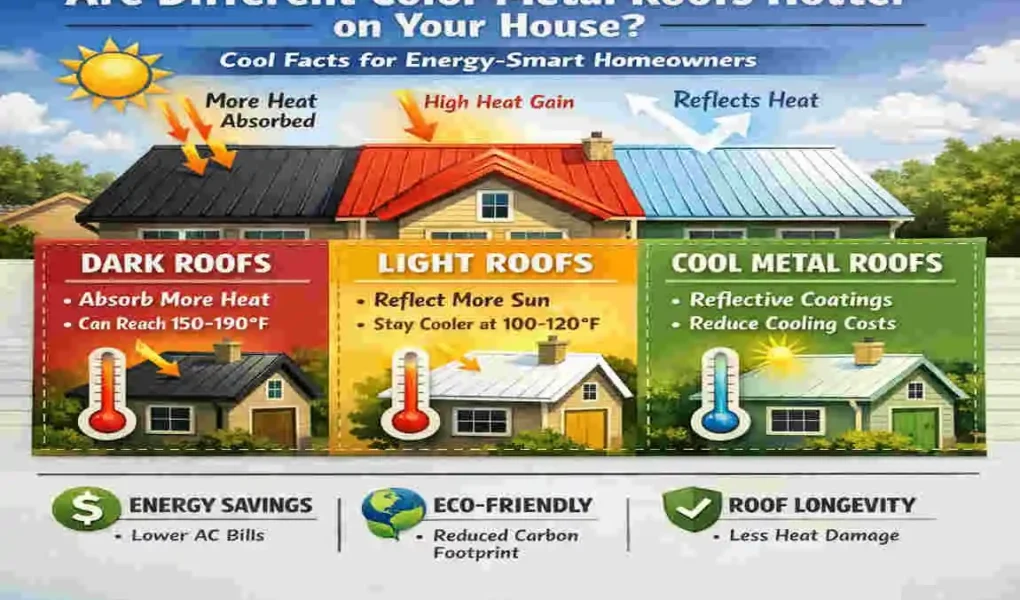
The short answer is yes. Just as wearing a black t-shirt on a sunny day makes you hotter than wearing a white one, the color of your roof dictates how much solar energy it absorbs.
However, it is not as simple as “black is bad, white is good.” Technology has blurred the lines, but the general rule of physics still applies.
The Absorption Spectrum
A dark-colored roof can absorb up to 80% or more of the solar energy that hits it. This energy converts to heat, which tries to push its way into your attic.
Conversely, a white or very light-colored metal roof reflects that energy away. In the middle of summer, the surface temperature difference between a white metal roof and a black metal roof can be as much as 50°F.
That surface temperature difference translates to your attic temperature, which eventually impacts how hard your air conditioner has to work.
Comparison Table: Color Performance
Let’s look at the numbers to see how different shades stack up against each other.
Roof Color, Solar Absorption, Estimated Attic Temp Rise, Best Climate Suitability
White / Light Gray 20-30% Minimal (+10°F) Ideal for Hot, Sunny Climates (Florida, Texas, Arizona)
Beige / Tan / Peach 40-50% Low (+20°F) Great for Moderate Climates with mixed seasons
Dark Gray / Black / Brown 70-80% Higher (+30°F) Better for Cooler Areas or snowy regions
The “Cool Roof” Pigment Revolution
Here is where things get really interesting. You might love the look of a charcoal-gray or forest-green roof, but you are worried about the heat.
Manufacturers have developed Cool Roof Pigments (often called IR-reflective pigments).
These are special chemical coatings added to the paint. They look dark to the human eye, but they are engineered to reflect the infrared spectrum of sunlight—the part that causes heat.
So, a standard black roof might reflect only 5% of the sun’s energy. But a Cool Roof-rated black metal roof can reflect 25% to 40% or more. This allows you to have the aesthetic appeal of a dark roof without the severe heat penalty.
Regional Considerations
Your location matters just as much as the color.
- Hot Summers (e.g., Lahore, Phoenix, Seville): In areas where temperatures regularly top 100°F, white or light pastel colors are the absolute best defense. Every degree you reflect is money saved.
- Mixed Climates: If you live somewhere with cold winters, a darker roof helps lower heating costs by absorbing some sunlight in winter, while still shedding heat faster than asphalt in summer.
Myths vs. Facts: Busting Common Misconceptions
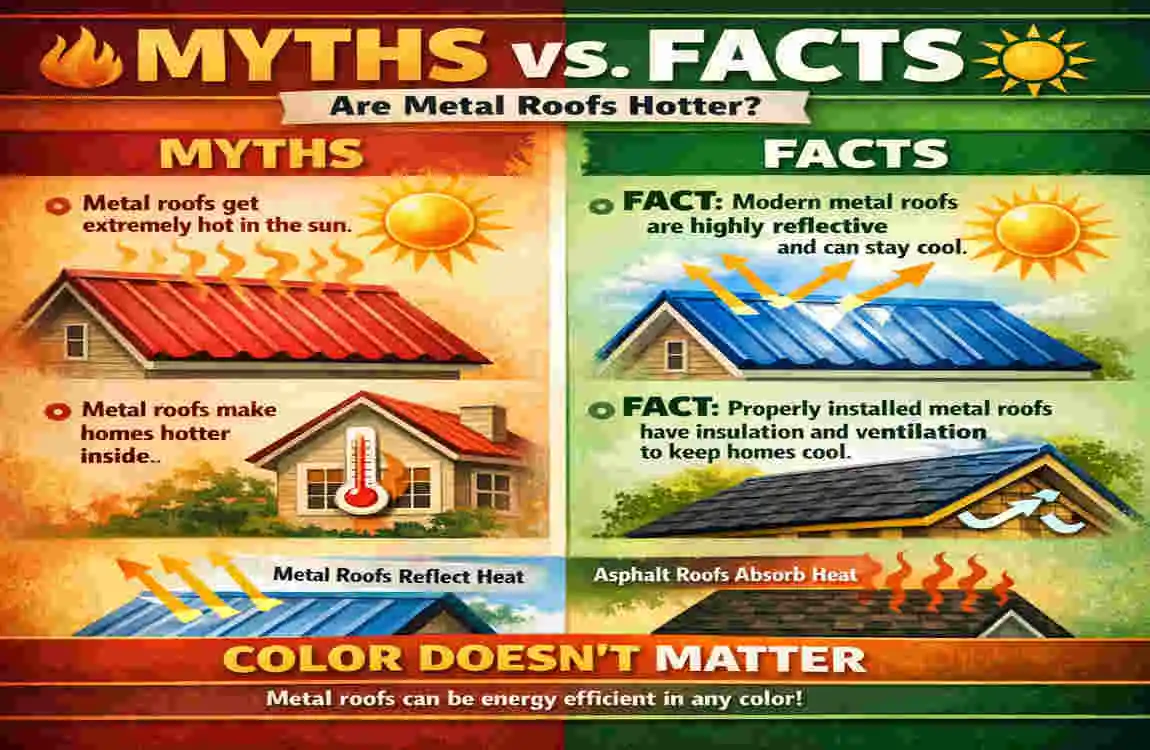
There is so much misinformation out there about metal roofing. Let’s clear the air and separate the myths from the facts so you can make a confident decision.
All metal roofs turn your house into an oven.
Fact: This is the biggest myth of all. People assume that because metal gets hot to the touch (like a car hood), it heats the inside of the car. But a house is ventilated; a car is sealed. Because metal has such low thermal mass, it doesn’t hold heat. With proper attic ventilation, a metal roof system actually keeps a home cooler than an asphalt roof because it doesn’t retain heat overnight.
You cannot use dark colors in hot climates.
Fact: While white is technically the most efficient, you are not limited to white. Thanks to the cool pigments we discussed earlier, a chocolate brown or slate gray metal roof with Energy Star-rated paint will still outperform a standard asphalt shingle roof in terms of energy efficiency. You can have style and savings.
Color doesn’t matter if the roof is in the shade.
Fact: Actually, metal wins here, too. If trees shade your house, the direct solar reflection matters less. However, the ambient air temperature remains high. This is where emissivity kicks in. Even in the shade or at night, metal sheds heat faster than other materials. Color is less critical in full shade, but metal remains the superior material choice.
Metal roofs make the house colder in winter.
Fact: This is a concern for northern homeowners. While metal reflects the sun, your home’s warmth is kept inside by your insulation, not your roofing material. A metal roof will not make your house freeze in the winter any more than a coat of paint would.
Quick Stats to Remember:
- Metal roofs can cut cooling bills by 25% on average.
- Even dark metal roofs cool down significantly faster than shingles once the sun sets.
Energy Savings Data: The Financial Impact
Let’s talk about what really matters to most of us: Money.
Installing a metal roof is an investment, but does it pay off? The data suggests a resounding yes, especially regarding cooling costs.
The ROI of “Cool”
Studies by the Cool Roof Rating Council and various energy departments have shown that choosing a lighter-colored metal roof can result in significant annual savings.
In hot climates, homeowners have reported saving between $200 and $500 per year on air conditioning costs alone. If you look at that over the roof’s lifespan, the numbers get huge.
Efficiency Boosters
It isn’t just the color that saves you money; it is how the roof functions as a system. Here is how metal maximizes efficiency:
- Radiant Barriers: Many metal roofs are installed with a radiant barrier underneath. This is a shiny foil layer that blocks 97% of radiant heat transfer.
- The Air Gap: Unlike shingles that are glued flat to the deck, metal panels often float on clips or battens. This creates an air gap. Air is a great insulator. This gap allows hot air to escape before it ever touches your attic insulation.
Long-Term Value
Let’s look at the big picture.
- Asphalt Shingle Lifespan: 15-20 years.
- Metal Roof Lifespan: 50-70 years.
Even if a metal roof costs more upfront, you would have to buy three asphalt roofs to equal the lifespan of one metal roof. When you combine that longevity with 30+ years of 20-40% energy savings, the “payback period” for a metal roof is often just 5 to 7 years in hot climates.
Case Study: The Attic Test
A homeowner in Texas conducted a test. He switched from dark gray shingles to a light blue metal roof.
- Before: On a 100°F day, his attic temperature reached 140°F.
- After: On a similar day, his attic temperature never exceeded 95°F.
- Result: His AC unit ran 30% less often, extending the life of his HVAC system.
Cool Roof Coatings: Technology Over Color
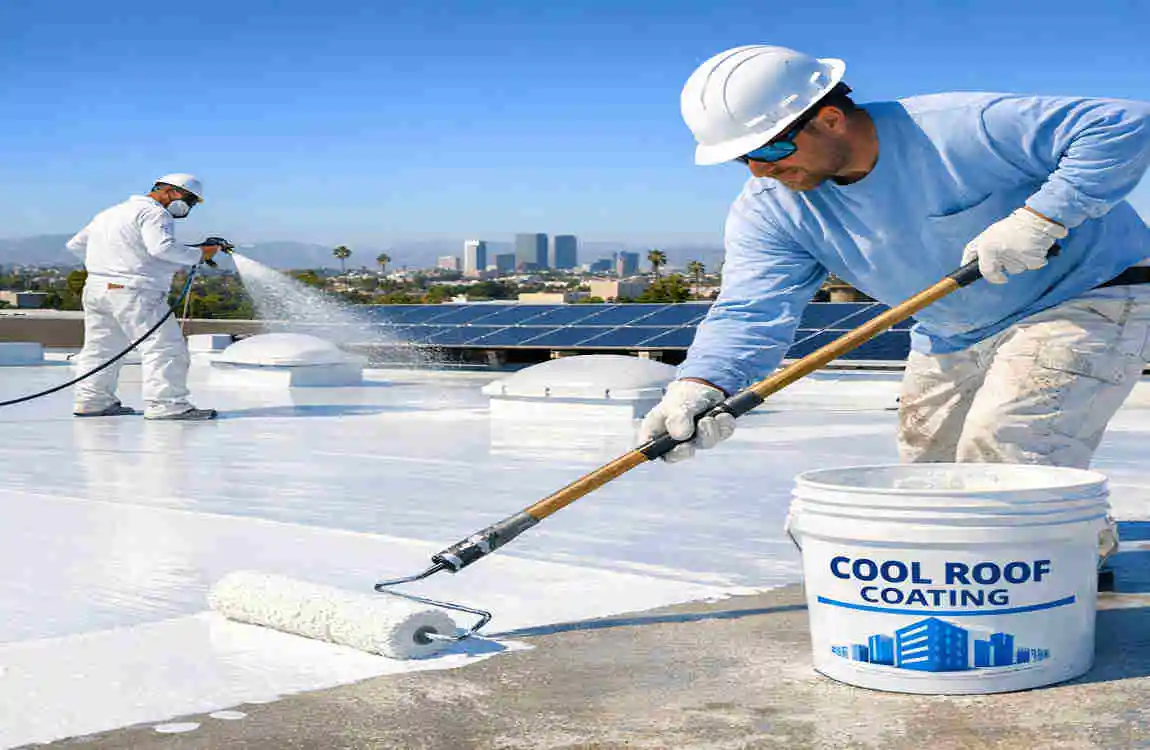
We touched on this briefly, but let’s dive deeper into Cool Roof Coatings. This is the technology that allows you to break the rules of color.
What are they?
These are high-performance finishes that often contain ceramic particles or specialized reflective pigments. They are applied to the metal during the manufacturing process (or can be painted on later for restoration).
How do they work?
Standard paint absorbs UV rays and infrared heat. Ceramic coatings act like millions of tiny mirrors. They scatter the light spectrum.
Pros of Cool Coatings:
- Higher SRI: They can boost the reflectance of dark colors by over 30%.
- UV Protection: They prevent the paint from fading or chalking, keeping your roof looking new for decades.
- Durability: They add an extra layer of protection against rust and corrosion.
Cons of Cool Coatings:
- Cost: High-performance PVDF (Kynar) coatings generally cost $1-2 more per square foot than standard polyester paints.
- Availability: You might have to special-order specific colors with these ratings.
Brands and Trends
Look for brands that carry the Energy Star label. Major paint suppliers like Sherwin-Williams (Valspar) and AkzoNobel produce these pigments.
Future Trend Alert: Scientists are currently working on nano-coatings and self-cleaning paints. These futuristic coatings will not only reflect heat but also automatically shed dirt and dust. Why does that matter? Because a dirty roof reflects less sunlight. A self-cleaning roof stays energy-efficient forever!
Installation Tips for Maximum Cooling
You can buy the most expensive, white, heat-reflective metal roof in the world, but if you install it wrong, you won’t get the benefits.
Here is a step-by-step guide to ensuring your roof is installed for maximum coolness.
Assess Your Climate
Before you buy, look at your location. If you live in a northern climate, a “cool roof” might actually slightly increase your winter heating bills. If you are in the south, go for the highest SRI you can get.
Choose the Right Panels
Aim for panels with an SRI rating of 50 or higher. Ask your contractor to see the spec sheet for the specific color you want. Don’t just guess!
The “Above Sheathing Ventilation” (ASV)
This is crucial. Ask your installer about battens or an airspace system. By raising the metal slightly off the roof deck, you allow air to flow beneath it. This convective airflow washes the heat away before it enters your home. This alone can reduce heat gain by 30%.
Ventilation is King
Your roof needs to breathe.
- Soffit Vents: Intake air at the bottom.
- Ridge Vents: Exhaust air at the top. Without a way for hot air to escape the attic, the heat will build up regardless of your roof color. Ensure your installer uses a vented ridge cap.
Budget Wisely
Expect to pay between $8 and $15 per square foot for a high-quality, installed metal roof. Warning: Be wary of significantly lower bids. They may be using cheap, standard paint that will fade and lose its reflective properties in a few years.
Homeowner Comparisons: Metal vs. The Rest
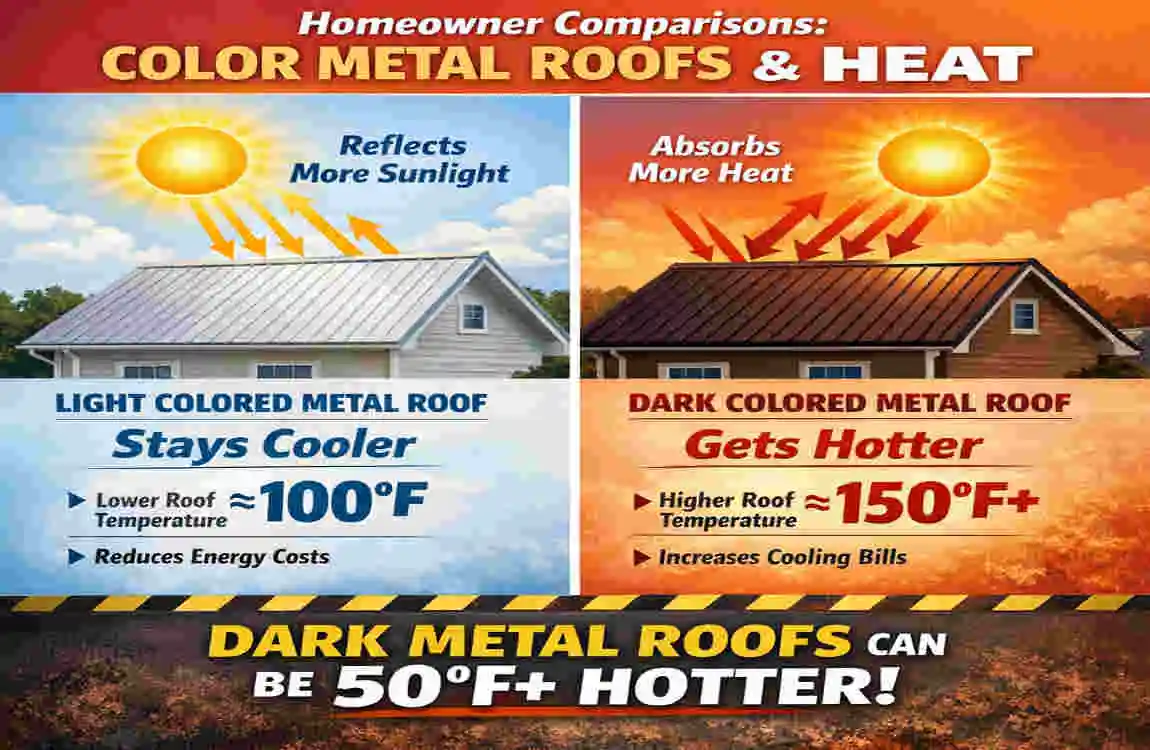
Still on the fence? Let’s compare a Light Colored Metal Roof against the two most common alternatives: Asphalt Shingles and Concrete/Clay Tiles.
FeatureMetal (Light Color)Asphalt Shingles, Concrete/Clay Tile
Heat Gain Very Low (Reflects heat) High (Absorbs heat) Medium (Thermal mass delays heat)
Energy Savings Up to 40% savings Baseline (0% savings) ~20% savings
Cooling Speed Fast (Cools at sunset) Slow (Radiates heat all night) Very Slow (Retains heat longest)
Lifespan 50+ Years 15-20 Years 40-50 Years
Maintenance Low Medium (Granule loss) Medium (Cracking)
Est. Cost $10k – $25k $6k – $12k $12k – $30k
The Verdict:
- Asphalt: Cheapest upfront, but hottest and most expensive to operate (AC costs).
- Tile: Good for airflow, but heavy and holds heat for a long time at night.
- Metal: The clear winner for energy efficiency, specifically in climates with variable weather like Pakistan, Australia, or the Southern US.
Frequently Asked Questions (FAQ)
Here are the most common questions homeowners ask about metal roof colors and heat.
Q: Are different-colored metal roofs hotter in the summer? A: Yes, darker colors naturally absorb more heat than lighter colors. However, a dark metal roof with “cool roof” pigments is still cooler than a dark asphalt roof. For the absolute coolest option, choose white or light gray.
Q: What is the best color for energy efficiency? A: White is scientifically the most energy-efficient color. It has the highest solar reflectance. Light beige, light blue, and light green are also excellent choices.
Q: Do coatings really work on dark roofs? A: Absolutely. Ceramic and IR-reflective pigments can lower the surface temperature of a dark roof by 20-30 degrees compared to standard paint. They are highly effective.
Q: Will a metal roof interfere with my Wi-Fi or cell signal? A: This is a common myth, but no. Unless you live in a bunker with no windows, a metal roof will not noticeably impact your cell service or Wi-Fi.
Q: Is a metal roof noisy when it rains? A: Not if installed correctly. With solid decking and proper insulation, a metal roof is often quieter than other roof types because it creates a sound barrier.