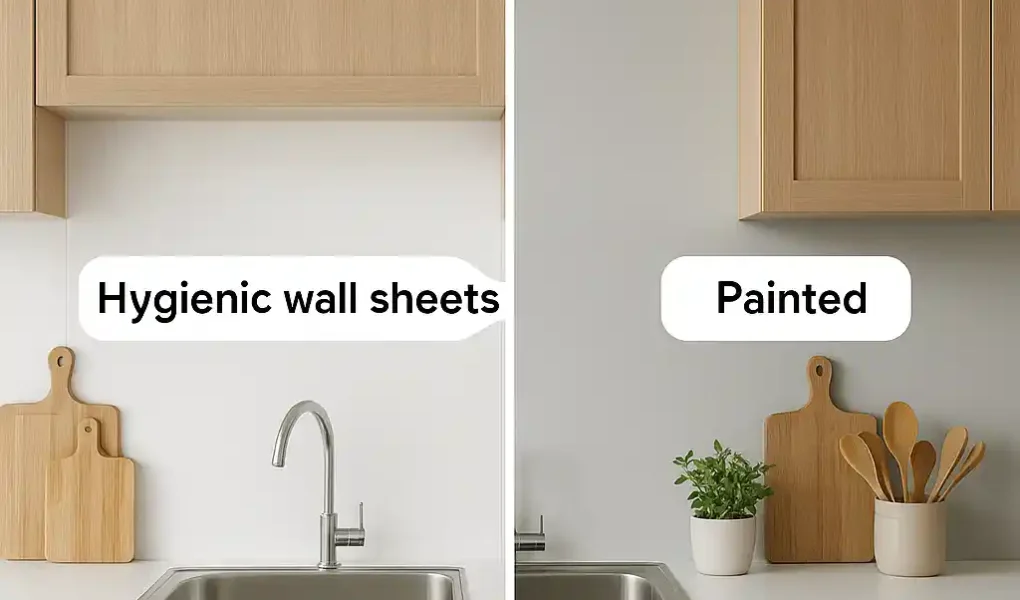
Keeping walls clean, durable, and easy to maintain is a long-term concern in many UK Home and buildings. From schools and clinics to kitchens and commercial spaces, wall finishes face daily wear that goes far beyond decoration. Choosing between hygienic wall sheets and paint isn’t only about looks. It’s about how well each option holds up over time.
If you’re weighing up the long-term performance of both, this guide breaks it down clearly. Stay until the end of our useful article to see which option suits demanding environments best.
How Each Option Handles Daily Wear
Painted walls are common because they’re familiar and easy to apply. However, in busy settings, paint often shows wear quickly. Scuffs, chips, and stains build up, especially in corridors, food areas, or rooms with frequent cleaning. Even high-quality paint tends to thin over time where surfaces are wiped often.
Hygienic wall sheets are designed for tougher use. They form a solid surface that resists knocks, splashes, and repeated cleaning. Because the sheets are fixed directly to the wall, they protect the structure underneath rather than just coating it. Over several years, this difference becomes more noticeable.
Cleaning, Hygiene, and Moisture Control
Painted walls may look smooth, but tiny pores remain on the surface. Over time, these pores may trap moisture and dirt, especially in humid conditions. In areas like kitchens or washrooms, this can lead to staining or peeling paint.
Hygienic wall sheets create a sealed surface. This limits moisture absorption and makes routine cleaning easier. In places that need frequent wipe-downs, such as food prep areas or healthcare settings, this sealed finish supports higher hygiene standards. That’s why many facilities go with options like Simply Cladding hygienic wall sheet when durability and cleanliness matter in the long term.
Maintenance and Repainting Cycles
Paint often needs regular attention. Marks don’t always wash off cleanly, so touch-ups become common. Over several years, repainting costs add up, not just in materials but also in labour and downtime.
Hygienic wall sheets need far less ongoing maintenance. Cleaning usually involves basic wipes rather than repairs. Since the surface doesn’t flake or fade easily, there’s no need for repainting cycles. This consistency helps facilities plan maintenance budgets more accurately.
Long-Term Cost Considerations
Paint usually looks cheaper at the start. The materials cost less, and installation is straightforward. However, when repainting every few years is factored in, long-term costs often rise.
Hygienic wall sheets involve a higher upfront spend, but they’re built to last. Many facilities find that fewer repairs, less downtime, and reduced cleaning effort balance out the initial cost. Over time, this often proves more economical for high-use spaces.
The Bottom Line
When comparing a hygienic wall sheet to simple paint, the difference becomes clearer with time. Paint suits low-traffic areas where appearance is the main concern. Hygienic wall sheets perform better in environments that demand durability, cleanliness, and low maintenance.
If your space faces regular cleaning, moisture, or heavy use, choosing a solution built for those conditions reduces future issues. Take time to assess how your walls are used daily before deciding. A well-chosen finish today can save ongoing effort and cost tomorrow.