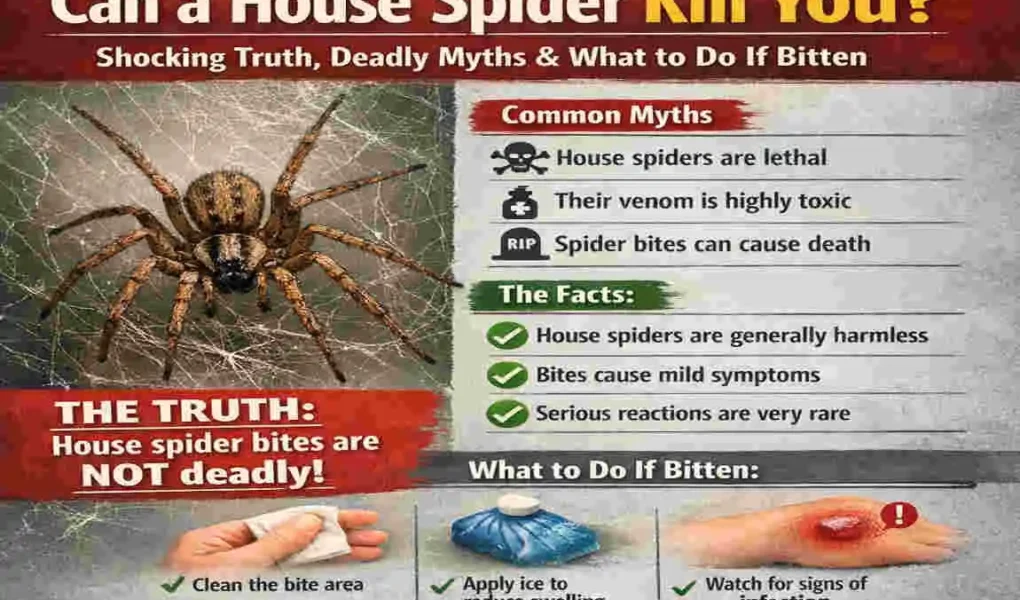
Spiders trigger anxiety in many people. Some dislike the way they move. Others worry about venom, painful bites, or worst-case stories they have heard online. And because so many spider myths get repeated again and again, it is easy to believe that the spider in your home could be a serious threat.
That does not mean spider bites never happen. They do. But when a common indoor spider bites, the result is usually minor. Most bites cause mild irritation, a small red bump, temporary itching, or slight swelling. Serious reactions are rare. Death from a true house spider bite is even rarer to the point that it is not something the average person should lose sleep over.
Still, fear sticks around because myths are powerful. People often confuse harmless house spiders with medically important spiders. Skin infections get blamed on spiders. Dramatic stories spread faster than facts. Before long, ordinary household spiders start to sound like tiny killers.
What Exactly Is a House Spider?
When people ask, can a house spider kill you, they often imagine one single kind of spider. But the truth is, “house spider” is a broad term. It usually refers to spiders that live in or around homes, garages, basements, ceilings, corners, storage areas, and quiet indoor spaces.
House spiders are arachnids, not insects. That means they have eight legs, two main body parts, and no antennae. Most of them are small to medium in size. Many spin webs, while others move around and hunt for insects on floors or walls.
The important thing to understand is this: most common house spiders are not dangerous to people. They are simply living where food and shelter are readily available.
Common Types of House Spiders
Below is a simple look at some spiders people commonly find indoors.
Type Appearance Habitat Bite Risk
Cellar Spider Very long thin legs, small body, messy webs Basements, ceilings, corners Usually causes little to no reaction
Cobweb Spider Small body, irregular tangled webs Dusty areas, storage rooms, furniture edges Rarely bites, generally harmless
Common House Spider Brownish, medium-small, web builder Window frames, corners, attics Mild irritation if it bites
Wolf Spider Hairy, fast-moving, does not rely on webs Floors, garages, near doors Bite may be painful but usually not serious
Jumping Spider Compact body, quick movement, large front eyes Walls, windows, indoor plants Usually harmless and shy
The average person uses the term “house spider” for almost any spider found indoors. That creates confusion. A harmless web-building spider in your bathroom may get grouped with more medically significant spiders, even when they are completely different.
Why Do They Invade Homes?
House spiders do not invade your home because they want to attack you. They are there for very practical reasons.
First, your home offers shelter. Indoor spaces protect spiders from wind, rain, heat, and predators. If a spider finds a quiet corner where nobody disturbs it, that spot can become a perfect hiding place.
Second, homes offer food. Spiders eat insects. If your home has flies, mosquitoes, ants, moths, or other tiny bugs, it becomes a feeding ground for them. In many cases, spiders are actually helping reduce other pest populations without you noticing.
Third, spiders like still, undisturbed places. Basements, garages, ceiling corners, under furniture, behind storage boxes, and cluttered rooms all create ideal spider habitat.
Are House Spiders Aggressive?
This is one of the biggest misunderstandings.
Most house spiders are not aggressive toward humans. They do not hunt people. They do not chase people. They do not want to bite you for no reason.
A spider usually bites only when it feels trapped, pressed against the skin, or threatened. For example, a bite may happen if you accidentally put your hand into a hidden web, wear clothing with a spider inside, or roll onto one in bed. Even then, bites are uncommon.
So, if you are asking, “Do house spiders kill humans?” the better question might be: how often do house spiders even bite humans? And the answer is, not very often.
House Spiders Are More Afraid of You Than You Think
This may sound like a cliché, but it is true. A spider’s first instinct is usually to hide or escape, not attack. You are much larger, louder, and more dangerous from the spider’s point of view.
That does not mean you have to love spiders. But it does help to understand them. Once you know what a real house spider is and how it behaves, the fear becomes easier to manage.
And that leads us to the most important question of all.
Can a House Spider Kill You? The Facts
Let’s answer this clearly.
Can a house spider kill you?
For the vast majority of common indoor spiders, no.
That is the honest answer.
A typical house spider does not have venom that is powerful enough, or delivered in enough quantity, to kill a healthy human. Even when a bite happens, the effects are usually mild and short-lived. In many cases, people do not even realize a spider bit them.
This is where fear and fact often split apart.
People hear the word “venom” and instantly assume “deadly.” But venom exists on a spectrum. Many creatures have venom or defensive chemicals that sound scary but cause only limited effects in humans. With common house spiders, that usually means a small red mark, itching, temporary pain, or minor swelling.
Why Common House Spiders Are Usually Not Dangerous
The reason most house spiders are low risk comes down to a few key points.
First, many common house spiders have venom designed for tiny prey, not large mammals. Their venom helps them catch insects, not overpower humans.
Second, even if they can bite, their fangs are often too small or weak to cause much damage to human skin.
Third, they generally inject very small amounts of venom. That amount is usually enough to affect a fly or moth, but not enough to create serious harm in a person.
So if you have been asking, can a house spider kill you, remember this: the spider in your living room is far more effective against insects than against people.
How Often Are House Spider Bites Serious?
In real life, serious medical problems from common house spider bites are uncommon. Most people recover with simple home care. The symptoms fade in a few hours to a few days. Some bites leave only a tiny irritated spot.
A bite becomes more concerning when:
- The spider was not a typical house spider
- The person has an allergic reaction
- The wound becomes infected
- The person is very young, elderly, or medically fragile
- The bite causes severe symptoms that do not match a normal mild reaction
This matters because many people assume every suspicious bump is a dangerous spider bite. That is not true. Skin infections, allergic rashes, ingrown hairs, and insect bites often get mistaken for spider bites.
The Real Danger: Misidentification
One major reason this topic stays confusing is that people use the phrase “house spider” too loosely. A medically important spider may occasionally be found in or near a house, but that does not mean every spider in a house is dangerous.
This is how myths grow.
Someone sees a spider indoors, gets a skin sore, and concludes that all indoor spiders are deadly. In reality, the spider may not have caused the sore at all. Or the person may have seen one species but blamed another.
This is why questions like ‘House spider bite deadly?’ and ‘Do house spiders kill humans?’ keep showing up. People often react to uncertainty, not to actual danger.
Rare Exceptions Worldwide
Now let’s be balanced.
A small number of spiders worldwide can cause serious medical issues. Two names often come up in these discussions:
- Black widow
- Brown recluse
These spiders are not the same thing as the ordinary harmless web spider in your ceiling corner.
A black widow is known for its stronger venom, which can cause muscle pain, cramping, and other symptoms. A brown recluse can cause tissue damage in some cases. But these spiders are often misidentified, and many regions do not even have them as people assume.
That is why it is so important not to lump all spiders together.
If someone says a “house spider” is deadly, they may actually be talking about a different species entirely. The label becomes the problem.
Regional Reality: Most Indoor Spiders Are Harmless
In many parts of the world, including urban homes across South Asia, Europe, and North America, the spiders most often found indoors are the ordinary, harmless varieties that prefer quiet corners and insect prey.
So if you are in a city apartment, family house, or office building and wondering, can a house spider kill you, the odds are strongly in your favor. The spider is likely one of the many low-risk species that want nothing more than a dark corner and a few bugs to eat.
What You Should Actually Worry About
Instead of worrying that every house spider is deadly, focus on these more realistic concerns:
- Panic and stress
- Misidentifying a bite
- Ignoring signs of infection
- Using bad home remedies
- Leaving clutter and cracks that invite pests
These are the problems that matter more in daily life than the idea that a common house spider will kill you.
The Bottom Line
Let’s say it as plainly as possible:
Can a house spider kill you?
In nearly all ordinary household situations, no.
A typical house spider bite is not deadly. It may be annoying. It may be itchy. It may even hurt for a short time. But for most people, it is not a life-threatening event.
The greater danger is fear, confusion, and misinformation.
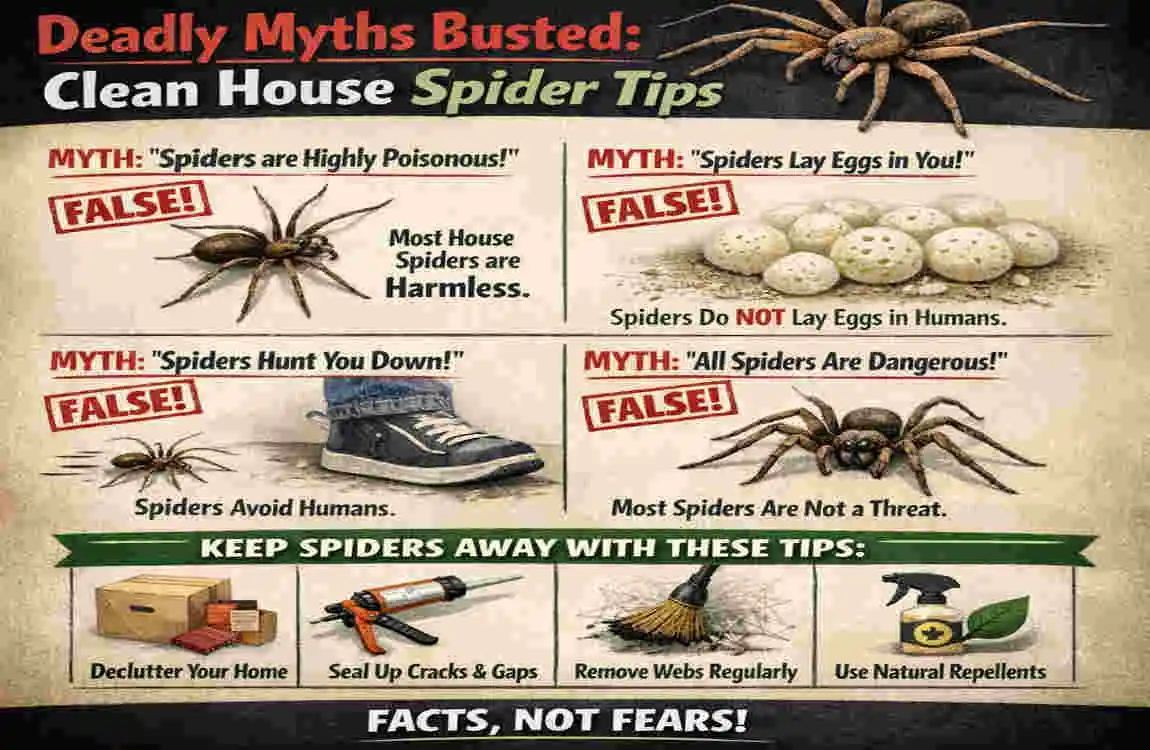
Top 5 Myths About House Spiders Killing Humans
Spider myths spread fast because they are emotional. A scary story is easier to remember than a calm medical explanation. But if you want to stay safe, you need facts, not fear.
Here are the most common myths people believe.
Myth: All spiders are deadly assassins
This is probably the biggest myth of all.
The truth is that most spiders are harmless to humans. Yes, spiders use venom to catch prey. But that does not mean they pose danger to people. Most species are too weak, too shy, or too small to cause more than a minor local reaction.
If you keep asking, can a house spider kill you, it helps to remember that ordinary house spiders are not built to take down humans. They are built to catch insects.
Myth: A house spider bite causes flesh to rot
This belief often comes from confusion with more medically significant species, especially stories involving brown recluse spiders. People hear about skin damage and assume every spider bite causes the same thing.
In reality, common house spiders do not usually cause tissue death or major skin damage. If a wound is getting worse, spreading, turning dark, draining pus, or becoming severely painful, you should think beyond “normal spider bite” and get medical advice.
A worsening skin lesion may be infection, not spider venom.
Myth: One bite means you need to rush to the hospital
Most of the time, that is not necessary.
A typical house spider bite leads to mild redness, itching, or temporary discomfort. Basic first aid is often enough. You should monitor the area, but panic is not helpful.
Of course, there are exceptions. If you have trouble breathing, severe pain, vomiting, widespread swelling, fever, or signs of a serious allergic response, then yes, you should seek urgent care. But those cases are not the normal outcome of a common house spider bite.
Myth: Spiders chase and attack humans
They do not.
Spiders do not stalk people around the room looking for a chance to bite. What often feels like “chasing” is simply a spider moving in a direction that happens to be near you. Some fast spiders can be startling, but speed is not aggression.
Most spiders want to escape, not fight. A bite is usually defensive. If a spider is pressed against your skin or trapped in clothing, it may bite because it thinks it is in danger.
Myth: Spiders lay eggs in human skin after a bite
This urban legend has frightened people for years, and it is simply false.
Spiders do not use human skin as a nursery. They do not inject eggs through bites. If you hear this claim online, treat it as fiction.
Why Myths Spread So Easily
Spider myths survive because they combine three powerful things:
- Fear
- Mystery
- Bad identification
Many people never see the spider that supposedly bit them. Others assume any red bump came from a spider. Social media then turns one unclear story into a dramatic warning.
The result is that harmless spiders get blamed for medical issues they did not cause.
That is why questions like ‘House spider bite deadly?’ and ‘Do house spiders kill humans?’ keep coming back. The myth sounds believable until you compare it with how common house spiders actually behave.
The Smarter Way to Think About Spiders
A better approach is simple:
- Do not assume every bite is from a spider
- Do not assume every spider is dangerous
- Do not rely on viral stories for medical advice
- Watch symptoms carefully
- Seek help if the reaction seems severe or unusual
Once you do that, most of the fear around house spiders starts to shrink.
House Spider Bite Symptoms: What to Expect
If a house spider bites you, what will it actually feel like?
In most cases, the symptoms are mild. Some people feel the bite right away. Others notice the area later because it starts itching or turns red. A small number of people may not notice much at all.
Here is a simple symptom timeline.
Time After Bite Common Symptoms Severity Level
Immediate Tiny red bump, mild pain, itch, slight burning Mild
1–24 Hours Minor swelling, tenderness, more itching, localized discomfort Mild to moderate
24–48 Hours Symptoms begin settling, redness fades, irritation lessens Low
48+ Hours Area continues healing; serious complications remain uncommon Low
What a Normal House Spider Bite Looks Like
A normal house spider bite often appears as a small, irritated spot. It may resemble a mosquito bite, mild rash, or tiny pimple. You may notice:
- Redness
- Itching
- Mild swelling
- Soreness
- A small raised bump
These symptoms usually stay limited to the area of the bite. They should not rapidly spread throughout the body or worsen dramatically.
What It Feels Like
Most people describe a common spider bite as:
- Slightly painful
- Itchy
- Annoying
- Tender when touched
That is why many people ask, house spider bite deadly, when what they are actually dealing with is irritation, not danger.
When Symptoms Can Be More Noticeable
Even a harmless bite can feel more intense if:
- The bite is on sensitive skin
- You scratch it repeatedly
- Your skin reacts strongly to bites in general
- You are anxious and checking it constantly
- The bite gets dirty and irritated
Children and people with very sensitive skin may show more visible redness or swelling than others. That still does not automatically mean the bite is dangerous.
When Is It Serious?
This is the part you should pay attention to.
A bite may need medical review if you notice:
Severe allergic symptoms
These include:
- Trouble breathing
- Wheezing
- Swelling of the face, lips, or throat
- Dizziness
- Fainting
This is an emergency.
Signs of infection
These include:
- Increasing redness that spreads
- Warm skin around the bite
- Pus or drainage
- Fever
- Worsening pain after the first day or two
This does not necessarily mean the spider was dangerous. It may mean bacteria entered the skin.
Severe or unusual body-wide symptoms
Such as:
- Muscle cramps
- Strong nausea
- Severe sweating
- Intense pain
- Large blistering
- Confusion
These symptoms are not typical of a common house spider bite. If they occur, seek medical advice.
Extra Caution for Children, Older Adults, and Vulnerable People
If the person bitten is a small child, an older adult, or someone with a weakened immune system, it is wise to monitor the bite more closely. Their bodies may react differently, and even mild issues can escalate more quickly.
Not Every “Spider Bite” Is a Spider Bite
This is worth repeating.
Many skin problems are blamed on spiders when the cause is something else, such as:
- Mosquitoes
- Fleas
- Bed bugs
- Ant bites
- Skin infection
- Allergic rash
- Ingrown hair
- Contact dermatitis
So if you did not actually see the spider bite you, be careful with assumptions.
The Main Takeaway on Symptoms
If you are wondering whether a house spider can kill you, the symptoms give a strong clue. A typical house spider bite causes localized, mild, short-term irritation. It does not usually lead to life-threatening illness.
That means the right response is calm observation, proper cleaning, and medical help only when symptoms look unusual, severe, or clearly worsening.
Step-by-Step: House Spider Bite First Aid
If you think a house spider has bitten you, take a breath. Do not panic. In most cases, simple first aid is all you need.
Here is a clear step-by-step plan.
Wash the area with soap and water
Start by gently cleaning the bite site. This helps remove dirt, bacteria, and anything on the skin that could increase irritation.
Use:
- Mild soap
- Clean running water
- A soft towel to pat dry
Do not scrub aggressively. You want to clean the area, not make it more inflamed.
Apply a cold pack or ice
A cold compress can reduce swelling, numb discomfort, and calm itching.
Wrap ice in a cloth or use a cold pack. Apply it for 10 to 15 minutes at a time. Then give your skin a break before repeating.
Do not put ice directly on bare skin for too long.
Elevate the area if possible
If the bite is on your hand, arm, foot, or leg, raising it slightly may help reduce swelling. This is a simple step, but it can make the area feel better more quickly.
Use basic pain or itch relief if needed
If the bite feels sore or itchy, you may consider:
- An over-the-counter pain reliever
- An anti-itch cream
- A mild antihistamine if itching is bothersome
Always use medications as directed and be mindful of allergies or existing health conditions.
Avoid scratching
This sounds easy, but it matters.
Scratching can:
- Break the skin
- Increase irritation
- Introduce bacteria
- Make a mild bite look worse than it really is
If itching is your biggest problem, focus on cooling the area and using appropriate anti-itch treatment.
Monitor the bite for 24 to 48 hours
Watch for changes.
A normal house spider bite should slowly improve, not get worse. Mild redness and itching are common. But if swelling increases significantly, pain worsens, or the area starts showing signs of infection, it is time to talk to a doctor.
Seek medical care if symptoms become serious
Get medical advice right away if you notice:
- Trouble breathing
- Severe swelling
- Fever
- Vomiting
- Increasing redness
- Pus
- Severe muscle pain
- Spreading rash
- Symptoms that feel intense or unusual
Again, this does not automatically mean the bite came from a dangerous spider. It simply means the reaction deserves proper attention.
Home Remedies vs. Myths
People often turn to home remedies first, and some simple ones can help. Others can make things worse.
Reasonable home care
These may provide comfort:
- Cool compress
- Gentle washing
- Rest
- Aloe vera for soothing the skin
- Basic over-the-counter itch relief
Remedies to avoid
Do not do these:
- Do not cut the bite
- Do not try to suck out venom
- Do not use a tourniquet
- Do not apply harsh chemicals
- Do not burn the area
- Do not cover it with dirty bandages
These old myths create more harm than help.
If you have been wondering whether a house spider bite in a deadly situation requires extreme treatment, the answer is usually no. Most bites need basic care, not dramatic action.
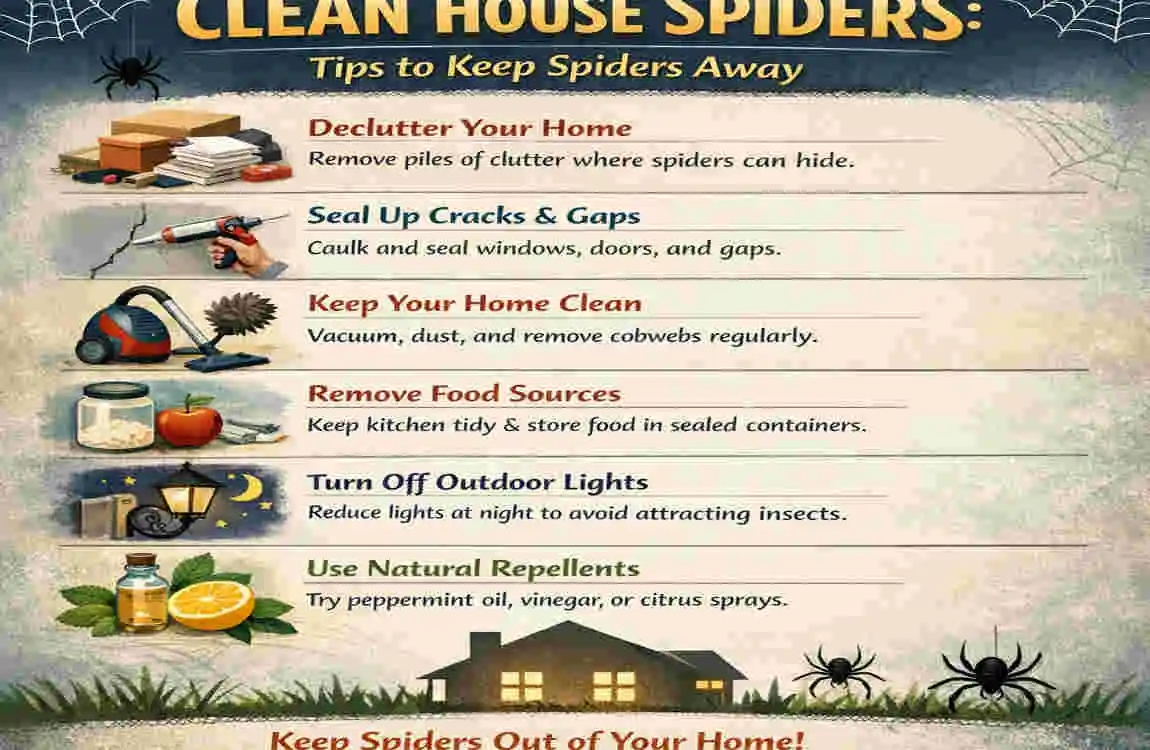
Prevention Tips for Your Home
If you want fewer spider encounters, prevention matters more than fear.
Here are practical steps you can take:
- Seal cracks and gaps around doors, windows, and walls
- Reduce clutter in garages, basements, and storage rooms
- Vacuum corners and webs regularly
- Fix moisture problems because damp areas attract insects and spiders
- Store items in closed containers instead of loose cardboard piles
- Shake out shoes, blankets, and clothing if they have been left undisturbed
- Keep outdoor lights managed since lights attract insects, and insects attract spiders
Why Prevention Works
Remember, spiders come inside for shelter and food. If you reduce insect populations, moisture, and hiding places, your home becomes less attractive to them.
Prevention also gives peace of mind. And that matters, especially if you are someone who freezes every time you see a spider.
When to Call Professionals
If you are seeing large numbers of spiders, repeated webs, or signs of a wider pest issue, it may be time for professional help.
Can a House Spider Kill You? FAQs
Can a house spider kill you?
In almost all everyday cases, no. Common house spiders are not considered a deadly threat to humans. Most bites cause only mild irritation.
Is a house spider bite deadly?
A house spider bite deadly outcome is extremely unlikely. Most true house spider bites cause redness, itching, or slight swelling that resolves with simple care.
Do house spiders kill humans?
No, ordinary house spiders do not kill humans. This fear usually comes from myths, misidentification, or confusion with less common medically important spiders.
Do house spiders bite sleeping people?
It is possible, but uncommon. Spiders do not usually seek out sleeping humans. A bite is more likely if the spider becomes trapped against the skin.
How do I know if a spider is dangerous?
Look for unusual markings, body shape, and region-specific species information. If you did not clearly identify the spider, focus more on your symptoms than on guessing.
Do I need antivenom for a house spider bite?
No. Common house spider bites do not require antivenom. Basic first aid and symptom monitoring are usually enough.