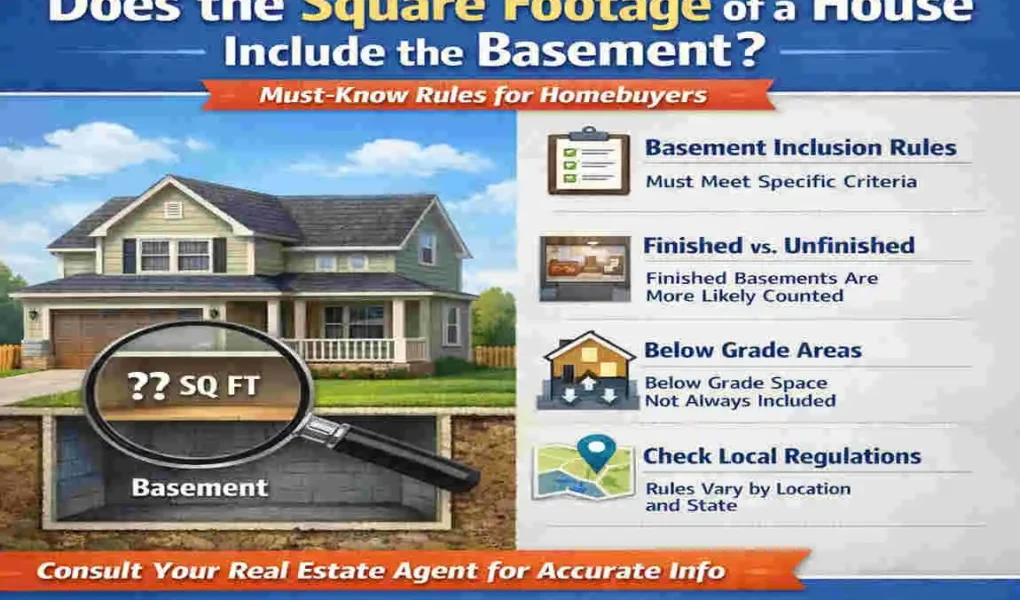
You have been searching for your dream home for months. You finally find a beautiful property that ticks all your boxes. The listing proudly advertises a spacious 3,000 square feet of living space. You make an offer, it gets accepted, and you are thrilled. But then, on closing day, the official appraisal report comes back with a shocking number. The appraiser says your new home only has 2,000 square feet of “livable” space.
What Is Square Footage in Real Estate?
Before we dive into the specifics of basements, we need to clearly define what square footage actually means in the real estate industry. When you see a number on a listing, you probably assume it represents every single inch of floor space inside the house. However, professionals use a much stricter definition.
Defining Livable Space
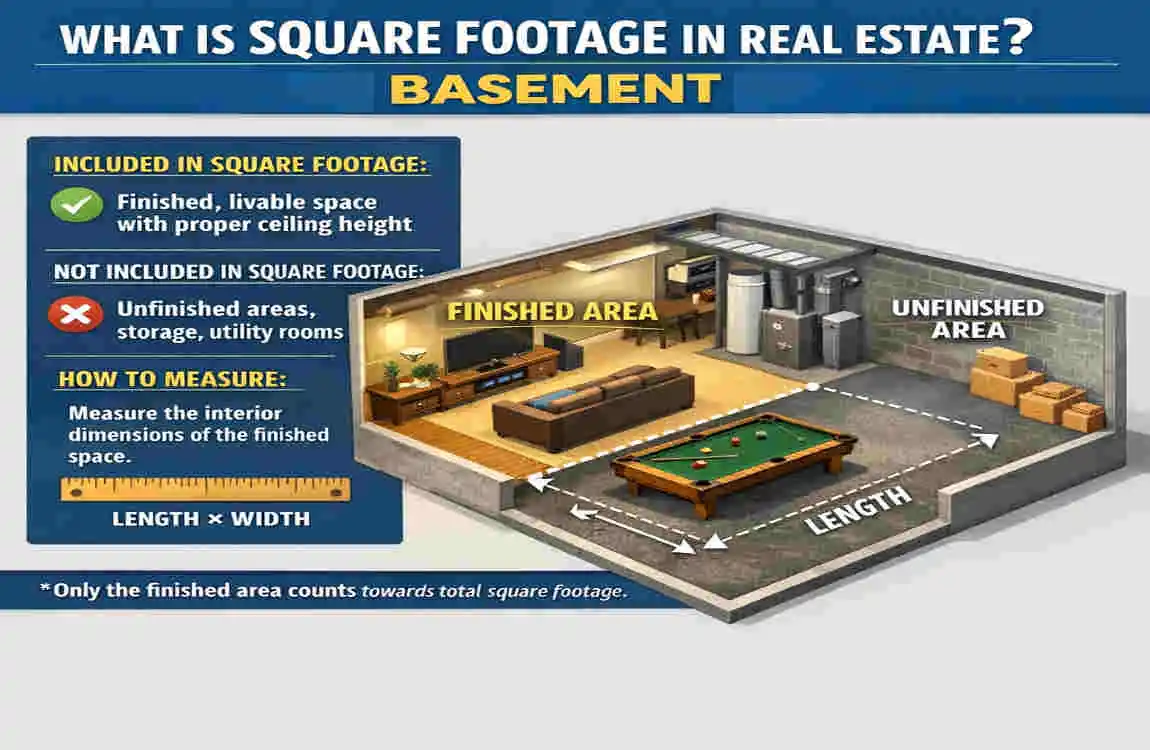
In real estate, official square footage refers to the total heated, livable area under a roof. Think of it as the year-round, comfortable living bubble of the house. To count toward the official total, a room typically needs finished walls, floors, and a ceiling, and a permanent heating source. If you have to put on a heavy winter coat to sit in a room during December, it does not count as official living space.
The Big Divide: Above-Grade vs. Below-Grade
To understand the rules, you need to learn two essential industry terms: above-grade and below-grade.
The “grade” is simply the ground level or the dirt line surrounding the house.
- Above-grade space includes the house’s main floors, which sit entirely above the dirt line. This is your living room, your upstairs bedrooms, and your main-floor kitchen.
- Below-grade space refers to any part of the house that dips below the soil line. Even if only a few feet of the room’s walls are underground, the entire level is usually considered below-grade. Yes, this means your basement.
Busting Common Square Footage Myths
Many first-time buyers fall for common myths about house size. They assume that garages, outdoor patios, and unfinished attics count toward the home’s total size. They absolutely do not.
Let us look at a practical example. Imagine you are touring a 2,000-square-foot house that also features a 1,000-square-foot unfinished basement. Because that basement is essentially raw, underground space, the official real estate listing should only advertise the home as 2,000 square feet. The basement is a bonus, not a part of the core measurement.
Square Footage Types Explained
To make this crystal clear, review this handy breakdown of how different measurement types treat your underground spaces.
Measurement Type Does It Include the Basement? Example Scenario
Gross Living Area (GLA) Rarely This strictly counts the main above-ground floors only. It is the standard for most appraisals.
ANSI Standards Finished only, if it meets strict criteria Counts only if the ceiling height is tall enough, it is heated, and it has proper exits.
Total Building Area Yes This includes all structures under the roof, including garages and unfinished basements. Still, it is rarely used for official home values.
Does the Square Footage of a House Include the Basement? The Straight Answer
If you are looking for the absolute most direct answer to the big question: Does the square footage of a house include the basement?
No, in most cases, it does not.
Because basements are located below-grade, the real estate industry excludes them from the official Gross Living Area (GLA). This rule applies unless the basement is fully finished in accordance with very specific building codes. Let us break down exactly how this works for different types of basements.
Unfinished Basements: The Raw Space
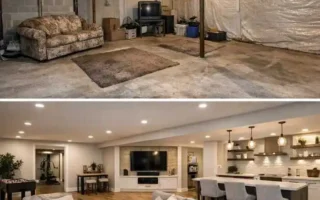
Unfinished basements are not included in a home’s official square footage. If you walk downstairs and see exposed wooden floor joists above your head, cold concrete floors beneath your feet, and bare cinderblock walls, you are standing in an unfinished space.
This area might be fantastic for storing your holiday decorations, keeping a deep freezer, or setting up a rugged home gym. However, because it lacks the basic comforts of a finished living space—like permanent heating, drywall, and standard flooring—appraisers view it as utility space. It adds functional value to the home but does not increase the square footage.
Finished Basements: The Grey Area
Finished basements present a much trickier scenario. Sometimes, a finished basement can count toward a home’s total area. Still, it must adhere strictly to the rules set by the American National Standards Institute (ANSI) or the International Property Maintenance Code (IPC).
To be considered countable, a finished basement generally needs a minimum ceiling height of 7 feet (though some areas allow specific portions to be 5 feet). It must also feature a permanent heating system tied into the main house and proper egress windows, which are large windows a person could use to escape during a fire.
The Real Estate Statistics You Should Know
To put this into perspective, look at the numbers. According to data from the National Association of Realtors (NAR), approximately 60% of all homes in the United States have a basement. However, only 20% to 30% of those basements actually qualify as livable square footage.
If you were to draw a mental flowchart for your basement, it would look like this: Is the space completely above the ground? If yes, count it. If no, is it fully finished with drywall, floors, and heat? If no, do not count it. If yes, does it have emergency exit windows and tall ceilings? If yes, it counts under ANSI rules!
Official Standards: ANSI, Appraisers, and MLS Rules
You might be wondering who actually makes up these rules. Real estate is heavily regulated to protect buyers and lenders from fraud. When asking whether the square footage of a house includes the basement, you have to look at three major governing bodies: ANSI, the appraisers, and the Multiple Listing Service (MLS).
The ANSI Z765 Gold Standard
The American National Standards Institute created a specific rulebook, ANSI Z765. This is widely considered the gold standard for measuring single-family homes in the United States.
Under ANSI rules, the line between what counts and what does not is very firm. Basements only count toward the main Gross Living Area if they are 100% above grade. If even a small corner of the basement wall is covered by earth, the entire floor is considered below-grade. ANSI allows you to list this below-grade finished space separately. Still, it strictly forbids lumping it into the main above-grade number.
Appraisal Rules from Fannie Mae and Freddie Mac
Fannie Mae and Freddie Mac are the massive government-sponsored enterprises that buy most mortgages in the United States. Because they hold the purse strings, they dictate how home appraisers must operate.
Their rules state that appraisers must exclude all below-grade space from the official Gross Living Area. There is a small loophole for “exceptional” quality. If a house is built on a steep hill and features a massive, sunlit walkout basement with luxury finishes that match the upper floors perfectly, an appraiser might make a special exception. But for the average suburban home, the appraiser will separate the main floors from the basement.
MLS Listings and Regional Variations
The Multiple Listing Service (MLS) is the database real estate agents use to post homes for sale. Interestingly, MLS rules vary widely by region.
In the Midwest, where basements are incredibly common, agents are more likely to include finished basement space in the total advertised number, usually with a small footnote explaining the breakdown. In the South, where basements are rare, agents rarely include them in their listings.
5 Key ANSI Criteria for Basement Inclusion
If you want to know if a finished basement can be listed as officially finished below-grade space, check these five specific criteria:
- Ceiling height must be sufficient: Ceilings must generally be at least seven feet high. If there are sloped ceilings or exposed beams, at least half of the room must meet the seven-foot rule, and no part of the room can be under five feet.
- Permanent heating is required: Space heaters do not count. The basement must be heated by the home’s permanent HVAC system or permanently installed baseboard heaters.
- Direct exterior access or egress: There must be a safe, accessible way to exit the basement to the outside, such as a walkout door or a large egress window.
- Fully finished walls and floors: The space must have finished walls (like drywall) and finished floors (like carpet, tile, or laminate). Painted concrete does not qualify.
- No excessive moisture: The basement must be completely sealed from the elements, with no active leaks, dampness, or mold issues.
Finished vs. Unfinished Basements: What Counts and Why
Understanding the difference in how these spaces are valued can save you massive headaches during the negotiation process. Let us explore the real-world impact of both states.
The Unfinished Basement: Bonus Space, Not Square Footage
As we established, an unfinished basement is excluded from the official count. However, it still holds significant value as “bonus space.”
When an appraiser looks at a house with an unfinished basement, they will value the main floors at a certain price per square foot. Then, they will add a flat value adjustment for the unfinished basement—perhaps a few thousand dollars for the concrete foundation and storage potential. The major impact is that a large unfinished basement lowers the home’s price-per-square-foot, making it look like a better deal on paper than a house built on a simple concrete slab.
The Finished Basement: Earning Partial Credit
A properly finished basement often earns what we call “partial credit.” It does not command the same price as the sunny upstairs living room, but it adds substantial value.
For example, imagine a house with an 800-square-foot finished basement that perfectly meets ANSI compliance. While the appraiser will list this separately from the main GLA, they will give it significant value. It might be valued at 50% to 70% of the above-grade price per square foot. It adds real, tangible equity to the home, even if it sits on a different line of the appraisal report.
A Real-Life Cautionary Tale
Consider the true story of a homebuyer in Chicago. This buyer found a beautiful home listed at 2,500 square feet. They assumed they were getting a massive house and gladly paid a Premium price, ending up paying $20,000 over the asking price to beat out other buyers.
However, they skipped their own independent measurements. A pre-purchase inspection later revealed that 1,000 square feet of that advertised space was actually in the basement. Worse, the basement was not ANSI-compliant because the ceilings were only six feet tall, and there were no emergency windows. The buyer overpaid drastically for space that the bank would never officially recognize.
The Pro Tip You Need
Do not rely solely on the real estate agent’s listing. Hire an ANSI-certified measurer. This service usually costs between $200 and $400. They will come to the house with laser-measuring tools and provide a legally binding floor plan that shows exactly how much official space you are buying. It is a small price to pay to avoid a $20,000 mistake.
Why Square Footage Rules Matter for Homebuyers
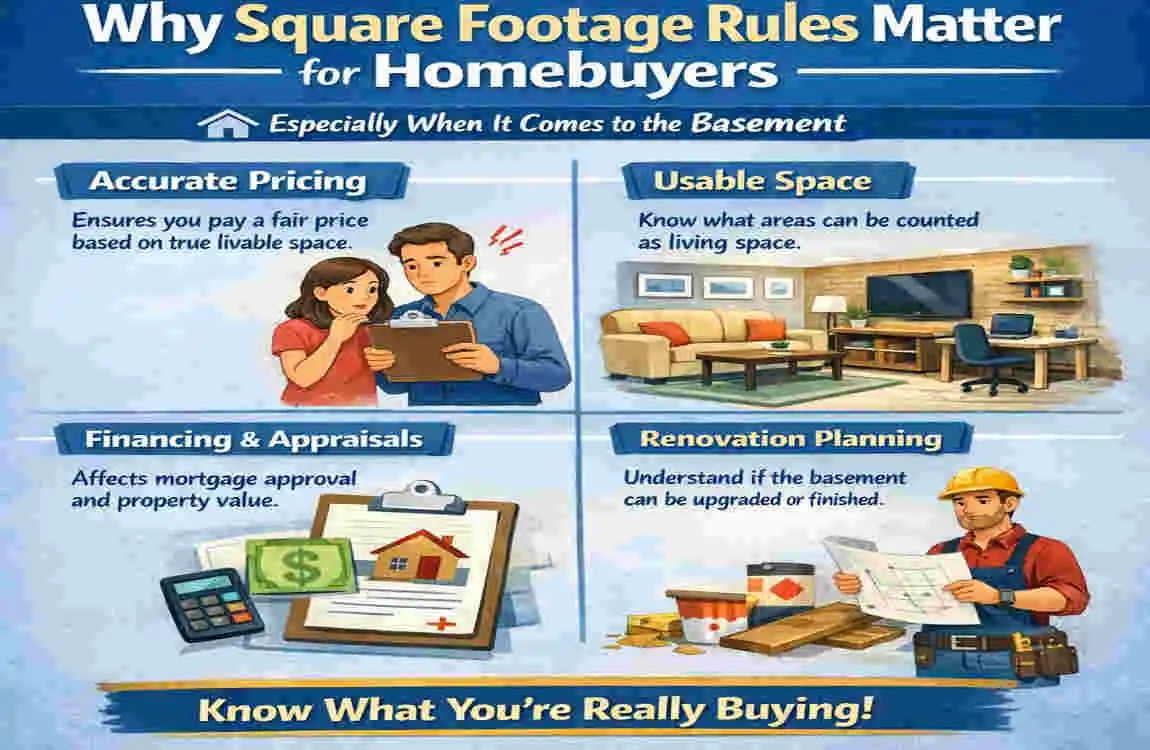
You might be thinking, “As long as I can comfortably live in the space, why do I care what the official number says?” You must care, because the official numbers dictate the financial reality of your purchase.
The Huge Impact on Home Valuation
Misstated square footage artificially inflates a home’s price. Let us look at the math.
Imagine homes in your target neighborhood sell for $200 per square foot. You look at a listing claiming to be 2,500 square feet, which prices the home at $500,000. However, if 700 square feet of that total is an uncounted basement, the true above-grade size is only 1,800 square feet. At $200 a foot, the house should be valued closer to $360,000.
If you pay the $500,000 asking price, you just overpaid by tens of thousands of dollars. The square footage dictates the baseline value of the entire transaction.
Resale Risks You Cannot Ignore
If you buy a house with inflated square footage numbers today, you will face severe problems when you try to sell it tomorrow.
Future buyers will likely use stricter appraisers. If you bought the home believing it was 3,000 square feet, but the next buyer’s appraiser rejects the basement and calls it 2,200 square feet, the buyer’s loan will fall through. You will be forced to lower your asking price to align with the official measurements.
Insurance Premiums and Property Taxes
Your local government and your insurance company care deeply about your basement. Basements affect your homeowner’s insurance premiums, especially if you live in a flood zone. A finished basement requires more coverage to protect the drywall and flooring from water damage. Additionally, your local tax assessor will use the finished state of your basement to calculate your annual property taxes. If you misunderstand the size of your home, you could end up paying higher taxes than you owe.
The Ultimate Buyer Checklist
To protect yourself, run through this simple checklist before signing any offers:
- Verify listing footnotes: Look closely at the small print at the bottom of the real estate listing. Agents often hide the basement breakdown down there.
- Request an ANSI report: Ask the seller if they have a recent, certified floor plan.
- Compare the comps: Look at recently sold comparable homes in the neighborhood. Did their listings include basement space? You need an apples-to-apples comparison.
Common Mistakes Homebuyers Make with Basement Square Footage
When navigating the complex real estate market, buyers often fall into the same traps when it comes to underground spaces. Here are seven major pitfalls you must avoid, along with simple fixes for each.
Assuming All Finished Basements Count
This is the most common error. Buyers see beautiful carpet and a fresh coat of paint and immediately assume the space is official square footage. The Fix: Always look up. Check the ceiling height. If you can reach the ceiling without standing on your tiptoes, the room might not meet the minimum height requirements to be considered finished space.
Ignoring Regional MLS Rules
Buyers moving from one state to another often assume real estate rules are the same everywhere. A buyer moving from Ohio (where basements are often listed in the total) to Texas (where they are separated) can get incredibly confused. The Fix: Ask your local real estate agent to explain exactly how the local MLS board requires agents to input basement spaces.
Skipping the Professional Appraisal
In highly competitive markets, some buyers waive their right to a professional appraisal to make their offers more attractive to sellers. The Fix: Never waive the appraisal if you have doubts about the home’s size. The appraiser is your independent, neutral judge who will verify the actual size of the property.
Confusing GLA with Total Square Footage
Buyers hear terms thrown around and think they all mean the same thing. Total Area, Gross Living Area, and Livable Space are very different things. The Fix: Always ask specifically for the “Above-Grade Gross Living Area.” That is the golden number you need for valuation.
Overlooking Heating and Cooling Requirements
A seller might put down laminate flooring and paint the walls of a basement, but if they rely on a plug-in space heater to keep the room warm, it is not officially finished. The Fix: Look for actual air vents, radiators, or permanently installed baseboard heaters connected to the home’s primary thermostat.
Neglecting Emergency Exits (Egress)
You find a basement with a beautifully finished bedroom and decide it is the perfect guest room. But if there is no window, it is illegal to count it as a bedroom. The Fix: Check every below-grade room for an egress window. The window must be large enough for a fully grown adult to climb through in case of a fire.
Trusting Online Real Estate Portals Blindly
A very common mistake is trusting popular real estate websites without questioning their data. The Real Example: Consider a famous case where a popular online listing site pulled inaccurate public tax records, listing a home at 3,500 square feet. The buyer made an offer based on that number. The official appraisal later revealed the home was actually 2,500 square feet above grade, plus a 1,000-square-foot unfinished basement. The online portal lumped the numbers together. This led to a massive 15% value dispute, and the deal fell apart completely.
How to Measure and Verify Basement Square Footage Yourself
If you want peace of mind before making an offer, you can take matters into your own hands. Measuring a basement is not overly complicated if you follow the right steps.
Gather the Right Tools
Do not rely on your eyes or your footsteps to measure a room. You need accurate tools. While a standard 25-foot tape measure works, a digital laser measure is the best tool for the job. You point the laser at the far wall, press a button, and you instantly have a perfectly accurate measurement down to the fraction of an inch.
Apply the ANSI Checklist
Walk down into the basement and start your checklist. First, measure the height from the floor to the ceiling to ensure it hits that crucial seven-foot mark. Next, look for the heating vents. Finally, check the windows. If the room passes these tests, you can begin measuring.
Measure the length and width of each finished room. Multiply those two numbers together to get the square footage for that specific room. (For example, a 10-foot by 12-foot room is 120 square feet). Add up the totals for all the finished rooms.
Use Technology to Your Advantage
If doing the math on paper stresses you out, use your smartphone. There are numerous free ANSI calculator apps and floor plan creators available in the app stores. You enter the dimensions of the walls, and the app calculates the total square footage for you, subtracting areas like utility closets and unfinished storage rooms.
The DIY Method vs. Hiring a Professional
While measuring it yourself is a great way to double-check a listing, remember the risks.
MethodProsCons
DIY Measuring : Free, fast, and helps you spot obvious lies immediately. Easy to make math errors, not legally binding, lenders will not accept your numbers.
Professional Measurer Highly accurate, ANSI-certified, legally recognized by banks and appraisers. Costs between $200 and $400, takes time to schedule an appointment.
You can save money by doing it yourself during an open house, but if you are seriously putting down hundreds of thousands of dollars, hiring a professional is the safest route.
Expert Tips for Negotiating with Basement Square Footage in Mind
Once you understand the rules, you can leverage this knowledge to your advantage throughout the buying process. Here is how you can negotiate like a real estate pro.
Do Not Be Afraid to Make a Lower Offer (Lowball Strategically)
If you discover that a seller has illegally lumped an unfinished or non-compliant basement into their total square footage, you have immense leverage. Do not just walk away from the house. Use the true numbers to your advantage. Present the seller with your findings and offer a price based strictly on the accurate, above-grade Gross Living Area.
Ask for Seller Concessions
The basement may be almost finished, but it lacks the required permanent heating source to be officially counted. You can ask the seller for financial concessions. Request that they drop the price by a few thousand dollars so you can afford to hire an HVAC professional to install the proper vents after you move in.
Protect Yourself with Contract Contingencies
When you write your official offer to purchase the home, include protective legal language. Add a clause that says your offer is “Contingent on ANSI verification of the square footage.” This means that if a professional comes in and proves the house is smaller than advertised, you can legally walk away from the deal and get your earnest money deposit back without any penalties.
FAQs: Does Square Footage Include the Basement?
Because this topic is so incredibly nuanced, buyers frequently ask the same rapid-fire questions. Here are the clear, detailed answers you need.
Does the square footage of a house include the basement?
Generally, no. Because basements sit below the ground level (below-grade), they are excluded from the main Gross Living Area (GLA) of the home. They are usually listed on a separate line in appraisals and official documents.
Does a finished basement count in square footage?
It can count as “finished below-grade space,” but it still will not be lumped into the main upstairs square footage. To count as finished space at all, it must meet strict ANSI rules, including minimum ceiling heights, permanent heating, and finished walls and floors.
What square footage standards do Realtors use?
Most reputable Realtors use the ANSI Z765 standard, as it is the most widely accepted method. However, because MLS rules vary locally, some Realtors rely on old county tax records, which are notoriously inaccurate and sometimes mistakenly combine all levels of the home.
Does a walkout basement count as square footage?
Even if a walkout basement has full-sized doors and beautiful windows on one side, if any of the other walls are built into the side of a hill (below the dirt line), the entire level is still considered below-grade and is excluded from the main GLA.
Do basement bedrooms count if there are no windows?
Absolutely not. For a below-grade room to be legally marketed and counted as a bedroom, it must have a proper egress window. This is a strict safety code. Without an emergency exit, it is just a bonus room or an office.
How does a basement affect my property taxes?
Tax assessors usually tax finished space at a higher rate than unfinished space. If you buy a house with an unfinished basement and finish it yourself, your property taxes will likely go up when the city recalculates the value of your newly improved home.
Can I sue a seller for lying about square footage?
If a seller intentionally misrepresents the home’s size to inflate the price, it may constitute real estate fraud. However, lawsuits are incredibly expensive and hard to win. It is much better to verify the square footage before you close the deal.