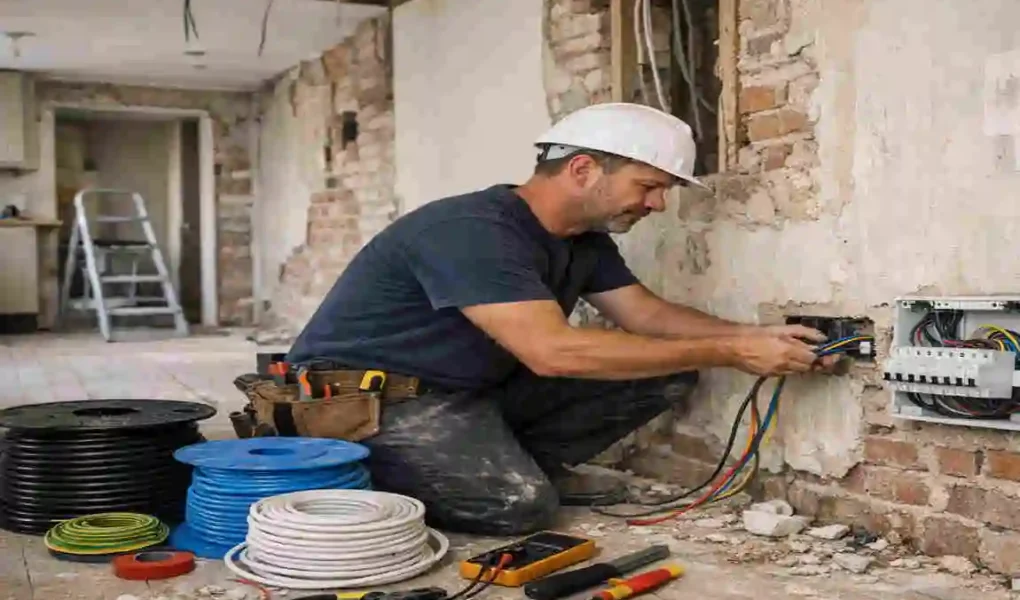
If you are a homeowner in the UK right now, you have probably noticed how much our daily lives rely on electricity. From running our home offices and charging our electric vehicles to powering smart kitchen appliances and automated heating systems, our homes are working harder than ever before. Yet, beneath the fresh paint and modern furnishings of many UK properties lies a hidden, aging nervous system. As we move deeper into 2026, the demand for electrical safety and modern capacity in our homes has never been higher, making the discussion around rewiring essential.
Perhaps you have been experiencing flickering lights, constantly tripping fuses, or you are simply aware that your home hasn’t had a major electrical update since the turn of the millennium. If you are living in a standard three-bedroom property, tackling an electrical overhaul might feel incredibly daunting. You might be worried about the mess, the disruption, and most importantly, the final bill.
It is completely normal to feel a bit overwhelmed. Upgrading your home’s wiring is a major project. Still, it is also one of the most critical investments you can make to protect your family from devastating risks like electrical fires or sudden power failures. To give you a quick ballpark figure before we dive deep, a full professional rewire for a typical three-bedroom house in the UK currently falls into the £4,000 to £8,000 range.
Why Rewire Your 3-Bed House?

You may be wondering if completely replacing the wiring in your home is necessary. If the lights turn on when you flick the switch, everything is fine. Unfortunately, electricity doesn’t quite work like that. The cables hidden behind your walls degrade over time, and the demands we place on our sockets have skyrocketed. Let’s break down exactly why giving your three-bedroom house an electrical facelift is so crucial in 2026.
Eliminating Dangerous Fire Hazards
If your property was built before the 1970s and hasn’t been rewired since, you are sitting on a significant safety hazard. Older homes often feature outdated rubber-sheathed cables, fabric-coated wires, or even aluminum wiring. Over the decades, these materials have dried out, crumbled, and left live wires completely exposed behind your plaster. This degradation is a leading cause of electrical fires in the UK. By upgrading your system, you strip out these ancient, fragile materials and replace them with robust, modern PVC-coated copper cables that are designed to safely handle today’s heavy electrical loads without overheating.
Meeting Regulations and Part P Compliance
The rules governing electrical safety in the UK are constantly evolving to keep us safe. As of 2026, electricians work strictly to the latest amendments of the 18th Edition Wiring Regulations (BS 7671). Furthermore, any major electrical work in a home must comply with Part P of the Building Regulations, which ensures the installation is legally certified and safe. If you ever plan to sell your home or need to make a home insurance claim, having up-to-date, certified wiring isn’t just a nice bonus—it is an absolute legal necessity.
Telltale Signs You Need to Call an Electrician
How do you know it is time to take action? Your house will usually give you warning signs. Keep an eye out for these red flags:
- Frequent trips: If your fuse box is constantly tripping when you boil the kettle and run the washing machine at the same time, your system is overloaded.
- Scorch marks: Any brown or black discoloration around your plug sockets or light switches is a sign of dangerous arcing and overheating.
- Old fuse boxes: If your consumer unit features old-fashioned rewirable fuses rather than modern circuit breakers and RCDs (Residual Current Devices), your home lacks crucial modern life-saving technology.
The Hidden Benefits: Smart Homes and Value Boosts
Rewiring isn’t just about preventing disasters; it is an incredible opportunity to upgrade your lifestyle. When your walls are open, you can future-proof your home. You can hardwire smart home systems, install dedicated circuits for super-fast internet, and prepare for energy-saving technologies. Better yet, a freshly rewired property with an up-to-date electrical certificate can boost your property’s market value by up to 5%. It is an investment that pays you back in safety, convenience, and pure equity.
Average Costs Breakdown
When you ask an electrician for a quote, the final number isn’t just pulled out of thin air. The £4,000 to £8,000 bracket covers a wide range of properties and specific requirements. To help you budget effectively for your three-bedroom house, let’s look at a detailed breakdown of what you can expect to pay, how long the job will take, and what is actually included in that price tag.
Understanding the Baseline Costs
Every house is structurally different, so an electrician has to adapt their approach to your property type. A semi-detached house will have different routing options compared to a sprawling bungalow. Here is a clear look at the current 2026 averages:
House Type Base Cost (ex. VAT) Timeframe Key Inclusions
Bed Semi £4,000-£5,500 5-7 days New consumer unit, full cabling replacement, standard sockets, and switches.
Bed Detached £5,500-£8,000 7-10 days Covers larger floor plans, exterior wall work, garage power feeds, and EV charger prep.
Bungalow Variant £3,500-£4,500 4-6 days Easier loft access to all rooms, no stairs to navigate, faster installation time.
The Cost of Labor: Paying for Expertise
When you hire an electrician, you are paying for years of training, highly specialized skills, and the ability to ensure your home is safely certified. Labor accounts for roughly 60% of your total rewiring bill. In 2026, the going day rate for a fully qualified, registered “sparky” ranges between £150 and £250 per day, depending on their experience and your location. Because a full rewire on a three-bed house usually requires a team of two (a lead electrician and an apprentice or mate) working for over a week, those daily rates quickly add up to form the bulk of your quote.
The Cost of Materials: Copper, Sockets, and Safety Gear
The remaining 40% of your budget goes directly into the physical materials being installed in your home. For a standard three-bedroom property, materials typically cost between £1,200 and £1,500. This covers:
- Hundreds of meters of twin and earth cable: The price of copper fluctuates globally, which directly impacts cable costs.
- A modern consumer unit (fuse box): Equipped with high-end RCBOs to protect every individual circuit.
- Back boxes, faceplates, and switches: The white plastic (or brushed steel) fittings you interact with daily.
- Lighting pendants and ceiling roses: The foundational hardware for your home’s lighting.
Regional Cost Variations
It is important to remember that where you live in the UK drastically affects your final bill. The cost of living, business overheads, and local demand all play a role. If you live in central London or the affluent South East, you can expect to pay a 20% to 30% Premium compared to someone having the same house rewired in the North of England. We will explore this geographic divide in much more detail later in the guide, but keep it in mind as you start planning your budget.
Cost Factors Influencing Your Quote
If two people live in identical three-bedroom houses on the same street, they could still receive wildly different quotes for rewiring. Why? How you use your home, and the specific choices you make during the planning phase, can shift the price by thousands of pounds. Let’s explore the hidden variables that dictate your final bill.
Property Age and Physical Access
Electricians need to run cables from your fuse box to every single socket and light fitting in every room. If your home has solid concrete floors, tightly packed wall cavities, or historic lath-and-plaster walls, the job becomes incredibly difficult. If an electrician has to use heavy machinery to “chase” (cut channels) into solid brick or plaster to bury the cables, you can expect an additional £500 to £1,000 added to your quote, purely for the extra hard labor and mess involved. Conversely, if your home has easy-to-lift floorboards and hollow stud walls, the job is much faster and substantially cheaper.
The Socket and Light Count
Every single plug socket, light switch, and light fitting requires extra cable, an extra physical unit, and extra time to install and test. A standard three-bedroom house usually features around 60 to 80 outlets in total. If you decide you want double sockets on every single wall, integrated USB-C charging ports in the bedrooms, and complex downlighting grids in the kitchen, your material and labor costs will spike. Keep your outlet count practical to keep costs down.
Modern Upgrades and Future-Proofing
A rewire is the perfect time to bring your home into the modern era, but these upgrades come at a Premium.
- Electric Vehicle (EV) Chargers: With the shift toward electric driving in 2026, adding a dedicated EV charging circuit to your driveway is a brilliant idea, but it will add £500+ to your bill.
- Underfloor Heating: Running dedicated high-load circuits for electric underfloor heating in your bathrooms or kitchen requires specialized planning.
- Solar Power Preparation: If you plan to install solar panels or home battery storage soon, ask your electrician to prep the consumer unit now; it will cost a bit more upfront but save you a fortune later.
Partial vs Full Rewire
Does your whole house actually need doing? Sometimes, a partial rewire is entirely sufficient. If you have recently built an extension with brand-new wiring, but the original part of the house is decades old, your electrician can upgrade the old section and integrate it with the new wiring. Choosing a partial rewire instead of ripping out good cables can yield savings of 30% to 50%. However, your electrician must run thorough tests to ensure the sections you are keeping are genuinely safe and compliant.
Regional Price Comparison
As we touched upon earlier, your postcode is one of the most significant factors in pricing. The UK construction and trades market is heavily regionalized. An electrician in central London has to pay higher rent, navigate emission zone charges for their van, and deal with higher parking fees—all of which are passed on to consumers. Here is a closer look at how the £4,000 to £8,000 average breaks down across different parts of the country in 2026.
Region3-Bed Rewire CostNotes
London & South East £6,000 – £8,000 The highest labor rates in the country, combined with Premium parking and transport overheads for tradespeople.
North West & Midlands £4,000 – £5,500 A highly competitive market with lower business overheads keeps prices much closer to the national baseline.
Scotland & Wales £3,500 – £5,000 . Generally offers the most affordable rates, with tradespeople often able to complete jobs slightly faster due to less urban congestion.
Why the Divide Exists
If you live in London, it is frustrating to know you are paying thousands of pounds more for the same copper wire and plastic sockets. However, the Premium is almost entirely tied to the cost of living. Electricians in the South East command a day rate that is often double that of an electrician in Yorkshire. Furthermore, homes in the South East are more likely to have restricted parking, making the simple act of unloading heavy cable drums a logistical nightmare that takes up billable time.
Leveraging Postcode Tools
To get a truly accurate picture of what you should be paying, it is highly recommended that you use online postcode comparison tools before you start calling contractors. These tools aggregate data from recently completed jobs in your neighborhood, providing a highly accurate, localized baseline. Once you know the average for your street, you can spot an overpriced quote from a mile away.
Step-by-Step Rewiring Process
One of the main reasons homeowners delay a rewire is the fear of the unknown. The idea of tradespeople tearing your house apart is stressful. However, when you understand exactly how a professional rewire unfolds, step by step, it becomes much easier to manage. Here is the exact journey your home will take over the 5 to 10 days of the project.
The Initial Survey and Planning (Free, 1 Hour)
Before a single floorboard is lifted, a certified electrician will visit your home for a comprehensive walkthrough. They will check the condition of your fuse box, inspect your existing sockets, and discuss your lifestyle. Do you work from home? Do you need outdoor power for a hot tub? This is where you map out the location of every new socket and switch. Following this hour-long consultation, they will provide your formal, written quote.
Making the Site Safe
When the project officially begins, safety is the absolute priority. The electrician will completely isolate the power to your home from the mains supply. If you are living in the property during the rewire, they will usually set up a temporary “site supply”—a safe, single power source that lets you plug in a fridge or kettle. At the same time, the rest of the house remains safely unpowered.
The First Fix (2-3 Days of Heavy Work)
This is the messy, loud, and physically demanding part of the job. The “first fix” involves installing the hidden infrastructure. The team will lift your carpets, pull up the floorboards, and drill through wooden joists to create paths for the new cables. If your walls are solid plaster, they will use a wall chaser to cut deep grooves, creating a channel to bury the wires. It generates a massive amount of dust, which is why preparation is key. During this phase, they pull hundreds of meters of fresh grey cable throughout the entire skeleton of your house.
The Second Fix (Bringing it to Life)
Once the cables are perfectly positioned and your walls have been patched up and re-plastered by a decorator, the electrician returns for the “second fix.” This is the satisfying part. They will connect all those hidden wires to your brand-new, modern consumer unit. They will screw on your fresh white socket faceplates, install your stylish new light switches, and hang your ceiling lights. Suddenly, the chaotic building site starts looking like a modern, functional home again.
Rigorous Testing and Final Certification
An electrician’s job isn’t finished when the lights turn on; it is finished when the system is proven to be completely safe. They will spend several hours using specialized meters to run high voltages through the new circuits, checking for microscopic faults, ensuring the earthing is perfect, and verifying that the safety trip switches act in milliseconds. Once satisfied, they will issue an Electrical Installation Condition Report (EICR) and notify your local Building Control department. You now have the paperwork to prove your home is perfectly safe and legally compliant.
Top Ways to Save on Rewiring

A bill of £6,000 can be a tough pill to swallow, especially given the rising cost of living in 2026. But a house rewire doesn’t have to drain your savings entirely. If you are strategic, proactive, and willing to put in a little elbow grease yourself, there are several highly effective ways to slash your final bill without compromising on safety or quality.
Get 3+ Quotes to Force Competition.
The golden rule of any home improvement project is never to accept the very first price you are given. You should always invite at least three different certified electricians to quote for the job. You will be amazed by the price variations. Just by comparing the market and letting contractors know you are shopping around, you can easily save between 10% and 20%.
Prep the Site Yourself
Electricians charge a Premium hourly rate. If they have to spend two hours moving your heavy oak wardrobe, rolling up your rugs, and unscrewing your old shelves before they can even access the floorboards, you are paying skilled labor rates for basic heavy lifting. Before they arrive, clear as many rooms as physically possible. Pull back the carpets yourself. Make their access fast and easy. Time is money, and the faster they can work, the cheaper your bill will be.
Avoid Unnecessary Extras and Bundle Work
It is easy to get carried away in the planning phase. Do you really need high-end brushed brass dimmer switches in the spare bedroom? Stick to standard white PVC fittings for areas guests rarely see. Furthermore, if you are planning a major kitchen or bathroom renovation in the near future, try to bundle the work together. Having an electrician rewire a kitchen before the new cabinets are installed is infinitely faster (and cheaper) than asking them to work around a newly fitted luxury kitchen.
Choose NICEIC or NAPIT Certified Professionals
While it might be tempting to hire a “handyman” friend who offers to do the job for half the price, it is a massive false economy. If they are not registered with a competent person scheme like NICEIC or NAPIT, they cannot legally sign off on the work. You will then have to pay hundreds of pounds to the local council to inspect and certify the illegal work, and if it fails, your home insurance will be voided. Doing it right the first time with a certified pro saves you from catastrophic financial risk.
The Ultimate Saving: Off-Peak Timing and Empty House Discounts
If you want to secure the biggest possible discount, hand the electrician the keys to an empty house. Trying to rewire a house while a family is still living in it is a logistical nightmare for tradespeople. They have to clean up thoroughly every single evening, turn the power back on so you can cook, and tiptoe around your daily lives. If you can move out and stay with family or friends for a week, the electricians can work twice as fast, rip up multiple rooms at once, and skip the daily clean-up. Electricians heavily prefer empty properties and will often knock up to £1,000 off the total quote for the sheer convenience of an empty site.
FAQs: Rewiring a 3-Bed House
To ensure you have absolutely all the information you need, let’s address some of the most common questions UK homeowners ask when facing a full property rewire.
How long does a full rewire actually take?
For a standard three-bedroom house, you should expect the physical work to take anywhere from 5 to 10 working days. A semi-detached property with easy access will lean toward the 5-day mark. In contrast, a larger detached house with solid walls, an attached garage, and a long list of smart-home requests will lean toward 10 days.
Is the process highly disruptive?
Yes. There is no sugar-coating it; a full rewire is one of the most invasive jobs you can have done to your home. Floorboards must come up, carpets will be rolled back, and channels will be cut into your walls, generating significant noise and a layer of fine plaster dust. While a good electrician will clean up daily and ensure you have a temporary power supply if you are living there, you should mentally prepare for a chaotic week.
Can I legally rewire my house myself (DIY)?
No. While it is not strictly illegal to lay your own cables if you possess advanced knowledge, it is illegal to connect them to the mains and sign them off without being a certified competent person. Under Part P of the Building Regulations, all major electrical work must be rigorously tested and certified. If you attempt a DIY rewire, you will not get an EICR certificate, which will make your home impossible to sell and instantly void your home insurance. Leave it to the professionals.
Is the VAT on a house rewire reclaimable?
Generally, no. For a standard existing property, the standard VAT rate of 20% applies to both labor and materials, and you cannot reclaim it. However, if you are renovating a property that has been vacant for more than 2 years, you may be eligible for a reduced VAT rate of 5%. Completely new builds are often zero-rated for VAT. Always discuss VAT implications with your contractor before signing the contract.