Sometimes your HVAC system seems to be running, but your home still feels less comfortable. Airflow seems weaker, dust builds up faster, and some rooms take longer to heat or cool. In many cases, the issue is not a major repair. It is simply an old air filter that has been left in too long.
Air filters help trap dust and other airborne particles as air moves through your heating and cooling system. When the filter gets clogged, airflow can drop, indoor air quality can suffer, and the system may have to work harder than necessary. That is why checking and replacing filters regularly is one of the easiest home maintenance tasks to stay on top of.
Why a Dirty Air Filter Causes So Many Problems
Your HVAC air filter does more than catch visible dust. It also helps protect the system by stopping particles from building up deeper inside. When the filter becomes packed with debris, it can restrict airflow, reduce efficiency, and make the system run longer to keep up.
That is why one small maintenance issue can create several symptoms at once. You may notice weaker airflow, more dust around the house, rising energy use, or air that feels stale.
When it’s clear a filter is overdue for replacement, homeowners can compare compatible options from Discount Filters before reduced airflow starts affecting comfort and efficiency.
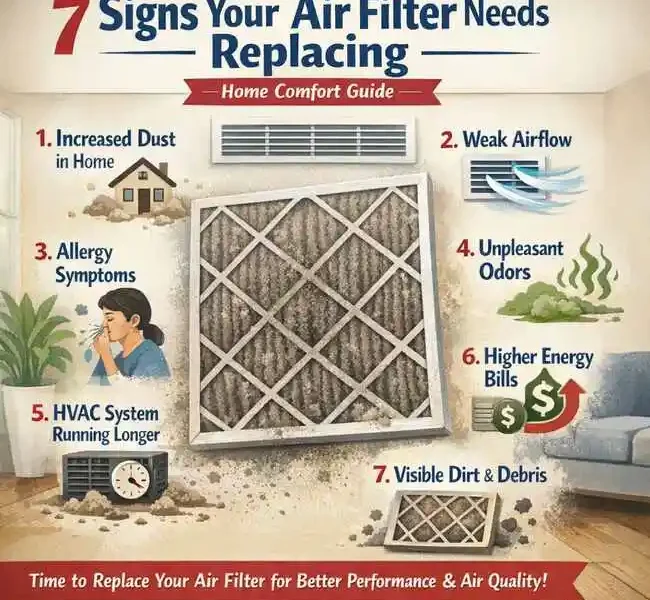
1. Airflow From the Vents Feels Weaker Than Usual
One of the earliest signs your air filter needs replacing is weak airflow from vents. If the system is on but the air coming out feels lighter than normal, a clogged filter may be making it harder for air to pass through properly.
This often shows up as rooms taking longer to heat or cool, longer runtimes, or a house that never feels quite comfortable even though the thermostat says it should. If airflow feels noticeably reduced, the filter is one of the first things worth checking.
2. Dust Builds Up Faster Around Your Home
If surfaces look dusty again soon after cleaning, your air filter may no longer be trapping particles effectively. You might also notice more dust collecting around vents, shelves, or furniture.
A filter will not solve every dust issue in a home, but it does help catch debris moving through the HVAC system. Once it becomes overloaded, it cannot do that job as well. That is why a dusty house air filter problem often appears gradually. Homeowners may think the house is just dusty, when the filter is actually overdue for replacement.
3. Allergy or Respiratory Symptoms Start Flaring Up
A dirty filter can also make the home feel less comfortable for people with allergies or respiratory sensitivities. More dust, dander, and similar particles may keep circulating through the air, which can contribute to sneezing, irritation, or that general stuffy indoor feeling.
This should not be overstated. A clogged filter is not the only cause of allergy symptoms, and replacing it is not a cure. Still, regular filter changes are one part of maintaining better indoor air quality, especially in homes with pets, dust sensitivity, or seasonal allergy issues.
4. You Notice a Dusty or Musty Smell When the System Runs
A dusty or stale smell when the HVAC system kicks on can be another sign that maintenance is overdue. Sometimes dust has built up around the filter or in nearby parts of the system. Other times, the house simply starts to feel less fresh when airflow is restricted.
A musty smell does not always mean the filter is the only problem, but it is one of the easiest things to check first. If you are wondering how to tell if an air filter is clogged, unusual smells when the system runs can be a useful clue.
5. The Filter Looks Gray, Dirty, or Obviously Clogged
Sometimes the clearest sign is a visual one. If you remove the filter and it looks gray, packed with dust, or visibly coated with debris, it is probably time to replace it.
Many homeowners wait until comfort drops before checking the filter, but a quick look is often enough. If it appears dirty, there is usually no reason to keep stretching its life. “It still works” is not a good standard if the filter is obviously clogged and restricting airflow.
6. Energy Bills Start Creeping Up
High energy bills HVAC filter problems do not always show up all at once. Sometimes the only clue is that heating or cooling costs start creeping upward even though your routine has stayed about the same.
When airflow is restricted, the HVAC system often has to run longer to do the same job. That extra effort can reduce efficiency and waste energy over time. Replacing a dirty filter is a small maintenance step, but it can help prevent a simple issue from becoming a more expensive one.
7. The System Runs Longer or Sounds Different
Another common warning sign is that the system just seems to be working harder. Heating or cooling cycles may last longer than usual, airflow noises may sound strained, or the unit may simply seem less smooth than normal.
That does not automatically mean a major repair is needed. But because airflow restriction is one of the first effects of a clogged filter, checking the filter makes sense before assuming something more serious is wrong. It is one of the simplest and most practical first steps.
How Often Should You Replace an Air Filter?
There is no single schedule that fits every household. A practical approach is to check the filter monthly and replace it based on its condition and how your home operates.
Some households need more frequent changes than others. Pets, allergies, smoke, renovation dust, and heavy HVAC use can all shorten filter life. Thicker or higher-capacity filters may last longer, but visible buildup and reduced airflow matter more than sticking to one rigid timeline.
A quick monthly check is usually enough to catch problems before they start affecting comfort, air quality, and energy use.
Final Verdict
A dirty air filter can quietly create several problems at once. Weak airflow from vents, faster dust buildup, allergy flare-ups, stale smells, higher energy bills, and longer system runtimes can all point to a filter that needs replacing.
The good news is that this is one of the easiest HVAC issues to fix. Regular checks and timely replacement can support better airflow, cleaner indoor air, and more efficient performance without turning into a bigger maintenance problem later.