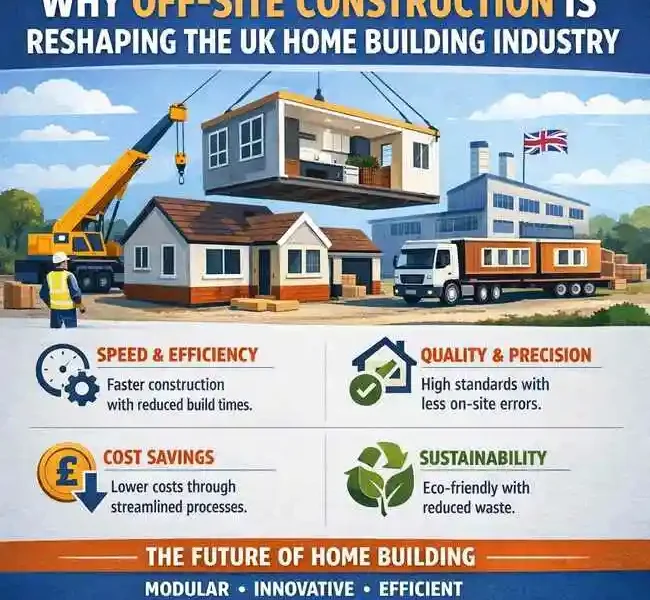
Britain keeps asking the same exhausting question: why do projects cost more, take longer, and still arrive with defects that feel almost traditional? Off-site construction answers with a quiet insult to old habits. Build components in a factory. Ship them. Assemble fast. There will be a reduction in noise, waste, and weather-related excuses. The change isn’t cosmetic. It’s structural, like swapping a draughty Victorian boiler for a heat pump and then wondering why the whole house behaves differently. The supply chain shifts. The workforce shifts. Expectations shift. Finance shifts, too, because certainty suddenly has a price tag.
Speed That Exposes Old Excuses
The on-site builder loves delays because they hide poor planning. Factories don’t forgive. Design freezes earlier, clashes get caught sooner, and schedules stop pretending that rain counts as an unforeseeable event in Britain. Even the awkward bits join the party. A concrete retaining wall can arrive as a coordinated kit, not a muddy improvisation with hurried pours and last-minute changes. What this truly signals is discipline. Faster programmes follow, yes. More importantly, the industry is starting to admit which delays came from chaos, not complexity. Clients notice. Lenders notice. The calendar stops lying.
Quality Control, Not Quality Hope
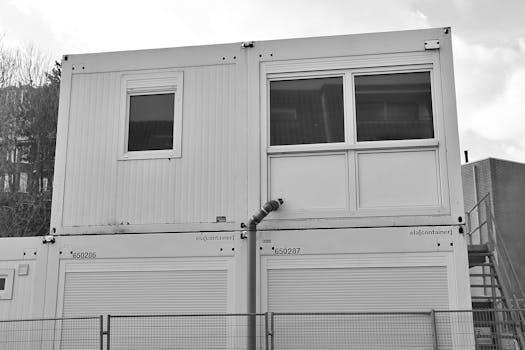
Site work often treats quality like a mood. Factories treat it like a measurement. This type of quality is achieved through repeatable processes, fixed jigs, controlled curing, and consistent tolerances. That matters when housing targets collide with real people who notice doors that don’t close and cold bridges that invite mould. Off-site also requires earlier coordination among architects, engineers, and service providers. There are significantly fewer instances of “trim it on site”. Those moments always cost money and dignity. The sharp truth is simple. Precision doesn’t come from speeches. It comes from conditions that allow it. Defects become data, not gossip.
Labour, Skills, and the New Craft

The UK labour pool is straining. Everyone knows it. Off-site shifts work from scattered sites to stable facilities, which changes who can join and who can stay. Predictable hours help retention. Training becomes real when teams repeat tasks and improve, as in any serious manufacturing line. Thus, repetition does not kill craft. It relocates it. The craft moves into detailing, digital setting-out, and assembly, which punish sloppy thinking. A bricklayer’s pride once resided in a straight course. Today, it can live in a flawless module junction, which reflects the precision and skill required in modern construction techniques. Careers start to look less seasonal and more professional.
Carbon Arithmetic That Actually Adds Up

Tradition is irrelevant to net-zero aims. Off-site factories order and store resources accurately, reducing waste. Despite more transport, fewer supplies to congested sites often balance the ledger, leading to overall efficiency gains that contribute to achieving net-zero aims. Controlled assembly decreases operational emissions for decades by improving airtightness and thermal performance. It doesn’t fit in a press release, so politicians forget it. The planning authorities notice too. There is an improvement in street cleaning, a reduction in site interruption, and a decrease in noise. Numbers replace slogans in the environmental story. Insurance likes that because risk decreases.
Conclusion
Off-site construction disrupts UK construction by challenging improvisation. It moves decisions forward and punishes unclear designs, lethargic coordination, and productivity hand-waving, resulting in more efficient project delivery and higher-quality results. Process isn’t magic. Different OS. Some firms resist, then wonder why margins drop and clients leave. Others will construct supply chains, standardise details, and approach buildings as goods with performance expectations. It won’t seem futuristic. It will appear staid, consistent, and, for Britain, oddly radical. Be prepared for procurement, contracts, and design culture to change.
Why Off-Site Construction Is Reshaping the UK Home Building Industry – FAQ
Q: What is off-site construction?
Off-site construction is a building method where parts of a home (or entire modules) are manufactured in a factory and then transported to the site for assembly. This includes modular homes, panel systems, and pre-fabricated components.
Q: Why is off-site construction growing in the UK?
It is growing due to housing demand, labor shortages, rising material costs, and pressure to build homes faster while maintaining consistent quality standards.
Q: How does off-site construction improve building speed?
Since components are built in controlled factory environments, multiple stages of construction can happen simultaneously. This reduces delays caused by weather and on-site labor constraints.
Q: Is off-site construction more cost-effective?
It can be. Standardized production, reduced material waste, and shorter build times often help lower overall costs, although initial setup and transport expenses can be higher.
Q: Does off-site construction affect build quality?
In many cases, it improves quality because factory conditions allow for better precision, quality control, and reduced exposure to weather-related damage during construction.
Q: What challenges does off-site construction face in the UK?
Challenges include planning regulations, transportation logistics, limited public awareness, and the need for skilled workers familiar with modern manufacturing-based building methods.