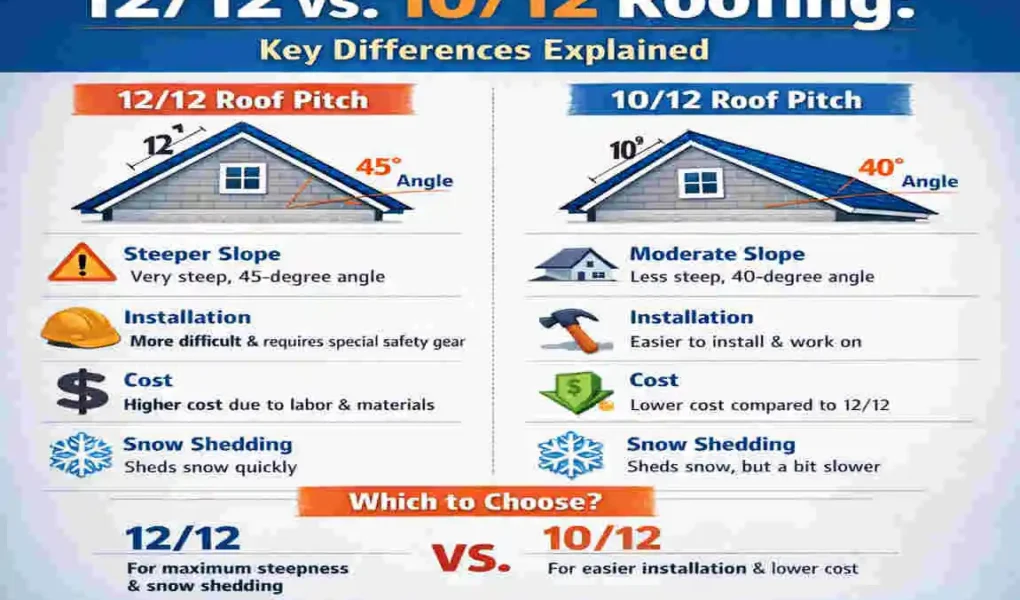
If you are asking what the difference is between a 12/12 and a 10/12 house pitch roofing, the simple answer is this: a 12/12 roof is steeper than a 10/12 roof.
That one difference changes a lot. It affects the roof’s look, attic space, snow shedding, installation difficulty, and sometimes the total cost. Both are steep roofs, but 12/12 rises faster and creates a more dramatic shape.
What Does Roof Pitch Mean?
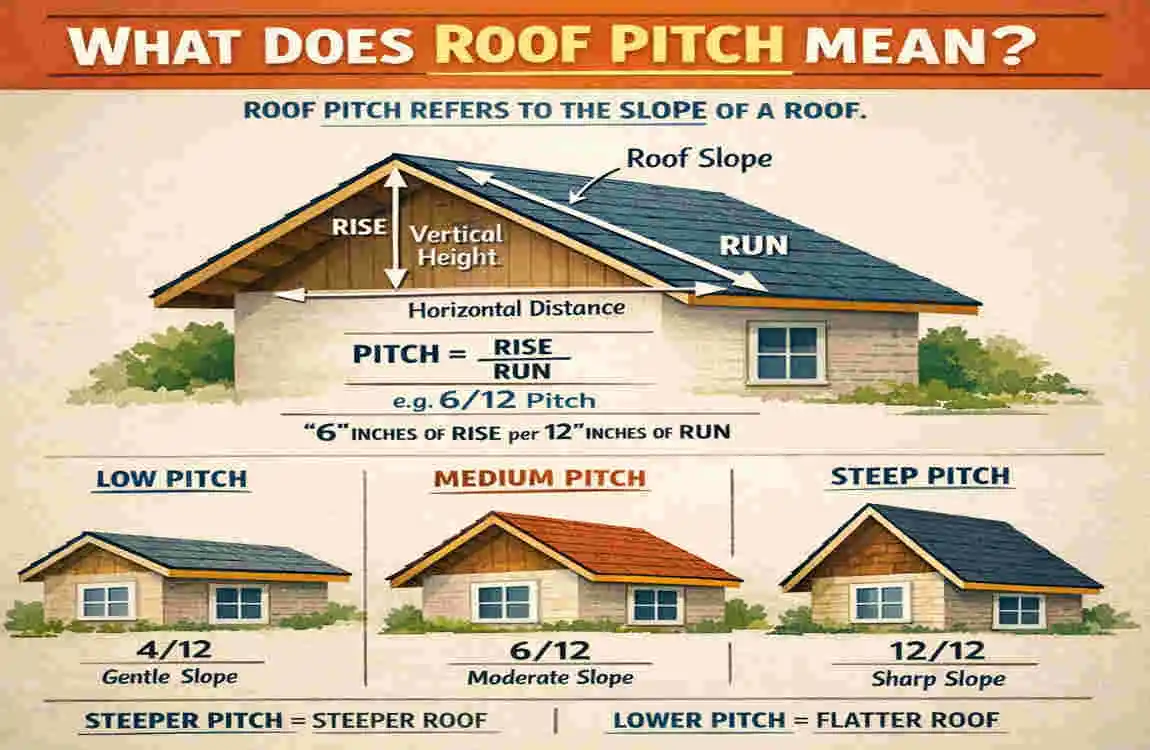
Roof pitch tells you how steep a roof is. It uses a rise-over-run system.
How Roof Pitch Is Measured
A roof pitch is written like 12/12 or 10/12.
- The first number is the rise.
- The second number is the run.
So:
- 12/12 means the roof rises 12 inches for every 12 inches across.
- 10/12 means the roof rises 10 inches for every 12 inches across.
What Is a 12/12 Roof Pitch?
A 12/12 roof is very steep. It is close to a 45-degree angle. This type of roof often looks bold and dramatic.
It is common in homes that want a strong architectural style, extra attic height, or fast water runoff.
What Is a 10/12 Roof Pitch?
A 10/12 roof is also steep, but not as steep as a 12/12 roof. It is about 40 degrees.
It still looks sharp and high, but it is a little less dramatic than 12/12. Many homes use this pitch because it gives a good balance of style and function.
Quick Comparison Table
Feature10/12 Roof12/12 Roof
Rise 10 inches per 12-inch run 12 inches per 12-inch run
Approx. angle About 40° About 45°
Steepness Very steep Steeper
Attic potential High Higher
Look Strong steep profile More dramatic profile
Installation Difficult More difficult
Snow shedding Excellent Excellent
What Is the Difference Between 12/12 and 10/12 House Pitch Roofing?
The biggest difference is steepness.
Difference in Roof Angle
A 12/12 roof has a steeper angle than a 10/12 roof. That may not sound like much, but it can change how the roof performs and how it looks from the street.
A steeper roof usually looks taller and more striking. It also helps water and snow move off the roof more quickly.
Difference in Roof Height
With the same house width, a 12/12 roof rises higher than a 10/12 roof. That means the roof peak sits higher above the walls.
This can make the home look larger and more vertical. It may also create more space in the attic area.
Difference in Attic Space
A steeper roof often gives you more attic volume. That does not always mean usable living space, but it can provide better headroom for storage, ventilation, or vaulted ceilings.
A 12/12 roof usually gives more height than a 10/12 roof, but the final result depends on:
- framing style
- insulation
- ceiling design
- building codes
Difference in Appearance
A 10/12 roof looks steep and elegant. A 12/12 roof looks even more dramatic.
Your choice may depend on the style of the home. For example:
- traditional homes may look good with either pitch
- farmhouse designs often suit steep roofs
- cottage or chalet-style homes may benefit from a very steep roof
- modern homes may use steeper roofs for a bold look
12/12 Roof Pitch: Pros and Cons
Benefits of a 12/12 Roof
A 12/12 roof has several strong advantages:
- excellent water drainage
- great snow shedding
- more attic height
- dramatic curb appeal
- good for vaulted interior spaces
It is a strong choice when the design calls for a bold roofline.
Potential Drawbacks
There are also downsides:
- harder to install
- more dangerous to work on
- may require more safety equipment
- can increase labor costs
- may use more roofing material
So while it looks great, it also asks more from the builder and the budget.
10/12 Roof Pitch: Pros and Cons
Benefits of a 10/12 Roof
A 10/12 roof still gives you a steep and attractive roofline. It offers:
- strong drainage
- good snow shedding
- substantial attic space
- a slightly less extreme look than 12/12
- wide design flexibility
This pitch works well for many homes because it is steep without being the steepest option.
Potential Drawbacks
It still has challenges:
- difficult to walk on
- needs careful installation
- may cost more than lower slopes
- requires proper safety steps
So although it is slightly easier than 12/12, it is still a serious steep roof.
How Roof Pitch Affects Roofing Materials
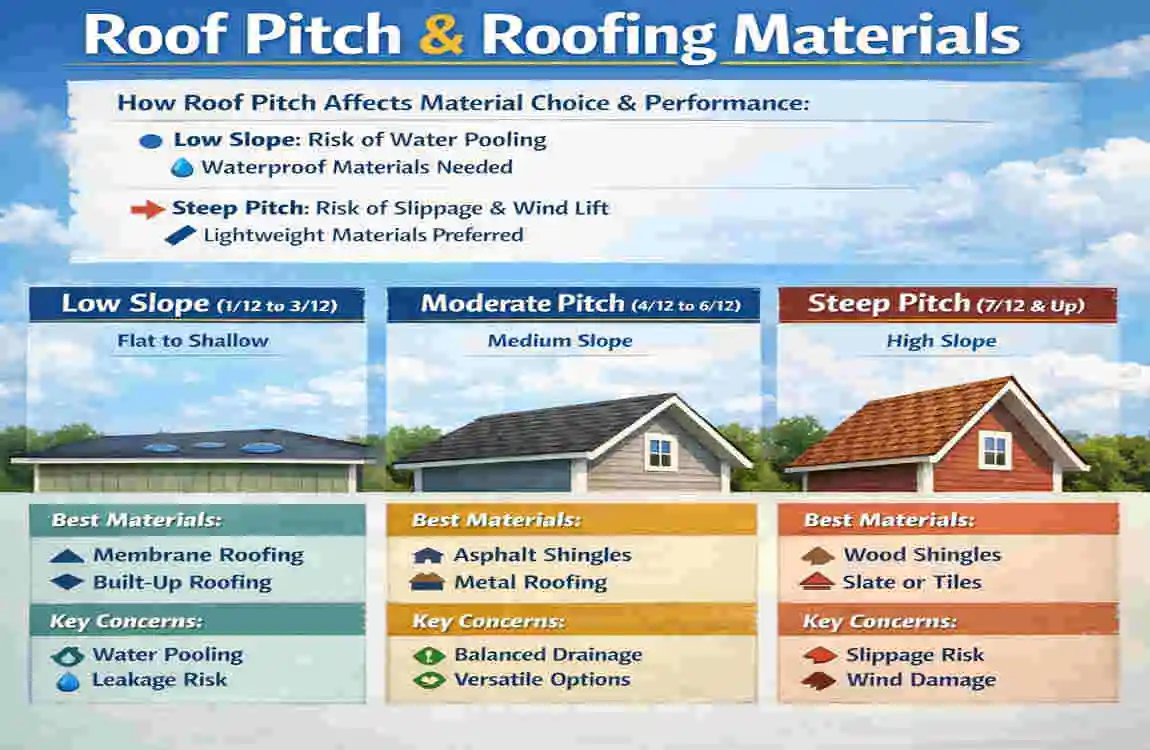
Roof pitch affects what materials work best and how they must be installed.
Shingles on Steep Roofs
Asphalt shingles can work on both 10/12 and 12/12 roofs, but they must be installed correctly. Fastening matters more on steep roofs because gravity and water flow are stronger.
Metal Roofing
Metal roofing is also a strong choice for steep roofs. It sheds water well and can last a long time when installed properly.
Underlayment and Flashing
Steep roofs still need proper protection underneath. That includes:
- underlayment
- flashing around chimneys
- flashing around skylights
- flashing in valleys
- sealing around roof openings
Good drainage does not replace proper detailing.
Cost Differences Between 10/12 and 12/12 Roofing
A steeper roof often costs more to build or repair.
Why Steeper Roofs Can Cost More
The higher cost often comes from:
- more difficult labor
- extra safety equipment
- more material handling
- larger roof surface area
- more complex framing
Is 12/12 More Expensive Than 10/12?
Often yes, but not always. Total cost depends on the whole project, not just pitch.
Other big factors include:
- roof size
- material choice
- location
- labor rates
- tear-off work
- structural changes
So you should always compare actual estimates, not just assume one pitch is always cheaper.
Snow and Rain Performance
Snow Shedding
Both roof pitches are steep enough to help snow slide off more easily than low-slope roofs. That can be a benefit in snowy climates.
Still, falling snow can be dangerous in some areas so snow guards may be needed in the right situation.
Rain Drainage
Both 10/12 and 12/12 roofs handle rain well. Water moves off quickly, which helps reduce pooling and leaks.
But gutters, valleys, and flashing still matter. Pitch alone does not protect a roof from bad installation.
Safety Considerations
Both of these roof pitches are steep roofs. That means safety is a major concern.
Roofers may use:
- harness systems
- roof brackets
- proper ladders
- strong footwear
- fall protection gear
If you own a home with this pitch, do not treat it like a simple walk-on roof. For repairs or installation, professional help is usually the safest choice.
Which Is Better: 10/12 or 12/12?
The better choice depends on your goals.
Choose 10/12 If You Want:
- a steep roof without maximum steepness
- strong drainage
- good attic height
- a slightly less dramatic look
- flexibility in design
Choose 12/12 If You Want:
- a very bold roofline
- maximum steepness
- more attic or vaulted space
- fast snow and water shedding
- a dramatic architectural style
Does a Steeper Roof Always Mean a Better Roof?
No. Steeper does not always mean better.
A roof should fit the home, the climate, the budget, and the building rules. Sometimes a 10/12 roof is the smarter choice. Sometimes 12/12 is worth it for the style and added height.
How to Choose the Right Roof Pitch
Here are the main things to consider:
- Your local climate
- Building requirements
- Attic space needs
- Home design style
- Roofing material
- Budget
- Long-term maintenance
A good roof pitch works with the home, not against it.
Common Mistakes to Avoid
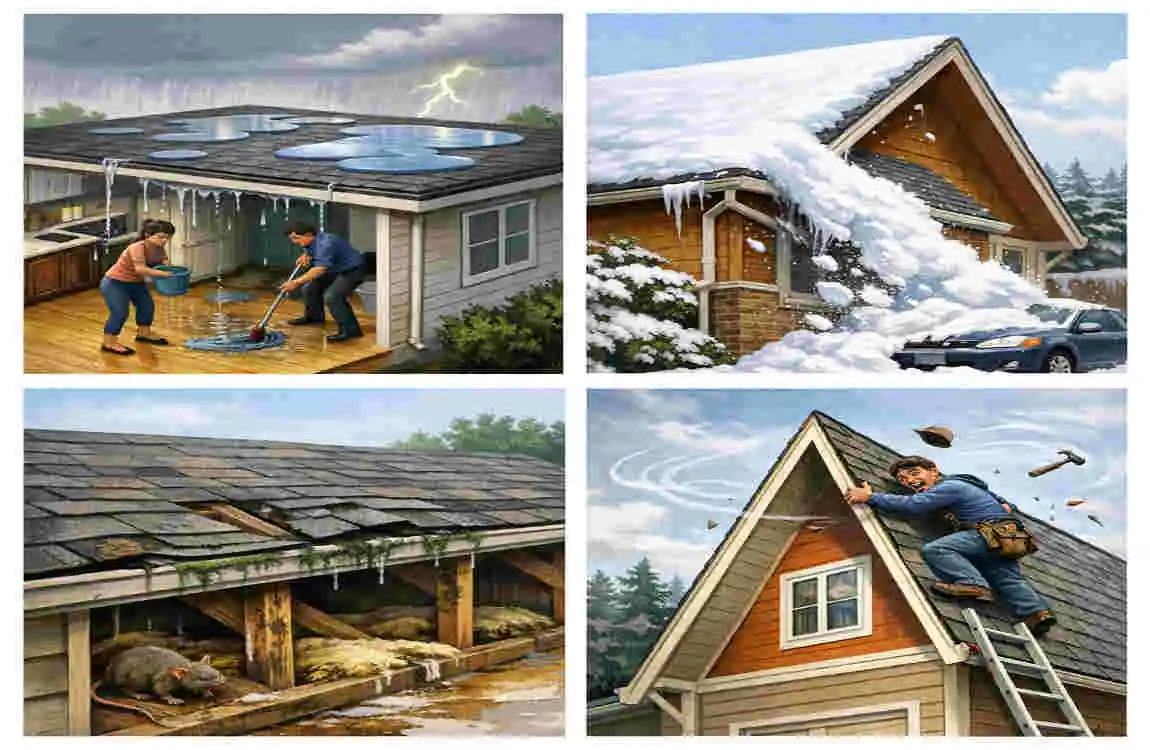
A few mistakes show up often when people compare roof pitches:
- choosing based only on appearance
- ignoring weather conditions
- forgetting about installation difficulty
- overlooking attic ventilation
- using the wrong roofing materials
- skipping safety planning
These mistakes can lead to higher costs and poor performance later.
Frequently Asked Questions
What is the difference between 12/12 and 10/12 house pitch roofing?
A 12/12 roof rises 12 inches for every 12 inches of horizontal run, while a 10/12 roof rises 10 inches for every 12 inches. That makes 12/12 steeper, at about 45 degrees, compared with about 40 degrees for 10/12.
Is a 12/12 roof steeper than a 10/12 roof?
Yes. A 12/12 roof is steeper and rises higher over the same distance.
Is a 10/12 roof considered steep?
Yes. It is still a steep-slope roof and needs careful installation.
Is a 12/12 roof more expensive than a 10/12 roof?
It can be, because steeper roofs often need more labor, more safety gear, and sometimes more materials.
Which roof pitch is better for snow?
Both are good for snow shedding. The best choice depends on the local climate and roof design.
| Feature | 12/12 Roof Pitch | 10/12 Roof Pitch |
|---|---|---|
| Slope | Steeper slope | Moderately steep slope |
| Rise per 12 in. Run | 12 inches | 10 inches |
| Appearance | Tall, dramatic, traditional | Slightly lower, balanced look |
| Attic Space | More usable attic space | Good attic space, but less than 12/12 |
| Snow Shedding | Excellent | Very good |
| Rain Drainage | Faster drainage | Good drainage |
| Roofing Cost | Usually higher | Usually lower |