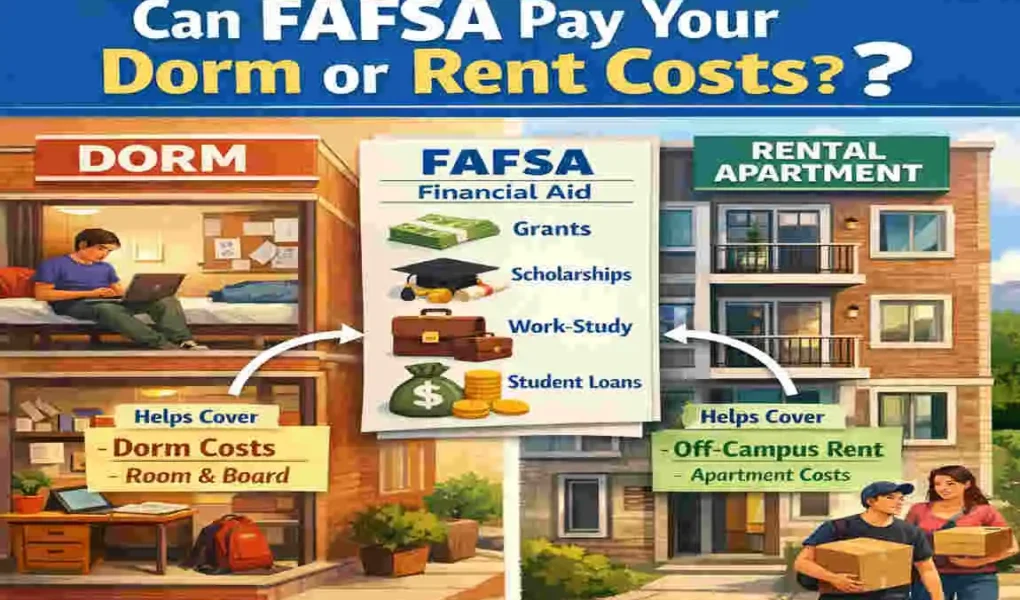
Housing is one of the highest costs students face in college. Whether you live in a dorm, apartment, or off-campus house, the monthly bill can add up fast. That is why so many students ask the same question: does FAFSA cover housing?
The short answer is FAFSA itself does not directly pay your rent or dorm bill. But the financial aid you qualify for through FAFSA can often help cover housing costs as part of your total college expenses.
That means grants, loans, work-study money, and school aid connected to FAFSA may all help you pay for living expenses.
What Is FAFSA and How Does It Work?

Understanding the Purpose of FAFSA
FAFSA stands for Free Application for Federal Student Aid. It is the form students fill out to see what kind of financial help they can get for college.
Schools use FAFSA information to decide how much aid you may qualify for. That aid can come from the federal government, your state, or the college itself.
In simple terms, FAFSA does not give you money by itself. It is the application that helps schools figure out your aid package.
Types of Financial Aid You May Receive Through FAFSA
When you complete FAFSA, you may qualify for different kinds of aid, including:
- Federal Pell Grants
- Federal student loans
- Work-study jobs
- State grants
- College scholarships
Some of this aid does not need to be paid back, while loans do.
What Expenses Can Financial Aid Usually Cover?
Financial aid can often help pay for more than just tuition. It may also help with:
- Tuition and fees
- Books and supplies
- Transportation
- Food
- Housing and living expenses
So if you are wondering whether FAFSA covers housing, the answer is that aid connected to FAFSA can often be used for housing as part of your total cost of attendance.
Does FAFSA Cover Housing Costs?
Can FAFSA Pay for Dorm Rooms?
FAFSA does not send money directly to the dorm office. Instead, your school includes housing in your cost of attendance, which is the full estimated cost of going to school.
That cost may include tuition, fees, books, food, and housing. If your financial aid is larger than your tuition bill, the extra money may be applied toward dorm charges or refunded to you.
For example, if your college charges tuition and dorm fees on the same account, your aid may help cover both.
Does FAFSA Cover Off-Campus Rent?
Yes, it can help with off-campus rent too.
If you live in an apartment or rented house, your school may include an estimated housing allowance in your financial aid package. If your aid exceeds your direct school charges, the excess may be refunded to you.
You can then use that refund to pay rent, utilities, and other living costs.
Just remember: you are responsible for budgeting that money carefully. FAFSA does not manage your rent for you.
How Housing Costs Are Included in College Cost of Attendance
Schools estimate your full annual education costs using a cost-of-attendance package. Housing is usually part of that estimate.
Expense Included in Cost of Attendance?
Tuition Yes
Fees Yes
Dorm Housing Usually Yes
Off-campus Rent Often Estimated
Food Usually Included
Transportation Often Included
This is why the question of whether FAFSA covers housing is so important. Housing is often part of the money colleges expect students to need.
How FAFSA Money Can Help Pay Your Rent or Dorm Expenses
Step-by-Step Process
Here is how the process usually works:
- Complete the FAFSA application
- Receive your financial aid award letter
- The school applies aid toward tuition and fees
- Any leftover money may be refunded to you
- You use the remaining money for housing and other living costs
This process is common for students who have aid left over after school charges are covered.
Using Financial Aid Refunds for Housing
If your aid is more than what you owe the school, you may get a refund by check or direct deposit.
That refund can help with:
- Dorm payments
- Rent
- Utilities
- Food
- Transportation
The key is to treat that refund like a budget, not extra spending money. It is meant to help cover essential school-related costs.
What Types of FAFSA Aid Can Help Pay for Housing?
Federal Grants
Grants are among the best forms of aid because they usually do not have to be repaid.
A Pell Grant, for example, may help cover education-related living costs, including housing, if you qualify.
Student Loans
Student loans can also help pay for housing. That includes rent, dorm costs, and other basic living needs.
But there is an important warning: loans must be repaid with interest. So even though they can help right now, they create future debt.
Work-Study Income
Work-study gives eligible students part-time campus jobs or approved off-campus jobs. The money you earn can help with housing, food, and everyday expenses.
Unlike loans, work-study money is earned income, so it does not need to be paid back.
Does FAFSA Pay for Housing During Summer Break?
Summer Housing Rules Vary
Summer aid is not always the same as fall or spring aid. Some students get aid for summer classes or summer housing, but not everyone does.
What You Should Check
Before planning summer living costs, ask your school about:
- Summer financial aid rules
- Enrollment requirements
- Housing availability
- Extra summer charges
Helpful Summer Tips
- Check with the financial aid office early
- Look for summer scholarships
- Search for campus jobs
- Review housing deadlines before summer starts
If you need housing over summer break, do not assume FAFSA will automatically cover it.
FAFSA Housing Rules Students Should Know
Living On Campus
If you live in a dorm, the school may apply aid directly to your housing bill. This is often the simplest setup.
Your meal plan may also be included in your student account.
Living With Parents
Students living at home usually have lower housing costs. Because of that, the school may set a smaller housing allowance in your aid package.
Living Independently or Off Campus
If you live off campus, your overall aid may remain the same, but your school may estimate your housing costs differently.
That means you are responsible for paying rent on time and using your aid refund wisely.
Common Mistakes When Using FAFSA Money for Housing
It is easy to make mistakes if you are not careful with your refund.
Here are some of the most common ones:
- Spending refund money too quickly
- Not creating a housing budget
- Ignoring utility costs
- Borrowing more loans than necessary
- Missing FAFSA deadlines
A little planning can save you a lot of stress later.
Tips to Reduce College Housing Costs
Choose Affordable Housing Options
You may be able to save money by choosing:
- Shared apartments
- Campus residence halls
- Roommates
- Cheaper rentals near campus
Apply for Additional Financial Assistance
FAFSA is helpful, but it is not your only option.
You can also look for:
- Scholarships
- Housing grants
- Campus programs
- Emergency aid funds
Create a Student Housing Budget
A basic housing budget should include:
- Rent
- Utilities
- Internet
- Food
- Transportation
If you know your monthly costs, it is much easier to avoid running short on money.
FAFSA Housing Coverage vs Other Financial Aid Options

Aid Option Can Help With Housing? Repayment Required?
Pell Grant Yes No
Scholarships Usually Yes No
Student Loans Yes Yes
Work-Study Yes No
Personal Savings Yes No
This table shows why many students combine different types of aid to manage housing costs.
Frequently Asked Questions
Does FAFSA pay for dorm rooms?
FAFSA does not directly pay dorm fees, but aid received through FAFSA can usually be used toward campus housing.
Can FAFSA money be used for rent?
Yes. Students can often use financial aid refunds for approved living expenses, including rent.
Does FAFSA cover food and housing?
Yes. Housing and food are usually included in the college cost of attendance.
Can I use Pell Grant money for housing?
Yes. Pell Grant funds may help pay for eligible education-related living expenses, including housing.
Does FAFSA pay for apartment rent?
FAFSA does not pay landlords directly, but aid refunds may help students pay apartment rent.
| Question | Information |
|---|---|
| Can FAFSA pay for dorm costs? | Yes, FAFSA financial aid can help cover college housing expenses, including dorm fees, if your school includes housing in the cost of attendance. |
| Does FAFSA directly pay rent? | No. FAFSA does not pay your landlord directly, but approved financial aid funds can be used for off-campus rent and living expenses after tuition and fees are paid. |
| What funds can help with housing? | Federal Pell Grants, Direct Loans, scholarships, and work-study earnings may help cover housing-related costs. |
| How are housing payments made? | Your college usually applies aid to tuition and fees first. Any remaining money may be refunded to you for expenses like rent, food, and transportation. |
| Does FAFSA cover all rent costs? | Not always. The amount depends on your financial aid package, school cost of attendance, and available funding. |
| Can students living off-campus use FAFSA money? | Yes. Students can generally use leftover financial aid for reasonable living expenses, including off-campus housing. |
| What affects housing aid eligibility? | Factors include family income, enrollment status, school costs, and whether you qualify for federal aid programs. |
| Best way to use FAFSA for housing | Complete the FAFSA early, compare aid offers, create a housing budget, and avoid borrowing more than necessary. |