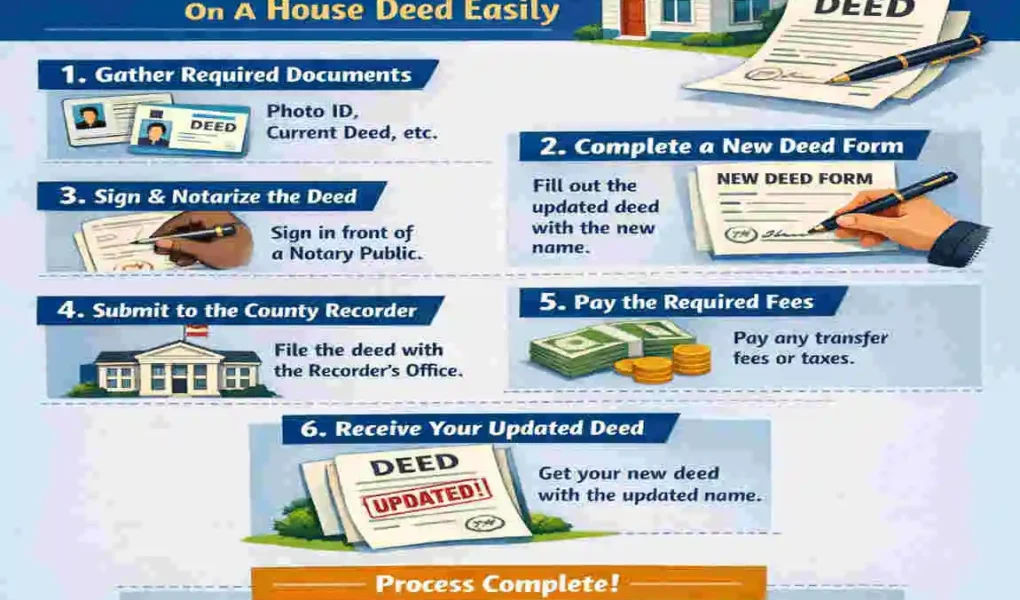
Changing a name on a house deed may sound stressful, but in many cases, it is a fairly direct process when you know what to do. The key is to understand why the name is changing and whether you are making a simple correction or actually transferring ownership.
| Step | What to Do |
|---|---|
| Check Current Deed | Review the existing deed and owner’s legal name. |
| Gather Documents | Prepare ID, existing deed, and legal name-change documents. |
| Prepare New Deed | Use the deed form required in your jurisdiction. |
| Sign & Notarize | Complete signatures and notarization as required. |
| Record the Deed | Submit the updated deed to the appropriate recording office. |
| Check Related Records | Confirm updates to tax, mortgage, and title records if needed. |
Understanding a House Deed and When a Name Change Is Needed
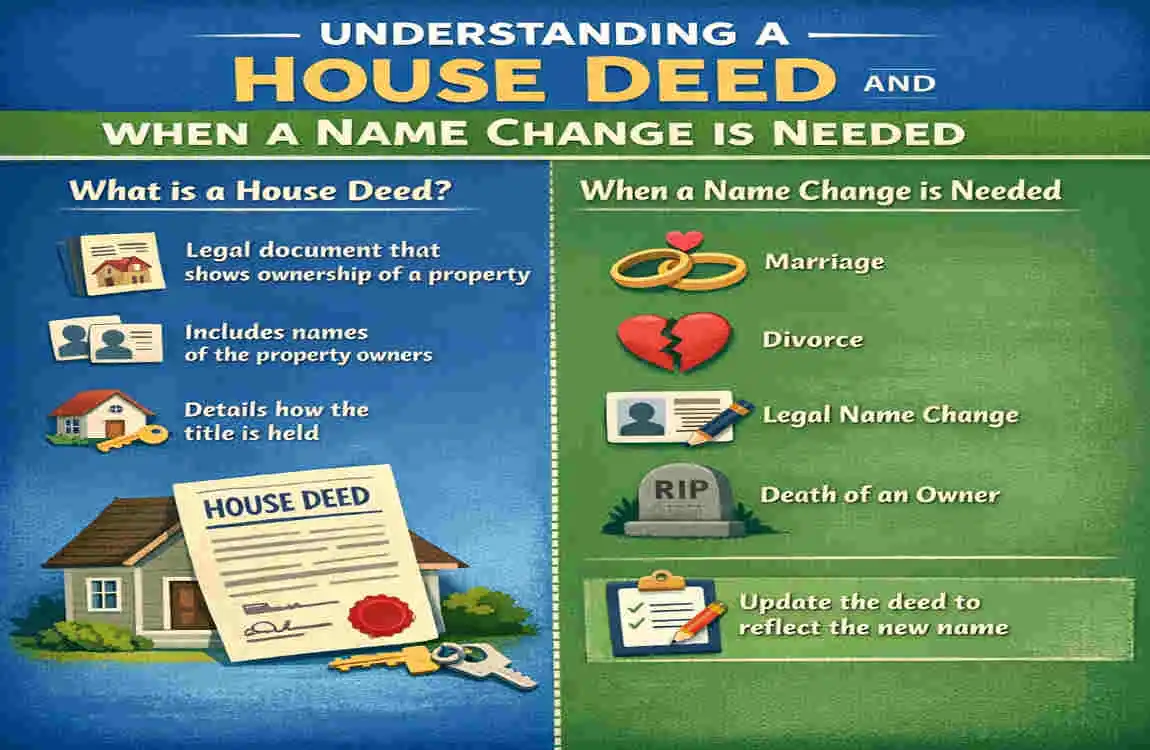
A house deed is the legal paper that shows who owns a property. It includes the owner’s name and the property’s legal description. If the name on the deed is no longer correct, you may need to update it.
People usually need a deed name change after marriage, divorce, a legal name change, inheritance, adding a spouse, removing an owner, or fixing a spelling error. Remember that a name change is not always the same as transferring ownership. Sometimes it is only a correction, but other times it changes who legally owns the home.
How to Change a Name on a House Deed

The exact steps depend on where the property is located, so it is always smart to check with the local recording office or land records office first. In most cases, you will need the current deed, proper identification, and proof of the name change.
Here is a simple view of the usual process:
Step What It Means
Review the deed Check the current owner name and property details
Gather documents Collect ID and legal proof of the change
Prepare the deed Use the correct deed form for your situation
Sign and notarise Complete all required signatures and notarization
Record the deed Submit it to the county or land-records office
Check the Current House Deed
Start by looking at the current recorded deed. Make sure the property’s legal description is correct, and confirm the exact name currently listed. Even a small error can cause problems later.
Gather Required Documents
You may need:
- A government-issued ID
- The current deed
- A marriage certificate, divorce decree, or court order
- A legal name change document
- Any local forms required by the recording office
Prepare the Appropriate Deed
The right deed depends on the reason for the change and local property rules. Some situations need a simple correction, while others may need a new deed that transfers interest from one person to another.
Sign and Notarise the Documents
Many deeds must be signed before a notary. Some places may also require witnesses. Do not skip this step, because an unsigned or unnotarized deed may not be accepted.
Record the Updated Deed
After you complete the deed, you must file it with the proper county or land-records office. Recording matters because it makes the change part of the public record and helps protect your ownership rights.
Different Situations That May Require a Deed Name Change
The process can look different depending on why the name is changing.
If the change is due to marriage, you may only need to update the name to match the legal name you now use. If the change happens after divorce, one spouse may need to be removed from the deed.
A spelling mistake is usually the easiest case, but it still needs to be corrected properly. Adding a spouse or family member often means creating a new ownership arrangement. Removing an owner or handling property after an owner’s death can involve legal rules that go beyond a simple name fix.
Costs, Taxes, and Other Important Considerations
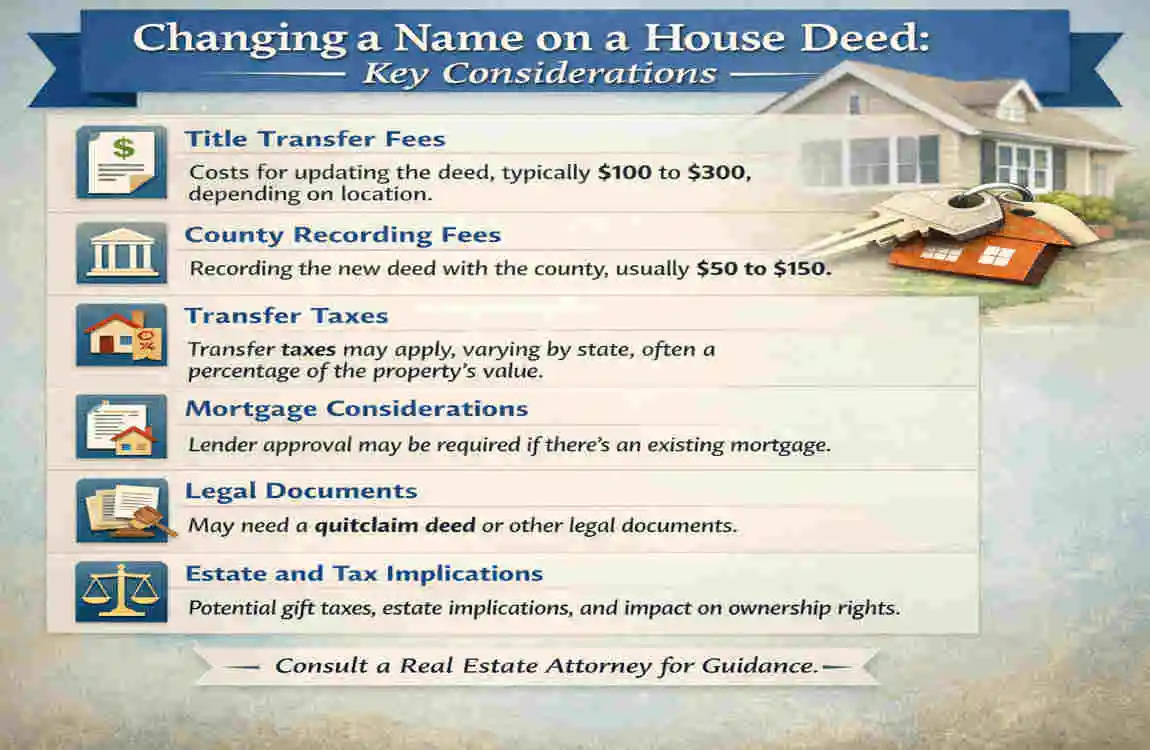
Several costs may apply, including recording fees, deed preparation charges, notarization fees, and sometimes legal fees. Some areas also charge transfer taxes, depending on the type of change.
Before recording the new deed, check how it may affect your mortgage, property taxes, title insurance, and future sale of the home. A name change can also raise questions if the property has a loan attached, so it is wise to review everything first.
Common Mistakes to Avoid When Changing a Name on a House Deed
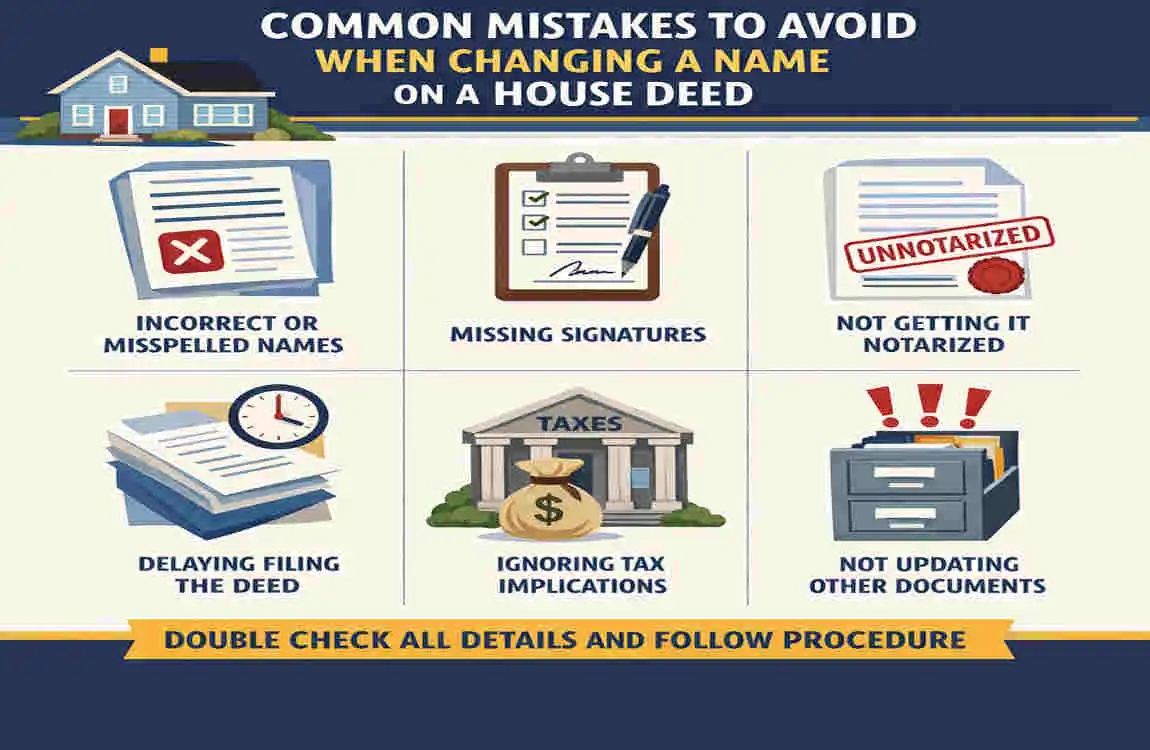
A few simple mistakes can create big delays. Common problems include using the wrong deed form, writing the legal property description incorrectly, forgetting to notarise the document, or assuming the name change automatically updates ownership.
It is also a mistake to ignore mortgage rules or fail to record the deed after signing. If the situation is complex, help from a real estate attorney, title company, or qualified deed-preparation service can save time and prevent errors.
Frequently Asked Questions About Changing a Name on a House Deed
How long does it take to change a name on a house deed?
It depends on local recording times. Some updates are quick, while others take longer if you need extra documents.
Can I change the name on my house deed myself?
Yes, in many cases you can, but you must follow your local rules carefully.
What documents are needed to change a name on a house deed?
Usually, you need ID, the current deed, and legal proof of the name change.
Does changing my legal name automatically change my house deed?
No. You usually must update the deed separately.
Does a deed name change affect the mortgage?
It can, so check with your lender before making changes.
How much does it cost to change a name on a house deed?
Costs vary by location and can include recording, notary, and preparation fees.
Can I add someone else’s name to my house deed?
Yes, but that is often treated as an ownership transfer, not just a name correction.
Can I remove someone’s name from a house deed?
Yes, but the process may require legal steps depending on ownership and mortgage rules.